Every home tells a story, and nothing anchors a room’s narrative quite like a handwoven rug. In West Bengal, where the rhythm of the handloom is as much a part of life as the flowing Ganges, the tradition of textile craftsmanship runs deep.
For centuries, Bengali artisans have woven their cultural identity into fabric, creating textiles that are not just utilitarian, but deeply artistic. While the region is globally renowned for its exquisite Baluchari and Jamdani sarees, the heritage of floor coverings—specifically rugs and carpets—holds its own unique place in Bengali homes. A rug here isn’t merely decor; it’s a testament to patience, skill, and an enduring connection to the earth.
However, finding authentic pieces in a market flooded with mass-produced imitations can be a challenge. Whether you are a collector of heritage crafts or a homeowner looking to add a touch of warmth to your living space, understanding the landscape of West Bengal’s rug traditions is the first step to finding that perfect piece.
Traditional Rug & Carpet Heritage of West Bengal
To understand the rugs of this region, one must look at the hands that weave them. West Bengal’s textile heritage is a vibrant tapestry woven from indigenous tribal traditions and centuries of artistic evolution.
The influence of tribal communities is profound. Their designs often mirror the geometry of nature—the flow of rivers, the shapes of leaves, and the contours of the hills. Unlike the Persian-influenced motifs found elsewhere in India, West Bengal’s traditional weaving often leans towards bold simplicity and earthy narratives.
Artisans here have mastered the use of natural fibers. Wool, cotton, and silk are not just materials; they are the canvas upon which history is written. The skilled artisan communities, often working on traditional pit looms in rural clusters, pass down techniques from one generation to the next. This intergenerational transfer of knowledge ensures that every knot and weave carries the soul of the community.
Types of Traditional Rugs and Carpets in West Bengal
When exploring the best place to buy traditional rugs and carpet in West Bengal, you will likely encounter a diverse range of styles, each with its own character and purpose.
Handwoven Tribal Rugs
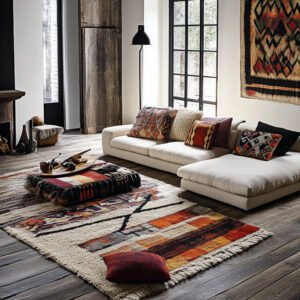
These are the heartbeat of rural craftsmanship. Characterized by bold, geometric patterns and a vibrant, often earthy color palette, tribal rugs speak a language of ancient symbols. They are robust, full of personality, and perfect for adding a raw, artistic element to a modern home.
Wool & Silk Blend Rugs
For those seeking a touch of opulence, the blend of wool and silk offers an unmatched sensory experience. The wool provides durability and warmth, while the silk introduces a lustrous sheen that catches the light. These rugs often feature more intricate patterns, bridging the gap between rustic charm and refined elegance.
Flatweave Dhurries
Perhaps the most versatile of all, the flatweave dhurrie is a staple in Indian homes. Lightweight, reversible, and incredibly easy to maintain, these rugs are perfect for the humid climate of West Bengal. They offer a cooling effect underfoot and come in an endless array of stripes and geometric motifs.
Handcrafted Area Rugs
These large-format pieces are designed to anchor a room. Whether placed in a sprawling living room or a cozy bedroom, handcrafted area rugs from this region blend traditional techniques with designs that suit contemporary aesthetics. They are substantial pieces of art that define the atmosphere of a living space.
What Makes a Place the Best to Buy Traditional Rugs?
In a world of fast fashion and factory-made decor, what truly defines the “best” place to acquire these treasures? It comes down to four pillars of integrity.
- Authentic Handwoven Craftsmanship: The seller must prioritize the human element. You are looking for the slight imperfections that signal a human hand, not the sterile perfection of a machine.
- Ethical Sourcing and Artisan Support: The best retailers view artisans as partners, not just suppliers. Ethical sourcing ensures that the weavers are paid fair wages and that the craft remains a viable livelihood for rural communities.
- Quality Assurance: Transparency is key. A reputable seller will be open about the materials used, the origin of the weave, and the pricing structure.
- Customization: Every home is unique. The ability to offer custom sizing and design flexibility shows a deep understanding of the craft and a willingness to collaborate with the buyer.
Best Place to Buy Traditional Rugs and Carpet in West Bengal
While local markets offer the thrill of the hunt, they can be inconsistent in quality. For those seeking a curated, reliable, and deeply artistic experience, The Ambiente stands out as a trusted destination.
The Ambiente – Trusted Destination for Traditional Rugs
At The Ambiente, we believe that a rug has the ability to determine the atmosphere of a living space. We don’t just sell carpets; we curate collections that honor the heritage of handweaving while speaking to modern sensibilities.
Our collection is deeply inspired by the rich tribal and textile heritage of the region. We focus on premium wool and handcrafted carpets that are built to last a lifetime. By blending traditional designs with contemporary interiors, we ensure that age-old craftsmanship finds a rightful place in modern homes.
Furthermore, we bridge the gap between rural artisans and urban homes. With consistent quality standards and nationwide delivery, we make the beauty of authentic craftsmanship accessible, no matter where you reside.
Why Choose Traditional West Bengal Rugs for Your Home?
Choosing a rug from this region is an investment in both style and sustainability.
- Unique Cultural Aesthetics: The tribal and Bengali motifs are distinct. They don’t just decorate a floor; they tell a story of a specific people and place.
- Eco-friendly Materials: Crafted from natural fibers like cotton, wool, and jute, these rugs are biodegradable and free from the harsh chemicals often found in synthetic carpets.
- Climate Suitability: West Bengal’s humid climate requires breathable textiles. Traditional flatweaves and cotton rugs allow for airflow, preventing the trapping of moisture and heat.
- Long-lasting Craftsmanship: A hand-knotted or handwoven rug is structurally superior to a machine-made one. With proper care, these pieces can become family heirlooms.
How to Identify Authentic Traditional Rugs
Before you make a purchase, it is helpful to know what to look for.
- Handwoven vs. Machine-made: Turn the rug over. In a handmade rug, the pattern on the back will be nearly as clear as the front. You might also see slight variations in the knots, unlike the perfectly uniform grid of a machine-made piece.
- Motifs: Authentic tribal rugs will often have geometric imperfections that add to their charm. The motifs should feel organic, not stamped on.
- Material Quality: Natural wool feels soft and retains a certain oiliness (lanolin), whereas synthetic wool can feel uncomfortably dry or plasticky.
- Weave Density: Generally, a tighter weave indicates a higher quality rug that will withstand more wear and tear.
Buying Traditional Rugs Online vs Local Markets in West Bengal
There is a romantic notion about wandering through the bustling local markets of Kolkata or rural haats to find a rug. While this can be an adventure, it often comes with limitations. Local markets may have limited variety, and verifying the authenticity or material quality on the spot can be difficult for the untrained eye.
Buying from a trusted online platform like The Ambiente offers distinct advantages. You gain access to a wider variety of designs that have been pre-vetted for quality. The convenience of browsing from home, combined with the assurance of authenticity and the ability to customize size and color, makes the online route the preferred choice for many discerning homeowners today.
Frequently Asked Questions (FAQ)
What materials are used in traditional West Bengal rugs?
Artisans primarily use natural fibers including locally sourced cotton, sheep wool, and sometimes silk for detailing. Jute is also a very common material used for durable, eco-friendly floor coverings in this region.
Are West Bengal rugs handmade?
Yes, authentic traditional rugs from West Bengal are handmade. They are typically woven on pit looms or frame looms by skilled artisans who have inherited the craft from their ancestors.
What makes Bengali and tribal rugs unique?
The uniqueness lies in their design language. Unlike the floral and curvilinear Persian designs, Bengali and tribal rugs often feature bold geometric shapes, folk motifs, and a distinct, earthy color palette derived from natural surroundings.
How long do traditional handwoven rugs last?
With proper care, a high-quality handwoven wool or cotton rug can last for decades. Hand-knotted rugs are particularly durable and can even be passed down as heirlooms.
Bring Cultural Elegance Home
West Bengal’s weaving heritage is a treasure trove of artistry, patience, and cultural expression. Whether it’s the geometric boldness of a tribal piece or the understated elegance of a cotton dhurrie, these rugs do more than cover a floor—they warm a home with the spirit of the artisan.
It is vital to choose sellers who respect this tradition and the people behind it. By choosing authentic, handcrafted pieces, you are not just decorating your space; you are keeping a rich legacy alive.
Ready to transform your living space? Explore authentic traditional rugs inspired by West Bengal at The Ambiente and bring cultural elegance into your home.