In an era where almost everything is delivered to our doorsteps in cardboard boxes, there are still some things that demand a personal touch. Buying a rug is one of them. While online shopping offers convenience, a rug is a tactile investment—something you’ll walk on, sit on, and live with every day. It sets the tone for your entire room, or as we like to say, the “ambience.”
Why does local shopping still matter in 2026? Because seeing a rug on a screen is vastly different from feeling the texture of hand-knotted wool or seeing how the silk sheen changes under showroom lighting. Visiting a store allows you to verify true colors, assess the weight and quality, and get expert advice tailored to your specific space.
This guide is designed to help you navigate the process of finding the perfect rug store in your area. From vetting shops specifically for quality to knowing exactly what questions to ask when you walk through the door, we’ll ensure you leave with a piece that perfectly suits your home.
What Makes a Rug Store “The Best”?
Not all rug retailers are created equal. When hunting for the best rug stores near you, you need to look beyond just proximity. The “best” store is one that balances variety with integrity.
- Wide variety of styles: A top-tier store should offer a diverse range, from modern abstracts to traditional Persian motifs, catering to various interior design tastes.
- Quality materials and craftsmanship: Look for retailers who prioritize natural fibers like wool, silk, and cotton over cheap synthetics that wear out quickly.
- Transparent pricing: You shouldn’t have to guess the price. reputable stores are clear about costs and why a rug is priced the way it is.
- Good customer reviews: In 2026, social proof is everything. Consistent positive feedback regarding durability and service is a must.
- Customization options: The ability to customize size or color shows that the store has a direct connection to artisans, rather than just reselling mass-market goods.
Start With Online Search (Local SEO Tips)
Before you get in the car, do some digital detective work. Finding a hidden gem starts with knowing how to search.
- Use specific keywords: Don’t just type “rugs.” Try “handmade rug store near me,” “luxury carpet showroom,” or “modern wool rugs [Your City].”
- Check Google Maps and Business Profiles: Look for stores with updated photos. A store that regularly uploads images of new stock is active and engaged.
- Visit websites: Does their online catalog look current? Do they mention “2026 collections”? A stagnant website often reflects a stagnant inventory.
- LSI Keywords: When scanning search results, keep an eye out for terms like “rug showroom,” “carpet atelier,” and “floor covering specialists.”
Check Reviews and Ratings Before Visiting
Your time is valuable, so vet the stores before you visit.
- Google Reviews: Look for detailed reviews that mention specific staff members or specific product qualities (e.g., “The wool is so soft,” “The delivery was seamless”).
- Social Media: Instagram and Pinterest are great for seeing real customer photos. Are people tagging the brand in their homes?
- Red Flags vs. Green Flags:
- Red Flag: Multiple complaints about shedding or colors fading quickly.
- Green Flag: Stories about staff going above and beyond to help with sizing or letting customers try rugs at home.
Visit Showrooms to Evaluate Quality
Once you are in the showroom, it’s time to get hands-on. You cannot judge a rug solely by its pattern.
- Touch and feel: Run your hand across the pile. Is it soft? Is it dense?
- Check knot density: Generally, higher knot counts indicate better quality and durability. Flip the rug over to see the back; a clear pattern on the back usually indicates a handmade rug.
- Inspect edges: The binding should be tight and secure. Loose threads are a sign of poor finishing.
- Ask about origin: A knowledgeable seller will know exactly where the rug was made and the technique used (hand-knotted vs. hand-tufted).
Ask These Questions at Rug Stores
Don’t be afraid to grill the sales staff. Their answers will reveal their expertise.
- “What specific materials are used in this rug?” (You want to hear specifics like “New Zealand wool” or “Bamboo silk,” not just generic terms).
- “Is this handmade or machine-made?”
- “How should I clean this specific fiber?”
- “Do you offer a warranty or a return policy if it doesn’t look right in my home?”
Compare Local Stores vs Online Rug Shops
While this guide focuses on local shopping, it’s helpful to understand the trade-offs.
- Price: Online shops might seem cheaper, but shipping returns for heavy rugs can be a nightmare. Local stores often include delivery.
- Convenience: Online wins for browsing in pajamas, but local wins for immediate gratification and assurance of quality.
- Selection: Online inventories are vast, but a local curator acts as a filter, showing you only the best quality options so you aren’t overwhelmed.
Best Rug Store Recommendation in 2026
If you are looking for a blend of heritage and modern design, some stores stand above the rest.
The Ambiente – Premium Rugs & Carpets
For those in India or shopping internationally, The Ambiente represents the gold standard in rug retailing. Based in Delhi with deep roots in Bhadohi (India’s carpet hub), they offer:
- Authenticity: Backed by 30+ years of expertise through their parent company, Bhadohi Carpets.
- Variety: A stunning range of modern, traditional, and transitional designs using premium wool, silk, and viscose.
- Empowerment: They work with over 4,000 women weavers, ensuring every purchase supports sustainable livelihoods.
- Customization: Need a specific size for an odd-shaped room? Their “bespoke” options are unmatched.
- Hybrid Experience: You can browse their extensive catalog online and visit their flagship store in Sultanpur, New Delhi, for the full sensory experience.
Other Reputed Rug Stores to Explore
Depending on your location, look for:
- Regional carpet showrooms: These often have direct ties to manufacturers.
- Specialty boutiques: Smaller stores often carry unique, hand-picked inventory you won’t find in big-box chains.
How to Spot Authentic Rugs
Don’t get duped by a good sales pitch.
- Check the back: Handmade rugs have slight imperfections on the back that mirror the front design. Machine-made rugs often look too perfect or have a mesh backing.
- Material Logic: If a “silk” rug is suspiciously cheap, it’s likely viscose or synthetic. Real silk is an investment.
- Labels: Look for “RugMark” or similar certifications that ensure no child labor was used.
Budget Planning for Rug Shopping
- Entry-level: Machine-made or hand-tufted rugs. Good for high-traffic areas or rental homes.
- Mid-range: Hand-woven flatweaves or lower-density hand-knotted wool rugs. Great durability and style.
- Luxury Investment: High-knot count silk and wool blends. These are heirlooms that last generations.
- Hidden Costs: Don’t forget to budget for a high-quality rug pad (essential for longevity) and professional cleaning down the line.
Latest Rug Trends to Look for in 2026
- Sustainable Fibers: Hemp, jute, and recycled materials are huge this year.
- Vintage Revival: New rugs treated to look antique and faded.
- Neutral Palettes: Warm beiges, greys, and earth tones that ground a room without dominating it.
- Texture: It’s not just about color; high-low piles and 3D textures are adding depth to floors everywhere.
Mistakes to Avoid When Buying Rugs Locally
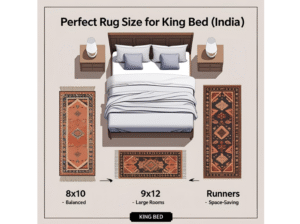
- Choosing the wrong size: The “floating rug” look (where the rug is too small for the furniture grouping) is the most common design sin.
- Ignoring maintenance: Don’t buy a high-maintenance silk rug for a muddy entryway.
- Buying only on price: A cheap rug that needs replacing in two years is more expensive than a quality rug that lasts twenty.
Local Rug Store Checklist (Quick Guide)
Before you hand over your credit card, ensure the store checks these boxes:
- Good, verifiable reviews.
- Transparent pricing tags on the rugs.
- A wide selection of materials (not just synthetics).
- Staff that educates you rather than just pushing a sale.
- clear return or exchange policy.
FAQs
How do I find a reliable rug store near me?
Start with Google Maps to find highly-rated specialists, not just general furniture stores. Look for businesses that mention “hand-knotted” or “artisan” in their descriptions.
Are local rug stores more expensive?
Not necessarily. When you factor in the quality, longevity, and lack of return shipping fees, local stores often offer better value for money than budget online retailers.
Is handmade always better than machine-made?
For longevity and value retention, yes. Handmade rugs are more durable and unique. Machine-made rugs are fine for temporary solutions but rarely last as long.
Can I negotiate prices at rug stores?
In many independent rug stores, especially for high-end pieces, there is some room for negotiation, or at least for getting extras like a rug pad or delivery included.
Conclusion
Finding the perfect rug is a journey—one that transforms a house into a home. By visiting local stores, you aren’t just buying a product; you are buying a piece of art that sets the mood for your living space.
Whether you are looking for a statement piece for your living room or a durable runner for the hallway, taking the time to see, touch, and understand the craftsmanship makes all the difference.
Ready to find the perfect rug?
Visit The Ambiente to explore a world where traditional craftsmanship meets modern design. Whether you browse our collection online or visit our New Delhi flagship, we’re here to help you start your interior story.