A beautifully crafted rug is more than just a floor covering; it’s a piece of art. Whether in a retail store, an exhibition, or your own home, the way you display a rug can transform its perceived value and appeal. A thoughtful presentation not only catches the eye but also tells a story about the rug’s craftsmanship, texture, and origin.
Learning how to make a display of rugs and carpets that captivates an audience is a crucial skill for retailers, designers, and home décor enthusiasts alike. The right display can boost sales, create an unforgettable customer experience, and turn a simple textile into the stunning centerpiece of any room. This guide will walk you through professional techniques and creative ideas to showcase your collection in the best possible light.
Why Does a Great Rug Display Matter?
In the world of retail and design, visual merchandising is everything. A potential customer’s first impression is often formed in seconds. A cluttered, poorly lit, or uninspired display can cause a masterpiece to be overlooked. On the other hand, a strategic presentation offers significant benefits.
Proper display techniques highlight a rug’s unique qualities. The rich texture of a hand-knotted wool carpet or the vibrant colors of a silk rug come to life under the right lighting. By showcasing these details, you help customers appreciate the artistry and quality, making them more likely to connect with the piece and make a purchase. Effective carpet display techniques and rug display ideas are not just about showing a product; they are about creating an experience that resonates with your audience.
Types of Rug and Carpet Displays
There are several effective methods for displaying rugs and carpets, each suited for different spaces and inventory sizes.
Hanging Displays
One of the most popular methods, hanging rugs allows customers to see the full design without obstruction.
- How it works: Use sturdy rods, industrial hooks, or specialized rug hanging bars to suspend rugs from the wall or ceiling.
- Benefits: This method offers excellent visibility and allows for easy browsing. Customers can feel the texture and examine the craftsmanship up close. It’s an ideal way to create a gallery-like feel.
Floor Stacks
A classic and practical approach, stacking rugs on the floor is common in many showrooms.
- How it works: Neatly fold or roll rugs and arrange them in organized stacks. Layering them slightly can add visual interest, but avoid creating messy, towering piles.
- Benefits: Floor stacks are space-efficient and encourage tactile interaction, as customers can flip through the collection.
Wall-Mounted Displays
For your most premium or artistic pieces, consider dedicating a wall to a single rug.
- How it works: Mount the rug directly onto a large, unobstructed wall, much like a tapestry or painting.
- Benefits: This technique transforms the rug into a feature art piece, immediately drawing attention and signaling its high value. It’s perfect for showcasing one-of-a-kind, handcrafted rugs.
Carousel or Rack Systems
For retailers with a large inventory, specialized racks are a game-changer.
- How it works: Rug display racks and rotating carousels allow you to display dozens of rugs in a compact footprint. These systems often feature arms that swing out, allowing customers to view each rug individually.
- Benefits: This is the most efficient way to manage and display a large volume of products, keeping your showroom organized and easy to navigate.
Digital or Virtual Displays
In the modern retail environment, technology offers new ways to engage customers.
- How it works: Use high-resolution screens to showcase your entire catalog. Augmented reality (AR) apps can even allow customers to visualize how a rug would look in their own home.
- Benefits: Digital displays save physical space and offer an interactive, futuristic shopping experience that can set your brand apart.
How to Prepare Rugs for Display
Before any rug goes on display, proper preparation is essential to ensure it looks its best.
- Cleaning and Grooming: Make sure every piece is clean, free of dust, and steamed to remove any wrinkles or folds from shipping and storage. Pay attention to the details—neatly trim and comb the tassels or fringe.
- Preventing Damage: For long-term displays, use appropriate backing materials to prevent stretching. If a rug is hung, ensure its weight is evenly distributed to avoid stress on the fibers.
Step-by-Step Guide to a Professional Rug Display
Creating an effective display involves more than just choosing a method. Follow these steps for a professional setup.
Step 1: Select the Right Area
Choose a high-traffic area with ample space. Consider the lighting—natural light is ideal, but directional spotlights can be used to highlight texture and color. Ensure there is enough room for customers to step back and view the entire rug.
Step 2: Categorize Your Rugs
Group your collection logically to create a cohesive and easy-to-navigate display. You can organize rugs by size, style (e.g., modern, traditional), color palette, material, or price point.
Step 3: Use Proper Display Stands
Invest in high-quality carpet display stands or racks that can safely support the weight and size of your rugs. Flimsy or inappropriate hardware can damage the rugs and create a safety hazard.
Step 4: Highlight the Hero Product
Identify a “hero” rug—a particularly unique, high-value, or eye-catching piece—and give it a prime location. A feature wall or a well-lit central platform can draw customers in.
Step 5: Add Informative Tags
Each rug should have a clear tag or information card detailing its material, origin, size, price, and care instructions. For handmade pieces like those from The Ambiente, sharing the story of the weavers adds immense value.
Step 6: Ensure Accessibility
Design the layout to allow a smooth browsing flow. Customers should be able to move freely and interact with the rugs without feeling cramped.
Creative Rug Display Ideas
Think outside the box to make your display memorable.
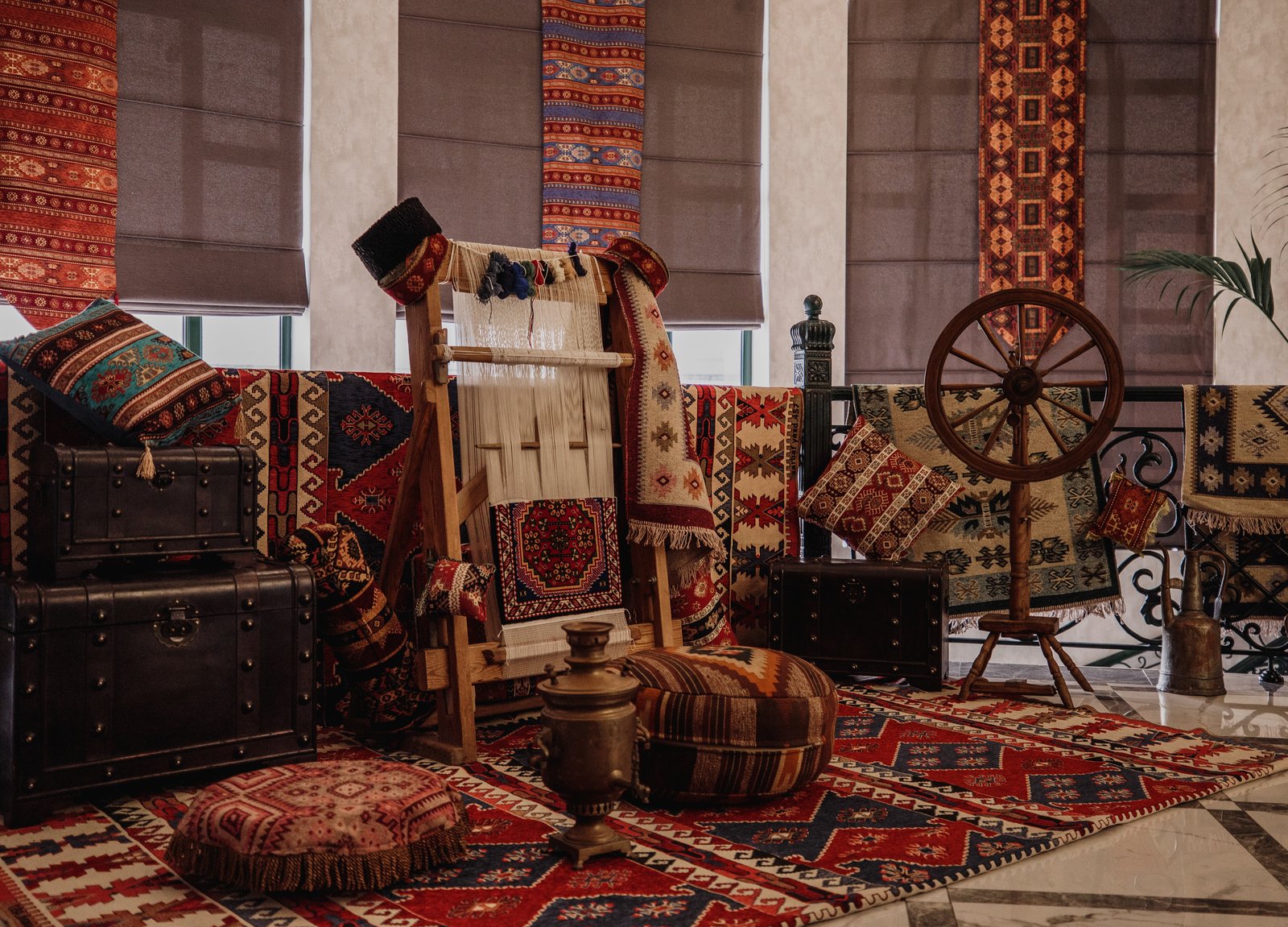
- For Retail Stores: Try layered hanging displays at different heights to create depth. Build a “rug tunnel” for an immersive walkthrough experience. Mix rugs with furniture and décor elements to create inspiring lifestyle vignettes.
- For Exhibitions: Use portable racks and vertical hanging arrangements to maximize space in a smaller stall. A “roll-and-show” technique, where rugs are partially unrolled, can pique curiosity.
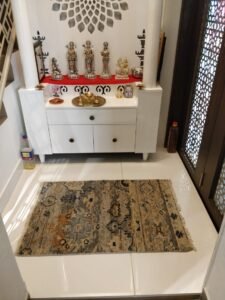
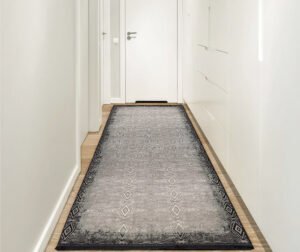
- For Home Décor: Don’t limit rugs to the floor. Hang a beautiful rug as wall art above a bed or sofa. Experiment with layering different rugs in a living room to add texture and color. A vibrant runner can make a powerful statement in an entryway or on a staircase.
Common Mistakes to Avoid
- Overcrowding: Too many rugs in one space can feel overwhelming and cheapen the look.
- Poor Lighting: Dim or harsh lighting can distort colors and hide beautiful details.
- Incorrect Grouping: Mixing premium, handmade rugs with budget, machine-made ones can devalue your high-end pieces.
- Sloppy Presentation: Wrinkled, dirty, or incorrectly folded rugs signal a lack of care and professionalism.
Find Your Perfect Piece
A rug is the soul of a room, and its display should honor the artistry woven into its fibers. By applying these techniques, you can create a stunning showcase that not only highlights the beauty of each piece but also connects with your audience on a deeper level.
Ready to find a unique, handcrafted rug to be the star of your next display? At The Ambiente, we are proud to work with over 4,000 women weavers to create exquisite silk and wool rugs that blend timeless tradition with modern design. Each piece tells a story of sustainable craftsmanship and empowerment.
Explore The Ambiente’s collection today and discover the perfect rug to anchor your space.
Frequently Asked Questions
How can I display rugs to maximize their visual appeal?
To maximize visual appeal, use good lighting, hang rugs at eye level, and create vignettes with complementary furniture. Highlighting a “hero” rug on a feature wall is also highly effective.
What are the best ways to store rugs when they are not on display?
Roll rugs with the pile facing inward to protect the fibers. Wrap them in a breathable fabric like cotton or muslin and store them in a cool, dry place off the ground. Avoid plastic wrapping, as it can trap moisture.
How do I choose the right type of display for different rug sizes and styles?
Large, intricate rugs are best displayed hanging or on a wall. Smaller or more uniform collections work well in stacks or on carousel racks. Modern, graphic rugs can make a statement as wall art, while traditional rugs add warmth in layered floor displays.
Where can I find unique, handmade rugs to showcase in my store or home?
The Ambiente offers a curated collection of unique, handcrafted rugs made by skilled artisans in India. Our designs blend traditional techniques with contemporary aesthetics, ensuring there is a piece for every style.
How does The Ambiente support sustainable and ethical rug production?
The Ambiente is committed to empowering local artisans, with a workforce that includes over 4,000 women. We provide sustainable livelihoods and a platform for co-creation, ensuring our rugs are not only beautiful but also ethically and responsibly made.