There is a quiet magic that happens in a dining room. It is where stories are shared over steaming plates of biryani, where laughter bounces off the walls during Diwali gatherings, and where the morning sun catches the steam rising from a cup of chai. But often, the foundation of this space—the floor beneath our feet—is overlooked. A rug does more than just cover the ground; it anchors the room, softening the echoes of conversation and adding a layer of soul to your home.
For the modern Indian home, which often dances gracefully between the heritage of the past and the sleekness of the present, transitional rugs are the perfect partner. They are the bridge between eras, weaving together the intricate motifs of history with the clean lines of contemporary design. If you are seeking to elevate your dining experience with a piece that feels both timeless and fresh, you might be wondering where to find such a treasure. Let us guide you through the world of transitional rugs and help you discover the perfect masterpiece for your dining space.
What Are Transitional Rugs?
To understand a transitional rug is to understand the art of balance. These pieces are not strictly traditional, nor are they entirely modern. Instead, they exist in a beautiful middle ground, borrowing the best elements from both worlds.
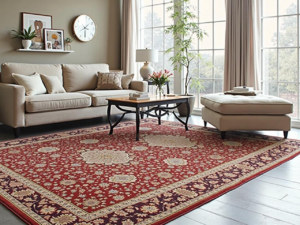
Imagine the classic Persian motifs—the floral vines, the medallions, the intricate borders—but stripped of their rigid formalities. In a transitional rug, these ancient patterns might be distressed, erasing parts of the design to create a vintage, lived-in feel. Or perhaps the traditional color palette of deep reds and navy blues is swapped for soothing ivories, muted golds, and slate greys. The result is a design philosophy that honors the artistry of the past while embracing the minimalism of today.
In Indian dining rooms, where we often mix teak wood furniture with modern marble floors or contemporary art with brass heirlooms, transitional rugs are trending because they harmonize these diverse elements. They do not demand attention; rather, they subtly enhance the ambience, creating a sophisticated backdrop for life to unfold.
Why Transitional Rugs Are Ideal for Dining Rooms
The dining room is a theatre of sensory experiences—taste, smell, sound, and sight. A transitional rug acts as the stage.
First, it creates a visual anchor. In open-plan Indian homes, where living and dining areas often flow into one another, a rug defines the dining zone without the need for walls. It grounds the table and chairs, giving the furniture a sense of belonging.
Secondly, it is the great harmonizer. If you have inherited a heavy, ornate wooden dining table but live in a modern apartment with stark white walls, a transitional rug bridges that gap. It softens the heaviness of traditional furniture while adding warmth to a modern shell.
Beyond aesthetics, there is the comfort of acoustics. The clinking of cutlery and the scraping of chairs can be jarring on hard tile or marble floors. A plush, hand-tufted rug absorbs these sounds, allowing for intimate conversations to flourish without fighting against background noise. It elevates a simple meal into a luxury dining experience.
Key Features to Look for in Dining Room Transitional Rugs
When hunting for the perfect rug, it is not just about the pattern; it is about how the piece lives and breathes in your space.
1. Size Matters
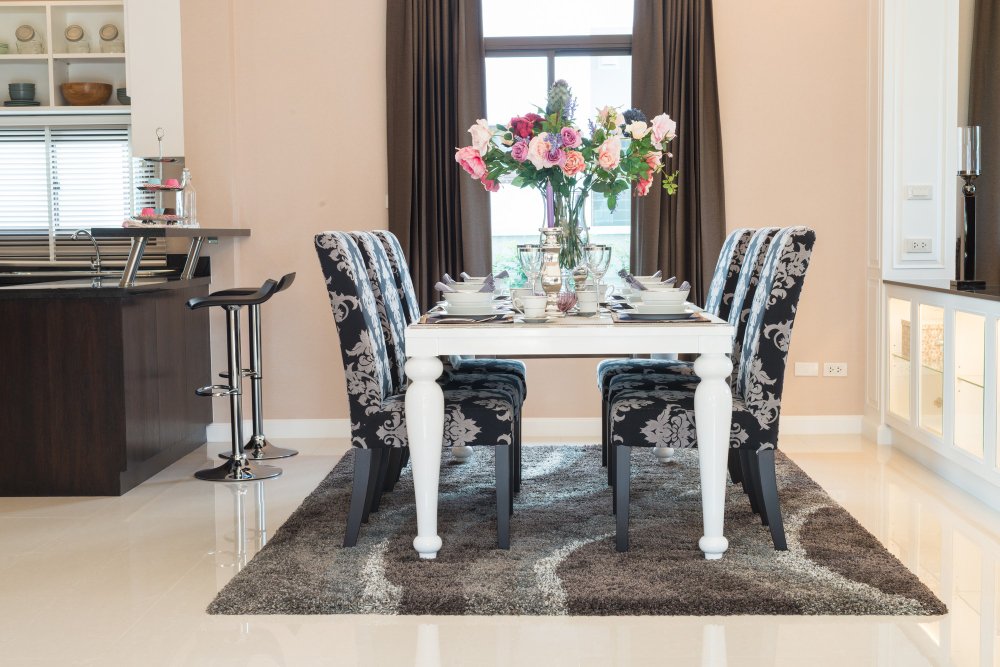
A common mistake is choosing a rug that is too small, making the dining set feel cramped. The rug should extend 24 to 30 inches beyond the table on all sides. This ensures that when a guest pulls out their chair to sit, the legs of the chair remain on the rug, rather than catching on the edge. Standard sizes like 6×9, 8×10, and 9×12 feet are common, but for unique room shapes, custom sizing is a luxury worth pursuing.
2. Material Selection
For a room that sees food and footfall, the material is the soul of the rug. Wool is the undisputed king here. It is naturally durable, resilient to crushing under chair legs, and contains natural oils that repel stains. For a touch of shimmer and luxury, wool-silk blends are exquisite, catching the light beautifully. Generally, low-pile or flatweave options are preferred for dining rooms, as they allow chairs to slide easily and are simpler to clean than deep shags.
3. Stain & Spill Resistance
Let’s be honest—spills happen. Whether it’s a drop of dal or a splash of wine, your rug needs to be forgiving. Transitional rugs often feature intricate, distressed patterns or heathered textures. These complex designs are excellent at camouflaging minor accidents until they can be cleaned, unlike a solid-colored carpet which highlights every speck.
4. Durability & Craftsmanship
A rug should be an heirloom, not a disposable item. Hand-knotted rugs, created by artisans tying individual knots, are incredibly durable and can last for generations. Hand-tufted rugs offer a lush feel at a more accessible price point. Both are superior to machine-made alternatives, carrying the unique fingerprint of the craftsman.
Best Place to Buy Transitional Rugs and Carpet for Dining Room in India
In the vast landscape of Indian decor, The Ambiente stands out as a beacon of artisanal excellence.
Why Choose The Ambiente?
The Ambiente derives its name from the word ‘ambience’, encapsulating the vibration, diverse characteristics, and mood of a surrounding. Blooming from South Asia’s largest hub of the hand-knotted carpet weaving industry—Bhadohi—traditional craftsmen and rural artisans form the essence of this brand.
They do not just sell rugs; they curate experiences. Their premium handcrafted transitional collections are a testament to the skill of weavers who have passed down their knowledge through generations. Whether you need a specific size to fit an 8-seater table or a custom color to match your curtains, The Ambiente offers bespoke solutions. With superior finishing, quality materials like New Zealand wool and bamboo silk, and seamless PAN India delivery, they are the trusted choice for those seeking to bring a piece of art into their dining room.
Online vs Offline Buying: What’s Better?
The digital age has transformed how we shop for luxury. While visiting a showroom allows you to touch the fibers, buying online offers a gallery of infinite possibilities.
Online platforms provide a wider design variety than any single physical store could hold. You can easily compare patterns, read reviews from other decor enthusiasts, and visualize the rug in your space. Brands like The Ambiente ensure safe packaging and doorstep delivery, removing the headache of transporting a heavy carpet. Furthermore, customization options are often more streamlined online, allowing you to specify exact dimensions with just a few clicks.
Popular Transitional Rug Styles for Dining Spaces
- Distressed Persian-Inspired: These rugs look like they have a story to tell. The fading creates a sense of history, perfect for adding character to a new apartment.
- Abstract Modern-Traditional: Think of a classic border that dissolves into splashes of color. These are art pieces for your floor.
- Subtle Geometric: For those who prefer order, soft geometric patterns in transitional hues provide rhythm without overwhelming the eye.
- Minimal Neutral Textured: Sometimes, texture is the pattern. A rug that relies on the interplay of high and low piles in a single hue adds sophisticated depth.
Dining Room Rug Styling Tips
- Shape Synergy: Mimic the shape of your table. A round table looks regal sitting atop a round rug, while rectangular tables demand a rectangular counterpart.
- Material Harmony: If you have a glass table, choose a rug with a strong pattern or rich texture, as it will be visible through the top. For heavy wood tables, a lighter-colored rug provides a necessary lift.
- Light and Color: Look at your wall paint and lighting. A dark dining room can be brightened instantly with a rug in shades of ivory or cream.
- Layering: For true luxury, consider layering a smaller, patterned transitional rug over a larger, neutral jute or sisal rug. It adds delightful complexity.
Budget Guide: Transitional Dining Rugs Price Range in India
Investing in a rug is investing in art.
- Entry-Level: Machine-made or simple hand-tufted options can be found for budget-conscious homes, offering style without a heavy commitment.
- Mid-Range: Here you find high-quality hand-tufted wool rugs. These offer excellent durability and design clarity, perfect for most family homes.
- Luxury Handcrafted: The pinnacle is the hand-knotted rug using premium wool and silk. These are investment pieces, often costing more, but offering unparalleled beauty and longevity that rivals the furniture itself.
Maintenance Tips for Dining Room Rugs
To keep your masterpiece looking pristine:
- Spot Clean Immediately: Blot spills with a clean, white cloth. Never rub, as this pushes the stain deeper into the fibers.
- Vacuum Regularly: This prevents dust and food crumbs from settling into the base of the rug.
- Rotate: Every six months, rotate your rug 180 degrees. This ensures that foot traffic and sun exposure are distributed evenly, preventing uneven wear.
- Professional Care: Once a year, treat your rug to a professional cleaning to revitalize the fibers and colors.
Final Thoughts: Choosing the Perfect Transitional Dining Rug
Choosing a transitional rug is about finding that sweet spot between elegance and practicality. It is about honoring the craftsmanship of the artisan while serving the needs of your daily life. A well-chosen rug will not only protect your floor but will also hold the memory of every meal shared above it.
As you look to transform your dining space, seek out pieces that speak to you, that tell a story of heritage and innovation woven together.
Ready to find the soul of your dining room? Explore the exquisite collection at The Ambiente today.
FAQ Section
Q1: What size rug is ideal for a 6-seater dining table?
Typically, an 8×10 foot rug is ideal for a standard 6-seater rectangular dining table. This size allows for the necessary 24-30 inches of overhang on all sides, ensuring chairs stay on the rug when pulled out.
Q2: Are transitional rugs easy to clean in dining areas?
Yes, especially if you choose the right material and pattern. Wool rugs naturally repel liquids, and the intricate, often distressed patterns of transitional styles are excellent at hiding small crumbs or spots between cleanings.
Q3: Which material is best for dining room carpets?
Wool is widely considered the best material. It is durable, naturally stain-resistant, and springs back after being compressed by chair legs. Synthetic blends are also good for easy cleaning, but they lack the longevity and luxurious feel of wool.
Q4: Where can I buy luxury transitional rugs online in India?
The Ambiente is a top recommendation for buying luxury transitional rugs online. They offer authentic, handcrafted rugs from Bhadohi with options for customization and PAN India delivery.
Q5: Are custom-size dining rugs available in India?
Yes, specialized brands like The Ambiente offer custom sizing. This is particularly useful for dining rooms with non-standard dimensions or unique table shapes.