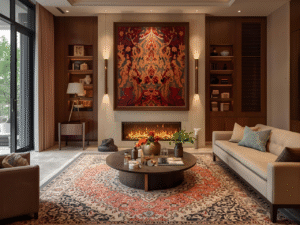

The biggest challenge when buying a rug online is the gap between what you see on screen and what you get in your home—spanning size estimation, color accuracy, material quality, and design fit. Shoppers who research sizing, material types, and interior style before browsing are far more likely to make a confident, lasting purchase.
Buying a rug online has never been more accessible. From hand-knotted silk masterpieces to flatweave cotton options, the digital marketplace offers more variety than any single showroom ever could. Yet for every buyer who clicks “add to cart” with confidence, there are dozens more who close the tab and walk away—not because they don’t want a rug, but because they’re unsure.
Too many choices. Too little context. And the nagging fear of spending a significant amount on something that might not work in the room.
These doubts are valid. A rug isn’t a small impulse purchase. It anchors your entire space, influences the mood of a room, and in the case of handmade pieces, represents decades of artisan skill. Getting it wrong is costly—not just financially, but aesthetically.
This guide walks through the most common challenges buyers face when shopping for rugs online and offers practical, experience-backed solutions for each one. It also explains how The Ambiente—India’s design-led rug atelier backed by 30+ years of manufacturing expertise through its parent company, Bhadohi Carpets—approaches each of these pain points to help customers make decisions they feel genuinely good about.
Why Buying Rugs Online Can Feel Overwhelming
Search “handmade rugs India” and you’ll surface thousands of results within seconds. That volume is both a gift and a burden. When everything looks similar at thumbnail size, narrowing down a choice becomes genuinely difficult.
The challenge isn’t just the quantity of options—it’s also the quality of information. Product descriptions vary wildly. Photography doesn’t always reflect real-world color. And size, which is one of the most critical decisions you’ll make, is nearly impossible to gauge from a flat image against a white background.
Add to this the price sensitivity around luxury rugs, and it’s easy to understand why hesitation sets in. The stakes feel high. The variables feel uncontrollable. And the fear of making an expensive mistake keeps many buyers stuck.
The good news: each of these challenges has a clear, workable solution.
Challenge #1 – Too Many Rug Designs to Choose From
Endless scrolling is exhausting, and when rugs start to look similar, decision fatigue sets in fast. Most buyers don’t know what they’re looking for until they see it—which makes open-ended browsing an inefficient way to shop.
The most effective approach is to filter before you browse, not during.
How to narrow your search before you start scrolling
Shop by room. A living room rug, a bedroom rug, and a hallway runner serve different functional and aesthetic purposes. Starting with the room helps eliminate a significant chunk of options immediately.
Shop by interior style. If your home leans Scandinavian, you’re probably not looking for an ornate traditional Persian. Filtering by aesthetic—modern, minimalist, bohemian, luxury—cuts the catalog to a manageable size.
Shop by color. If your sofa is deep teal and your walls are warm white, you can eliminate entire design families just by knowing your dominant palette.
Shop by material. If you need something durable for a high-traffic hallway, wool or flatweave cotton will serve you better than silk. Starting with material filters out pieces that won’t meet your practical needs.
The Ambiente structures its collections around these exact filters, allowing buyers to move from a broad catalog to a focused shortlist without the overwhelm.
Challenge #2 – Visualizing the Rug in Your Home
Product photography on a white studio backdrop tells you very little about how a rug will actually look in a lived-in room. Colors shift under warm lighting. Patterns look different against dark hardwood than they do against light marble. Scale is nearly impossible to judge without reference points.
This visualization gap is one of the most frequently cited reasons for cart abandonment in the rug category.
Tools and approaches that help bridge the gap
Lifestyle imagery. Rather than isolated product shots, lifestyle photos show rugs styled in realistic room settings—with furniture, lighting, and layered décor. These images give buyers a far more accurate sense of how a rug integrates into a space.
Room inspiration galleries. Curated lookbooks organized by interior style help buyers identify designs that match their aesthetic before they look at individual products.
Design consultations. Speaking with an expert who understands both rug construction and interior design can resolve visualization uncertainty faster than any tool. The Ambiente offers bespoke consultations where buyers can describe their space and receive tailored recommendations—a service that reflects the brand’s roots in artisan craftsmanship and design knowledge accumulated over three decades.
Virtual visualization tools. Some platforms now offer augmented reality or room-placement tools that allow buyers to digitally preview a rug in their space before purchasing.
Challenge #3 – Choosing the Right Rug Size
Size errors are among the most common—and most costly—mistakes in rug shopping. A rug that’s too small makes a room feel disjointed. One that’s too large overwhelms the space. Getting this right requires more than guesswork.
Room-by-room rug sizing guide
Living room: The most common approach is to place the front legs of all major furniture on the rug, leaving 18–24 inches of bare floor around the perimeter. For larger rooms, all furniture legs on the rug works well. For smaller rooms, an 8×10 or 9×12 is typically appropriate.
Bedroom: A rug placed under the lower two-thirds of the bed—extending 18–24 inches on each side—is a widely recommended approach. A 9×12 works for most king-size beds; a 8×10 suits queens. Alternatively, runners placed on either side of the bed create a softer landing without requiring a large central piece.
Dining room: The rug should extend at least 24 inches beyond the edges of the table on all sides, so chairs remain on the rug even when pulled out. For a standard 6-seater table, a 9×12 is typically the minimum.
Hallway runners: Measure your hallway length and subtract 12–18 inches from each end. Width typically falls between 2 and 3 feet.
Before purchasing, measure your room and mark out the rug dimensions with painter’s tape. This low-effort step eliminates size uncertainty and is one of the most valuable things a buyer can do before committing.
Challenge #4 – Understanding Rug Materials
Material determines everything: how a rug feels underfoot, how long it lasts, how easy it is to clean, and how it behaves in different light conditions. Yet most buyers have limited knowledge of the differences between options.
A practical comparison of rug materials
Wool: The most popular material for handmade rugs. Wool is naturally resilient, soil-resistant, and softens beautifully with age. It’s warm underfoot, hypoallergenic, and well-suited for living rooms and bedrooms. Handmade wool rugs from The Ambiente are crafted by artisans from Bhadohi—India’s largest hand-knotted carpet weaving hub—and represent the brand’s core offering.
Bamboo Silk: A plant-derived fiber with a lustrous, silk-like sheen. More durable than natural silk and easier to maintain. Offers a luxury aesthetic at a more accessible price point. Best suited for low-traffic areas.
Silk: The most luxurious option. Silk rugs have an incomparable sheen and intricate detailing that other materials can’t replicate. They’re best used as decorative pieces in low-traffic spaces—formal dining rooms, studies, or display areas.
Cotton: Lightweight, easy to clean, and affordable. Flatweave cotton rugs are practical for high-traffic areas, children’s rooms, and casual spaces. Less plush underfoot than wool or silk.
Hand-knotted: A construction method, not a material. Hand-knotted rugs are made by individually tying each knot by hand—a process that can take months for a single piece. They’re the most durable and valuable type of handmade rug.
Hand-tufted: Made by pushing fibers through a canvas backing with a tool. Faster to produce than hand-knotted rugs and typically more affordable, but less durable over the long term.
Flatweave: No pile—the fibers are woven directly into the base. Thin, reversible, and easy to clean. Ideal for high-traffic areas or layering over other rugs.
Challenge #5 – Matching Your Interior Design Style
A rug that doesn’t complement your interior style can disrupt the entire visual flow of a room—even if the rug itself is beautifully made.
Which rug styles work for which interiors?
Modern: Clean lines, geometric patterns, and neutral or monochrome palettes work best. Avoid ornate borders or traditional motifs.
Contemporary: More flexible than modern. Abstract designs, organic shapes, and tonal color palettes complement contemporary spaces well.
Minimalist: Simplicity is key. Solid colors, subtle textures, and restrained patterns suit minimalist spaces. The rug should blend, not compete.
Luxury: High-pile wool or silk rugs with intricate detailing—think hand-knotted Persian or Tibetan-style designs—add the depth and richness that luxury interiors demand.
Scandinavian: Flatweave or low-pile rugs in muted tones—greys, creams, dusty blues—fit the clean, functional aesthetic of Scandinavian design.
Traditional: Classic medallion designs, rich jewel tones, and ornate borders complement traditional décor. Persian and Turkish-inspired patterns are natural choices.
Bohemian: This style welcomes layering, bold patterns, and eclectic color combinations. Kilims, Moroccan-inspired designs, and richly textured pieces all work.
The Ambiente’s curated collections are organized to make this matching process straightforward, with design guidance available for buyers who want a more tailored recommendation.
Challenge #6 – Color Selection
Color is one of the most personal—and most difficult—decisions in rug shopping. What looks warm and inviting on a screen may read entirely differently under your home’s lighting.
How to choose the right rug color for your space
Neutral vs. bold: Neutral rugs (ivory, beige, grey, taupe) are safe choices that work across a wide range of furniture and wall colors. Bold rugs create a focal point and work best in spaces with restrained surrounding color.
Dark vs. light: Dark rugs anchor a room and hide dirt well—practical for high-traffic areas. Light rugs make a space feel larger and airier, but require more maintenance in busy households.
Pattern selection: Solid rugs offer flexibility and longevity. Patterned rugs add personality but require more consideration of existing patterns in the room (upholstery, curtains, art).
Seasonal trends: Earthy tones, terracotta, and warm olive have been prominent in recent years. Dusty pinks and sage greens continue to hold strong. That said, classic palettes—deep navy, ivory, charcoal—remain timeless.
Creating visual balance: If your furniture is heavily patterned, a solid rug provides visual relief. If your furniture is simple, a patterned rug adds interest. The relationship between your rug and your furniture should be complementary, not competing.
Challenge #7 – Trusting Product Quality Online
Buying a luxury rug online requires a degree of trust that many buyers aren’t ready to extend without reassurance. The questions that run through a buyer’s mind are legitimate: Is this actually handmade? Is the material genuine? Will it last? Does the price reflect real value?
What The Ambiente does to address quality concerns
Detailed product descriptions that specify construction method, material composition, pile height, knot density, and country of origin. No vague language—just specific, verifiable information.
High-resolution imagery that captures texture and pile structure, giving buyers a more accurate sense of what the rug will look and feel like in person.
Material transparency backed by three decades of manufacturing knowledge through Bhadohi Carpets. The Ambiente’s rugs are produced by over 4,000 artisan weavers—80% of whom are women—using traditional hand-knotting and hand-tufting techniques refined over generations.
Bespoke consultation for buyers who want to ask questions, discuss specifications, or request material samples before committing. The Ambiente’s founders, Avani Khandelwal, built the brand specifically to make high-quality handmade rugs more transparent and accessible to Indian buyers.
Challenge #8 – Finding Custom Rug Solutions
Standard sizes and designs don’t always work. An architect designing a hotel lobby needs specific dimensions. A homeowner with an irregular room shape needs something made to measure. A designer building a project around a specific color palette needs a rug that doesn’t exist in any catalog.
How bespoke rug services simplify the process
The Ambiente offers a full bespoke service covering:
- Custom sizes for any room shape or dimension
- Personalized color options matched to existing interior palettes
- Unique patterns developed in collaboration with the brand’s design team
- Project-specific designs for hotels, villas, commercial spaces, and large-scale residential projects
The process is straightforward: buyers share their requirements, receive design proposals, approve samples, and receive a rug made specifically for their space. The Ambiente’s integrated team of artisans, designers, and architects works collaboratively from brief to delivery.
How The Ambiente Makes Online Rug Shopping Easier
The Ambiente was founded to solve exactly the problems outlined in this guide. Avani Khandelwal, an MBA graduate from Management Development Institute, Gurgaon, identified a gap in the Indian market: luxury handmade rugs were either inaccessible in price or inaccessible in transparency. The Ambiente was built to change that.
The brand brings together:
- Curated collections organized by room, style, color, and material—so browsing is intuitive, not exhausting
- Handmade luxury rugs crafted by skilled artisans from Bhadohi, India’s carpet-weaving capital
- Custom rug manufacturing for residential and commercial projects of any scale
- Expert design guidance from a team that understands both rug construction and interior design
- Premium materials including wool, silk, bamboo silk, and hand-knotted constructions
- Nationwide delivery across India
- Dedicated customer support from inquiry through to after-sale care
With a flagship store at Pillar No. 11B, Mehrauli-Gurgaon Road in New Delhi, and a growing online presence, The Ambiente has served over 5,000 clients across India and internationally.
Expert Tips Before Buying a Rug Online
Before you begin browsing, run through this checklist:
- Measure your space accurately. Use a tape measure and mark out dimensions on the floor with painter’s tape.
- Identify your interior style. Modern, traditional, bohemian? Knowing this eliminates most of the catalog immediately.
- Choose the right material. Match material to usage: wool for durability, silk for luxury display areas, flatweave for high-traffic zones.
- Request customization if needed. Don’t settle for an almost-right size or color when bespoke options are available.
- Compare room inspiration images. Look for your rug styled in a real setting, not just against a white background.
- Invest in quality over price. A well-made handmade rug lasts decades. A cheap one rarely makes it past five years.
- Purchase from trusted brands. Look for brands with verifiable manufacturing credentials, transparent sourcing, and genuine customer reviews.
- Ask for professional guidance. A design consultation costs nothing at The Ambiente and can save you from a costly mistake.
Why Handmade Rugs Are Worth the Investment
Factory-produced rugs are cheaper upfront. But the comparison largely ends there.
Superior craftsmanship: A hand-knotted rug can take months—sometimes over a year—to complete. Each knot is tied individually by a skilled artisan. The density, precision, and care involved in that process cannot be replicated by a machine.
Long-lasting durability: High-quality hand-knotted wool rugs routinely last 50 to 100 years with proper care. Many antique Persian and Indian rugs in circulation today are over a century old and still functional.
Unique character: No two handmade rugs are identical. Minor variations in tone, texture, and pattern are natural outcomes of the human hand—and they’re part of what makes each piece genuinely distinctive.
Sustainability: The Ambiente’s artisan network supports over 4,000 weavers, the majority of whom are women from rural communities in Uttar Pradesh. Purchasing a handmade rug contributes directly to sustainable livelihoods and the preservation of traditional craft.
Timeless appeal: Trends come and go. A well-designed handmade rug transcends them. The best rugs don’t date—they deepen in character.
Better long-term value: When calculated over a 20- or 30-year lifespan, the cost per year of a quality handmade rug is often lower than replacing a machine-made rug every three to five years.
The Right Rug Is Closer Than You Think
Buying a rug online doesn’t have to be a stressful, uncertain experience. The challenges are real—size confusion, material complexity, color uncertainty, quality concerns—but each one has a clear answer.
Know your room. Know your style. Know your material. And choose a brand that makes the process transparent from start to finish.
The Ambiente exists for exactly this purpose: to bring expertly crafted handmade rugs, honest product information, and genuine design expertise to buyers across India. Whether you’re furnishing a single room or sourcing for a large hospitality project, the team—built on 30+ years of manufacturing knowledge and a deep commitment to artisan craft—is equipped to guide you to the right choice.
Explore The Ambiente’s curated collections online, or book a design consultation to discuss your space, style, and requirements with an expert.
Frequently Asked Questions (FAQ)
What is the biggest challenge when buying a rug online?
The most common challenge is the gap between how a rug looks on screen and how it appears in a real room. Color, scale, and texture are all difficult to judge from product photography alone. Lifestyle imagery, design consultations, and careful material research help bridge this gap before purchase.
How do I choose the correct rug size for my room?
Measure your room and mark out your intended rug dimensions with painter’s tape before purchasing. For living rooms, the rug should accommodate at least the front legs of all major furniture. For bedrooms, extend 18–24 inches beyond each side of the bed. For dining rooms, allow at least 24 inches beyond the table edge on all sides.
Which rug material is best for home use?
Wool is widely regarded as the best all-round material for home rugs—durable, soft, naturally stain-resistant, and long-lasting. Silk suits decorative, low-traffic spaces. Bamboo silk offers a silk-like appearance with greater resilience. Flatweave cotton works well in high-traffic or informal areas.
Can I customize a rug to fit my specific space or color palette?
Yes. The Ambiente offers a full bespoke service that covers custom sizes, colors, patterns, and project-specific designs. This service is available for residential buyers, interior designers, architects, and commercial clients.
How do I know if a rug is genuinely handmade?
Look for clear product disclosures that specify construction method (hand-knotted or hand-tufted), origin, knot density, and material. Reputable brands like The Ambiente provide this information transparently and source rugs directly from verified artisan networks.
Are handmade rugs worth the investment compared to machine-made alternatives?
For buyers prioritizing longevity, quality, and character, yes. A high-quality hand-knotted wool rug can last 50 to 100 years with proper care, offering significantly better long-term value than machine-made alternatives that typically need replacement within three to five years.
Which rug style works best for luxury interiors?
High-pile wool or silk rugs with intricate detailing—hand-knotted Persian-inspired or Tibetan-style designs—suit luxury interiors well. Rich jewel tones, deep neutrals, and fine knotting density contribute to the elevated aesthetic that luxury spaces demand.
How do I match a rug with my existing furniture?
Match pattern complexity inversely: heavily patterned furniture pairs well with solid or subtly textured rugs, while simple furniture benefits from a more expressive rug. For color, pull a secondary tone from your furniture and make it the dominant color in your rug.
Does The Ambiente offer bespoke rugs for commercial projects?
Yes. The Ambiente works with interior designers, architects, and hospitality brands on project-specific rug designs. The brand supports custom sizing, personalized color development, and unique pattern creation for hotels, villas, offices, and large-scale residential projects.
Does The Ambiente deliver handmade rugs across India?
Yes. The Ambiente offers nationwide delivery across India and has served over 5,000 clients both domestically and internationally. The flagship store is located at Pillar No. 11B, Mehrauli-Gurgaon Road, New Delhi.