A tribal rug can bring rhythm and character to a room through angular shapes, repeated medallions, stripes and a strongly defined border. However, tribal is a broad retail description. It can refer to documented weaving traditions, a vintage piece with a regional attribution, or a contemporary design inspired by those traditions. Understanding that difference helps you choose with more confidence and describe the rug respectfully.
This guide focuses on reading a pattern and using it in a modern home. It explains why a diamond alone cannot identify an origin, how construction changes the appearance of a motif, and how to balance a patterned rug with furniture. You can browse tribal rugs for current design options while treating the individual product's material, construction and origin as separate facts to verify.
What makes a rug look tribal?
Common visual characteristics include geometric motifs, repeated shapes, strong outlines and compositions organised into fields, bands or medallions. Designs may feel bold because the colours contrast sharply, or quiet because a limited earthy palette reduces that contrast. Neither palette proves a particular cultural origin. Modern designers can use similar visual devices without reproducing a historic weaving tradition in every detail.
The label tribal should therefore start a conversation rather than end it. Ask whether the product is being sold as a contemporary interpretation or as a piece attributed to a named region or community. If the attribution matters to you, request the evidence behind it. A rug can be an excellent decorative choice without a historic pedigree, provided the seller describes it accurately and the price reflects what is actually offered.
Origins and motifs need context
Weaving traditions developed through relationships between communities, workshops and trading routes. Similar motifs can appear in more than one place, and designs evolve as they are adapted. The Metropolitan Museum of Art's discussion of a Transcaucasian carpet illustrates how shared design traditions can make precise attribution difficult. That is a useful reminder to avoid identifying a carpet from one decorative symbol.
A motif sometimes has a documented interpretation within a particular object or tradition. That does not make the same meaning universal across every rug with a similar shape. Ask for a credible object record or specialist explanation when a seller assigns a specific symbolic meaning. It is more honest to enjoy a hooked diamond as part of the composition than to repeat an invented story about luck, protection or family identity.
Read the field, border and medallions
The field is the main area within the border. It may carry a repeated pattern, a series of medallions or a more open composition. The border creates a frame and often uses a smaller repeated motif. These parts interact: a busy field and a strong border can make a rug feel visually dense, while an open field with a simpler frame leaves more breathing space.
Look at the design from a room-scale photograph and a close detail. A motif that looks delicate on a phone screen can become dominant in a large rug. Equally, a detailed pattern can read as texture from across the room. The relevant question is not whether the design is busy in isolation, but whether its contrast and scale support the furniture and room around it.
Medallions, diamonds, bands and grids
Repeated diamonds can establish a clear directional rhythm, which works well when the furniture arrangement follows that line. A chain of medallions can make a long room feel connected, but may look awkward if a small coffee table covers only the central motif. A rug with an all-over grid often remains legible when furniture hides part of the surface, because the repeat continues around the obstruction.
Bands and stripes can be useful in narrow spaces. Their orientation influences how the floor reads visually, although the effect depends on the rest of the room. Avoid choosing solely from a rule that stripes always widen or lengthen a space. Mark the proposed rug outline and examine a full image of the design within it. The relationship between the border and visible floor is often more noticeable than the stripe direction.
Construction changes pattern and feel
A flatwoven rug forms its design through the woven structure without a separate upright pile. Depending on the technique, colour transitions and joins may create a crisp, graphic effect. A hand-knotted rug uses individual knots to form the pile and can offer a different softness, surface depth and detail. Hand-tufted and machine-made rugs can also reproduce tribal-inspired motifs, but their underlying structures differ.
Do not treat tribal as a construction label. Ask how the rug was made and compare the care needs, edge finishing and backing. If you are considering a knotted version, the hand-knotted rug collection provides a construction category to explore. For a wider understanding of pile-free structures, read the kilim and handloom guide, which separates weaving method from decorative style.
Choose fibre for the room's activity
Wool can provide resilient comfort in a living room, but performance depends on yarn, construction and the permitted care routine. Cotton flatweaves can be lighter and more flexible, which can make them easier to move while increasing the importance of a supportive pad. Jute offers a distinct coarse texture but may not suit a room where liquids regularly reach the floor. Blends require a clear composition rather than an impressionistic material name.
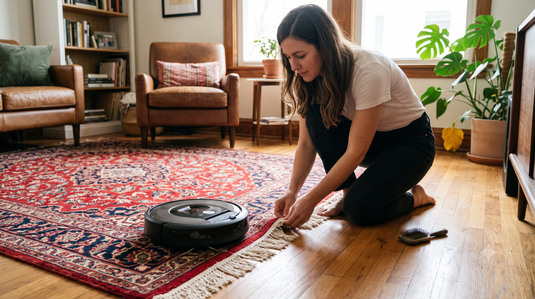
Think about the surface in use. A looped structure can catch on particular claws or furniture components, while a delicate pile may dislike an aggressive rotating vacuum brush. If the home includes children or pets, evaluate snagging, pile height and spill care alongside appearance. Browse wool rugs when comparing everyday comfort, and confirm the instructions for the individual rug before committing.
Balance tribal patterns with modern furniture
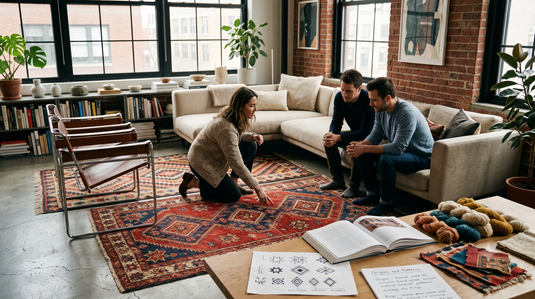
Simple furniture silhouettes give a strongly patterned rug space to be seen. A plain sofa, restrained coffee table and one or two repeated accent colours can create a clear relationship without making every item match. Choose a quieter colour from the rug for cushions or curtains, rather than repeating its most saturated colour across every surface. The room will feel connected while the rug retains its role.
Pattern mixing works best when scale and contrast differ. A large rug motif can sit beside a fine woven cushion or subtle stripe, whereas several equally bold patterns can compete. If the sofa is already patterned, consider a rug with fewer colours or a larger, more open drawing. You are balancing the amount of visual information, not following a prohibition against using patterns together.
Three practical room palettes
For a warm neutral room, combine an ivory sofa, oak furniture and a rug with rust, charcoal and cream. Let rust appear in one small accessory, with charcoal echoed in a lamp or frame. The rug contributes character while the upholstery keeps the room calm. Check the cream against the wall and floor; a very yellow cream beside a cool white can appear more yellow than expected.
For a cooler contemporary room, a navy and ivory geometric rug can work with grey upholstery and walnut furniture. Add a warm neutral cushion to connect the timber and rug rather than making the room entirely blue. In a colourful room, choose one existing dominant hue, such as terracotta, and select a tribal-inspired rug that contains it among quieter colours. Remove one competing accessory before adding more colour.
Plan size before selecting the motif
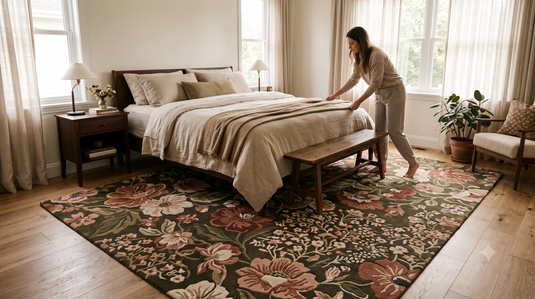
Start with the furniture footprint. In a seating area, a rug that connects the sofa and chairs often looks more deliberate than one carrying only a coffee table. Measure the room, furniture and main routes, then mark two possible sizes on the floor. Check which option leaves enough visible pattern to justify the design. A detailed central medallion may contribute little if it disappears entirely beneath a large table.
Do not enlarge a rug simply to fill every available floor area. Keep doors clear and preserve functional circulation. In an open-plan room, the rug can define a seating zone while leaving the adjoining dining or circulation area visually separate. The rug size and shape guide helps with layout, while the specific pattern should be assessed within the chosen footprint.
Consider light, contrast and pile direction
Natural light and artificial light can change how colours relate. A muted red may look warmer in evening lighting, and a dark outline may become more prominent in a bright room. Pile direction can also make a knotted rug appear lighter from one end and darker from the other. Ask for images from both ends and view a sample under the lighting you actually use.
High contrast draws attention to individual motifs and edges. Lower contrast lets the same drawing behave more like texture. If the room already includes large artwork, patterned curtains or a prominent fireplace, a lower-contrast rug may offer a better balance. If the furniture is restrained and the floor expansive, a stronger pattern can provide an intentional focal point. Decide which element should lead the room before choosing the rug.
Buying contemporary, vintage or attributed pieces
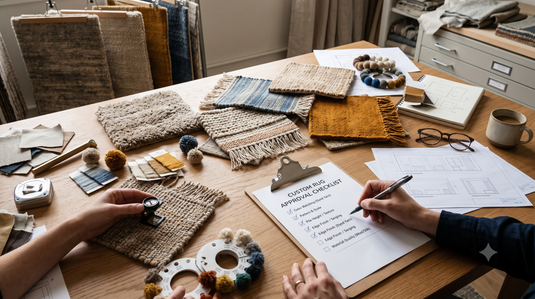
For a contemporary rug, ask about exact dimensions, fibre, construction and expected handmade variation. For a vintage or antique piece, add questions about wear, repairs, cleaning history and provenance. A pleasing unevenness in colour is not sufficient evidence of age, and an older appearance can be deliberately created. Price and description should distinguish authentic age from a contemporary distressed effect.
Request close photographs of the ends, edges, reverse and any areas of concern. A repaired rug can still be a worthwhile purchase if the work is disclosed and the intended placement is appropriate. If you are paying a significant premium for attribution or age, seek specialist advice. Choose an everyday decorative rug for its documented specification rather than treating an unsupported cultural story as added value.
Care without losing texture or clarity
Dry dirt can flatten the appearance of a pattern by lodging in the pile or woven structure. Follow the manufacturer's vacuum guidance, keep fringe away from the head and address spills promptly. Avoid scrubbing a single motif aggressively, because local fibre distortion can leave a mark even after the original stain has gone. Cleaning should preserve the structure and colour, not merely make the surface look wet and temporarily bright.
Rotate the rug when practical to distribute wear and light exposure, and check the pad and floor underneath. Never pull a loose thread to see where it goes. Seek advice about trimming or repair according to the construction. The woven rug maintenance guide explains how to reduce snagging and fading without relying on a universal cleaning recipe.
Common mistakes to avoid
The first mistake is buying a motif before measuring the furniture arrangement. The second is assuming that tribal means handmade, wool or historically attributed. The third is repeating a supposed symbolic meaning without evidence. Another frequent mistake is choosing a low-contrast image online and discovering that the actual rug has much stronger colour boundaries under your room lighting. A sample and full specification help prevent these surprises.
Finally, avoid making every item in the room follow the rug's visual language. Tribal-inspired pattern can sit comfortably with modern architecture, simple upholstery and contemporary art. A few considered connections usually work better than a themed room filled with similar motifs. The rug should support the people and activities in the space, rather than require the whole room to perform a cultural story it cannot substantiate.
Frequently asked questions
Can a tribal-inspired rug be machine-made?
Yes. Tribal-inspired describes design, and machine-made describes construction. A machine-made rug can reproduce geometric motifs, while a handmade rug may use a completely different style. Ask for construction and material separately, and make sure the seller's price and description reflect the actual product rather than an assumed heritage.
Does every diamond motif have a fixed meaning?
No. Meanings depend on the object, tradition and evidence available. Similar shapes occur in different contexts. If cultural interpretation is important to your purchase, seek a documented explanation from a credible specialist or collection record. A decorative interpretation should not be presented as a universal historical fact.
Are tribal rugs only suitable for boho interiors?
No. They can work in restrained contemporary rooms, traditional homes and mixed interiors. Control pattern scale, contrast and repeated colour to suit the space. Plain furniture and a measured palette can make a bold rug look deliberate without requiring a boho theme or a collection of similar accessories.
What should I prioritise for daily use?
Prioritise suitable fibre and construction, correct size, stable installation and a care routine you can maintain. Then choose the pattern that fits your room. Documented origin matters when you are paying for provenance, but it does not replace the practical requirements of a rug used every day.
## Related room planning and care
If the room needs a quieter pattern, compare transitional rugs and muted palettes. For an earthy colour foundation, the brown rug styling guide shows how to connect upholstery, curtains and flooring. These approaches help you use a characterful design without asking every object in the room to compete.