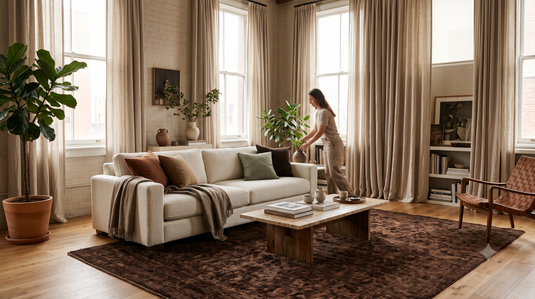
A green rug can bring a living room together when its undertone, size and texture work with the furniture already there. Sage can create a quiet foundation, olive can connect warm wood and leather, and emerald can make a more expressive centrepiece. The best choice depends on the actual room: its sofa colour, floor, daylight, evening lamps and daily use.
Start with the seating arrangement rather than buying a colour in isolation. A beautiful green rug that floats beneath the coffee table may contribute less than a calmer design that connects the sofa and chairs. Equally, a rich sheen that looks attractive in a photograph may require more careful maintenance than your family room allows. This guide helps you make those decisions in a practical order.
Browse The Ambiente's green rugs and carpets alongside this guide. The collection includes different patterns and constructions, so check each product's named colour, composition and available dimensions. Sage, olive and emerald below describe styling directions; they are not a promise that every shade is currently available in every size.
First decide what the green should do
Ask whether you want the rug to blend with the room or become its main focal point. A greyed green with restrained pattern can sit quietly beneath colourful cushions and artwork. A saturated green with a strong border can draw attention to the seating area. Neither approach is automatically more sophisticated. What matters is whether the rug supports the room's intended character.
Take a photograph showing the floor, sofa, curtains and adjacent walls together. Notice which element already attracts your eye. If upholstery and curtains both have busy patterns, a quieter green field can provide relief. If the furniture is simple and the walls are plain, a larger botanical, geometric or abstract design can add the detail the room lacks.
Separate three decisions: shade, pattern and surface. A sage rug with an oversized motif may be more visually assertive than a plain emerald rug. A reflective olive pile can change dramatically as you walk around it. Colour names alone cannot communicate those differences. Shortlist a few contrasting options and compare them in the room instead of browsing dozens of similar photographs.
Sage green rugs: a calm starting point
Sage usually describes a softened green containing a grey influence. Different sellers use the name differently: one sage may lean blue, another yellow, and another appear almost neutral. It often works well with cream upholstery, pale timber, oatmeal textiles and restrained black accents. Use the actual sample to determine whether its undertone agrees with your furnishings.
For a light living room, try a sage rug with an ivory sofa and an oak coffee table. Add a cushion containing a small amount of the same green, then keep most accessories neutral. Repeating the colour once or twice creates a connection without making every fabric match. A textured or gently varied rug can contribute interest when the palette itself is quiet.
In a darker room, check whether sage appears pleasantly muted or simply dull under the available light. A sample that looks fresh in a bright showroom can seem grey beside a cool wall or deep sofa. Compare a slightly warmer green and a design containing cream before deciding. A pale colour may increase contrast with dark furniture, but it does not compensate for insufficient room lighting.
Olive green rugs: connecting warm materials
Olive generally has a stronger yellow or earthy influence than a blue-green shade. It can work particularly well with tan leather, walnut, warm beige, rust and terracotta. Those pairings are useful when a room contains several natural materials that need a shared colour relationship. The green provides variety while staying close to the warmth of the existing furnishings.
Consider a tan sofa, a walnut cabinet and warm off-white walls. An olive rug with small beige details can connect the light walls and dark timber. Choose accessories in two or three related tones rather than introducing a new strong colour at every point. If the floor is also warm brown, compare a lighter olive or a pattern with pale areas to keep the rug visibly distinct.
Olive can become muddy when too many nearby surfaces have similar brownish values. Create some separation through a light cushion, a quieter curtain or a coffee table with a different surface. You do not need a high-contrast black-and-white room; a modest change in lightness may be enough. Look at the entire seating area from the doorway to judge whether the furniture remains easy to read.
Emerald green rugs: a stronger focal point
Emerald suggests a richer, more saturated green, sometimes with a blue influence. It can form a striking base beside cream, charcoal or pale grey seating. Brass-coloured details, dark timber and restrained artwork can complement the effect, but these are styling options rather than requirements. The room can remain contemporary and relaxed without adding ornate furniture or shiny accessories.
Try an emerald rug beneath a simple cream sofa and a slim black coffee table. Let the rug carry most of the colour, with one artwork or cushion providing a small echo. If you prefer a softer result, look for emerald within a mixed neutral pattern rather than a large uniform field. The proportion of green in the design can matter as much as the intensity of the yarn.
A dark green rug may show pale pet hair, lint or crumbs clearly. That is a visibility issue rather than proof that the material attracts more dirt. Before choosing an uninterrupted deep colour, think about the debris common in your household. A varied design can make small marks less obvious, although it still needs regular cleaning and should never be treated as stain proof.
Match green rugs with grey, beige and colourful sofas
For a grey sofa, identify whether the upholstery feels warm, cool or balanced. A warm grey may coordinate comfortably with olive and muted sage; a cooler grey may work with a blue-influenced green. Test these as possibilities, not rules. If the rug and sofa look disconnected, a cushion containing both tones can bridge them without requiring a new sofa cover.
For beige or cream seating, compare the whites and pale details in the rug. A cool white motif may appear sharper beside warm ivory upholstery than expected. Sage can maintain a soft palette, olive can add earthiness, and emerald can produce stronger contrast. Choose the effect intentionally. A room does not need every neutral to be identical, but its differences should feel considered.
For blue, pink or patterned upholstery, reduce the number of competing details. A plain or restrained green can support a strong sofa. If you want a patterned rug too, choose a different pattern scale and at least one connecting colour. Photograph the samples together before purchasing. Our living room rug colour guide compares green with other colour directions when you are still deciding on the palette.
Consider wood, marble and tile flooring
On warm wood, olive may create a close earthy relationship while a greyed sage introduces more separation. Examine the red, orange or yellow influence of the floor rather than treating all timber as brown. A green that works with pale oak may look quite different against reddish timber. Leave enough visible floor around the rug to evaluate that relationship during sample testing.
On white or pale marble, a green rug can become particularly prominent. Look at the veining as well as the background colour: cool grey veins and warm beige veins suggest different surrounding palettes. Check that the rug, its backing and any underlay are appropriate for the floor finish. Colour coordination cannot answer whether a particular pad may affect polished stone or another sensitive surface.
On patterned tile, begin with a simpler rug or a larger-scale pattern that does not compete with the tile's small repeating units. Test an actual section of the design where possible. If the tile is mostly covered, the visible border still influences the room. Our rug pad guide for marble, wood and tile explains the separate practical checks involved in stable placement.
Test daylight, lamps and pile direction
A photograph captures one lighting condition. Your living room may have strong morning light, subdued afternoon light and warm lamps in the evening. Place a sample on the floor where the rug will actually sit, then look at it beside the sofa in each condition. Keep the same surrounding fabrics in place so you are comparing the rug rather than changing the whole setting.
Walk around the sample and turn it through different orientations. A directional or lustrous pile can appear lighter from one end and darker from the other. That may be an attractive part of the design, but it is useful to understand before ordering. Ask for photographs from more than one direction if a sample is unavailable. Screen brightness and camera processing can alter the apparent shade.
Judge the sample from sitting and standing positions. A green that coordinates when held against a curtain may behave differently flat on the floor. Keep notes such as warm olive at night, grey sage in daylight or emerald with a noticeable sheen. Specific observations help the seller recommend alternatives more effectively than a broad request for something greener or more luxurious.
Choose a size that connects the furniture
Measure the seating group, not only the empty floor. Mark a proposed rug outline with removable tape that is suitable for your floor finish. Check whether the sofa's front legs and the relevant chair legs can sit securely on the rug. This creates a connected arrangement in many living rooms, although a fully-on layout may be preferable where there is enough space.
An illustrative seating group 240 cm wide and 180 cm deep may need more than that footprint if the rug is to extend beside the sofa and chairs. A 240 by 300 cm outline is one possibility to test, not a universal recommendation. Furniture depth, circulation and room boundaries can change the answer. Measure the intended arrangement and compare it with the exact available variant dimensions.
For an L-shaped sofa, include the chaise in the planning rectangle and keep the coffee table comfortably within the rug area. For separate sofas facing each other, assess both sides rather than centring the rug on only one. Read the rug size and shape guide before ordering when the layout is unusual or the room serves several functions.
Pick material and construction for daily use
Treat green as a colour choice and durability as a product specification. Fibre, pile, construction, finishing and care all influence how a rug suits a room. The Carpet and Rug Institute's carpet selection guidance explains why fibre attributes and construction need to be considered together. A material name alone is not a guarantee of performance.
A compact wool surface can be a useful starting point for comfortable everyday seating areas, subject to the individual product's suitability. A wool-and-bamboo-silk blend can add a more reflective visual texture, with care requirements that should be checked before purchase. The Ambiente's green collection includes hand-knotted and handloom wool-and-bamboo-silk listings; inspect each specification rather than assuming the entire collection has one weave or composition.
If you have pets, inspect loops, fringes and edges as well as pile feel. If the room is used for snacks or drinks, ask about spill response and professional cleaning. An attractive decorative rug may suit a quieter seating area better than the main household route. For material comparisons, see wool, bamboo silk and silk rugs.
Three practical room combinations
For a compact room with a cream sofa, pale floor and black shelving, test muted sage with restrained texture. Mark a generous enough outline to connect the sofa and coffee table, then repeat green in one cushion. Keep curtains close to the wall tone if you want the room to feel calm. Check that the rug's pale areas remain practical for the traffic it will receive.
For a family room with tan leather and dark timber, compare olive with a mixed cream-and-green pattern. The lighter details can keep the seating area distinct from the floor. Choose a construction whose cleaning instructions fit your routine, and plan a compatible underlay. A promising palette still needs sensible placement away from the wettest entrance route and enough access for normal cleaning.
For a larger contemporary room with charcoal seating and light walls, test emerald as the focal colour. Compare a plain design with a quieter abstract pattern, because the charcoal sofa already contributes visual weight. Add a light cushion or artwork detail to link the walls and seating. View the composition from across the room so the green feels integrated rather than confined to the coffee-table area.
Keep the colour attractive through appropriate care
Read the instructions for the whole rug, including blends, backing and fringe. A wool label in a product name does not mean every component tolerates the same treatment. Plan regular removal of dry soil using equipment suitable for the piece. If there is a spill, respond according to the maker's instructions and avoid spreading the affected area through forceful rubbing.
Do not apply a generic home remedy because the rug is dark enough to hide a mark. Ask for advice when the fibre or dye behaviour is uncertain. For valuable or delicate pieces, a qualified rug cleaner can assess treatment options. The detailed handmade rug care guide is the appropriate companion when you need material-specific maintenance information.
Frequently asked questions
Which green works best with a beige sofa?
Sage is a useful first sample for a soft palette, olive for an earthy palette, and emerald for stronger contrast. Check the beige sofa's undertone and the rug's pale details in your own light. These combinations describe design directions, so use samples and the room's existing furniture to make the final choice.
Can a dark green rug work in a small living room?
Yes, if its scale and relationship with the furniture suit the space. A dark rug with light seating can look balanced, while a small dark patch below the table can appear disconnected. Test the footprint first and compare the rug under evening lighting. Room size alone does not decide whether emerald or forest green will work.
Are sage and olive the same colour?
They usually suggest different directions: sage is often greyed and subdued, while olive is often warmer and earthier. Product naming is inconsistent, and some shades overlap. Compare the actual rug or sample rather than relying on a colour word. Record whether the shade leans blue, yellow or grey beside your furniture.
Is a green carpet different from a green rug?
In everyday shopping the words sometimes overlap. Clarify whether the listing is a loose area rug or fitted wall-to-wall flooring. This guide concerns loose living-room rugs. Fitted carpet involves separate measuring, installation and underlay considerations, so confirm the product format before treating the descriptions as interchangeable.
Should cushions exactly match the rug?
Exact matching is optional. One connecting green or a shared neutral can be enough to make the room coherent. Vary texture and pattern scale so the furniture does not become a set of identical surfaces. Compare the combination against the walls and floor, then remove any accessory that makes the palette unnecessarily busy.
Make a focused green rug shortlist
Choose two or three candidates from the green rug collection, then record their dimensions, composition, weave, shade and care guidance. Test the furniture footprint and review the colour in your actual lighting. A good shortlist turns the broad appeal of green into a room-specific decision that you can explain, measure and maintain.