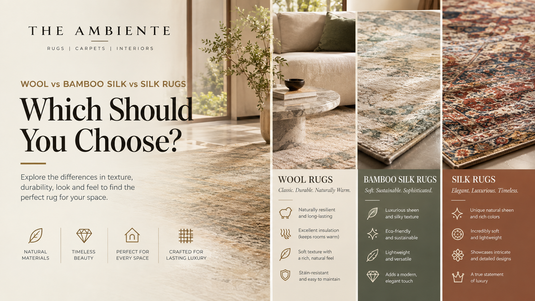
Wool, bamboo silk and silk can all produce beautiful rugs, but they behave very differently in a home. One is known for resilience and everyday practicality. Another is chosen for sheen and softness. The third can deliver extraordinary refinement but usually needs the most careful handling.
If you are comparing premium rugs in India, material should be one of your first decisions. It affects texture, appearance, durability, cleaning, price and where the rug should be placed.
At The Ambiente, we often see buyers fall in love with a surface finish before thinking about how the room is actually used. A glossy rug can look stunning under showroom lighting, but if it sits in a busy living room with children, pets and frequent spills, the maintenance expectations need to be realistic.
This guide compares wool rugs, bamboo silk rugs and silk rugs so you can choose the material that fits your space rather than simply the one that photographs best.
Why Rug Material Matters
Construction explains how a rug is built, while material explains how that surface will feel and respond to use. A hand-knotted wool rug and a hand-knotted silk rug may share the same construction method but behave very differently under foot traffic, moisture and cleaning.
Material also changes how colour appears. Wool tends to create rich, warm colour with a softer visual finish. Bamboo silk and silk reflect more light, so colours can appear brighter, deeper or more changeable depending on the direction of the pile.
Before choosing a fibre, ask where the rug will go, how often the room is used and how much maintenance you are willing to do.
What Is Wool?
Wool is one of the most established natural fibres used in rugs. It has been used for centuries because it combines softness, resilience and the ability to take dye well.
Quality wool has natural crimp and elasticity. That helps the pile recover after being compressed by foot traffic or furniture better than many delicate lustrous fibres.
Wool is also naturally warm underfoot, which makes it comfortable in bedrooms, living rooms and sitting areas.
Advantages of Wool Rugs
- Good resilience for regular household use.
- Comfortable and warm underfoot.
- Rich colour and a naturally matte to softly lustrous appearance.
- Suitable for many hand-knotted, handloom and tufted constructions.
- Can age attractively when properly maintained.
- Works well in both traditional and modern interiors.
Things to Know About Wool
Wool is not stain-proof. Spills should still be addressed promptly, and harsh cleaning chemicals can damage the fibre.
Some wool rugs shed loose fibres when new, especially depending on yarn type and construction. Initial shedding is not automatically a quality problem, but excessive or persistent shedding deserves attention.
Wool can also be affected by prolonged dampness and textile pests if stored poorly.
What Is Bamboo Silk?
“Bamboo silk” is a common rug-market term for a smooth, lustrous regenerated cellulose fibre. It is valued for its silky hand feel and reflective surface.
The main visual attraction is sheen. Depending on the pile direction and light, the same rug can appear lighter from one side and darker from another. This gives bamboo silk rugs a luxurious, fluid look.
It is frequently used alone or blended with wool to create contrast between matte and glossy areas.
Advantages of Bamboo Silk Rugs
- Very soft and smooth feel.
- Strong visual sheen and light reflection.
- Excellent for tonal designs and carved or textured patterns.
- Can create a premium look at a different price point from pure silk.
- Works beautifully in formal bedrooms and lower-traffic living spaces.
Things to Know About Bamboo Silk
Bamboo silk generally needs more careful maintenance than wool. Water marks, crushing, pile distortion and staining can be more visible because the surface is smooth and reflective.
It is not the material we would automatically choose for a highly active family room, entrance or dining area where spills are frequent.
For cleaning advice, see our existing guide to cleaning and caring for bamboo silk rugs.
What Is Silk?
Natural silk is a protein fibre known for extraordinary fineness, strength relative to its diameter and a distinctive lustre. In rugs, it can support very fine detailing because the yarn can be extremely thin.
Silk rugs are often associated with intricate hand-knotting and collector-level craftsmanship. They can have exceptional visual depth, especially when the pile changes direction.
However, silk is not usually chosen for rough everyday treatment. Its value is closely linked to fineness, workmanship and appearance.
Advantages of Silk Rugs
- Very fine yarn can support intricate pattern detail.
- Beautiful natural lustre.
- Soft, refined surface.
- Can create exceptional visual depth in hand-knotted rugs.
- Often suited to formal or collector-oriented interiors.
Things to Know About Silk
Silk typically requires careful professional cleaning. Moisture, aggressive rubbing and unsuitable chemicals can alter the surface.
It is also usually more expensive than wool and many regenerated cellulose alternatives. If a product is marketed as “silk” at an unexpectedly low price, ask whether the fibre is natural silk, viscose, bamboo silk or another silk-like material.
Wool vs Bamboo Silk vs Silk: Quick Comparison
| Feature | Wool | Bamboo Silk | Silk |
|---|---|---|---|
| Feel | Soft, warm, resilient | Very smooth and silky | Fine and luxurious |
| Appearance | Rich, softer lustre | High sheen | Refined natural lustre |
| Traffic tolerance | Generally strong | Better for moderate or lower traffic | Best in carefully used spaces |
| Maintenance | Moderate | Higher care | Highest care |
| Typical cost | Premium but practical | Premium decorative | Often highest |
| Best use | Living rooms, bedrooms, dining, hallways | Bedrooms, formal lounges | Formal rooms, collector pieces |
Which Material Is Best for a Living Room?
For most regularly used living rooms, wool is the easiest material to recommend because it balances comfort, resilience and appearance.
A wool hand-knotted rug can handle normal family use when correctly sized and maintained. Explore our living room rug collection to compare materials and constructions.
Bamboo silk can work beautifully in a formal living room or a low-traffic lounge where visual sheen matters more than rugged performance.
Pure silk is better suited to carefully managed spaces where spills, shoes and pets are less likely to create problems.
Which Material Is Best for a Bedroom?
Bedrooms are kinder to delicate fibres because traffic is lighter and shoes are often removed.
This makes bamboo silk especially appealing. The sheen can create a soft, luxurious look under bedroom lighting, and the smooth surface feels pleasant underfoot.
Wool remains an excellent option if you want warmth and easy everyday living. Silk can work in a formal bedroom if the budget and care requirements make sense.
See The Ambiente’s bedroom rugs for examples across different materials.
Which Material Is Best for Dining Rooms?
Dining rooms involve chair movement and food spills, so practicality matters.
Wool is usually the strongest choice of the three. It is not immune to staining, but it is more forgiving for regular use than a delicate high-sheen pile.
If you love the look of bamboo silk, consider a wool-and-bamboo-silk blend where lustrous areas are used selectively rather than across the entire surface.
Pure silk would generally be a specialised choice for a lightly used formal dining room rather than an everyday family dining space.
Which Material Is Best for High-Traffic Areas?
Wool wins this comparison for most high-traffic residential settings.
Dense construction is still important. A loose, very high-pile wool rug may show wear differently from a dense low-pile wool rug.
If the area is truly demanding, also look at construction. Our guide on hand-knotted, hand-tufted and handloom rugs explains how structure changes performance.
What About Wool and Bamboo Silk Blends?
Blends are popular because they allow designers to combine the best visual qualities of two fibres.
Wool can provide structure and resilience, while bamboo silk creates highlights, outlines or textured areas. This contrast is especially effective in modern abstract designs.
However, the rug still needs to be cleaned according to its most delicate component. If a rug contains bamboo silk, treat the entire piece with appropriate care.
How Do These Fibres Feel Underfoot?
Wool feels springy and warm. It has a softer, more cushioned character without the slickness of high-sheen fibres.
Bamboo silk feels smoother and cooler. The pile can feel almost liquid when brushed in different directions.
Silk feels very fine and refined, especially in dense hand-knotted rugs.
Feel is subjective, so if possible, touch actual samples rather than choosing only from photos.
How Do They Handle Furniture?
All pile rugs can show pressure marks from heavy furniture. Wool generally has better natural recovery than bamboo silk or silk.
Use furniture cups where appropriate, rotate the rug periodically and avoid placing extremely heavy furniture on delicate high-sheen pile if you are concerned about permanent compression.
How Does Sunlight Affect the Material?
Strong direct sunlight can affect dyes and fibres over time. This is true for all rugs, not only silk.
Rotate rugs periodically so fading is more even, and consider window treatments in rooms with intense direct sun.
Because lustrous rugs reflect light differently, changes in pile direction and light can sometimes be mistaken for fading. Look at the rug from multiple directions before assuming the colour has changed.
Which Material Is Easier to Clean?
Wool is generally the most forgiving of the three, but it still requires the right products and technique.
Blot spills rather than rubbing them. Avoid oversaturating the rug. For significant stains, use a cleaner experienced with handmade rugs.
Bamboo silk and silk need more cautious treatment. Water rings and pile distortion can become visible if cleaning is uneven.
Our guide to maintaining wool rugs covers practical wool care in more detail.
Which One Is Better for Homes With Pets?
Wool is usually the more practical choice, especially in a lower pile.
Pets can create claw pulls, stains and repeated traffic. Delicate bamboo-silk or silk surfaces can show this wear more quickly.
If you have an active cat, also read our guide on stopping cats from scratching rugs.
Which One Is Better for Children?
Again, wool is usually the easiest balance of comfort and resilience.
For a child’s room, choose a practical pile height and make sure the rug is secured with a suitable pad.
A pale high-sheen rug may look beautiful but can create unnecessary cleaning stress in a play-heavy room.
What About Allergies?
Allergies are individual, and the cleaning routine matters as much as fibre type. Rugs collect dust simply because they are horizontal textile surfaces.
Regular vacuuming, good indoor air quality and appropriate professional cleaning are important regardless of material.
If a household member has a significant allergy, discuss flooring choices with a qualified healthcare professional rather than relying on broad “hypoallergenic” marketing claims.
How Price Differs
Rug pricing depends on much more than fibre. Construction, knot density, size, design, dyeing and finishing all matter.
That said, natural silk is usually at the highest end. Bamboo silk offers a lustrous premium look at a different price point. Wool spans a wide range, from accessible handloom pieces to extremely fine hand-knotted rugs.
Always ask what percentage of each fibre is used in a blend. “Silk touch” or “silk-like” language does not necessarily mean natural silk.
How to Identify What You Are Actually Buying
Read the fibre composition carefully. Ask whether “silk” means natural silk, viscose, bamboo silk or another regenerated cellulose fibre.
Look at the construction method too. A material label does not tell you whether the rug is hand-knotted, tufted or woven.
If you are investing in a premium rug, ask the seller for written material information and care instructions.
When Wool Is the Best Choice
Choose wool if you want a rug that can handle normal household life while still feeling premium. It is especially suitable for living rooms, family spaces, bedrooms and many dining areas.
It also works beautifully in hand-knotted rugs, where the material and construction can create a long-lasting combination.
When Bamboo Silk Is the Best Choice
Choose bamboo silk when sheen, softness and visual movement are priorities. It is a strong option for bedrooms, formal lounges and modern interiors where the rug is treated with care.
It is also effective in blends, where the lustrous yarn highlights specific parts of a design.
When Silk Is the Best Choice
Choose natural silk when you value fineness, craftsmanship and a highly refined surface, and when the room can support the maintenance requirements.
A silk rug is less about everyday practicality and more about exceptional textile detail.
How The Ambiente Would Choose
For a busy family living room, we would usually begin with wool.
For a quiet master bedroom where the client wants a soft sheen, we would consider bamboo silk or a wool-and-bamboo-silk blend.
For a formal collector-level piece with intricate knotting, natural silk may be worth the investment.
The room decides the material, not the other way around.
The Bottom Line
Wool, bamboo silk and silk are not simply different levels of luxury. They are different materials with different strengths.
Wool is resilient, warm and versatile. Bamboo silk is soft, reflective and visually rich but needs more careful maintenance. Natural silk offers exceptional fineness and lustre but is best treated as a delicate premium material.
Before you buy, think about traffic, pets, children, sunlight, cleaning and how long you want the rug to serve the room. Then compare construction and fibre together.
If you want to see the difference in real designs, browse The Ambiente’s wool rugs, bamboo silk rugs and luxury rugs side by side.