A handmade rug is easier to assess when you understand what each part does. The visible pattern is only one layer of the decision. Beneath it are threads that hold the structure together, edges that protect that structure, and sometimes a backing that helps secure the surface yarn. Learning these components gives you a more useful vocabulary for comparing products, asking questions and describing a problem to a cleaner or repair specialist.
This guide follows a rug from its foundation to its surface. It also explains why two rugs can look similar from above yet behave differently under furniture, during cleaning or after years of use. Construction varies, so an inspection should support the product specification rather than replace it. A photo of the reverse can be helpful, but it cannot independently prove a rug's age, origin or quality.
The foundation: warp threads
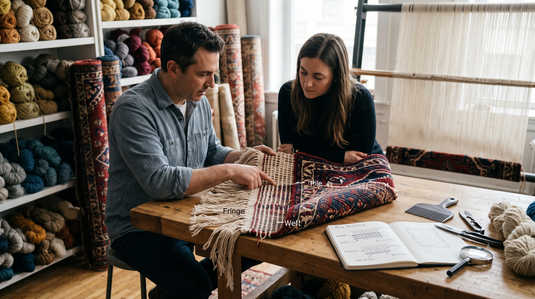
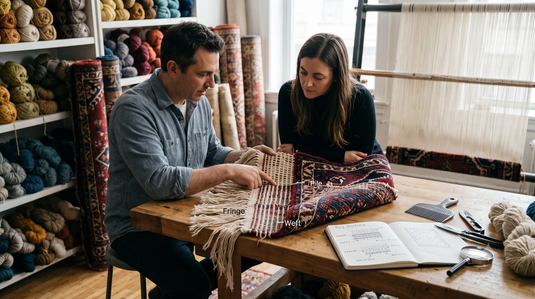
Warp threads are the lengthwise threads held on the loom. Think of them as part of the framework that makes weaving possible. In a knotted pile rug, surface yarn is tied around warp threads, while other threads are inserted across them to bind the structure. The relationship between these elements influences flexibility, thickness and how the completed rug holds its shape.
The warp material may differ from the surface fibre. A rug described as wool can have a cotton foundation, for example. That is not automatically a contradiction if the description clearly refers to the pile. Ask whether a material statement describes the pile alone or the entire textile. This matters when considering moisture, cleaning and the behaviour of the foundation as well as the softness of the face.
You should not pull a foundation thread to test strength. Handling an intact rug gently is sufficient for a basic viewing. If threads are exposed because an edge is damaged, record the location and ask a specialist to assess it. A small area of visible foundation can signal wear or a structural problem that needs more than surface cleaning.
The crosswise structure: weft threads
Weft threads run across the warp. In a pile rug, rows of weft help secure rows of knots. In a flatweave, the interlacing of warp and weft forms the textile without a separate cut pile. This distinction explains why a flatweave is not merely a pile rug shaved very short. Its appearance and use come from a different arrangement of yarn.
Weft spacing and tension are part of the maker's process. They cannot be reduced to a single universal buying score. A rigid reverse is not always better than a flexible one, and a soft fold is not proof of weakness. Compare the actual construction, yarn and intended use. The same kind of hand flexibility would mean different things in a dense knotted rug and a lightweight woven dhurrie.
When asking for photographs, request a clear view of the reverse and an edge at the same time. A tightly cropped picture may show pattern detail but hide the relationship between the foundation and finishing. Our guide to handmade rug identification explains how several clues work together rather than relying on a single visual test.
Pile: the surface you see and touch
Pile is the raised surface made from yarn standing above the foundation. A cut pile has open yarn ends, while a loop surface retains loops. Some designs combine heights or finishes to create relief. A sculpted surface can make a plain colour look rich, but it also changes how crumbs, chair feet and cleaning tools interact with the rug.
Pile height and pile density are different properties. A tall, loosely spaced surface may feel soft yet behave very differently from a shorter, closely packed one. Check how the rug recovers after gentle pressure and whether the surface feels consistent across the sample. Do not assume that more height means more durability or that a low surface will necessarily feel hard underfoot.
The pile direction can also affect colour. Looking along the yarn may produce a different shade from looking against it, especially in reflective fibres or carefully finished wool. Move around a sample in the room's actual light before deciding that one side is faded. Directional shade is a useful design consideration when placing a rug near windows or beneath several different lamps.
Knots, tufts and woven surfaces are different structures
A hand-knotted rug secures pile through knots tied into a woven foundation. A hand-tufted rug introduces yarn through a supporting cloth and commonly uses an adhesive layer and secondary backing to secure it. A flatweave forms its visible surface through weaving. These descriptions identify methods; they are not a complete ranking of quality, comfort or value.
Each method can serve a different budget and room. A buyer choosing a decorative bedroom rug may make a different decision from someone seeking a repairable heirloom for a busy living area. Ask about the actual materials, backing, finish and care requirements of the product in front of you. A good specification is more informative than a broad claim that every handmade rug behaves the same way.
For a fuller comparison, read hand-knotted, hand-tufted and handloom rugs. You can then browse hand-knotted rugs and hand-tufted rugs with a clearer idea of which details to verify on each listing.
Fringe: decorative detail or part of the foundation?
On many hand-knotted rugs, fringe is the continuation of the warp beyond the woven body. On other products, a fringe can be added as a separate decorative finish. Both arrangements exist, and appearance alone is not enough to distinguish them reliably. The important buying question is how the fringe relates to the particular rug's structure.
This is why casually cutting untidy fringe is a poor repair strategy. If those threads are structural, shortening or disturbing them can expose the end of the weave to further damage. Even a separate fringe can be attached in a way that needs professional attention. Ask for repair advice before trimming, unpicking or applying glue to an unfamiliar finish.
During routine use, keep fringe out of aggressive brush mechanisms and inspect it when moving furniture. A tangled section needs gentle handling rather than repeated pulling. If ends are coming loose or the woven body is starting to open, consult the handmade rug repair guide and arrange an assessment of the exact area.
Side edges and end finishes
The long sides of a rug are often finished with binding, wrapping or another construction-specific edge treatment. These edges protect the woven body during handling and daily use. Their role is practical as well as visual: an edge that unravels can allow damage to travel inward if it is left unattended.
Look for a finish that is secure and appropriate to the rug, rather than demanding machine-perfect sameness from every handmade piece. Slight variation may reflect handwork. Loose threads, an opening seam or a substantial area of wear deserve separate attention. Variation and damage should not be treated as interchangeable simply because the product is handmade.
Furniture placement affects the edges too. A chair leg resting exactly on a thick border can rock or repeatedly press the same point. A rug that is too small may leave its edge in the main walking route. Measuring the layout and choosing suitable support underneath can reduce those awkward transitions before they become maintenance problems.
Field, borders, medallions and direction
The field is the main design area inside a rug's borders. A medallion is a central motif that may organise the field, while an all-over design repeats across it. These are design terms rather than construction methods. A rug with a medallion can be made through several different processes, and a geometric pattern is not proof of a specific regional origin.
Consider what the furniture will cover. A coffee table may conceal the centre of a medallion but leave an intricate border visible. An all-over pattern can remain legible when several chairs sit on it. Neither arrangement is inherently better; the issue is whether the part of the design you enjoy will be visible in the completed room.
Directional designs need an extra placement check. A pictorial rug or a design with a clearly defined top may look awkward when viewed mainly from the opposite end. Mark the room entrance, main seat and viewing direction before ordering. The rug's orientation should work with the room's everyday experience, not just with an isolated product photograph.
Backing and the reverse are not the same thing
Every rug has a reverse, but not every rug has a separate applied backing. On a woven or knotted rug, you may see the structure itself from below. A tufted product commonly has a secondary backing. Labels, finishes and specialist construction can add other layers, so ask the seller to describe the complete underside rather than using the word backing loosely.
An applied backing is not automatically evidence of poor quality. It does, however, affect the cleaning and repair questions you should ask. Adhesives and backing cloth can behave differently from surface fibres when exposed to moisture, heat or ageing. A cleaner should know those layers before choosing a treatment. Surface softness does not reveal whether the whole rug is suitable for wet cleaning.
A separate rug pad is another item entirely. It sits between the rug and floor to provide compatible support or grip. The rug's backing does not automatically replace a pad, and a pad must suit both the floor finish and rug construction. Use the rug pad and underlay guide before choosing one for marble, timber or tile.
Dimensions, thickness and weight in a real room
Length and width tell you whether the footprint fits. Thickness tells you more about doors, furniture stability and edge transitions. Weight affects handling and cleaning arrangements. These measurements answer different questions, so a listing that gives only the footprint may need a follow-up enquiry before you purchase.
Ask whether stated measurements include the fringe. A rug body and its total end-to-end length can differ, which matters in a narrow room or beside a cabinet. Handmade dimensions may also have an allowed tolerance. Confirm that tolerance before planning an exact fit against a wall or around a fixed furniture arrangement.
Use a taped outline to test the space, including the pad and any border you want to remain visible. The custom rug measurement guide provides a useful starting point. Accurate measurements make a craftsmanship enquiry more productive because the seller can discuss a real layout rather than an approximate room size.
Inspect a sample without damaging it
View the sample from above, below and from the side. Feel it gently, look at the edge finishing and read the specification alongside it. If you are comparing several products, use the same lighting and the same inspection order. That keeps a glossy photograph or a particularly soft first impression from deciding the entire purchase.
Avoid burn tests, chemical spot tests and forceful pulling. These can damage a product and do not provide a reliable home method for establishing every fibre or manufacturing detail. If authenticity, age or a valuable antique attribution is important, seek appropriate independent expertise. A destructive experiment is not a substitute for documented information.
Record questions in plain language: what is the pile made from, what is the foundation made from, is there adhesive, how is the fringe attached, and which care method is approved? These questions give the retailer something concrete to answer. Keep the written response with the order details so the same information is available when the rug eventually needs cleaning.
Use anatomy to describe a problem accurately
If a loose yarn appears on the surface, describe it as a surface strand and photograph it before touching it. If an edge has opened, show the side and reverse. If the fringe is damaged, include the point where it joins the woven body. The position and construction are more useful to a specialist than simply saying that the carpet is coming apart.
Do not assume that shedding, a projecting strand and foundation damage are the same issue. They may need very different responses. Our guides to wool rug shedding and rug sprouting explain why the right diagnosis should come before a treatment.
The benefit of learning rug anatomy is confidence without overconfidence. You can compare specifications, notice a meaningful problem and ask better questions while recognising where specialist assessment is needed. A beautiful rug remains a design choice, but understanding its parts helps that choice stay practical through installation, daily living, maintenance and eventual repair.