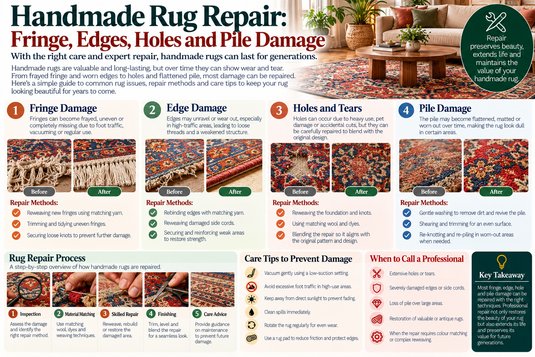
Handmade rug damage does not always mean the rug needs to be replaced. Fringe can wear, edges can open, pile can thin and small holes can appear after years of use. Many of these problems can be repaired if they are caught early.
The key is knowing which issues are cosmetic and which are structural.
At The Ambiente, we recommend inspecting handmade rugs regularly and addressing edge, fringe and foundation damage before it spreads. This guide explains the most common rug repair problems, what can be handled at home, what should be left to a specialist and how repair differs across hand-knotted, hand-tufted and woven rugs.
Why Handmade Rugs Are Repairable
A handmade rug is built from yarn and foundation materials rather than one solid manufactured sheet.
That makes local repair possible in many cases.
A skilled repairer can rebuild fringe, secure edges, re-knot missing pile and stabilise holes without replacing the entire rug.
Start by Identifying the Construction
Repair methods depend on how the rug was made.
Hand-knotted rugs have pile knots tied into a foundation. Hand-tufted rugs use yarn inserted through backing. Handloom rugs are woven structures.
See our construction guide before attempting any repair.
Fringe Damage
Fringe is one of the first areas to show wear.
In many hand-knotted rugs, fringe is part of the foundation rather than a decorative trim.
That means severe fringe loss can eventually affect the rug body if left untreated.
What Causes Fringe Damage?
- Vacuum brushes
- Foot traffic
- Pets
- Furniture movement
- Repeated washing
- Long-term abrasion
Can You Trim Damaged Fringe?
Do not casually trim structural fringe.
Shortening loose ends may make the edge look cleaner, but cutting too much can expose foundation threads and make future repair harder.
For valuable rugs, professional fringe repair is safer.
Edge and Side Damage
The side edges of a rug often use wrapping or binding around foundation cords.
If that binding opens, the edge can begin to fray.
Early repair is relatively simple compared with rebuilding a large damaged side.
What Causes Edge Damage?
Edges take concentrated abrasion from shoes, vacuum heads, furniture and repeated folding.
Rugs placed partly under heavy furniture can also wear unevenly at exposed edges.
Small Holes in Hand-Knotted Rugs
A small hole may begin when the foundation breaks, moths damage wool, or long-term wear removes pile and structure.
A skilled repairer can rebuild foundation threads and re-knot the missing area.
The closer the repair yarn matches the original, the less visible the result.
When a Hole Is Structural
If you can see broken warp or weft threads, the problem goes beyond surface pile loss.
Do not keep using the rug heavily because the opening can expand.
Stabilise the area and arrange professional repair.
Pile Loss
Pile can wear down in traffic paths while the foundation remains intact.
In hand-knotted rugs, re-piling may be possible by adding new knots to the worn area.
However, colour matching can be difficult on older rugs because the original yarn may have faded or aged.
Can Bald Spots Be Repaired?
Sometimes.
If the foundation is still strong, missing pile can be rebuilt.
If the entire structure is weak, repair may require more extensive reconstruction.
Sprouting Is Not the Same as Damage
A raised yarn end does not necessarily need structural repair.
It may simply be a sprout that can be trimmed level with the pile.
See our rug sprouting guide before assuming the rug is damaged.
Shedding Is Not the Same as a Hole
New wool rugs can shed loose fibres without losing structural pile.
If you are seeing fuzz rather than missing tufts, read our wool rug shedding guide.
Moth Damage
Textile pests can damage natural fibres, especially wool rugs stored in dark undisturbed areas.
Moth damage often appears as irregular pile loss while the cotton foundation remains visible.
The rug should be treated for the pest issue before repair begins.
Pet Damage
Cats and dogs can pull loops, scratch pile and damage fringe.
Repair depends on whether the problem is surface-level or structural.
If scratching is ongoing, see our cat scratching guide before repairing the same area repeatedly.
Burn Damage
Small burns may affect only pile, while deeper burns can damage the foundation.
A repairer may remove the damaged section and rebuild it.
Do not cut away a burned area yourself if you are unsure how deep the damage goes.
Water Damage
Water can weaken backing, move dyes and create mould.
Dry the rug quickly and professionally clean it before structural repair.
Repairing a rug while moisture remains trapped can make the problem worse.
Hand-Tufted Rug Repairs
Hand-tufted rugs rely on backing and adhesive, so repair differs from hand-knotting.
Loose tufts, backing separation and adhesive breakdown may require local re-tufting or backing work.
If the entire backing is deteriorating, repair can become less economical.
Handloom Rug Repairs
Woven rugs may develop pulled loops, edge damage or broken yarns.
Because some yarns are continuous across the weave, cutting a loose loop without understanding the structure can create more damage.
Professional repair is safer for looped constructions.
Repairing Flat-Weave Rugs
Flatweaves can often be rewoven locally if the warp and weft are accessible.
Edge repair is especially important because fraying can travel into the body of the rug.
Can You Repair a Rug at Home?
Minor maintenance such as trimming an isolated sprout can be done carefully at home.
Structural repair should usually be left to a specialist.
Household glue, tape and random stitching can make professional repair harder later.
Why Glue Is Usually a Bad DIY Fix
Glue can harden fibres, stain the rug and create a stiff patch.
It may also prevent a repairer from accessing the foundation properly.
Use adhesive only when the rug construction specifically requires it and the repair method is appropriate.
Why Tape Is Not a Permanent Repair
Tape can leave residue and attract dirt.
It may temporarily stabilise an edge during transport, but it should not be treated as a finished repair.
How Professional Re-Knotting Works
For hand-knotted rugs, the repairer can rebuild damaged foundation threads and tie new pile knots into the area.
After knotting, the new pile is clipped to match the surrounding height.
Colour matching is one of the most skilled parts of the process.
How Fringe Is Rebuilt
Fringe repair can involve securing the end, rebuilding missing warp extensions or adding protective finishing.
The method depends on how much original foundation remains.
How Edges Are Rebound
Side cords can be rewrapped or rebound with yarn matching the original colour.
Early edge repair prevents deeper unraveling.
How to Judge Whether Repair Is Worth It
Consider:
- Rug age
- Construction
- Material
- Sentimental value
- Market value
- Extent of damage
- Replacement cost
- How visible the repair area is
Repair vs Restoration
Repair addresses a specific problem such as fringe, edge or hole damage.
Restoration is broader and may involve multiple areas, cleaning, re-piling and structural stabilisation.
Our companion guide explains when a handmade rug should be restored instead of replaced.
How to Prevent Future Fringe Damage
Keep vacuum brushes away from fringe.
Do not place heavy furniture directly on fringe.
Redirect pet chewing or scratching.
How to Prevent Edge Damage
Use a suitable rug pad, avoid dragging furniture and rotate the rug so one side does not take all the traffic.
See our rug pad guide for floor protection.
How to Prevent Holes
Vacuum regularly, check for textile pests and do not leave rugs damp.
Store clean rugs in dry conditions.
Monsoon and Repair Risk
Humidity and dampness can worsen existing structural problems.
Keep damaged rugs especially dry during the monsoon.
See our monsoon care guide.
Should You Clean Before Repair?
Often, yes.
Professional cleaning removes soil and reveals the true condition of the fibres.
However, fragile rugs may need stabilisation before washing, so let the repair specialist decide the sequence.
How to Photograph Damage for a Repair Quote
Take one full-rug photograph, one close-up of the damaged area and one image of the reverse.
Include a ruler or coin for scale.
This helps the repairer estimate the problem before physical inspection.
How The Ambiente Thinks About Rug Repair
We recommend early intervention.
Small fringe, edge and pile issues are usually easier to correct before they spread into the foundation.
A handmade rug is built to be maintained, and repair can extend its useful life significantly.
How to Prioritise Rug Repairs
If a rug has several issues at once, repair the structural problems first. A broken edge, open foundation or active hole should be stabilised before cosmetic pile work.
Fringe can sometimes look messy without threatening the rug immediately, while a split side or broken warp can spread quickly. A good repairer will separate urgent structural work from optional cosmetic improvement.
Can Old Repairs Be Corrected?
Yes, in many cases. Poor stitching, visible patches, stiff glue and badly matched yarn can sometimes be removed and replaced with a more appropriate repair.
The difficulty depends on how much original material was altered. The earlier a poor repair is corrected, the easier it may be to preserve the surrounding structure.
How Repair Colour Matching Works
Repair yarn is not always matched to the rug’s original colour formula. An older rug may have faded, softened or developed patina, so a new bright yarn can look obvious even if it was technically the original shade.
Experienced repairers often blend yarns or choose slightly softened tones so the repaired area sits more naturally within the aged surface.
Should a Repair Be Invisible?
Ideally, a repair should be structurally sound and visually discreet, but perfect invisibility is not always realistic. Age, fibre wear and colour changes affect the result.
For valuable handmade rugs, preserving original material and stability is usually more important than making the rug look mechanically new.
How Much Repair Is Too Much?
If large sections of foundation, pile and edges all need rebuilding, the project may move from repair into full restoration.
At that point, compare the cost and expected result with the rug’s value, sentimental importance and replacement options.
How to Protect a Rug Before It Reaches the Repairer
If the rug has a hole, open edge or loose fringe, reduce traffic over that area until it can be repaired. Avoid folding directly through the damaged section because that can place more stress on weakened foundation threads.
For transport, roll the rug carefully and keep the damaged area supported. Do not tape directly onto the pile or fringe.
What to Expect After a Professional Repair
The repaired area may initially look slightly different because the new yarn has not aged in the same way as the surrounding rug. Over time, normal use can help the repair settle visually.
A good repair should feel stable, lie flat and prevent the original damage from spreading. Ask the repairer for aftercare instructions, especially if the rug has been washed or re-blocked during the process.
How Often Should Handmade Rugs Be Inspected?
A quick inspection every few months is useful, especially for rugs in busy rooms. Look at fringe, side edges, high-traffic zones and areas under furniture.
Early detection is valuable because a small open edge is much easier to repair than a large unravelled section.
When a Repair Specialist Should See the Rug in Person
Photos are useful for an initial estimate, but some problems need physical inspection. This is especially true when the foundation may be weak, when colours need close matching, or when the rug has several layers of old repair.
An in-person inspection lets the specialist check flexibility, yarn strength, knot structure and how far damage extends beyond the visible area. That often leads to a more accurate repair plan and avoids underestimating hidden structural work.
The Bottom Line
Fringe wear, open edges, holes and pile loss do not automatically mean a handmade rug is finished.
Many problems can be repaired, especially in hand-knotted rugs where the structure can be rebuilt locally.
Do not pull loose yarns, glue damaged areas or cut structural fringe without understanding the construction.
If the rug has significant damage, professional repair is safer.
Explore The Ambiente’s hand-knotted rugs, wool rugs and handmade rugs for long-term craftsmanship and care references.