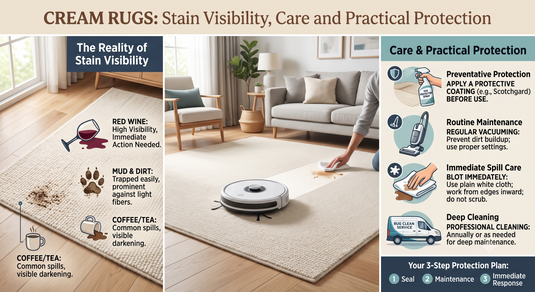
Cream rugs usually show certain marks more clearly than darker or mixed-colour rugs. That does not mean cream dye makes the fibre absorb every spill more easily. Visible contrast and actual stain behaviour are different issues. A dark rug can still stain, while a well-chosen cream rug can remain practical when its material and care requirements suit the room.
If you love a light rug, choose it with a realistic protection plan. Consider the room's traffic, shoes, food, pets, sunlight and cleaning routine before deciding on the fibre and construction. The aim is to enjoy the rug without expecting it to be immune to daily life.
Why cream shows some marks more clearly
Dark grit, coloured drinks and shoe marks can contrast strongly with a pale surface. On a darker or patterned rug, the same residue may be less obvious. Visibility is useful because it prompts cleaning, but it can make a cream rug feel more demanding.
Different colours reveal different problems. A very dark rug may show pale dust, lint or light pet hair. A mixed-colour pattern may disguise ordinary soil more effectively than either a uniformly pale or uniformly dark surface. Disguising dirt does not remove it, so every colour still needs maintenance.
Judge the colour in the context of your household. If dark hair or outdoor grit is common, think about how it will look against the rug. If the room is a quiet bedroom with little food or shoe traffic, the same cream tone may be much easier to manage.
Colour alone does not decide stain resistance
The fibre, dyes, finish and construction all influence how a spill behaves. Some materials are more sensitive to moisture or particular treatments than others. A colour name tells you almost nothing about the correct cleaning method.
Ask for the actual composition. Wool, cotton, polyester, polypropylene and viscose should not be treated as interchangeable. A blend also needs explanation, especially when a delicate lustrous fibre forms a significant part of the surface.
The term stain-resistant is not the same as stain-proof. Ask what the claim covers, whether a treatment is involved and whether it requires special care. A product should not be chosen on the assumption that any spill can be left until the next day.
Choose the material for the room
A wool rug can be a useful option for a comfortable living area, but it still requires product-specific care. A washable synthetic or cotton rug may suit a different routine if the washing instructions are clear and practical. Viscose-rich designs need a more cautious approach to moisture and cleaning.
Consider where the cream colour is most likely to be challenged. A dining area has predictable food risks. A narrow route from a balcony can receive grit or damp footwear. A lounge used without outdoor shoes presents a different brief.
Our tufted rug material guide discusses how construction and density affect a busy room. Browse ivory rugs only after you have decided what the rug needs to handle. Colour should be one part of the specification.
Decide how much texture you can maintain
Texture can soften the appearance of cream and create depth without a strong pattern. A tonal mix or subtle high-low surface may make the rug feel less visually flat. However, very long pile can hold debris and complicate routine cleaning.
Check whether your vacuum can be used safely on the selected construction. The manufacturer's guidance should determine suction settings and attachments. A motorised brush is not appropriate for every rug, and fringes or loose yarns may need separate attention.
For a frequently used room, a manageable pile may be more sensible than choosing the softest possible surface. Compare textured rugs by pile and material, not only by the attractive shadow effects in photographs.
Protect the room at the entrance
Much of a rug's cleaning burden begins outside the rug. A suitable entrance mat can reduce tracked-in soil. A consistent shoe routine may also help, provided it works for your household and guests. Keep the entry area clean so the mat does not become a source of dirt itself.
If the cream rug is directly beside an external door, assess the location carefully. Rain, dust and repeated footfall may make another colour or construction more practical there. You can keep the light rug for a seating zone while using a separate, suitable mat in the entrance.
The Carpet and Rug Institute's cleaning guidance emphasises regular cleaning and prompt attention to spots. Use the rug's own care instructions to translate those general principles into the correct method for your product.
Use an appropriate pad
A pad can improve stability or cushioning when it is suitable for the rug and floor. It can also help the rug sit more consistently. It is not a protective barrier that makes spills harmless, and it should not be used to hide dampness beneath the rug.
Check compatibility with the floor finish. Different backing materials and pads may have different restrictions. Ask the floor manufacturer if you are unsure, especially with wood, specialist finishes or delicate stone.
Clean and dry both surfaces before placing the rug. If a spill reaches the underside, follow the appropriate drying and cleaning guidance rather than leaving moisture trapped. Our rug underlay buying guide covers the questions to ask before selecting a pad.
Create a routine you can keep
Regular vacuuming removes loose soil before it becomes deeply worked into the surface. Frequency should reflect the room's use, the rug's construction and the manufacturer's recommendations. A main family room may need attention more often than a quiet guest bedroom.
Pay particular attention to common walking routes and the area near seating. Check under the edges for grit when it is practical to do so. A rug can look clean from above while debris has collected underneath.
Rotate the rug periodically if the supplier recommends it and the design permits. This can help distribute use and light exposure more evenly. Rotation cannot repair existing damage, but it can be part of thoughtful maintenance.
Keep the routine simple enough to repeat. A cream rug that requires care beyond your available time or equipment may be the wrong product, even if it looks perfect in a sample photograph.
Respond to a spill without making it worse
Act promptly and follow the product's care instructions. For many liquid spills, gently blotting with an appropriate clean absorbent cloth is a better starting point than vigorous rubbing. Rubbing can spread the residue or disturb the surface.
Do not assume that more water creates a better result. Overwetting can affect backing, dyes or sensitive fibres. Avoid scrubbing, soaking or applying heat unless the manufacturer explicitly directs you to do so for that product.
Remove loose solids carefully without grinding them into the pile. If the substance is unfamiliar or the rug is delicate, contact the supplier or a qualified cleaner. The goal is to prevent an avoidable second problem, not to improvise the strongest possible treatment.
Avoid universal home-cleaning recipes
Vinegar, baking soda, bleach, dishwashing liquid and steam are often suggested online as general solutions. None should be treated as universally suitable for rugs. The material, dye and backing determine whether a product or method is appropriate.
A successful treatment on one household textile does not prove suitability for another. Even a hidden-area test has limits if the method can affect backing or leave residue. Use the care label and seek advice when the proposed treatment is outside it.
Do not combine cleaning chemicals. Keep the original product information available for a professional cleaner. If someone recommends a treatment, ask whether it is compatible with the exact rug rather than accepting a broad claim that it works on all carpets.
Consider professional protection carefully
A stain-related treatment may be offered for some rugs. Ask what the treatment is intended to do, whether it suits the fibre and whether it changes maintenance or warranty conditions. Have it applied only through an appropriate, documented process.
No treatment should be understood as a promise that the rug cannot stain. Spills still need attention, and some substances may remain difficult to remove. The treatment's practical benefit needs to be weighed against cost and any restrictions.
Avoid applying a generic spray simply because the rug is light. If the product manufacturer does not recommend it, ask before proceeding. Protecting the rug begins with choosing an appropriate material and managing soil, not only with adding a coating.
Pay attention to sunlight and colour change
Direct light can affect textiles over time, but the extent depends on the material, dyes and exposure. Do not assume that cream is automatically immune because it appears pale. Areas covered by furniture may age differently from exposed areas.
If a room receives strong sun, discuss the rug's suitability with the supplier. Curtains, blinds and thoughtful placement can reduce prolonged exposure. The correct approach depends on the room and should not compromise comfort or ventilation.
Check the rug from different directions before interpreting a colour change as damage. Some pile surfaces reflect light differently when brushed or viewed from another angle. If the difference is persistent or unexpected, ask the supplier to assess it.
Choose a cream design that supports everyday living
A softly mixed ivory surface can provide the visual calm of cream without relying on a perfectly uniform field. A subtle pattern may make ordinary variation less noticeable. This is a design choice, not a substitute for cleaning.
If the household is very active, consider whether a mid-tone neutral would better suit the main room. You can still use cream in a smaller or quieter zone. Browse living room rugs with both colour and practical use in mind.
Our small-room Amazon rug guide also explains why dimensions, care and backing should be checked before a photograph drives the purchase. The same priorities apply when buying a light rug from any retailer.
Plan for delivery and first use
Inspect the rug when it arrives. Check the label, dimensions, colour and condition before disposing of packaging. Follow the supplied instructions for flattening and installation. Do not apply cleaners or protection sprays merely to freshen a new rug.
Keep the care sheet, invoice and product description together. These are useful if the rug later needs cleaning, repair or a warranty discussion. Record the actual fibre and construction instead of relying on a remembered marketing name.
Before furniture is placed, make sure the floor and pad are clean and dry. Check corners and door clearance. Setting the rug up correctly reduces the temptation to use tape, improvised adhesives or other fixes that may damage the rug or floor.
Create a small care record
Keep the rug’s fibre composition, supplier details and care sheet in an accessible place. Note which products or methods the manufacturer permits. This is helpful when another household member handles a spill or a cleaner visits later. Avoid leaving the decision to a generic online search during an urgent situation. If the room changes use, reassess the rug’s location. A cream rug that worked in a quiet reading area may face a different cleaning burden when the same space becomes a playroom or dining corner. Care planning should evolve with the room.
Related rug planning guides
For complementary planning, read our plush rug guide, high-traffic tufted material guide and carpet and cushion shopping guide. Together they connect colour, daily use and practical purchase checks.
Frequently asked questions
Are dark rugs always easier to maintain?
They may conceal some dark marks, but they can reveal pale dust, lint and light hair. Maintenance depends on material and construction as well as colour. A darker surface still needs regular cleaning, even when dirt is less visible.
Can a cream rug work with children or pets?
It can, if the particular rug suits the household's use and cleaning routine. Choose manageable construction and documented care. Do not interpret cream, washable or natural as proof of safety or stain resistance. Our shared children's room rug guide discusses practical room planning.
Should I put a cream rug under a dining table?
Only if you are comfortable with the likely spills and the care requirements. Consider chair movement, rug dimensions and the practicality of cleaning. A mixed-colour or different material option may be easier for a frequently used dining room.
What is the most effective protection strategy?
Choose the right material, limit tracked-in soil, vacuum appropriately and respond promptly to spills. Ask for product-specific advice before using treatments. These habits are more dependable than expecting a pale rug to remain untouched by everyday life.