Bedroom rugs need a different balance from rugs used in entrances or family rooms. Comfort matters more, traffic is usually lower, and easy care is still important because the rug may sit partly under a heavy bed where cleaning access is limited.
The best material depends on whether you prioritise softness, durability, washability, natural fibre, pet friendliness or budget.
At The Ambiente, we generally recommend wool as the strongest premium all-round bedroom material, but cotton, synthetic fibres, jute and flat-woven blends can also make sense in the right room. This guide compares the most practical options.
Best Overall Premium Material: Wool
Wool offers softness, resilience and a comfortable warm feel underfoot.
It works well under beds, beside beds and in bedroom seating areas.
For most adults who want a long-term premium rug, wool is the easiest place to start.
Why Wool Is Durable
Wool fibres have natural crimp and resilience, allowing them to recover after pressure better than many softer fibres.
This matters under bed legs and in the walking paths beside the bed.
How Easy Is Wool to Care For?
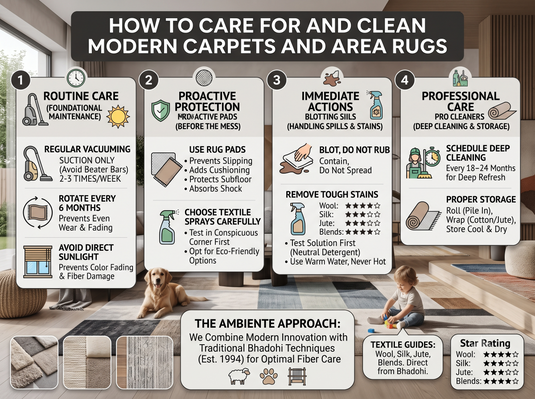
Regular gentle vacuuming is usually enough for routine maintenance.
Blot spills quickly and use professional cleaning when a deep clean is needed.
Avoid aggressive alkaline cleaners.
Cotton Rugs for Bedrooms
Cotton is affordable, lightweight and often easier to wash than wool.
It works especially well for guest rooms, children’s rooms and casual bedrooms.
The trade-off is lower resilience and a lighter feel.
When Cotton Is the Best Choice
Choose cotton when washability, lower price and easy handling matter more than long-term pile resilience.
Small cotton bedside rugs are particularly practical.
Polypropylene Bedroom Rugs
Polypropylene is stain-resistant, affordable and easy to maintain.
It suits children, pets and budget bedrooms where spills or frequent cleaning are likely.
It does not offer the same premium feel as wool.
Polyester Bedroom Rugs
Polyester can feel soft and provides strong colour at an accessible price.
It works well in moderate-traffic bedrooms.
Dense construction is preferable because lower-density polyester can flatten over time.
Nylon Bedroom Rugs
Nylon is highly resilient and easy to maintain, although it is more common in carpet flooring than artisan-style area rugs.
It is useful in busy bedrooms, teen rooms and pet-friendly spaces.
Jute Bedroom Rugs
Jute creates natural texture and works beautifully with wood, linen and neutral decor.
It is durable in dry rooms but less soft under bare feet than wool.
Keep it away from damp bathroom entrances.
Jute-Wool Blends
Blending wool with jute can soften the feel while retaining natural texture.
This works well in relaxed modern bedrooms.
Bamboo Silk Bedroom Rugs
Bamboo silk adds sheen and softness, making it attractive for formal bedrooms.
However, it needs more careful cleaning and can show water marks more easily than wool.
Use it where traffic is controlled.
Natural Silk Bedroom Rugs
Silk provides the most refined sheen and supports fine detail, but it is also the least practical easy-care option.
Use it only in low-traffic premium bedrooms where professional maintenance is acceptable.
Flat-Weave Bedroom Rugs
Flat-weave rugs are easy to vacuum and fit under beds and wardrobes without adding much height.
They are one of the best options for warm climates and modern bedrooms.
Handloom Wool Rugs
Handloom rugs in wool provide an excellent balance of handmade quality, lower pile and practical maintenance.
They suit minimal interiors especially well.
Hand-Knotted Wool Rugs
Hand-knotted wool rugs are ideal when durability and craftsmanship matter more than entry price.
A dense low- to medium-pile hand-knotted rug can remain in a bedroom for many years.
Hand-Tufted Wool Rugs
Hand-tufted wool offers softness and custom design at a lower price than many hand-knotted rugs.
It is a good option for bedrooms that need plushness and colour without the highest handmade cost.
Best Material for Easy Vacuuming
Low-pile wool, handloom, flat weave and dense synthetic rugs are the easiest.
Deep shag and long pile take more time to clean.
Best Material for Washability
Small cotton and selected synthetic rugs are the easiest to wash, depending on manufacturer instructions.
Large wool and handmade rugs should usually be professionally cleaned instead of machine washed.
Best Material for Pet-Friendly Bedrooms
Low-pile wool and dense synthetics are the safest choices.
Avoid loose loops and delicate bamboo silk if pets scratch or have accidents.
See our pet-friendly rug material guide.
Best Material for Children’s Bedrooms
Choose soft, low-pile and easy-to-clean materials.
Cotton, wool and washable synthetics can all work depending on budget.
Best Material for Allergy-Conscious Bedrooms
Low pile is easier to vacuum frequently.
Regular cleaning and moisture control matter more than choosing one “allergy-proof” fibre.
Best Material for Marble Bedroom Floors
Wool is excellent because it adds warmth over cool stone.
Use a non-slip pad and keep the marble dry after mopping.
See our marble floor rug guide.
Best Material for Wooden Bedroom Floors
Handloom wool, flat weave and cotton all work well.
Use a floor-safe pad and clean underneath periodically.
Best Material for Tile Floors
Wool and padded hand-tufted rugs add comfort over hard tile.
Flatweaves can work too, but they usually need more grip.
How Pile Height Affects Easy Care
Low pile is easiest to vacuum and creates fewer clearance problems.
Medium pile offers more softness.
High pile feels plush but traps more dust and hair.
How Colour Affects Easy Care
Mid-tone beige, grey, taupe, blue and patterned rugs hide daily dust better than pure white or black.
Easy care is partly about how clean the rug looks between cleaning sessions.
How Pattern Affects Easy Care
Subtle pattern hides small marks better than a solid pale surface.
Geometric, textured and faded patterns are good bedroom choices.
Best Material for a Guest Bedroom
Handloom wool, cotton and flat-weave rugs are excellent because guest rooms usually receive moderate or low traffic.
You can prioritise value and easy handling.
Best Material for a Master Bedroom
Wool is the strongest all-round recommendation.
If you want more luxury, add bamboo silk highlights rather than making the entire rug from a more delicate fibre.
Best Material for a Rental Bedroom
Cotton, synthetic and flat-weave rugs are practical because they are easier to move and replace.
Best Material for a Luxury Bedroom
Hand-knotted wool, wool-and-bamboo-silk blends and fine silk rugs create the most premium effect.
Choose based on how much maintenance you are comfortable with.
How Often Should Bedroom Rugs Be Vacuumed?
Usually less often than living-room rugs because bedroom traffic is lower.
Once per week is a practical starting point for many homes, with more frequent cleaning for pets or dust.
How Often Should Bedroom Rugs Be Professionally Cleaned?
There is no fixed schedule.
Clean when soil remains after vacuuming, stains persist or the rug has gone a long time without a deep clean.
Use a Rug Pad
A rug pad helps with grip and floor protection.
It also makes lighter rugs feel more substantial.
See our rug pad guide.
How to Choose Between Wool and Synthetic
Choose wool if you want natural fibre, resilience and premium feel.
Choose synthetic if lower price, stain resistance and easier replacement matter more.
How to Choose Between Wool and Jute
Choose wool for softness.
Choose jute for dry natural texture and lower cost.
If you walk barefoot beside the bed, wool is usually more comfortable.
How to Choose Between Wool and Bamboo Silk
Choose wool for durability and easier everyday care.
Choose bamboo silk for sheen and luxury in low-traffic settings.
Common Bedroom Material Mistakes
- Choosing silk for a pet-heavy room.
- Using jute next to a damp bathroom.
- Choosing deep shag when easy vacuuming is a priority.
- Buying a lightweight rug without a pad.
- Assuming washable means every size can go into a home washing machine.
- Choosing only by softness.
How The Ambiente Recommends Choosing
For most bedrooms, start with wool or handloom wool if the budget allows.
Choose cotton or synthetic when easy washing and lower cost matter more.
Use jute for natural texture in dry rooms and bamboo silk only where the extra sheen justifies the additional care.
Bedroom Materials for Homes With Frequent Dust
In dusty environments, lower pile is easier to maintain. Handloom wool, flat weave, cotton and dense low-pile synthetics are preferable to shag and very deep pile.
Vacuuming becomes faster and less dust settles deep into the structure.
Bedroom Materials for Humid Climates
Choose materials that can be kept dry and allow regular airflow underneath. Wool can handle normal indoor humidity well, but every rug should be lifted occasionally during very humid periods.
Avoid jute in consistently damp rooms because moisture can cause odour and fibre damage.
Bedroom Materials for Air-Conditioned Rooms
Air-conditioned bedrooms give you more flexibility because humidity is usually controlled. Wool, hand-knotted rugs and bamboo-silk blends can all work well when the room remains dry.
Bedroom Materials for People Who Change Decor Often
Cotton, synthetics and flat-weave rugs are practical because they are lighter, easier to move and usually less expensive to replace.
If you like changing colour schemes every few years, this flexibility may matter more than maximum longevity.
Bedroom Materials for Long-Term Interiors
If you want one rug to remain through several furniture changes, wool is the safest premium choice. Neutral hand-knotted or handloom wool can adapt to different bedding, curtains and paint over time.
How to Compare Cost Over Time
A lower-cost synthetic rug may be cheaper to replace, while a quality wool rug may last much longer with proper care.
Think about how many years you expect to keep the rug rather than judging only the initial purchase price.
How to Choose a Rug for Barefoot Comfort
Wool and medium-pile hand-tufted rugs feel softer under bare feet than jute or very flat woven rugs.
If comfort beside the bed is the main goal, place softness ahead of washability.
How to Choose a Rug for Easy Furniture Movement
Low-pile handloom and flat-weave rugs make it easier to move stools, benches and occasional chairs. They also reduce the chance of wardrobe doors catching on the rug.
Bedroom Rugs for Couples With Different Comfort Preferences
If one person prefers soft plush surfaces and the other wants easy cleaning, medium-pile wool is often the best compromise. It feels comfortable underfoot without creating the maintenance burden of deep shag.
Bedroom Rugs for Minimalist Homes
Handloom wool, flat weave and low-pile neutral rugs fit minimalist rooms because they add texture without visual clutter. Choose ivory, beige, grey, muted green or blue for a calm base.
Bedroom Rugs for Colourful Interiors
When the room already has colourful bedding or artwork, choose a quieter material and pattern. Wool and handloom rugs in soft neutrals help prevent the bedroom from feeling too busy.
Bedroom Rugs for Pet-Free Low-Traffic Rooms
If the room is quiet and no pets use it, you have more freedom to choose bamboo silk, wool-and-silk blends or even natural silk. The extra maintenance becomes easier to justify because traffic is lower.
How to Decide Whether Easy Care or Luxury Matters More
If you want the least maintenance, choose low-pile wool, cotton or practical synthetics. If you want a more luxurious visual effect and accept more careful cleaning, bamboo silk and silk blends become more attractive.
How to Compare Two Bedroom Rugs Fairly
Match size, construction, material and pile height before comparing price. A smaller synthetic rug should not be used as the price benchmark for a larger hand-knotted wool rug.
How to Keep Bedroom Rugs Looking Better Longer
Vacuum regularly, rotate the rug occasionally, keep wet footwear away, use a rug pad and avoid placing the rug back on a damp floor after mopping.
These simple habits often matter more than choosing a material marketed as “easy care”.
The Bottom Line
Wool is the best premium all-round material for durable, easy-care bedroom rugs. Cotton and washable synthetics are practical for lower budgets and frequent cleaning, while flat-weave and handloom constructions make maintenance easier because of their lower profile.
Jute works in dry natural interiors, and bamboo silk or natural silk should be reserved for lower-traffic bedrooms where more careful cleaning is acceptable.
Browse The Ambiente’s bedroom rugs, wool rugs and handloom rugs to compare practical bedroom materials.