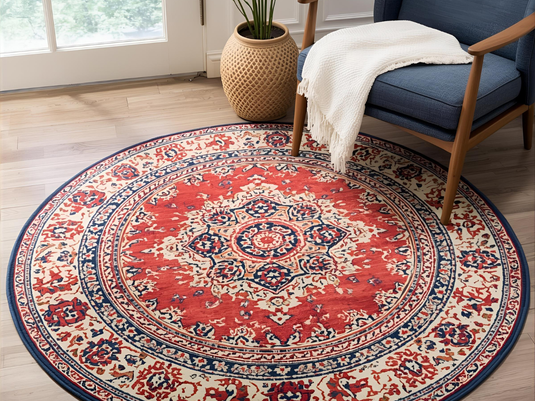
A round rug works best when its shape, colours and material respond to the furniture and the way the room is used. Begin with the seating group or table that the rug needs to connect, then compare colours in the room's actual light. For an entryway, construction and floor grip become especially important. For a quieter sitting corner, tactile comfort may carry more weight.
Round does not mean suitable for every small room, and wool does not mean every rug can handle every spill. This guide brings the decisions together: matching style and colour, selecting materials for repeated traffic and caring for round jute or wool rugs without relying on universal cleaning recipes.
Start with the furniture arrangement
Look at the furniture's outline before considering a rug pattern. A round coffee table, curved chair or compact conversation corner can relate naturally to a circular rug. A long sectional may need a rectangle if a circle cannot connect enough of the seating. The shape should solve a layout problem rather than simply repeat another circle in the room.
Mark the proposed diameter on the floor. Stand at the entrance and sit in the usual seats. Check whether the furniture feels connected, whether the rug edge cuts across a walking route and whether a door can open freely. Leave enough visible floor for the arrangement to remain comfortable, without treating a fixed wall margin as a rule for every room.
Our round rug size guide develops the measuring questions. A size name such as medium is not a measurement. Record the diameter in centimetres and compare it with the actual product dimensions.
Match the rug to the furniture style
With clean-lined contemporary furniture, a restrained geometric or abstract rug can create a clear relationship. Choose whether the rug should be the main focal point or a quieter background. A dramatic motif and several equally dramatic pieces can compete rather than support one another.
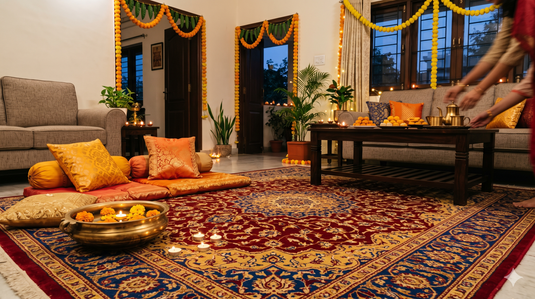
With traditional furniture, a medallion or detailed border may work, but exact period matching is unnecessary. A quieter modern rug can provide contrast while repeating colours from the upholstery or timber. In a relaxed interior, woven texture and softly mixed tones may feel more appropriate than a polished, highly contrasting surface.
Consider all the room's visible materials. Timber, metal, glass and upholstery influence the rug's effect. If the furniture already carries substantial texture, a controlled rug surface may create better balance than another very fluffy element.
Build a colour relationship rather than an exact match
Identify the sofa or chair's main undertone. A grey can lean blue, green or warm brown. Ivory upholstery may be creamy rather than bright white. A rug that seems neutral online can look noticeably different beside those surfaces.
Choose a rug that connects at least one major room element and introduces only as much contrast as you want. You might repeat a muted upholstery colour in a small part of the pattern, or use a warm neutral that belongs with the floor. Avoid trying to match every accessory to every rug colour.
View a sample in daylight and under evening lamps where possible. Photographs from opposite directions are useful for a lustrous surface. Screen images are references, not precise colour approvals, particularly for a custom order.
Three furniture and colour examples
For a beige sofa with warm timber, consider ivory, muted clay or a softly mixed brown palette. A blue accent already present in the room can appear in a limited part of the rug. This keeps the relationship intentional without adding several unrelated colours.
For a cool grey sofa with black metal furniture, consider a rug with a related grey and a controlled warmer accent. A completely cool palette is another option, but assess whether the room feels comfortable under your lighting. A warm accent is a design choice, not a requirement.
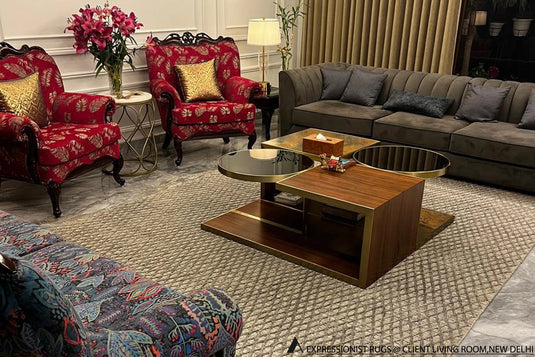
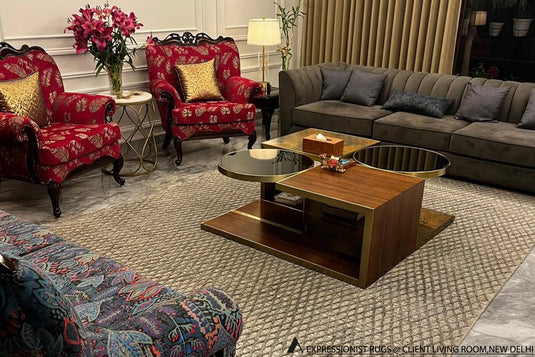
For patterned chairs, choose a quieter rug that repeats one colour or provides a compatible background. If both chair and rug have patterns, compare their scale. Several similarly sized busy motifs may be harder to combine than a detailed chair beside a broader, calmer rug design.
Choose the diameter through actual placement
For a reading chair, make sure the rug accommodates the feet and any nearby table in a way that feels stable. For a seating group, check how much of the sofa and chairs the circle connects. A circle that sits only beneath a coffee table can look isolated if the surrounding furniture is far away.
For a round dining table, test chairs pulled out as well as pushed in. Their rear legs need appropriate support during normal use. The round versus rectangular dining guide helps compare shapes against furniture movement.
Check the full height as well as the diameter. Pile and a pad can interfere with door clearance. A circular outline does not prevent a rug edge from catching in a narrow doorway.
What makes an entryway a demanding location
An entryway may receive shoes, grit, dampness and repeated turns in a small area. Traffic is concentrated rather than evenly spread across the rug. Map the door swing and the route people actually take before choosing a circle for this location.
A decorative indoor rug should not be assumed to replace a purpose-made entrance mat. If shoes are frequently wet, use an appropriate mat and address moisture before placing a more delicate rug farther inside. A beautiful circular rug can work in a dry foyer without being the right product directly beside an external door.
Ask the supplier about intended use. Outdoor suitability, slip resistance or moisture tolerance must apply to the complete product, including dyes and backing. A fibre's general properties do not establish all those claims.
Wool for a dry, frequently used interior
A well-specified wool rug is a useful starting point for a comfortable dry foyer or busy sitting area. Examine density, pile and finishing rather than choosing only by the fibre name. A compact surface can be more manageable in repeated traffic than a loose, very long pile.
Ask about shedding, vacuuming and spill treatment. Wool is not maintenance-free or immune to stains. A product-specific care sheet should tell you how to handle its construction, dyes and backing.
Explore wool rugs and confirm which designs are available in a round shape. Custom availability should be checked for the selected product, rather than inferred from another item in the collection.
Synthetic and washable options need clear specifications
Nylon, polyester and polypropylene can suit different budgets and routines. Compare the selected rug's construction, pile and care instructions. Stain behaviour and recovery from repeated pressure are different priorities, so easy-clean marketing should not be the whole decision.
If the rug is described as washable, confirm the method and the capacity required for that diameter. A round shape may still create a bulky load. Machine washable does not mean every household machine can handle it.
For a wet entrance, choose a product explicitly intended for that use. Do not transfer a moisture-related claim from the fibre to the rug's backing or to the floor underneath.
Where round jute makes sense
Jute provides a distinctive woven texture that can suit a dry, quieter interior. It is less straightforward where wet shoes, frequent food spills or pet accidents are expected. Choose its location with those conditions in mind.
Inspect the edges and ask about cleaning before buying. A jute rug should not be assumed to tolerate soaking or ordinary carpet shampoo. Blends also need care instructions that account for every component.
Browse jute rugs as a design direction. If a round jute rug is mainly attractive because of its warm appearance, compare a more manageable material in a related colour for a demanding room.
Protect the floor and keep the circle stable
Ask what backing touches the floor and whether a pad is recommended. The pad must suit the rug and the floor finish. Wood, tile and specialist surfaces can have different compatibility requirements.
Clean and dry the floor before installation. A pad should sit within the rug's outline rather than protrude around its edge. Check the perimeter after flattening because people approach a round rug from several directions.
Avoid household tape or improvised adhesives unless the floor and rug manufacturers explicitly permit the method. Our rug padding guide explains why grip and cushioning require their own specification.
Maintain a round wool rug thoughtfully
Follow the manufacturer's vacuum instructions and use attachments appropriate to the construction. Fringes or delicate edges may need separate attention. More aggressive brushing is not automatically better cleaning.
Remove loose soil regularly, especially near an entrance. Check underneath when practical so grit does not remain trapped against the floor. Rotate the rug if the supplier recommends it and the design allows, helping distribute use rather than expecting rotation to reverse existing damage.
Respond promptly to a spill using the approved method. Do not soak, scrub or apply a generic cleaning mixture. WoolSafe's consumer advice is a useful general reference, while the selected rug's care sheet remains the product-specific authority.
Maintain round jute without treating it like wool
Vacuum according to the supplier's guidance, taking care with edges and joins. Address loose debris before it becomes worked into the weave. Check that the floor and room remain dry.
If liquid is spilled, seek the product's instructions promptly and avoid adding more water in an improvised treatment. A cleaner should know the composition, including any cotton, wool or other blended component. Drying and dye behaviour deserve particular attention.
Do not pull loose ends or attempt to reshape the rug with force. Contact the supplier about unexpected edge changes or damage. A woven texture can include natural variation, but variation should not be used to dismiss broken joins or a material mismatch.
Budget for the complete installation
Compare the delivered price, dimensions, pad and realistic maintenance. A cheaper rug that cannot connect the furniture or suit the entrance conditions may be poor value. A more expensive material is also unnecessary if it does not solve the actual brief.
Confirm stock, return eligibility and the process for reporting transit damage. A custom circle may have different terms from a ready-made product. Keep the specifications and approved diameter with the order.
Explore round rugs after defining the layout, palette and use. This turns browsing into a comparison of suitable products rather than a sequence of appealing photographs.
Frequently asked questions
Does a round rug suit a rectangular sofa?
It can, if the circle connects the relevant seating and leaves usable circulation. Mark the diameter and test the furniture arrangement. A long sofa or sectional may be better served by a rectangle. Matching shapes is a design option, not a universal rule.
Which round rug material is best for a busy entrance?
Start with the moisture, shoe traffic and cleaning requirements. A compact wool rug may suit a dry interior foyer, while a different documented entrance product may be needed beside a wet external door. Fibre alone cannot establish grip or complete-product suitability.
Can I wash a round jute rug at home?
Do not assume so. Follow the exact care label and ask the supplier if it is unclear. Jute and its backing can be sensitive to inappropriate wet cleaning. A round shape changes placement and load size, not the material's care requirements.
How do I keep the colour relationship coherent?
Choose a rug that relates to the existing furniture and floor, then repeat an accent selectively. Compare undertones under your own lighting. Our bedroom and living-room colour planning guides can help turn inspiration into a practical palette.
Check the curve and edge on arrival
Inspect the label, diameter and condition before discarding packaging. Follow the supplier's instructions for flattening, then check the entire perimeter rather than only the point beside the door. A circle may be approached from several directions during normal use.
Look at the rug with the furniture in its intended position. Confirm that chair legs sit steadily and that people do not need to step repeatedly across an awkward edge. If the dimensions or material do not match the order, report the issue promptly through the seller's process. Keep the care sheet with the invoice for future cleaning or repair discussions.
For related decisions, compare Rug Size and Shape Guide: Sofas, Coffee Tables and Room Layouts, Durable Rugs for Busy Living Rooms: Kids, Pets, Stains and Care, Bedroom Rug Materials and Colours: Softness, Cleaning and Styling. These guides connect the material, layout and care choices behind this topic.
Need help choosing a rug or carpet?
Ask The Ambiente about rug sizes, materials, colours or the right choice for your room.
Entryway rug selection for Indian homes
Entryways frequently receive shoes, dust and moisture, so consider the rug's material, pile height, grip and cleaning requirements before choosing. A round rug may suit an open foyer, while a runner may be more practical in a long passage. Measure the doorway sweep and leave enough clearance so no edge bunches where people walk. Avoid assuming every decorative handmade rug can tolerate frequent wet shoes. Compare round rugs and runner rugs, then check each product's actual dimensions and instructions.
For polished stone or tile, consult the rug and flooring guidance about suitable non-slip underlay. Do not use adhesive products that might stain or damage the floor. Where children or older visitors regularly pass through, a stable, low-profile arrangement is especially important.
Entryway rug checklist for Indian homes
First, decide whether the entrance opens directly to an outdoor corridor or into a sheltered foyer. Dust, monsoon footwear and moisture make a big difference to material suitability. A decorative wool or silk-blend rug should not be treated as an outdoor absorbent doormat unless its specific product instructions allow that use.
Second, measure the inward door swing and any shoe cabinet doors. Make sure the rug remains flat, with no corners in the walking path. Third, choose a pile profile that suits frequent cleaning and test whether a floor-compatible underlay is needed. Refer to our rug pad guidance for tile, wood and marble.
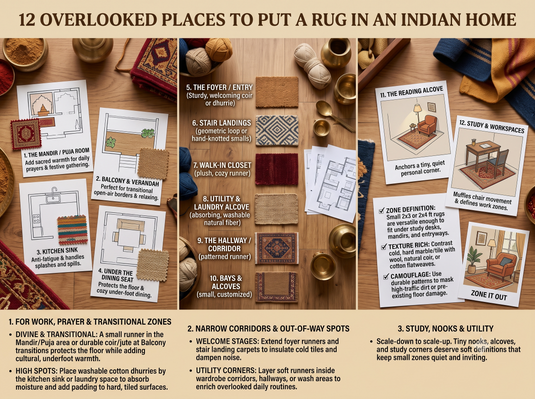
Fourth, choose shape only after checking function. A round rug can look elegant in a spacious foyer, but a narrow runner may suit a long entry corridor. Do not force a circular rug into a doorway that needs a flat low-profile mat. For more options, read our guide to overlooked rug placements.