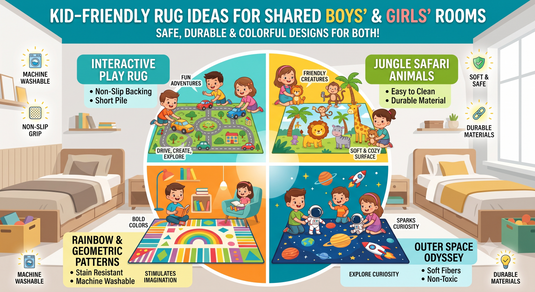
Kid-friendly rug ideas for a shared boys' and girls' room work best when they are chosen around the children's interests, the room's activities and practical care. A colour or motif does not need to be assigned to a gender. Consider geometric patterns, nature-inspired designs, abstract colour, simple stripes or a calm neutral texture that can grow with the room.
The design should support play, rest and everyday movement. Material, pile, backing, corner stability and maintenance deserve as much attention as the picture on the rug. No decorative theme or natural-fibre label automatically establishes that a product is safe for every child.
Begin with how the children use the room
List the activities that happen on the floor. Building blocks, drawing, reading and active play create different needs. A very deep pile can make a tiny toy difficult to find, while a thinner woven rug may provide a more stable surface for some games.
Consider ages and supervision. A toddler's room and a school-age shared bedroom have different furniture and routines. If a child has a known sensitivity or particular access need, discuss the relevant material and layout questions with an appropriate professional.
Ask the children what they like without limiting the conversation to stereotyped colours. Their interests may overlap more than expected. A shared nature theme or favourite palette can provide a useful starting point while allowing individual details elsewhere.
Idea one: calm geometry
Geometric designs can create interest without requiring a specific character or theme. Broad shapes or a restrained repeating motif can work for children of different ages. Choose the contrast and colour according to the room's existing furniture.
A very busy pattern may compete with toys, books and bedding. A quieter geometry can help the floor remain visually organised. There is no rule that a children's rug must be the brightest object in the room.
Explore geometric rugs and check the individual material and care details. A design suitable for a family living room may also fit a child's room, but the use requirements should still be assessed rather than inferred from the pattern.
Idea two: nature-inspired colour and motifs
Leaves, landscapes, softly interpreted animals or earthy colour relationships can suit a shared room without depending on gendered categories. Decide whether the motif should be obvious or merely suggested through colour and shape.
Keep scale in mind. A large animal image may be partly hidden beneath a bed or table, while a repeating nature motif can remain readable around furniture. Check what will actually be visible in the final layout.
A nature-inspired rug can connect with timber furniture and simple bedding. Avoid assuming that a nature theme means the material is natural or environmentally certified. Appearance and composition are separate facts that need separate checking.
Idea three: abstract colour
An abstract rug can include colours both children enjoy without assigning each side of the room a rigid theme. A muted multi-colour design may provide flexibility as bedding and accessories change over time.
Choose a palette with enough connection to the room. Repeating one or two rug colours in small accents can help, but matching every colour is unnecessary. The rug should support the whole arrangement rather than become a collection of unrelated bright patches.
Browse multi-colour rugs for ideas, then inspect the selected product's construction. A cheerful design does not tell you whether the surface will suit floor play or how it should be cleaned.
Idea four: simple stripes
Stripes can bring rhythm to a room and work with many styles of bedding. A low-contrast stripe may feel calm, while a stronger one can define the play area. Consider whether the pattern remains comfortable to look at from normal viewing distances.
The orientation can relate to the room's shape or furniture layout. Do not rely on a claim that a stripe will automatically make the room larger. Mark the rug dimensions and assess the arrangement directly.
A striped flatweave may suit some activities, but it needs stability on the floor. Lightweight woven rugs can shift or bunch up if they are not appropriately secured with a compatible pad. Design and installation should be considered together.
Idea five: a neutral textured base
A neutral rug can provide a flexible background for changing interests. Toys, books and artwork already introduce colour, so the rug does not always need another theme. A subtle texture can keep the room warm without making it visually crowded.
Choose a manageable surface rather than the deepest possible pile. A plush rug may feel comfortable, but daily use includes vacuuming, finding small objects and moving furniture. Ask how the product should be maintained.
Kids' room rugs provide a starting point, while minimal rugs can offer quieter alternatives. A collection name is not a certification of safety; check the actual product information.
Select the fibre for practical reasons
Wool, cotton and synthetic materials can each suit different briefs. Read the full composition and care instructions. Do not assume natural means hypoallergenic or synthetic means unsuitable. The actual product and the household's needs matter.
Blends should be explained clearly. If a rug contains a delicate lustrous material, ask how it responds to likely spills and cleaning. A busy play area may need a more manageable construction than a formal decorative room.
Our rug safety and maintenance guide for children helps frame the questions. If a supplier makes a certification claim, ask what standard, test and product scope it covers rather than relying on a logo alone.
Consider pile height and surface stability
Shorter or more controlled pile can be useful where children build toys on the floor. Longer pile can provide a different feel but may hold small pieces and require more careful cleaning. The best choice depends on the activities and the manufacturer's guidance.
Check corners and edges. A rug that curls or moves in a walking route can create a practical hazard. Install it according to the product instructions and reassess if the room layout changes.
Do not assume a heavy rug cannot slide. Floor finish, backing and the pad all affect stability. If the rug does not sit properly after the recommended flattening process, ask the supplier rather than using improvised tape or adhesives.
Choose the rug pad carefully
A compatible pad can help with grip or cushioning, but it must suit both the rug and floor. Ask about restrictions for wood finishes, tile or other surfaces. The pad should not extend beyond the rug where it can become exposed.
Clean and dry the floor before installation. If a spill reaches the pad or underside, follow the relevant drying and care instructions. Do not leave moisture trapped because the surface appears dry.
Our rug padding guide explains why this component needs its own specification. The rug's softness does not establish its floor compatibility or eliminate the need for a pad.
Measure the shared space
Decide whether the rug is for the open play zone, beside beds or beneath a central table. Measure the usable area, including doors, drawers and walking routes. A shared room often has more furniture movement to consider than a single-child room.
Avoid placing an edge where children repeatedly step out of a bed or turn into a narrow route if it creates an awkward transition. The right placement should support movement, not merely align with the centre of a photograph.
Mark the outline before ordering. This can reveal whether a larger shared rug or separate smaller zones would work better. If you need an unusual size, our custom-size rug comparison helps you plan the brief and timing.
Make care part of the selection
Ask how the rug should be vacuumed, what to do with spills and whether it can be washed. Washable should come with a method, not just a word in the title. Confirm machine capacity, drying and whether the backing has separate requirements.
A washable rug may still be impractical if you have no suitable drying space or the selected size does not fit your machine. A professionally cleaned rug may suit another household. Choose a routine you can actually maintain.
Keep cleaning products and equipment used according to their instructions and out of children's reach. Do not apply a social-media cleaning recipe to an unfamiliar fibre. Product-specific advice is especially important for mixed materials and sensitive dyes.
Think realistically about spills and colour
A pattern or mixed colour can make ordinary marks less obvious. It does not make the rug clean or stain-proof. Light rugs may show dark grit and coloured spills, while dark rugs can show pale lint and dust.
If you prefer cream, choose it knowingly and establish a manageable routine. Our cream rug care guide explains the difference between stain visibility and material behaviour. Colour should be balanced with the room's habits.
Keep food and craft activities in mind. A room used for painting or messy play may need separate protection appropriate to the activity. Do not expect a decorative rug to replace a suitable work surface or supervised play setup.
Avoid unsupported safety promises
Terms such as child-friendly, non-toxic, hypoallergenic and eco-friendly need evidence. Ask what the supplier means and whether the claim applies to the exact product. A fibre name alone cannot establish all these properties.
If a relevant certification is listed, check the standard and scope. Do not assume a test for one aspect covers every possible concern. For a child with a specific medical sensitivity, follow personalised professional advice rather than a general shopping article.
Also consider physical details. Long fringes, loose components or damaged edges may be unsuitable for a particular age or activity. Discuss the actual product rather than treating an appealing motif as a safety assessment.
Allow the room to evolve
A shared room can change quickly as children grow. A rug with a flexible palette may remain useful through different bedding, toys and furniture arrangements. That can be more practical than a highly specific theme with a short period of appeal.
Give each child some individual expression through smaller items while the rug connects the shared area. This can avoid making one child's preference dominate the whole floor. The arrangement should feel fair and comfortable for both.
Our kids' room rug question guide offers additional planning questions. Use it alongside the children's own preferences and the room's actual requirements.
Compare value beyond the initial price
Add delivery, a pad where needed and realistic care costs. A low price for the wrong dimensions or an unmanageable cleaning routine may not represent good value. Compare the complete product and purchase terms.
Check return eligibility before ordering, particularly if colour or texture is uncertain. Ask whether the selected size, sale item or custom product has different conditions. Inspect the rug promptly after delivery and keep the documentation.
Do not assume the most expensive rug is the best for a child's room. The right choice is suitable, stable and maintainable, with a design the children enjoy. A clear specification helps you spend where it makes a practical difference.
Related rug planning guides
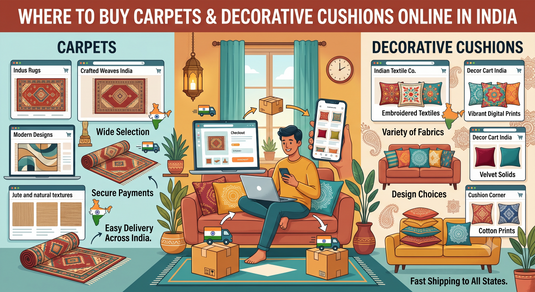
For complementary choices, explore tufted materials for busy rooms, carpet and cushion shopping and small living room rug planning. Use the same specification checks when the shared bedroom also serves as a family play area.
Frequently asked questions
Which colours work for both boys' and girls' rooms?
Any colours the children enjoy can work. Consider shared preferences, existing furniture and the desired mood. Greens, blues, earthy tones, neutrals and multi-colour patterns are possible directions, but no palette needs to be assigned to a gender.
Is a very fluffy rug best for play?
Not always. Deep pile can be comfortable but may hold small toys and require more care. A controlled pile or stable flatweave can suit some activities better. Choose according to the room's use and the product's specifications.
Does natural fibre mean safe for every child?
No. Safety and suitability depend on the actual product, construction, condition and individual needs. Ask for relevant evidence and follow professional advice for known sensitivities. Avoid treating a material label as a comprehensive guarantee.
How can I make the rug last through room updates?
Choose a flexible design and manageable construction, measure carefully and follow the care instructions. Let smaller accessories carry changing themes. A rug that fits the shared activities can remain useful even when the children's interests evolve.