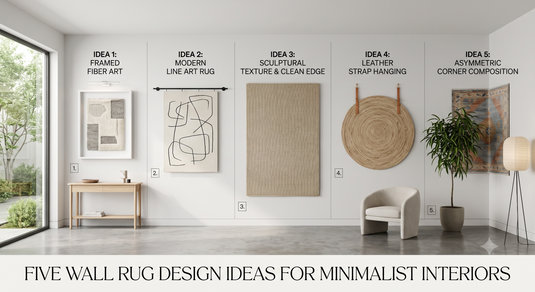
Five wall rug directions that can suit minimalist interiors are a tonal woven panel, a restrained geometric design, a soft organic composition, a subtle linear rug and a small traditional textile used as a single focal point. The best option depends on the wall, furniture below it and the amount of visual detail already in the room.
Minimalism does not require every surface to be empty. A textile can add warmth and character while keeping the composition clear. The practical challenge is choosing a rug whose size, weight and installation method suit the wall, rather than treating any floor rug as an immediately hangable decoration.
Why a wall rug can work in a quiet interior
A textile introduces a surface different from painted plaster, glass or timber. That difference can make a pared-back room feel less stark. It may also provide a focal point without the hard outline of a conventional frame.
Wall rugs are receiving editorial attention, including in Architectural Digest's feature on the subject. The useful question is not whether the idea is fashionable, but whether the chosen textile belongs in your particular room.
Keep the purpose clear. You may want warmth, a defined focal point or a link between furniture colours. Do not promise acoustic performance from a decorative rug without relevant product evidence. Visual softness and measured sound absorption are different claims.
Design one: a tonal woven panel
A rug in closely related shades can introduce texture without strong contrast. Ivory, warm grey or soft brown may work well when those tones already appear in the room. The surface becomes the interest rather than a busy motif.
Look for a weave whose details remain appealing at the intended viewing distance. A delicate texture visible only in close-up may disappear on a high wall. A more pronounced texture can cast shadows under side lighting, so view samples in comparable conditions.
Explore minimal rugs or flat-weave rugs as design starting points. A floor product in either collection still needs an assessment for hanging. Collection membership does not establish that it is lightweight, has a hanging system or can be altered safely.
This direction suits rooms where the furniture or architecture already provides a strong shape. A quiet textile can complement those features instead of becoming another competing statement.
Design two: restrained geometry
A geometric rug can suit minimalism when the number of forms and colours is controlled. Think of a few broad shapes or a low-contrast motif rather than assuming that every geometric design must be visually loud.
Relate the geometry to the room's existing lines. A rectangular textile above a console can reinforce a horizontal composition. A design with softer curves can balance furniture with sharp edges. The goal is a relationship, not a literal repetition of every shape.
Browse geometric rugs and consider how the whole design reads when vertical. A rug designed for the floor may have a composition that looks different when hung. Rotate a photograph during planning, but confirm that the actual structure can be supported in the chosen orientation.
Keep nearby accessories selective. A bold geometric textile may need little more than a simple lamp or one object on the furniture below. Minimalism works through clarity of emphasis, not through an automatic limit on the number of items.
Design three: a soft organic composition
Organic shapes can bring movement to a calm interior. A rug with broad curved forms or a gently irregular motif may soften an otherwise rectilinear room. Choose a palette that belongs to the room rather than relying on shape alone.
A low-contrast organic design can feel quiet, while a sharply contrasting one becomes a stronger focal point. Decide which effect you want before browsing. A beautiful pattern can still be too assertive for a room meant to feel restful.
Modern rugs offer several visual directions to explore. Check the whole composition, edges and dimensions. If the rug itself has an irregular outline, installation requires support designed for that shape rather than a generic hanging method.
This direction can work above a reading corner or in a sitting room with simple upholstery. Leave enough clear wall around it for the outline to be understood. Crowding it between shelves can make an otherwise graceful design feel awkward.
Design four: subtle stripes or linear rhythm
A striped or line-based textile can organise a wall without relying on a detailed pictorial pattern. Vertical lines may emphasise height, while horizontal lines can relate to a long console or sofa. Those are compositional effects, not guarantees that a room will physically feel larger.
Choose the spacing and contrast carefully. Fine, high-contrast stripes can become visually busy at a distance. Broader or more tonal lines may feel calmer. View the design at approximately the distance from which it will usually be seen.
A woven rug may reveal its linear structure naturally. You do not always need a printed stripe. Examine the material and texture together, especially if the room has strong directional lighting that will emphasise raised details.
This option is useful when you want continuity with simple furniture. Avoid combining it with several other competing line patterns nearby unless the relationship is intentional and remains easy to read.
Design five: one small traditional textile
A traditional rug can work in a minimalist room when it is given a clear, singular role. Its detail can become the room's focal point, while the surrounding furniture and palette remain restrained. Minimalism does not require a ban on ornament.
Choose a textile whose colours connect with the room. You might repeat one muted shade in a cushion or object, then leave the rest of the composition quiet. Do not try to reproduce every colour in the rug across the interior.
Explore traditional rugs for the visual direction. If the piece is valuable, old or delicate, consult a textile professional before deciding how to mount it. A conservation-minded installation is different from attaching an inexpensive decorative panel.
A smaller textile can be particularly effective in a reading area, hallway niche or above a compact cabinet. Its scale should relate to the wall and furniture rather than following a general rule that bigger is always better.
Choose the wall before you choose the rug
Identify the wall's role in the room. Is it visible immediately from the entrance, behind a sofa or beside a staircase? The viewing angle and distance influence which design will work and how much detail can be appreciated.
Measure the available area and include surrounding furniture, switches, vents and door movement. Mark the proposed outline with removable paper or tape appropriate for the wall finish. Stand back and assess the composition from the room's normal viewpoints.
Avoid placing a textile where it is likely to be brushed repeatedly or exposed to moisture. Kitchens, bathrooms and damp external walls need particular caution. Solve any moisture problem before installing a textile rather than using the rug to conceal it.
Understand the weight and support requirements
A rug's weight can be substantial, particularly in a dense pile construction. The hanging system must support that weight appropriately, and the wall must be suitable for the fixings. Ask a qualified installer when the wall structure or load is uncertain.
Supporting only a few points can stress a textile. The appropriate method depends on its construction, size, condition and value. A professional may propose a support system that distributes load and avoids damaging the rug, but there is no universal method for every piece.
Do not cut, staple, glue or pierce a valuable rug based on a short online tutorial. Ask the supplier whether alteration affects warranty or future floor use. Our hand-knotted and hand-tufted guide can help explain why different constructions need different consideration.
Plan the lighting
Light can reveal texture and make a tonal rug more interesting. It can also exaggerate unevenness or create distracting shadows. Test the intended lighting with a sample or temporary visual reference before finalising the installation.
Avoid assuming that strong direct light is desirable for every textile. Prolonged sunlight can affect materials and dyes. Ask the supplier about the selected rug's suitability and use blinds or thoughtful placement where needed.
Keep heat sources in mind. A rug should not be installed close to a heater or in a position that conflicts with electrical equipment. Let the installation plan respond to the actual room conditions rather than only the photograph you want to recreate.
Think about maintenance before hanging
A wall textile can collect dust. Choose a position and mounting method that allow appropriate cleaning or removal. The rug's care instructions remain relevant even when it is used decoratively on a wall.
Do not assume wall use makes the textile maintenance-free. Ask whether the surface can be gently vacuumed and which attachment is suitable. A delicate piece may need specialist care rather than ordinary household equipment.
Plan how you will inspect the reverse side and wall condition if necessary. If installation makes the textile difficult to remove, discuss that with the installer. A practical display should remain manageable after the initial styling is complete.
Keep the rest of the room coherent
Once the rug is selected, review the nearby furniture and objects. The wall textile should have enough visual space to make sense. You may need to simplify a shelf or move another artwork rather than adding more elements to create balance.
Repeat a colour or material relationship sparingly. A timber frame elsewhere, a related neutral in upholstery or a small accent can connect the textile to the room. Exact matching is unnecessary and can make the arrangement feel overly coordinated.
Our 2026 carpet design inspiration guide discusses how to translate references into a personal interior. Use a wall rug because it supports your composition, not merely because it appears in a saved image.
Compare a wall rug with other textile options
A purpose-made tapestry, woven wall panel or framed textile may offer a more suitable weight and mounting method than a floor rug. Consider these alternatives if the desired effect is mainly visual. The word rug should not restrict a practical design decision.
If you already own a rug, assess its condition and construction before repurposing it. A piece with weak areas or loose joins may need repair or a different display method. Do not assume that removing foot traffic removes all structural concerns.
For a room that also needs a floor rug, avoid letting the wall textile and floor textile compete equally. One can lead while the other supports. Solid rugs can provide a quieter floor direction beneath a more detailed wall composition.
Work within a clear budget
Include mounting, installation and any professional assessment in the budget. A lower-cost textile can become expensive if it needs complicated support or specialist handling. A purpose-made wall piece may offer a simpler overall solution.
Confirm whether a purchased rug is returnable if it is intended for wall use. Alteration usually changes the situation, so do not modify it before inspecting it and agreeing on the installation plan. Keep the product description and care sheet.
If you are commissioning a custom textile, specify the intended vertical use from the beginning. The supplier may need to consider orientation, weight and finishing differently. Our custom-size rug supplier guide explains how to make the brief precise.
Related rug planning guides
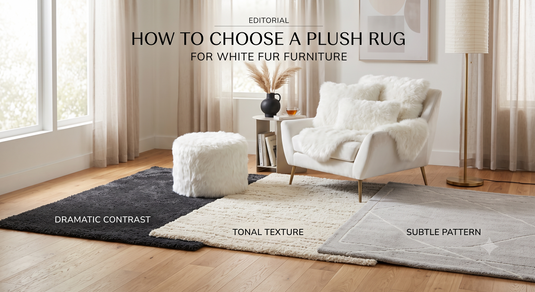
If the room also needs a floor textile, compare plush rugs with white furniture, cream rug care and Italian rug value. These guides help connect the decorative decision with practical ownership.
Frequently asked questions
Can any rug be hung on a wall?
Not automatically. Size, weight, construction, condition and wall type matter. Ask the supplier and a qualified installer about a suitable support method. A valuable textile may need specialist advice before any modification is made.
Which design is calmest for a minimalist room?
A tonal woven panel or low-contrast linear design is often a useful starting point. The room's existing palette and lighting still decide the result. A small traditional textile can also feel calm if it is the only detailed focal point.
Will a wall rug soundproof the room?
Do not assume that. A decorative textile may affect the feel of a room, but soundproofing and measured acoustic treatment require appropriate design and evidence. If acoustics are the objective, discuss it with a qualified specialist.
How do I make the display feel intentional?
Relate the rug's size to the wall and furniture, choose one clear visual role and use a suitable mounting method. Keep nearby objects coherent. The most successful wall rug is one that belongs to the room and can be cared for properly.