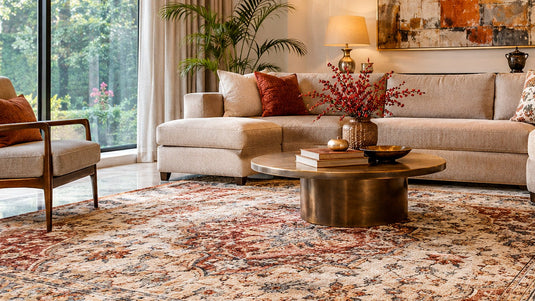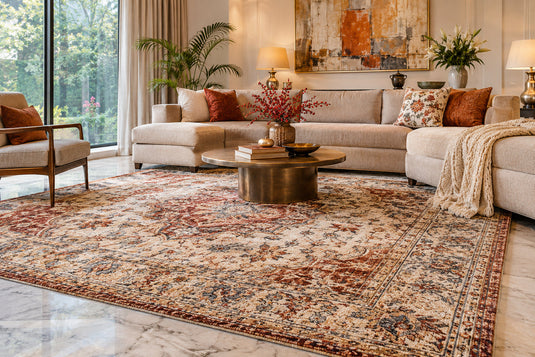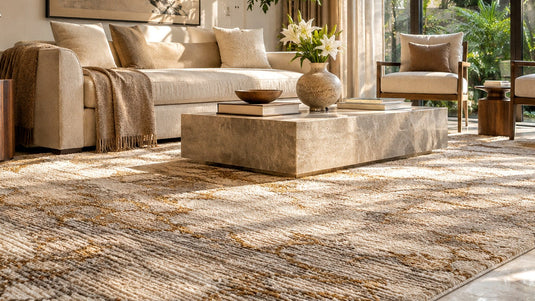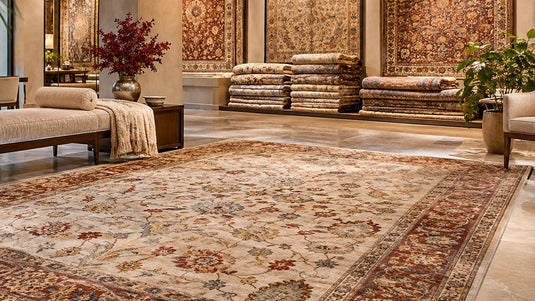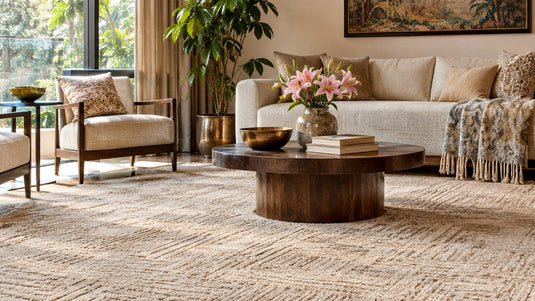
Some interiors have unusual proportions, a specific colour scheme or a furniture arrangement that standard rug sizes cannot accommodate. A bespoke rug can make those constraints part of the design rather than a compromise. Winter is a good time to assess where the household uses the floor most and plan a rug that still works year-round.
Begin with the purpose
Describe the room and what the rug needs to do. Is it anchoring a lounge, adding softness beside a bed or connecting an open-plan seating zone? Identify entrances, furniture legs and pathways. Before discussing colours, measure the full useable floor and mark the desired outline with tape. These notes prevent a beautiful design from arriving in an unsuitable size.
Prepare a design brief
A useful brief includes room photographs in daylight, a dimensioned layout, preferred palette, material interest and reference patterns. Include any elements to avoid—for example, a very high pile under dining chairs or a strong border that clashes with furniture. If possible, attach upholstery or paint references. Explain whether the rug should be quiet and textured or the main focal point.
Choose shape and proportion
Rectangles suit many seating arrangements, but round, runner and unusual formats can work in defined spaces. Consider how much pattern remains visible beneath furniture. Borders should not disappear under sofa legs or be cut awkwardly by the room layout. Confirm the final dimensions in centimetres or feet and clarify acceptable manufacturing tolerances in writing.
Agree on construction and fibre
Different constructions offer different design and care possibilities. Hand-knotting may suit intricate detailing; tufting can create sculptural textures; handloom methods may give attractive linear or flatwoven surfaces. Wool is valued for resilience, while silk-like accents can offer sheen and require gentler care. Ask for a specification that names the actual fibres and construction instead of relying on broad descriptors.
Review the design before production
Request a mockup that shows pattern placement, scale and major colour choices. Where sampling is available, ask how it will be used to confirm texture or tone. Review the rug against your room and furniture plan, not just as a flat design. Confirm the approval process, payment stages, estimated production time, delivery and aftercare. Late design changes may affect cost and timing.
Make the consultation efficient
Send The Ambiente team your dimensions, inspiration pictures, city, preferred budget range and required timing. If the project involves an architect or interior designer, include them early so technical and visual decisions align. The aim is to convert a concept into a specification that can actually be produced and maintained.
Detailed buyer considerations
What to include in the first email or WhatsApp message
Begin with your name, city, room type, target delivery date if one exists, approximate budget and a clearly labelled floor plan. Add photographs taken from the doorway and the main seating position. Explain what existing design must remain, such as a sofa, artwork or flooring. If an architect or interior designer is involved, share their finalized brief to avoid contradictory directions. Include examples of motifs you like but indicate which elements are inspiration rather than exact requirements. The better the brief, the fewer rounds of clarification may be required.
Plan borders, colour and focal motifs together
A rug design looks different once furniture covers part of its surface. Decide where the most important pattern should remain visible. Wide borders may look balanced in open rooms but can become partially obscured beneath sofas or a bed. A large central motif may be unsuitable if a heavy coffee table covers it. Ask for the artwork to be shown within the measured furniture layout. Colour also changes under natural and artificial light, so reference physical samples where possible. Decide whether you prefer a subtle tonal design or a more expressive pattern before approving a final mockup.
Choose fibre and construction for the actual use
For a busy family living room, ask about wool-rich surfaces and how the selected weave responds to wear. For a more formal, low-traffic space, silk-like accents may contribute desirable lustre. Hand-knotting, hand-tufting and handloom construction each support different aesthetic and practical outcomes. Do not assume that every visual effect can be executed in every technique. Ask the maker to explain options, fibre behaviour, pile height and maintenance. The custom design should satisfy the room's function as well as its colour scheme.
Make the approval stages explicit
Confirm who approves the initial drawing, colour references and final technical specification. If there is a physical sample, ask what it represents and which details remain approximate. Set clear expectations for production time, quality checks and delivery. Bespoke rugs can involve handmade variations, so document the agreed design and tolerances instead of relying on verbal descriptions. Review any changes after approval because they can affect both cost and timing. Keep one shared version of the specification if several decision-makers are involved.
How to evaluate the delivered rug
Before installation, review the dimensions, overall palette, pattern scale and edges against the approved specification. Allow the rug to settle according to the product's instructions and use a suitable pad if recommended. Keep it away from damp flooring during placement. Ask about cleaning methods for the actual fibres and whether the rug should be professionally cleaned in future. A bespoke rug is a significant design decision; a simple written handover of care and specifications helps protect that investment over time.
A worked example for a real room layout
An interior designer is creating a rug for an asymmetrical living room. The original reference image has a central motif that would be hidden beneath a large coffee table. Instead of simply reproducing the reference, the designer shifts the main detail toward a visible area, then confirms the border scale and colours against the furniture plan. The owner reviews a mockup while the maker explains which weave and fibre combination can achieve the requested texture. Only after size, pattern and delivery expectations are agreed is the order ready for approval. This process reduces avoidable changes later.
Five mistakes to avoid
- Approving a flat rug image without checking the furniture layout. Before choosing, verify this point using actual room measurements, product details and care guidance rather than relying on a broad category label.
- Using ambiguous colour names instead of a confirmed reference. Before choosing, verify this point using actual room measurements, product details and care guidance rather than relying on a broad category label.
- Assuming every design works in every weave or fibre. Before choosing, verify this point using actual room measurements, product details and care guidance rather than relying on a broad category label.
- Omitting production and delivery requirements from the brief. Before choosing, verify this point using actual room measurements, product details and care guidance rather than relying on a broad category label.
- Making verbal design changes after approving the final specification. Before choosing, verify this point using actual room measurements, product details and care guidance rather than relying on a broad category label.
Final five-step buying checklist
- Send a dimensioned floor plan and daylight photos. This small check can reduce guesswork and helps the seller recommend suitable options rather than unrelated designs.
- State the intended use, traffic and cleaning needs. This small check can reduce guesswork and helps the seller recommend suitable options rather than unrelated designs.
- Confirm weave, fibre, pile and all relevant design elements. This small check can reduce guesswork and helps the seller recommend suitable options rather than unrelated designs.
- Approve the artwork and colour process before production. This small check can reduce guesswork and helps the seller recommend suitable options rather than unrelated designs.
- Keep final dimensions, cost and delivery terms together in writing. This small check can reduce guesswork and helps the seller recommend suitable options rather than unrelated designs.
Explore related handmade rug collections
Compare suitable patterns, constructions and available dimensions: Modern rugs | Textured rugs | Living room rugs. Check each product's material, size and care specifications before ordering.
Frequently asked questions
Are thicker rugs always better for winter?
No. Pile height, construction, fibre and the room's actual use matter more than thickness alone. Compare how the rug feels and how you will clean it.
Can I order a custom size?
The Ambiente offers custom rug enquiries; share measurements and the desired design so availability, specifications and timing can be discussed.
What should I send for a recommendation?
A floor-plan measurement, room photograph, preferred colours, city and approximate budget help the team propose suitable options.
Ask The Ambiente about the right rug for your space
We can help you compare available handmade designs, discuss bespoke dimensions and understand suitable construction options. Share your room photograph and measurements so recommendations reflect your actual layout.
Need help choosing the right rug?
Send your room measurements and placement photos to The Ambiente.
Chat with us on WhatsApp