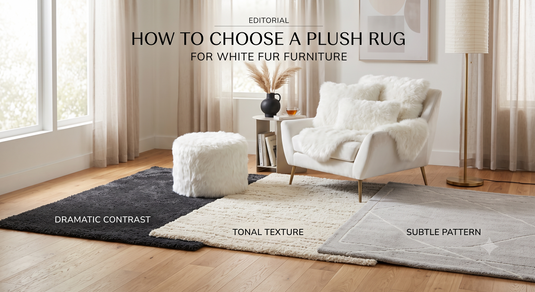
A plush rug can complement white fur or fur-look furniture, but the combination needs enough contrast and structure to remain comfortable and easy to use. Start by deciding whether you want the rug to echo the furniture's softness or provide a quieter counterpoint. Then assess fibre, pile, colour, size and care.
White furry upholstery already carries a strong texture. Adding the longest possible shag rug is not automatically the best match. A more controlled plush surface can retain warmth while making the furniture and walking routes easier to manage.
Identify the furniture material first
The word fur may refer to natural fur, faux fur, sheepskin, a bouclé-like textile or another soft upholstery. These surfaces differ in colour, maintenance and texture. Check the furniture's actual material and care instructions rather than treating all fluffy white furniture as the same.
Look at the undertone. The upholstery may be bright white, creamy ivory or a slightly greyed white. A rug described as white online can belong to a different tonal family and create an unexpected contrast.
If possible, compare a rug sample beside the furniture. Do this in daylight and under the lamps you normally use. The relationship between two pale surfaces can change noticeably with the room's lighting.
Decide which texture should lead
If the furniture is very fluffy, a dense and relatively even rug can provide visual balance. If the furniture has only a subtle furry finish, a more expressive rug texture may work. The decision depends on the whole room, including curtains, cushions and other upholstered pieces.
Too many equally strong textures can make a room feel busy even when all the colours are neutral. Give one surface the main role and let others support it. This is a compositional choice rather than a strict limit on how many textures you can use.
Explore textured rugs for different degrees of surface interest. Look beyond the word plush and inspect the pile height, material and construction. A smooth dense pile and a loose shag can have very different practical behaviour.
Choose contrast deliberately
A white rug beside white furniture can create a soft, continuous palette. It also makes differences in undertone and cleanliness more visible. If you choose this approach, use other room elements to keep the composition readable.
A warm ivory rug may feel gentler beside creamy upholstery. A muted grey, brown or soft colour can provide more separation without making the room harsh. The rug does not need to match the furniture exactly to belong with it.
Browse ivory rugs, grey rugs or brown rugs as possible directions. Compare the actual product colour with the furniture rather than deciding solely from the collection name.
Use the floor as part of the palette
Dark flooring can provide contrast beneath pale furniture and a light rug. Pale flooring may require more distinction in the rug's colour or texture so the seating group does not visually disappear. Neither arrangement is automatically better.
Look at the room from the entrance and from the usual seating positions. The rug should connect the furniture while remaining understandable as a surface. A close-up styling photograph may hide how indistinct the arrangement feels from across the room.
If the floor has a strong pattern, consider a quieter rug. If the floor is plain, a subtle rug motif can add interest. The relationship should include the existing architecture rather than treating furniture and rug as an isolated pair.
Match the pile to the room's use
A plush rug can be comfortable, but very long pile may complicate vacuuming and furniture placement. Think about whether people eat in the room, children play there or small objects regularly fall onto the floor.
Check doors and movable furniture. A pile that interferes with a door or makes a lightweight table unstable can become frustrating. Ask for the pile height and consider the thickness of any recommended pad as well.
For a heavily used bedroom or lounge, our high-traffic shag rug guide explains why softness must be balanced with maintenance. Do not assume a rug is suitable for heavy use merely because it is described as cosy.
Examine the fibre composition
Wool can provide a comfortable surface and is a useful option to investigate for everyday interiors. Synthetic fibres may offer different price points and care routines. Lustrous regenerated fibres can create a distinct appearance but need careful consideration of moisture and cleaning.
Ask for percentages in a blend and the actual construction. The same fibre name can appear in very different rugs. Density, yarn and backing influence the finished product alongside composition.
For a busy room, read our tufted rug material guide. You can also compare wool rugs by their individual specifications. Do not choose a material only because it looks soft in a photograph.
Consider shedding and lint
White furry furniture may release fibres or make lint more noticeable. Some rugs may also shed, especially early in use. Ask the supplier what is expected for the selected product and what maintenance is recommended.
Contrast affects visibility. Pale upholstery fibres may show clearly on a dark rug, while dark hair or grit may show clearly on a light rug. No colour makes all debris invisible. Choose a palette you can maintain rather than seeking an impossible no-cleaning combination.
Avoid judging shedding from a single vague review. Look for information about the exact construction and use period. If the amount seems excessive or changes unexpectedly, contact the supplier rather than using aggressive brushing that may damage the surface.
Size the rug around the seating group
Measure the furniture footprint and walking routes. The rug should connect the arrangement without interfering with doors or access. Placing front furniture legs on the rug can be a useful starting point, but the room's layout takes priority.
A small accent rug can work beside a reading chair. Beneath a sofa and coffee table, it may look disconnected if the furniture sits entirely outside it. Mark the dimensions on the floor before choosing the final product.
Our small living room rug guide offers a practical placement framework. Even in a larger room, the relevant measurement is often the seating group rather than the total floor area.
Keep the furniture stable
Check how the legs and base will sit on the selected rug. A deep or uneven pile can affect lightweight furniture differently from a compact surface. A table with small feet may need particular attention.
Do not place furniture half on an edge if that creates an unstable arrangement. Test the intended positions and consider whether the rug needs to be larger or shifted. If the furniture has manufacturer guidance about floor surfaces, follow it.
The pad also matters. A compatible pad can support stability and cushioning, but an excessively thick layer may not suit the furniture or door clearance. Choose the rug and pad together rather than adding an arbitrary extra layer after installation.
Choose a pad for the floor and rug
Ask what backing the rug uses and what pad is recommended. Confirm suitability for the actual floor finish. Smooth tile, wood and specialist finishes may need different considerations, and a non-slip claim should be checked against the product details.
Clean and dry the floor before placing the rug. Check corners after installation and allow any flattening process to follow the supplier's instructions. Avoid household tape or adhesives as a permanent solution without appropriate guidance.
Our rug padding guide explains why the underside deserves its own buying decision. A plush top surface does not tell you whether the rug will grip or protect the floor properly.
Be realistic about a pale palette
White furniture and a light rug can create a beautiful calm room. They also make some marks easier to see. Decide how food, drinks, shoes and pets will be managed before committing to the combination.
Colour visibility is not the same as stain resistance. A cream rug's actual response to a spill depends on its material and finish. A darker alternative can still stain and still needs maintenance.
Our cream rug protection guide discusses these differences. If a very pale rug feels impractical, consider a softly mixed neutral or low-contrast pattern that preserves the mood with a different visual effect.
Plan cleaning for both surfaces
Keep the furniture and rug care instructions separate. A product suitable for faux-fur upholstery may be unsuitable for the rug, and a rug cleaner may be unsuitable for the furniture. Do not assume matching appearance means matching care.
Check the recommended vacuum method and attachments. Some delicate or long-pile surfaces need different treatment from a short dense rug. Avoid aggressive brushing or soaking unless the product instructions allow it.
For spills, follow the relevant care sheet promptly. If a spill affects both furniture and rug, treat each according to its own composition. Seek professional advice when the material is delicate or the substance is difficult to identify.
Use lighting to assess the finished effect
Plush surfaces can look different when illuminated from the side. Shadows may emphasise texture, while diffuse light can make the same surface appear smoother. Test the rug in the room rather than assuming a catalogue photograph will translate exactly.
Look at the two pale materials together at different times of day. If the furniture and rug undertones clash, a slightly different neutral may solve the problem more effectively than adding more accessories.
Do not use strong lighting simply to make the texture appear luxurious. The room should remain comfortable for its normal activities. A cohesive interior works under the lighting people actually use, not only under a styling setup.
Avoid unnecessary matching sets
A rug does not need to copy the furniture's exact colour and texture. A controlled contrast can make both pieces more legible. You can connect them through one shared undertone or a small repeated colour elsewhere.
Keep cushions and throws selective. If the sofa and rug already carry considerable softness, another furry throw may be unnecessary. A smoother textile can provide a useful balance while keeping the palette calm.
Our carpet and cushion shopping guide explains how to coordinate textiles without buying every component from one retailer. The room's composition matters more than an exact product match.
Check the purchase terms
Online texture and colour are difficult to judge precisely. Ask about samples, additional images and the applicable return terms. Confirm whether the selected size or made-to-order product has different conditions.
Calculate the delivered cost, including a pad where required. Add realistic maintenance expenses if specialist cleaning is part of the product's care. A rug that suits the room and can be maintained is better value than one purchased solely for an attractive promotional image.
Inspect the rug promptly after delivery. Check dimensions, composition, colour and condition before disposing of packaging or moving all the furniture. Follow the supplied instructions for installation and report any mismatch through the seller's process.
Make the final check from across the room
Place samples or clear visual references beside the furniture, then view the arrangement from the doorway. Close-up softness is only part of the result. Check whether the rug gives the furniture enough definition, whether its colour belongs with the floor and whether other textiles compete for attention. A slightly quieter rug may create a more comfortable overall room than the fluffiest option in the shortlist.
Related rug planning guides
For related decisions, compare 2026 carpet inspiration, minimalist wall rug ideas and Italian rug value. They can help you assess whether the rug should be a quiet background or a distinctive focal point.
Frequently asked questions
Should a rug match white fur furniture exactly?
No. An exact match is one option, but a related neutral or controlled contrast can work equally well. Compare undertones and texture in the actual room. The goal is a coherent arrangement, not identical materials.
Is shag the best rug style for furry furniture?
Not automatically. Very long pile can compete with the furniture and may require more care. A compact plush surface or subtle texture can provide warmth with a clearer composition. Choose according to room use and maintenance.
Can a darker rug work with white furniture?
Yes. It can provide visual separation and anchor the seating group. Consider whether pale fibres from the furniture will be noticeable and whether the colour connects with other room elements. Maintenance and palette should be assessed together.
What should I prioritise before buying?
Check the dimensions, fibre, pile, backing and care first. Then assess the colour relationship under your lighting. A rug that fits those requirements will be easier to enjoy than one selected purely because it appears fluffy in a photograph.