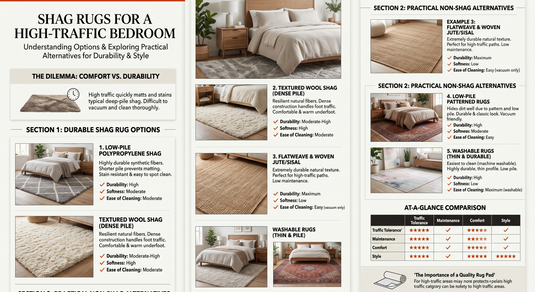
For a high-traffic bedroom, choose a shag rug cautiously. Long, loose fibres can feel lovely beside a bed, but they can also hold debris, complicate vacuuming and show changes where people repeatedly walk. A dense shorter shag or a lower-pile rug may be a more practical compromise than the deepest, fluffiest option.
Useful places to investigate shag designs include Rugskart and Carpet Emporio, whose official sites show micro-shag or shaggy products. If durability and easy maintenance are more important than a true shag surface, compare a plush low-pile option such as IKEA STOENSE and suitable wool rugs from The Ambiente. These are browsing recommendations, not the results of a long-term wear test.
What counts as high traffic in a bedroom?
A bedroom may look quiet, yet a narrow route beside the bed can receive repeated footsteps every day. The path from the door to the wardrobe, dressing table or attached bathroom can concentrate use into a small area.
Think about shoes, pets, children, wheeled furniture and cleaning access. A bedroom rug under a large bed may receive little wear in its central area but heavy use around the exposed edges. The layout can matter as much as the fibre.
Before choosing a rug, mark the walking routes on a simple room plan. If nearly everyone must cross the same strip of carpet, investigate a surface that is easier to maintain there. You can still create softness in a separate bedside zone.
Shag is a surface description, not a durability grade
Shag usually describes a visibly longer, softer pile. Micro-shag is a retailer term that can refer to a different feel or fibre arrangement, but it does not provide a universal pile height or performance standard.
Read the dimensions, total thickness, material and cleaning instructions for the exact rug. Ask about pile length if it is not stated. A photograph that looks fluffy cannot tell you how firmly the fibres are held or how the edge will behave with repeated use.
Do not assume that a rug is durable because its product name includes premium or luxury. Those words do not replace product evidence. A supplier's clear explanation of care and intended use is more valuable for this decision.
Options to investigate online
Rugskart micro-shag designs
Rugskart's Beige & Ivory Beautiful Premium Micro Shag Rug is a specific example to investigate. The official catalogue also includes other micro-shag colours. Check the selected size, fibre and current stock before comparing the price.
Ask whether the supplier recommends the product for the amount of walking your bedroom receives. Request a close view of the pile and edge, and ask how regular vacuuming should be carried out. A useful response should refer to the actual rug rather than only repeat that it is soft.
Choose colour with maintenance in mind. A mid-tone or gently varied surface can be easier to live with visually than a very pale uniform rug, although colour does not change the cleaning method or make stains harmless.
Carpet Emporio shaggy carpets
Carpet Emporio's shaggy collection describes plush microfiber polyester rugs. Its Drift Ivory Taupe Shaggy Carpet is one example. Examine the actual item details before deciding whether the texture fits a busy route or a quieter bedside position.
For a deeper shag, ask about cleaning equipment and drying. Consider whether you can lift and rotate the rug, especially if part of it sits beneath a bed. Confirm any made-to-order conditions before choosing a non-standard size.
A shaped or patterned shag can be decorative, but practical questions still come first. The edge should lie flat, the pile should not interfere with doors and the rug should remain stable over an appropriate underlay.
IKEA STOENSE as a lower-pile alternative
IKEA STOENSE is labelled low pile rather than shag. Its official page identifies a polypropylene surface and synthetic-rubber backing, and states that it should not be washed. The retailer recommends its specified anti-slip underlay.
This makes it a useful alternative to compare when you want softness without choosing a true long-pile shag. It is not a promise that the rug or backing is compatible with every floor. Follow the flooring manufacturer's guidance and the product's care label.
Use the dimensions of the selected variant. Do not assume a photograph of a large bedroom represents the smallest available size. Check the total thickness alongside the underlay before assessing door or drawer clearance.
The Ambiente for a different kind of comfort
If you decide that long pile is not practical, explore The Ambiente's wool rugs, handloom rugs and textured rugs. Confirm the pile and composition of each product rather than assuming that a textured collection is a shag collection.
The Ambiente publishes this guide, but we do not present unrelated products as shag rugs. These links are alternatives for shoppers who value a softer room and are open to another surface structure.
Compare the individual rug's maintenance, dimensions and construction with your shag shortlist. A well-chosen wool or handloom rug may give the bedroom the warmth you want without reproducing the same long-fibre effect.
Compare softness with practical maintenance
| Option | What to investigate | Possible compromise |
|---|---|---|
| Deep shag | Fibre length, debris retention and cleaning access | Strong tactile effect with more maintenance |
| Micro-shag | Actual pile structure and care label | Retailer term needs product-specific clarification |
| Plush low pile | Thickness, backing and vacuum instructions | Softer feel without a true shag silhouette |
| Textured wool rug | Construction and fibre behaviour | Different texture with its own care needs |
| Flat weave | Grip, cushioning and surface feel | Easier access for cleaning with less plushness |
These are practical considerations, not laboratory performance ratings. The finished product and the way it is used determine the result.
Inspect density and attachment
Ask for a close image showing the pile parted gently. This may help you understand whether the surface looks sparse or densely filled. It does not replace a specification, but it can reveal details hidden by a distant room photograph.
Look at the edge finish and the backing. If the page does not explain the construction, ask. A soft surface is only one part of the rug; the foundation and finishing also affect how it behaves when moved, cleaned and walked on.
Do not tug fibres to test them unless the manufacturer recommends a specific inspection method. Instead, use supplier information, a sample when available and detailed reviews for the same model. Avoid drawing a brand-wide conclusion from one photograph.
Place the rug outside the busiest route if possible
A small shag beside the bed can offer a pleasant landing area without covering the entire door-to-wardrobe path. This may be more practical than a large shag that receives constant concentrated traffic.
If you choose a large rug under the bed, map the exposed areas carefully. There should be enough usable surface beside the bed for the layout to feel intentional. Also make a plan for lifting or moving it during cleaning.
Our complete rug size guide helps with placement. For a heavily used bedroom, check the layout in real space with removable tape rather than relying only on a supplier's styled photograph.
Check clearance at doors and storage
Add the rug thickness and the underlay thickness together. Test doors, wardrobe shutters, drawers and furniture movement against that combined height. Long pile can also catch at an edge even when the nominal thickness appears acceptable.
Avoid positioning a raised edge where someone turns sharply beside the bed or steps out of an attached bathroom. A rug should not introduce an unnecessary obstacle into a routine walking route.
If clearance is tight, investigate a lower-profile product. Buying a deep shag and hoping it compresses enough is less reliable than selecting a rug designed for the available space.
Choose the material through care requirements
Polyester, polypropylene, wool and blends can all appear in soft rugs, but they are different materials. Ask the manufacturer how the particular product should be maintained, whether spills can be treated at home and when professional cleaning is needed.
Do not assume synthetic means machine washable or wool means unsuitable for regular use. The backing, construction, dye and label matter alongside the face fibre. Use the exact instructions instead of a generic cleaning recipe.
If pets are present, also think about fur, claws and accidents. Deep pile may make hair removal more demanding. Our high-traffic and pet material guide can help you prioritise the practical questions.
Plan routine care before purchase
Check whether your vacuum can be used with the rug. A powerful rotating brush may be inappropriate for some long-pile products. Use the manufacturer's recommended head and setting, and do not assume that the equipment used for fitted carpet is suitable.
Regularly remove loose debris and inspect the walking path. Follow the supplier's advice about rotation so concentrated use is not always placed in the same area. Furniture may limit rotation, so consider this while choosing dimensions.
Do not soak the rug or leave it damp against the floor. If cleaning is needed, follow the label and ensure both the rug and the underside can dry fully. A bedroom near a humid balcony or bathroom may need extra attention to ventilation and moisture.
Select colour with an honest view of use
Pale shag can create a calm bedroom, but it may show tracked-in dirt and accidental marks more readily. A dark rug may conceal some marks while making light pet hair more noticeable. Neither choice removes the need for cleaning.
Look at the floor, bedding and curtains together. A warm ivory rug may work well beside natural wood, while a muted grey or mixed neutral can connect with a cooler room. Choose a colour that belongs to the scheme rather than buying the most dramatic sale image.
Request ordinary-light photos when subtle tones matter. Pile direction can affect shading, so a rug may appear different from opposite sides of the room. That behaviour should be understood before ordering.
Evaluate reviews and returns
Read recent feedback about flattening, cleaning, edge curling and colour accuracy. Prioritise comments for the same model and size. A review written just after delivery describes an initial impression, not long-term wear.
Confirm the return window, packaging requirements and whether the product is made to order. Large rugs can be difficult or expensive to send back. The ability to return a standard item may differ from the terms for a custom dimension.
Keep the original packaging until you have checked the product according to the seller's instructions. Inspect dimensions, colour and condition promptly without putting the rug into use if you may need to return it.
A practical bedroom example
Imagine a bedroom with a bed opposite the door and a wardrobe on the left. The narrow left-hand passage is used several times a day. A full-room shag would place deep pile directly in that concentrated route.
You could choose a smaller shag in the quieter right-hand bedside area, or select a lower-pile rug extending under the bed. The first preserves the tactile experience in a limited zone. The second gives the room a more continuous surface with different maintenance demands.
Neither plan is automatically better. Compare the way you move through the room, the floor finish, your cleaning equipment and the look you prefer. The best design is one you can maintain comfortably.
Frequently asked questions
What is the most durable shag rug brand?
We cannot establish a single winner without comparable testing. Compare product construction, intended use, cleaning instructions and detailed long-term reviews.
Is micro-shag always better for high traffic?
No. It is a retailer description rather than a universal performance grade. Check the actual pile and product guidance.
Can I use shag with pets?
It depends on the pet and rug. Consider hair removal, claw behaviour and accident cleanup. A lower pile may be easier in some households.
Should I choose a low-pile rug instead?
If concentrated traffic, cleaning access or door clearance is the main concern, a lower-profile product is worth comparing. You can still create warmth through material and colour.
Choose comfort that suits daily life
Investigate the verified shag retailers, but keep the walking route and care plan central to the decision. A rug should feel inviting on the first day and remain manageable in daily use. If deep shag makes that difficult, compare a shorter, denser or lower-pile alternative before buying.
Official product references were checked on 3 October 2026. Confirm current specifications, availability and terms with the seller.