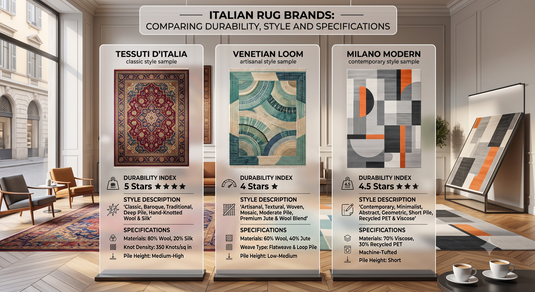
Italian rug brands worth exploring for design and specification include cc-tapis, Amini and Illulian. They are documented names with distinct approaches to rugs, but a brand's Italian identity is not the same as a promise that every rug is made in Italy. Durability must also be assessed at product level through material, construction, intended use and care.
If you are buying for a busy Indian home, start with the room's requirements. A striking silk-rich design for a quiet sitting area may be less suitable for a family circulation route. A rug can be beautifully made and still be wrong for the way your household uses the space.
This shortlist is based on published brand information, not hands-on testing or a universal performance ranking. It is designed to help you ask better questions before investing in a rug.
cc-tapis: distinctive design with a global production story
cc-tapis is based in Milan and describes a production network that includes Nepal, Thailand and India, with smaller projects in Italy. This is an important distinction for buyers who assume that an Italian design label means all manufacturing takes place in Italy.
The brand is a useful starting point when you want a rug with a clear design presence. However, visual originality and durability are separate questions. Ask for the exact construction, composition and room suitability of the selected design.
Its materials information describes a range of fibres, including wool and silk-related options. Do not apply the characteristics of one fibre to the whole catalogue. A wool-based design and a delicate lustrous design may need different placement and care.
For a project, request the technical sheet and any relevant intended-use information. Confirm whether the rug can be made in your desired dimensions and how changes affect the pattern. Also ask who will provide after-sales support in India if the product is supplied through a dealer.
Amini: compare collections rather than relying on one label
Amini presents a range of rugs with different design and material approaches. Its company information also describes care-related services. Those services are worth asking about, particularly for a significant purchase, but availability and terms should be confirmed for your location.
Look at the chosen collection's technical details. A brand can offer several constructions and price levels. You should know whether you are comparing hand-knotted, hand-tufted or woven products, and how much of the surface is wool, silk or another fibre.
Ask for images that show the edge, underside and surface closely. A room photograph is useful for styling but may hide information about pile, backing and finishing. A material sample can be helpful when colour or tactile quality is central to the brief.
Do not infer country of manufacture from an Italian company address. Request the origin of the specific product if that matters to you. Accurate documentation is more valuable than a broad description that leaves design origin and production origin mixed together.
Illulian: custom design requires a detailed specification
Illulian is another established Italian design name to explore, particularly when you are interested in a distinctive or custom rug. Its published frequently asked questions explain that price depends on factors such as quality, dimensions and composition, with shipping considered separately.
That information makes a fixed catalogue-wide price comparison unreliable. A custom quote needs a consistent brief. Specify the intended room, dimensions, colours, composition and required delivery destination before comparing it with another supplier.
If a treatment or finish is offered, ask what it does and what it does not do. An optional stain-related treatment is not a guarantee that spills can be ignored. Confirm the effect on care, warranty and future professional cleaning.
For a busy home, discuss expected use explicitly. Do not assume that a luxury brand's most delicate design is its most practical one. The right product is the one whose specification fits the room, regardless of where it sits in a brand's price range.
What durability means in a rug
Durability includes more than surviving without a hole. You may care about appearance retention, edge stability, resistance to flattening, ease of removing ordinary soil or the ability to repair a damaged area. These concerns can point toward different products.
Describe the room's actual stresses. A lounge used in the evening differs from a narrow daily walking route. A dining room adds chair movement and food spills. A home office may involve rolling furniture that requires separate consideration.
Ask the supplier which of these conditions the rug is designed to handle. A general statement that a product is durable should be followed by meaningful information about material, construction and use. Marketing language alone is not enough to compare expensive rugs fairly.
Start with the fibre, then examine the construction
Wool is often a useful starting point for a comfortable everyday rug, but its performance also depends on the yarn and construction. Silk and some lustrous regenerated fibres can provide a different visual effect while requiring a more careful location and cleaning routine.
A blended description needs percentages or a clear explanation of where the fibres appear. Decorative silk details in a wool-rich rug are different from an almost entirely delicate surface. The composition should be specific enough for a cleaner to understand later.
Construction matters too. Compare pile density, finishing and backing where applicable. Do not use thickness alone as a measure of quality. A tall, soft pile can be less practical for repeated traffic than a more compact surface.
Our hand-knotted and hand-tufted comparison explains why the methods should be evaluated individually. Neither an Italian label nor a construction name automatically answers every question about the finished rug.
Assess the style in your own room
A designer rug can command attention. Decide whether you want it to lead the room or support another focal point. A bold rug beneath equally bold furniture and artwork may create a composition with no clear hierarchy.
View the complete design at the intended dimensions. If much of it will sit beneath a large sofa or table, consider whether the visible sections still make sense. A rug designed as a strong graphic statement may need more open floor than a subtle textured rug.
For quieter ideas, compare minimal rugs. For a more expressive direction, explore modern rugs. These are separate design alternatives, not claims that the collections reproduce another brand's work or share its manufacturing methods.
Consider colour, light and surface direction
Lustrous fibres can look different from different viewing directions. This can be part of their appeal, but it can also surprise someone who expected a uniform colour. Ask for photographs from more than one angle and view a sample in your room if possible.
Check daylight and evening lighting. Warm lamps, tinted glass and surrounding upholstery all affect the apparent colour. A showroom image cannot tell you exactly how a rug will look in your home.
Avoid approving a costly custom colour from a phone screenshot alone. Where the supplier offers sampling, ask whether the sample represents the final fibre and construction. A printed colour reference and an actual yarn sample serve different purposes.
Ask about Indian supply and after-sales support
An international catalogue is not proof of local stock. Ask whether the product is already in India, supplied through an authorised dealer or imported after you order. These routes can affect taxes, shipping, return options and the person responsible for resolving a problem.
Request a delivered quote for your address. Clarify which charges are included and who handles customs clearance where relevant. If currency conversion is involved, ask when the exchange rate is fixed and whether later changes affect the total.
Lead time should distinguish production, dispatch and delivery. A product shown online may be made to order. An estimated manufacturing period does not necessarily include sample approval, freight or customs. Our custom-size supplier comparison provides a consistent way to record these stages.
Maintenance is part of the purchase
Obtain the care sheet before buying, not only when a spill occurs. Check the recommended vacuum method, spot-treatment restrictions and professional cleaning requirements. A rug's visual appeal is easier to enjoy when you know how to look after it.
Ask whether local cleaning services can handle the composition. A delicate imported rug may require specialist attention, and not every service is equipped for every fibre or construction. Confirming this in advance is especially useful outside major cities.
Keep the technical sheet and invoice. They can help a cleaner identify the material and help you discuss repairs with the supplier. Do not apply a generic recipe from social media to a valuable rug merely because it is described as natural or luxurious.
Compare Italian brands with Indian alternatives fairly
Indian rug makers and retailers offer a wide range of materials and constructions. Compare a selected product with a similarly specified alternative, rather than comparing one luxury design with an entry-level rug from another country.
The Ambiente's hand-knotted rugs, wool rugs and luxury rugs offer ways to explore different briefs. Check each product's own composition and dimensions. These collections should not be presented as Italian-made unless an individual listing explicitly establishes that origin.
A local option may offer advantages in communication, sampling or delivery, but those advantages should be confirmed. An imported design may justify its cost through a particular aesthetic or custom service. Value depends on what you need and what the supplier actually provides.
Build a comparison sheet before committing
Record the brand, selected design, dimensions, material composition and construction. Add country of manufacture if it matters to the purchase. Include the delivered price, production estimate, expected arrival and after-sales contact.
Then note the intended use and care requirements. This prevents a beautiful photograph from overshadowing a practical concern. If one supplier cannot answer a key question, leave that field unresolved rather than filling it with an assumption.
Compare samples or close-up images alongside the written details. The sheet does not replace judgement, but it makes the judgement easier to explain. It can also help a designer and client agree on why one option is more suitable than another.
Questions that reveal whether a quote is useful
Ask the supplier to connect its recommendation to your brief. If it proposes a particular fibre, ask why that fibre suits the traffic and cleaning conditions. If it recommends a custom size, ask how the design will be adapted and what dimensional variation is expected. If it mentions a protective treatment, ask for the documented care requirements rather than assuming protection is permanent.
Request a clear distinction between available stock and a new production order. Ask whether a displayed sample can be supplied in the same composition and whether the selected colour will be approved physically or digitally. Confirm the contact responsible for resolving a delivery problem. These questions do not require you to become a textile expert. They require the seller to explain the actual product in a way that supports a considered purchase. A useful quote should leave you knowing what will arrive, why it suits the room and how it will be maintained.
Related rug planning guides
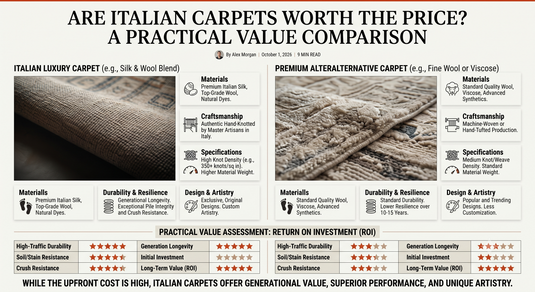
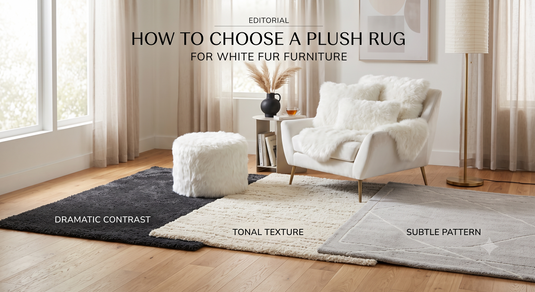
Our Italian rug price comparison develops the value questions further. For specific household conditions, compare cream rug care and plush rug placement before choosing a delicate or unusually soft surface.
Frequently asked questions
Are Italian rug brands automatically more durable?
No. Brand nationality is not a performance specification. Material, construction, finishing and intended use determine whether a rug suits your room. Compare the selected products rather than applying one durability claim to an entire country.
Are all rugs from Italian brands made in Italy?
No. Some Italian design brands use international production networks. Request the country of manufacture for the exact rug if origin matters to you. Keep design identity, company location and production origin separate in your comparison.
Is silk the best material for an expensive rug?
Silk can offer a distinctive lustre and refined appearance. It is not automatically the best option for every room, especially where spills or heavy traffic are expected. Decide whether that appearance is worth the care commitment and ask the supplier about the precise composition.
Which brand should I choose first?
Start with the design and specification that fit your room. Explore cc-tapis, Amini and Illulian as documented options, then compare their selected products with alternatives. A clear brief and written quote will help more than an unsupported ranking of whole brands.