For leather rugs in India, start with brands and retailers that state the actual material composition, explain the construction and provide usable care instructions. Two documented options to explore are The Rug Republic and Saraf Furniture, also known through its INSARAF storefront. Their ranges provide starting points for a shortlist, rather than evidence that every design is equally durable or suitable for every room.
Leather rugs differ considerably. A stitched hide rug, a woven leather-and-jute rug and a product containing synthetic leather can look related in photographs while requiring different care. Choosing the right category matters more than buying a product simply because leather appears in its title.
This guide reviews buying routes and practical checks. It does not claim that we have physically tested these brands or that a particular seller is the best for every customer. Product details should be confirmed against the current listing before ordering.
The Rug Republic: inspect the composition of each design
The Rug Republic's leather rug collection includes leather designs alongside leather-and-jute combinations. Its published product range has included names such as Permar, Rosenberg and Brayton. These are useful examples of how varied the category can be.
The buying lesson is to read each individual product page. Do not assume that all designs in a collection use the same type of leather or the same proportion of other fibres. A woven blend can have a different surface, weight and cleaning requirement from a hide patchwork.
Ask for a close-up photograph of the edges and reverse side if the listing does not provide them. Confirm the finished dimensions, whether a pad is recommended and how the rug should be treated after a spill. Current stock and delivery estimates need confirmation for the selected size and delivery postcode.
This brand is worth considering when you want to compare different leather-based constructions within one range. It is not a shortcut around checking the actual specifications. Brand familiarity cannot tell you whether a particular design suits a dining area, a bedroom or an entrance route.
Saraf Furniture: a second documented shopping route
Saraf Furniture's Kapalon leather carpet collection provides another place to explore leather rugs online in India. Review the current product details and ask for written answers where the material or maintenance description is incomplete.
Keep the distinction between furniture expertise and rug suitability clear. A retailer offering leather products can be a useful source, but you still need rug-specific information. The care required for a leather sofa should not be automatically applied to a floor textile.
Ask whether the colour is inherent to the material or applied through a finish, whether the rug contains a backing and how it should be cleaned. If a listing uses an unfamiliar collection name, do not infer a technical specification from the name alone. The invoice and product description should identify what you are purchasing.
Compare the seller's response with your room requirements. A rug that is attractive in a photograph may be unsuitable near a wet balcony door or in a place where dining spills are common. You should be able to explain why the chosen construction fits the intended location.
Why this is a shortlist rather than an invented top five
There are many marketplace listings for leather rugs. A long list of names would be easy to assemble, but it would not necessarily help you distinguish a manufacturer from a reseller or genuine leather from a leather-look material.
The two shopping routes above are based on publicly available retailer collections. Inclusion is not a guarantee of current availability, after-sales performance or independently verified durability. Before paying, confirm the specific design, composition, size, delivery terms and returns.
The Ambiente should not be treated as a leather rug supplier unless a current product listing explicitly says so. If you like the visual warmth of leather but want to compare other materials, our brown rugs and textured rugs provide separate design alternatives. They are alternatives in appearance and feel, not leather substitutes with identical performance.
Understand the main leather rug constructions
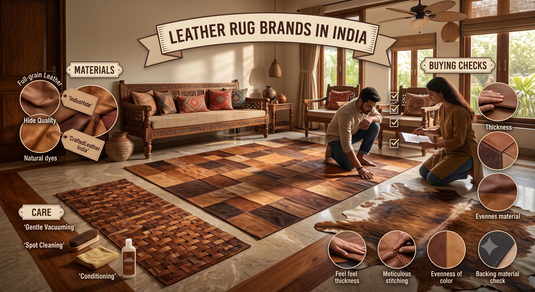
Hide rugs retain the character of a hide surface. Patchwork rugs join pieces into a larger design. Woven leather rugs use strips in a woven structure, sometimes with another material such as jute. A printed or embossed leather-look textile is another category again.
The joins matter. Inspect whether seams are even, whether edges sit flat and whether the underside is explained. A photographed pattern can conceal the construction. Ask for an image close enough to show how the pieces or strips meet.
Natural variation is common in animal-derived materials, but variation should not be used to dismiss every defect. Uneven finishing, broken stitching or an inaccurate size are different from an expected tonal difference. Request a clear explanation of acceptable variation before ordering.
If the seller uses terms such as recycled leather, bonded leather or PU, ask what they mean for that product. These descriptions should not be collapsed into genuine hide. They may offer different visual effects and price points, but they need an accurate material statement.
Choose the room before choosing the brand
A quiet sitting area and a busy family corridor expose a rug to different stresses. Map the walking route, likely spills and furniture movement. Consider whether people regularly wear outdoor shoes in the room or whether the rug will sit under a dining table.
Leather may suit an accent area where its texture is visible and its care requirements are manageable. It should not be assumed to be the easiest choice for a frequently wet entrance or a child's messy play zone. Ask the supplier to explain the intended use of the exact construction.
For heavy daily use, compare leather with wool or another suitable rug material before committing. Our high-traffic rug material guide can help you frame that comparison. The point is to choose according to use, rather than expecting a fashionable material to solve every practical need.
Think about moisture and cleaning realistically
Do not soak a leather rug or apply a household cleaner simply because it works on another rug. Water, solvents, oils and inappropriate treatments can affect leather finishes and joined constructions. Follow the manufacturer's instructions for the particular product.
Ask what to do with a small spill and what requires a specialist. A written care sheet is more useful than a general assurance that the rug is easy to maintain. Confirm whether the seller recommends a cleaning service and whether that service can handle the rug's mixed materials.
Leather-and-jute designs deserve especially careful interpretation. A treatment that suits one component may be unsuitable for another. Do not assume that a blended construction can be washed, steamed or treated with leather conditioner. Product-specific guidance is essential.
If you cannot realistically follow the care instructions, reconsider the material. A rug should work with your household routine. It should not become a constant source of worry whenever someone brings a drink into the room.
Evaluate comfort and surface behaviour
Leather does not provide the same underfoot experience as a deep wool pile. Woven strips, hide and patchwork constructions can each feel different. Consider whether you want the rug mainly for visual character or for regular barefoot comfort.
A small sample can help assess the surface, but it may not show how a full-size rug lies on the floor. Where possible, ask for photographs of the whole rug unrolled. Check the manufacturer's instructions for flattening and whether creases from transport are expected to settle.
Do not place a rug in a circulation route until the corners lie safely and the appropriate pad is installed. A rug's weight is not a guarantee against sliding. The floor finish, underside and room conditions all influence stability.
Check backing and floor compatibility
Ask what touches the floor. A backing may contain materials that need compatibility checks for a particular wood finish or stone surface. A pad can help with grip or protection, but it should be chosen for the rug and floor together.
Clean and dry the floor before installation. Trapped grit can damage surfaces as the rug moves. Moisture underneath can create a different problem from a spill visible on top. If the room receives damp air or occasional water ingress, address that condition before buying a leather rug.
Our rug padding and underlay guide explains why underlay is separate from the rug's decorative surface. Check the care labels for both pieces and follow any restrictions from the floor manufacturer.
Compare prices without comparing unlike products
Do not compare two rugs only by their listed price. Start with actual dimensions and calculate the approximate price per square metre if the shapes allow a fair comparison. Then consider the composition, construction, finish and services included.
A leather-and-jute rug and a patchwork hide rug may have different manufacturing inputs and care needs. A lower price does not automatically mean poorer value, and a higher price does not automatically establish superior longevity. You need enough detail to explain what accounts for the difference.
Add delivery, a suitable pad and any likely specialist cleaning expense. Confirm whether the price includes taxes and whether the seller's return terms apply to the size you selected. Promotional prices can change, so save the final order details instead of relying on an old screenshot.
Match leather visually without overwhelming the room
Leather can bring warm tones and a distinctive surface to an interior. To keep the composition balanced, repeat a related colour in a small accent rather than trying to match every element exactly. A brown leather rug can sit alongside timber, stone or fabric without all those materials sharing one shade.
If the room already has a leather sofa, consider whether another substantial leather surface adds depth or makes the composition too uniform. A different texture can provide a useful counterpoint. Compare the rug with the furniture under the lighting that will be used in the room.
For quieter arrangements, minimal rugs offer another design direction. You do not need to choose leather simply because the room includes leather furniture. Material contrast can be more effective than literal matching.
Questions to send a seller before ordering
Ask for the full material composition, construction method and finished dimensions. Request the care sheet and an explanation of suitable room use. Ask whether the product is in stock, made to order or imported after purchase.
Next, confirm the delivered price, estimated dispatch and delivery dates, return eligibility and process for reporting transit damage. If a custom size is involved, request the agreed dimensions and tolerances in writing. Verbal assurances are difficult to compare across suppliers.
Finally, ask about variation. Is the displayed photograph representative or does it show the actual rug? Will the hide pattern differ? Can the seller provide an image of the piece being dispatched? These questions help set realistic expectations without treating natural materials as factory-identical surfaces.
Related rug planning guides
For other material decisions, compare tufted rugs for busy areas. If the purchase is custom, use our supplier quote guide. Our Italian rug value comparison also explains how to assess a premium without relying only on brand identity.
Frequently asked questions
Are leather rugs suitable for every high-traffic room?
No material should be recommended for every room without checking its construction and intended use. Leather rugs vary widely. For a busy circulation route, confirm abrasion suitability, edge stability and cleaning requirements with the supplier. Compare alternative materials if frequent spills or wet shoes are part of daily life.
Can I use leather conditioner on a rug?
Only if the rug manufacturer explicitly recommends that product and method. A treatment designed for a sofa or shoes may alter the rug's finish or affect mixed materials. Avoid improvised treatments and ask for product-specific guidance.
Is recycled leather the same as a natural hide rug?
No. The term can describe a different material process and should be clarified by the seller. Ask for the actual composition and construction. Buy based on the disclosed material rather than assuming all products carrying the word leather have the same properties.
What is the most useful final check?
Make sure the rug suits the room's daily use and that you can follow its care instructions. Then confirm size, floor compatibility and written purchase terms. A documented, suitable choice is more valuable than an unsupported claim that one brand is universally the best.