Carpet vs Hardwood Floors: Which Is Better?
Few home design arguments are as reliably intense as carpet versus hardwood.
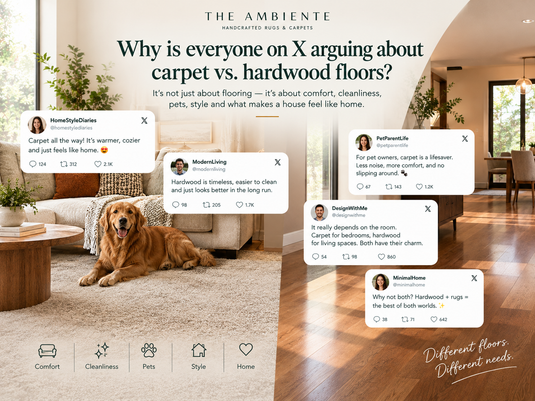
Someone posts a renovation photo on X showing an old carpet being pulled up to reveal hardwood underneath. Half the replies celebrate as though buried treasure has been discovered. The other half points out that the room is now colder, louder, and less comfortable.
Then someone says carpet is impossible to keep clean.
Someone else responds that hardwood shows every speck of dust.
Pet owners arrive.
Parents arrive.
Allergy sufferers arrive.
People who live above downstairs neighbors definitely arrive.
Before long, a fairly ordinary flooring decision has turned into a debate about hygiene, resale value, comfort, environmental responsibility, pets, wealth, climate, childhood nostalgia, and whether wearing socks indoors counts as an adequate heating strategy.
Why does carpet versus hardwood generate so much disagreement?
Because both sides have legitimate arguments, and because flooring is much more personal than people sometimes admit.
Hardwood is durable, repairable, visually versatile, and relatively easy to clean at the surface. Carpet is warm, soft, quiet, comfortable, and often less expensive to install. Hardwood can last for generations under the right conditions. Carpet can make a bedroom or family room dramatically more comfortable overnight.
Neither material is universally better.
At The Ambiente, we think the useful conversation begins when you stop treating flooring as a morality test and start looking at the room, household, climate, budget, and maintenance involved.
So, in the spirit of settling at least part of the internet argument, here is what everyone on X is actually debating when they argue about carpet and hardwood floors.
First, Why Does This Debate Keep Going Viral?
Social media rewards strong opinions.
"Both materials have advantages depending on your circumstances" is probably not going to produce thousands of quote posts.
"Carpet should be illegal" has a better chance.
So does "Hardwood people enjoy living in echo chambers with freezing feet."
Flooring also makes excellent before-and-after content.
Pulling up carpet is visually dramatic. Refinishing wood creates satisfying transformations. Installing plush carpet over a bare floor has its own appeal.
The problem is that short posts remove context.
A photograph cannot tell you how cold a room feels in January, how much sound travels to the floor below, whether the hardwood is actually worth restoring, or how often someone's elderly dog slips while trying to cross it.
Good flooring decisions are usually contextual.
Social-media arguments usually are not.
The Hardwood Argument: "Why Would You Cover Beautiful Wood?"
This is one of the strongest emotional positions in the entire debate.
People see hardwood as a permanent architectural feature.
If a century-old home has original oak, maple, pine, or another wood floor underneath carpet, uncovering it can feel like restoring part of the building's character.
Sometimes that is exactly what is happening.
Quality hardwood can last for decades and, in some cases, generations. Depending on the product and condition, solid hardwood may be sanded and refinished multiple times.
That makes it fundamentally different from many floor coverings designed to be replaced once they become worn.
The grain, natural variation, and ability to age are also difficult to reproduce exactly.
But there is a key detail social media tends to skip.
Not every wood floor hiding underneath carpet is beautiful.
The Hardwood Under Your Carpet Might Be a Mess
Pulling back one corner and seeing wood does not mean you have discovered a perfectly preserved floor.
There may be stains.
Boards may be cracked.
Sections could be missing.
Previous homeowners may have cut into the floor for plumbing, heating, wiring, or repairs.
Pet urine can cause discoloration and odor.
Old adhesive, paint, fastener holes, uneven refinishing, or water damage may create significant restoration work.
Some old homes have wood subfloors that were never intended to be the decorative finished floor people imagine.
Even genuine hardwood may be too thin or damaged for aggressive refinishing.
Before ripping out carpet because X told you there is "probably gorgeous hardwood under there," inspect the floor properly.
Potential is not the same as condition.
The Carpet Argument: "I Don't Want to Wake Up on a Cold Floor"
This argument is less glamorous but extremely persuasive at 6:30 on a winter morning.
Carpet feels warm.
More precisely, carpet and its cushion reduce the sensation of stepping directly onto a hard, thermally conductive surface. They also provide insulation compared with a bare hard floor.
In bedrooms, this can make an enormous difference to comfort.
You get out of bed barefoot and immediately step onto something soft.
Children can sit and play on the floor comfortably.
A basement feels less like a basement.
Hardwood advocates will correctly point out that an area rug can provide softness where you need it.
Carpet advocates will correctly respond that an area rug does not cover the entire floor.
This is where preference genuinely matters.
Some people like the combination of hardwood and rugs. Others want every step from the bed to the closet to feel soft.
Neither preference is incorrect.
Hardwood Usually Wins on Surface Cleanability
If you spill something on a properly finished hardwood floor, you can often wipe it up quickly.
Dust and pet hair remain visible and accessible at the surface.
There is no pile for crumbs, pollen, dander, or grit to settle into.
That makes hard flooring appealing to people who prioritize straightforward cleaning.
Regular sweeping, dusting, and manufacturer-approved damp cleaning can handle much of everyday maintenance.
The catch is that wood has its own cleaning rules.
Too much water can cause damage.
Harsh products may affect the finish.
Steam cleaners are not appropriate for many wood floors.
Deep scratches, dents, and water staining can be more complicated than ordinary surface dirt.
Still, when the argument is simply "Which floor is easier to remove loose debris from?" hardwood generally has the advantage.
But Hardwood Shows the Dirt
This is the counterargument carpet owners enjoy making.
Hard flooring may be easier to clean because the dirt sits on top.
That also means you can see it.
Dust bunnies drift under furniture.
Dark hair shows on pale wood.
Light pet hair shows on dark wood.
Every crumb from breakfast can become surprisingly visible when sunlight comes through a window at the right angle.
Carpet, particularly in mid-tone or patterned colors, can disguise small amounts of everyday soil between cleanings.
That does not mean the dirt has disappeared.
It means you are less likely to see it.
Whether that feels like an advantage or a horrifying revelation depends largely on which side of the internet debate you already occupy.
Is Carpet Actually Unhygienic?
This is where the conversation often gets exaggerated.
Carpet can trap dust, dirt, pet dander, pollen, hair, food particles, and other material.
That is true.
The practical question is whether it is maintained appropriately.
Regular vacuuming with suitable equipment removes much of the loose material. Periodic deeper cleaning addresses soil that normal vacuuming does not remove.
A neglected carpet can certainly become dirty.
So can a neglected sofa, mattress, curtain, rug, or hardwood floor.
Carpet does require more involved cleaning than a smooth hard surface, and spills can penetrate into pile and potentially padding if they are not handled promptly.
But describing all carpet as inherently filthy ignores enormous differences in construction, household behavior, vacuuming frequency, pets, traffic, and cleaning.
A low-pile carpet in a shoe-free home vacuumed regularly is not the same environment as a twenty-year-old deep pile exposed to pets, outdoor shoes, and years without professional cleaning.
Context, once again, ruins the easy hot take.
What About Allergies?
Hardwood often receives the recommendation here because it provides a smooth surface that is relatively easy to clean thoroughly.
Carpet can collect allergens such as pollen, dust, and pet dander.
For people with significant allergies or asthma, minimizing reservoirs of those materials may be useful.
But individual allergies vary.
Some research and industry discussions note that carpet can hold particles rather than allowing them to remain airborne, while the key practical issue remains effective removal through vacuuming and cleaning.
The sensible approach is not to rely on sweeping claims from flooring companies or social-media users.
If someone in your home has medically significant allergies or asthma, follow advice from an appropriate healthcare professional.
If you do choose carpet, low-pile constructions are generally easier to vacuum thoroughly than deep shag or plush styles.
Effective vacuum filtration and indoor humidity management matter too.
Carpet Absolutely Wins on Acoustics
This is one category where the argument becomes fairly straightforward.
Textile flooring absorbs sound.
Hard surfaces reflect it.
Walk through an empty room with bare hardwood and you may hear footsteps, voices, televisions, toys, chairs, and dropped objects more clearly.
Add carpet and cushion, and the room usually becomes acoustically softer.
This matters in large homes.
It matters even more in apartments, upstairs bedrooms, nurseries, media rooms, and busy family spaces.
Impact noise is particularly important.
A child running across an upstairs hardwood floor can sound much louder in the room below than the same child running across carpet with suitable underlay.
Hardwood users can add area rugs and pads to improve acoustics, along with curtains and upholstered furniture.
But if maximum all-over sound absorption is the goal, wall-to-wall carpet is extremely effective.
Apartment Dwellers Know This Argument Better Than Anyone
If you live above another person, your flooring choice is not only about your own experience.
Hard flooring can transmit impact sound through the building structure.
This is why many apartment buildings, leases, condominium associations, and cooperative boards have rules about flooring and area-rug coverage.
Some require a certain percentage of hard flooring to be covered with rugs.
Others specify acoustic underlayment standards for new floor installations.
If you are changing from carpet to hardwood in a multi-unit building, check the rules before demolition.
The beautiful hardwood floor that earns you thousands of likes online may earn you a very different reaction from the person living below.
Pets Make the Debate Much More Complicated
Dogs and cats create arguments for both materials.
Hardwood is easier to remove pet hair from.
Accidents are less likely to penetrate deeply if cleaned quickly, assuming the floor finish is intact and liquid does not enter gaps.
But claws can scratch wood.
Large dogs can create visible wear in high-traffic paths.
Some dogs struggle with traction on smooth floors, especially as they age or develop mobility problems.
Carpet gives animals more grip.
It can also provide a warm surface for sleeping.
But carpet collects hair and dander and can be much harder to deal with after repeated urine accidents.
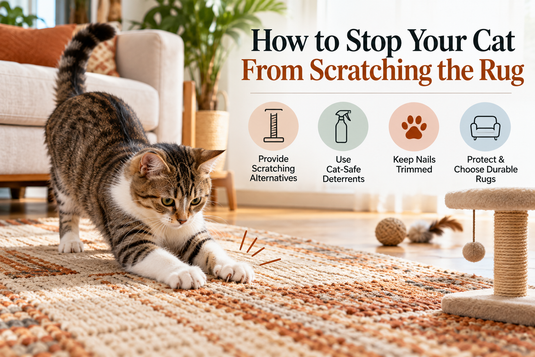
Cats add another problem: scratching.
Some carpet constructions, particularly prominent loops, can catch claws and pull.
There is no simple "best pet floor."
It depends on the animal.
An elderly dog with arthritis may strongly prefer carpet or strategically placed rugs. A household with a puppy still learning house training may prefer hard flooring.
Children Also Make Good Arguments for Both
Parents often appreciate carpet because it creates a softer play surface.
Babies crawl on it.
Toddlers fall on it.
Children sit on the floor with toys for long stretches.
Carpet can also reduce the noise created by those activities.
On the other hand, children spill things.
A lot of things.
Food, juice, paint, markers, mud, craft supplies, and unidentifiable substances all eventually meet the floor.
Hardwood can make cleanup easier when spills are handled promptly.
So what matters more to you: softness or surface cleanability?
Many families split the difference.
They use hard flooring through dining and high-mess areas, then carpet bedrooms or use large rugs in play zones.
The internet may insist you pick a team.
Your house does not.
Hardwood Has a Major Longevity Advantage
Well-maintained solid hardwood can have an exceptionally long service life.
It can often be refinished rather than completely replaced when the surface becomes worn.
This is one reason hardwood has a reputation as an investment.
Quality engineered hardwood can also last for many years, although refinishing potential varies depending on the thickness of the real-wood wear layer and product construction.
Carpet generally has a shorter replacement cycle.
How short depends on fiber, construction, traffic, maintenance, pets, and quality.
A dense wool carpet in a low-traffic room can last much longer than a cheap synthetic carpet in a busy hallway.
Still, wall-to-wall carpet is generally not expected to remain in place for generations in the way a good hardwood floor potentially can.
On lifespan alone, hardwood has a compelling case.
But Longevity Doesn't Automatically Mean Better Value
Hardwood usually costs more initially.
Material cost varies enormously by species, grade, construction, finish, and region. Installation can also involve subfloor preparation, transitions, trim work, removal of old flooring, and other expenses.
Carpet is often less expensive to purchase and install.
That makes it useful when flooring a large house on a limited budget.
The long-term calculation depends on how long you stay in the home and how each material performs.
If you install inexpensive carpet and replace it repeatedly, total costs can accumulate.
If you install expensive hardwood and move two years later, you may not personally enjoy decades of its lifespan, though resale value may potentially benefit.
Flooring economics are more complicated than dividing the purchase price by square footage.
Does Hardwood Increase Home Value?
This is one of X's favorite claims.
Hardwood is widely desirable, and many buyers do prefer it in major living areas.
But the value added by a flooring project depends on the local property market, home style, installation quality, wood type, condition, and what the flooring replaced.
Removing a severely worn carpet and revealing beautiful original hardwood is likely to improve buyer perception.
Replacing perfectly good bedroom carpet with extremely expensive exotic hardwood right before selling does not guarantee you will recover every dollar.
Resale preferences also vary by region.
In some markets, carpeted bedrooms remain completely normal and desirable.
Do not spend thousands on flooring solely because someone online insists there is a guaranteed return.
If resale is your primary motivation, ask a knowledgeable local real-estate professional what buyers in your specific market actually expect.
Carpet Can Make a Room Feel More Finished
Hardwood has visual character.
Carpet has spatial continuity.
A wall-to-wall carpet creates one uninterrupted soft surface across the entire room. Furniture can sit anywhere without needing to relate to the edges of an area rug.
This is particularly helpful in awkwardly shaped bedrooms.
The carpet follows alcoves, angled walls, bay windows, and other irregular geometry.
You do not have to find a standard rug size that somehow accommodates everything.
Carpet also provides an opportunity to use subtle texture or color across the whole room.
The "beige builder carpet" stereotype does not represent everything available.
There are patterned carpets, wool loops, low-pile textures, sophisticated neutrals, bold colors, and tailored constructions.
Some people dislike wall-to-wall carpet because they have only experienced mediocre versions of it.
Hardwood Offers More Decorating Flexibility
Once hardwood is installed, you can change what sits on top of it.
That is a significant advantage.
Today you may use a large traditional wool rug.
In five years, you might switch to a minimal flatweave.
Later, you could remove rugs almost entirely.
The underlying floor remains.
With wall-to-wall carpet, the floor itself is part of the room's textile palette.
Changing its color or texture means replacing the carpet.
For people who enjoy changing interior design regularly, hardwood plus rugs offers more flexibility.
This is one reason The Ambiente naturally sees value in hard flooring paired with well-chosen area rugs. You get the durability and cleanability of hard flooring while adding softness and color where you want them.
But that combination is not necessarily cheaper.
A quality hardwood floor plus a large handmade rug can cost far more than carpeting the room.
What About Bedrooms?
This may be the hardest room in which to declare a winner.
Hardwood in a bedroom looks clean and classic. It is easy to maintain and works with different rug styles.
A large rug under the bed can provide plenty of softness.
Carpet, however, is especially pleasant in bedrooms because bare feet spend so much time on the floor.
It also makes the room quieter.
If the bedroom is upstairs, carpet can reduce footfall noise for the level below.
There is no practical reason every bedroom in every house needs the same flooring.
You might prefer hardwood in the primary bedroom and carpet in children's rooms, or vice versa.
Choose for the actual occupants.
What About living rooms?
Living rooms often favor hardwood plus an area rug because the combination offers flexibility and strong furniture definition.
A rug can anchor the sofa and chairs while leaving some of the wood visible.
If the rug becomes worn or your taste changes, replace it without changing the whole floor.
But a carpeted living room can be incredibly comfortable.
If your family regularly sits on the floor, watches movies, plays games, or has young children, full-room softness can make the space more usable.
Acoustics improve too.
Large open-plan spaces sometimes sound harsh with extensive hard flooring. A large rug helps, but wall-to-wall carpet absorbs more sound across the room.
What About Stairs?
Stairs are where the safety argument becomes especially important.
Hardwood stairs are attractive and durable, but they can be slippery depending on finish, footwear, pets, and individual mobility.
Carpeted stairs provide more traction and cushioning.
They can also reduce the noise of people going up and down.
The downside is wear.
Stair carpet receives intense traffic concentrated in a small area.
Choose a carpet rated for stair use and have it professionally installed.
Another option is a stair runner.
This leaves wood visible at the sides while providing a textile surface through the main walking path.
For many homeowners, it is an excellent middle ground.
What About Basements?
Hardwood generally requires significant caution below grade.
Moisture is the primary issue.
Solid hardwood is often not suitable for below-grade installations, while certain engineered products may be approved under specific conditions.
Always follow the flooring manufacturer's instructions.
Carpet can make a dry basement warmer and more comfortable, but it also needs moisture management.
Do not install carpet over an unresolved damp slab or a basement with recurring water intrusion.
If flooding is a realistic concern, hard, water-tolerant surfaces with removable rugs may make recovery easier, depending on the exact materials.
Basements are another example of why "hardwood or carpet?" is sometimes the wrong first question.
The first question is whether the space is dry.
Environmental Arguments Aren't Simple Either
Hardwood advocates point out that wood is a natural material and long-lived flooring.
That can be true.
Responsible forestry, certification, species, manufacturing, finishes, transportation, installation products, and actual lifespan all affect environmental impact.
Carpet can use natural wool, synthetic fibers, recycled content, or blends.
Some manufacturers have carpet recycling programs or produce flooring using recovered material.
Others rely heavily on virgin petrochemical-based fibers.
Wool is renewable but comes with its own land-use, livestock, processing, and transportation considerations.
There is no credible environmental analysis that stops at "wood natural, carpet synthetic."
You need to look at the particular product, supply chain, installation, durability, maintenance, and end-of-life options.
Keeping an existing serviceable floor is often worth considering before replacing it purely for style.
Refinishing Hardwood Is Messy Too
Social-media renovation videos often compress several days of disruption into thirty satisfying seconds.
Hardwood refinishing can involve sanding, dust control, noise, finish application, drying or curing time, furniture removal, and limits on when the floor can be walked on.
Modern dust-containment equipment can reduce mess considerably, but refinishing is still a project.
Some finishes produce stronger odors or emissions than others.
Water-based and oil-based systems behave differently in terms of appearance, drying, durability, and application.
If you are restoring old flooring, also consider what else may be present in the building, particularly in older homes where previous coatings or construction materials may require professional assessment.
"Just refinish it" can be good advice.
It is not always simple advice.
Installing Carpet Is Faster, but It's Still an Installation
Carpet installation is generally quicker than many hardwood projects.
But preparation still matters.
The subfloor needs to be suitable.
Old flooring may need removal.
Tack strips and cushion need correct installation for stretch-in carpet.
Seams need careful planning.
The carpet should be properly tensioned with appropriate equipment.
Poor installation can lead to wrinkles, seam problems, premature wear, or other failures.
A cheap installation can make good carpet perform badly.
When comparing carpet and hardwood costs, include professional installation rather than comparing only material prices.
Hardwood Can Be Repaired, but Not Every Scratch Vanishes
Another social-media simplification is that hardwood is endlessly repairable.
It is repairable to a degree.
Minor surface scratches may sometimes be addressed without refinishing the entire room, depending on the finish.
Deeper gouges are more complicated.
Water staining can penetrate the wood.
Pet urine may cause persistent discoloration.
Boards can warp, cup, or gap when moisture conditions are wrong.
Engineered hardwood has a limited wear layer, so how many times it can be sanded depends heavily on construction.
Solid hardwood offers greater refinishing potential, but repeated sanding does remove material.
Hardwood lasts a long time when cared for correctly.
It is not invulnerable.
Carpet Can Be Repaired More Often Than People Think
Carpet is also not automatically ruined by one damaged area.
A skilled carpet repair professional may be able to address burns, pulls, damaged seams, localized stains, or small areas of damage using matching spare carpet.
Carpet can also often be professionally re-stretched if it develops wrinkles and the backing remains sound.
The problem is matching.
If you do not have spare carpet from the original installation, finding an exact color and dye-lot match years later can be difficult.
This is why keeping a remnant from installation is useful.
Store it cleanly and dryly.
You may never need it, but if one section is damaged later, you will be glad you have it.
Why Area Rugs Keep Winning the Middle Ground
This is where the carpet-versus-hardwood war becomes less dramatic.
You can have hardwood and textiles.
In fact, the combination is one of the most flexible flooring arrangements available.
Hardwood provides a durable underlying surface.
Area rugs add warmth, sound absorption, color, texture, and cushioning.
They can be removed for cleaning and replaced as tastes change.
Rugs can also help protect wood in high-use furniture zones.
Of course, they introduce their own considerations.
The rug needs to be correctly sized.
A suitable rug pad is important.
Pet hair and dust still require cleaning.
Sunlight can affect exposed wood differently from covered wood, potentially creating color variation over time.
Still, hardwood plus rugs resolves many of the objections people have to choosing one material for an entire room.
Why Wall-to-Wall Carpet Is Not Actually Dead
Every few years, someone announces the death of carpet.
Carpet continues to exist quite comfortably.
Why?
Because people like soft floors.
Hotels use carpet heavily because of acoustics and comfort. Bedrooms remain a natural place for carpeting. Basements benefit from warmth. Families appreciate cushioning. People in cold climates enjoy insulation.
Modern carpets also offer much more variety than the beige plush products associated with certain periods of suburban construction.
Low-pile wool, patterned carpeting, textured loops, tailored neutrals, and bold colors give designers plenty to work with.
The renewed interest in cozy, layered interiors has also made textile flooring feel relevant again.
Carpet never disappeared.
People just got tired of certain types of carpet.
And Hardwood Isn't Going Anywhere Either
Hardwood has something few flooring materials can fully replicate: each board comes from a tree with natural grain and variation.
That gives it visual depth.
It can work in traditional homes, modern homes, rustic spaces, and nearly everything between.
It also develops signs of age in a way many people find attractive.
A slightly worn old oak floor can look better because it has been lived on.
Whether you feel the same way about a worn carpet is another matter.
Hardwood's long service life and ability to be refinished mean it will remain desirable regardless of what happens on social media.
So Who Is Right in the X Argument?
The hardwood people are right that hard flooring is easier to clean at the surface, can last exceptionally long, offers design flexibility, and may be a valuable architectural feature.
The carpet people are right that carpet is quieter, warmer, softer, often less expensive, and genuinely pleasant to live with.
Pet owners who want traction are right.
Pet owners who want easy hair cleanup are also right.
Parents who want a soft play surface are right.
Parents who want to wipe spilled juice off the floor in ten seconds are right too.
The disagreement exists because people are optimizing for different things.
How The Ambiente Would Decide Room by Room
Instead of choosing one winner for the whole house, we would ask a few practical questions.
How much foot traffic does the room receive?
Will people sit or play on the floor?
Is sound transmission an issue?
Do pets need traction?
Are pet accidents likely?
Does anyone have significant allergies?
What is the climate?
Is the room below grade?
What is the budget?
How long do you expect to keep the flooring?
Is there existing hardwood worth preserving?
Do you enjoy changing rugs and decor?
How much maintenance are you realistically willing to do?
The answers usually make the decision much easier.
The Actual Answer Is Less Exciting Than the Argument
Carpet versus hardwood makes a great internet fight because both materials have obvious strengths and obvious weaknesses.
Hardwood is durable but hard.
Carpet is soft but holds more debris.
Hardwood is easy to wipe but can scratch.
Carpet is quiet but typically needs replacement sooner.
Hardwood can feel cold.
Carpet can feel dated if the wrong style is chosen.
One costs more initially.
The other may cost more through replacement over a long enough period.
There is no dramatic winner because houses are not standardized test environments.
At The Ambiente, we would rather choose flooring around how a room is used than around which side of X produced the funniest quote post.
If you love original hardwood, keep it and add a rug where you want softness.
If you want your bedroom to be warm and quiet from wall to wall, install good carpet.
If your elderly dog slips on hardwood, create traction with rugs or carpeting.
If allergies make textile flooring difficult for someone in your household, prioritize a hard surface that is easy to clean.
If you have beautiful wood hidden beneath old worn carpet, investigate whether it can be restored.
And if the carpet is comfortable, clean, in good condition, and you genuinely like it, you are not required to tear it out because the internet has decided that discovering hardwood underneath is a personality trait.
The Bottom Line
People on X are arguing about carpet versus hardwood because flooring sits at the intersection of design and everyday life.
It affects what a room looks like, but also what it sounds like.
It changes how warm your feet feel in the morning.
It determines whether dog hair disappears into the pile or forms visible tumbleweeds along the baseboard.
It affects what happens when a child falls, a cat scratches, a drink spills, or someone walks through an upstairs hallway at midnight.
Those experiences are personal.
That is why there will never be a universal answer.
Hardwood has the advantage in longevity, surface cleanability, repair potential, and flexibility with area rugs. Carpet has the advantage in softness, warmth, sound absorption, and full-room comfort.
Many of the best homes use both.
At The Ambiente, that is the part of the debate we find most useful. You do not need to pledge allegiance to a flooring material.
Choose hardwood where durability and flexibility matter.
Choose carpet where softness and acoustics matter.
Use area rugs to create warmth, define spaces, protect hard flooring, and add character.
Your floor needs to work for the people and animals walking across it every day.
X will find something else to argue about by tomorrow.