If you live with allergies and pets, choosing a rug can feel like a conflict between comfort and practicality. You want the warmth, texture, and character a rug brings to a room, but you probably do not want another place for pet hair, dander, dust, and pollen to collect.
The good news is that having allergies or pets does not necessarily mean you need to give up rugs. The more useful question is what kind of rug will be easiest to keep clean in your particular home.
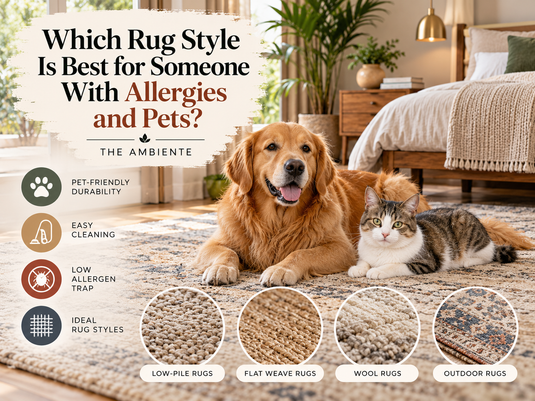
For most households with both pets and allergy concerns, a low-pile, tightly constructed rug made from a durable and easy-to-clean material is usually the strongest starting point. Flatweave rugs can be especially practical because they have little or no pile for hair and debris to settle into. Low-pile wool and certain synthetic rugs can also work well, depending on your sensitivities, cleaning habits, pets, and where the rug will be used.
At The Ambiente, we think the best rug is one that works with daily life. A beautiful rug that becomes frustrating every time your dog sheds or your allergies flare up is not a particularly successful choice.
Here is what to consider when choosing a rug for a home shared by pets and allergy sufferers.
Start With Rug Construction, Not Color
When most people shop for rugs, they naturally begin with appearance. They look at colors, patterns, and how a particular design will fit with the sofa or bed.
If allergies and pets are major concerns, construction deserves to come first.
Rugs with long, deep, or loose piles provide more places for particles to settle. Pet hair can become embedded between fibers, while dust, pollen, and other debris can work their way deeper into the rug.
That does not mean every high-pile rug creates an allergy problem. Allergies vary considerably from person to person, and cleaning practices make a difference. But if your goal is to make regular removal of dust and pet hair as straightforward as possible, shorter is usually better.
A low-pile or flatweave rug allows a vacuum to reach more of the material's surface. You are also more likely to notice dirt before it accumulates.
That basic principle can narrow your choices considerably.
Flatweave Rugs Are One of the Most Practical Options
If someone asked us to recommend one rug construction for a household balancing allergies and pets, flatweave would be high on the list.
As the name suggests, flatweave rugs do not have the raised pile you find on many traditional rugs. The fibers are woven relatively flat, producing a thinner surface.
Why does that matter?
First, pet hair has fewer deep spaces in which to become trapped. You still have to vacuum, of course, but removing visible hair is generally easier than it is with a deep shag rug.
Second, dust and debris are less likely to disappear deep into a thick pile. That makes routine cleaning more manageable.
Third, many flatweave rugs are durable enough for busy rooms. Depending on their construction and material, they can work well in living rooms, dining rooms, hallways, offices, and bedrooms.
Flatweaves can also be easier to move than very heavy rugs, which is useful when you want to clean the floor underneath.
Styles such as kilims and dhurries are well-known examples, although "flatweave" covers a broad range of rug designs. Always check the actual fiber content and care instructions, since not all flatwoven rugs have identical cleaning requirements.
Low-Pile Rugs Are Another Strong Choice
Maybe you like the feel of pile underfoot and do not want a completely flat rug.
If you are comparing low-profile flooring more broadly, see our guide to the best low-pile carpet for a basement for another practical use case.
You still have plenty of options.
A low-pile rug provides some softness and texture without the depth of plush or shag constructions. For many homes, this is the sweet spot between comfort and cleanability.
Pet hair tends to remain closer to the surface, where a suitable vacuum can reach it. Crumbs and outdoor debris carried in on paws are also less likely to disappear into a deep layer of fibers.
Low pile is particularly useful in a bedroom or living room, where you might want something softer than a flatweave.
The specific construction still matters. A dense, well-made low-pile rug may hold up better to regular vacuuming and pet traffic than something loosely constructed.
Look at how tightly the fibers are arranged and whether the surface contains loops that could catch claws.
Be Cautious With Shag and Deep-Pile Rugs
A deep shag rug can feel wonderful under bare feet. Unfortunately, that same depth can make it one of the more demanding choices for a home with shedding pets and allergies.
Long fibers give dust, dander, hair, crumbs, and other particles plenty of places to settle.
Vacuuming can also be more difficult. Some vacuum settings are not appropriate for long piles, and aggressive rotating brush heads can potentially damage certain rugs. Even when the surface looks clean, debris may remain lower in the pile.
Add a long-haired cat or a heavily shedding dog and maintenance can quickly become a regular project.
If you love deep-pile rugs and your allergies are mild, you do not necessarily have to rule them out. A small rug in a lower-traffic, pet-free part of the house may be manageable.
But for a main living room or bedroom shared with pets, a lower-pile construction is usually easier to live with.
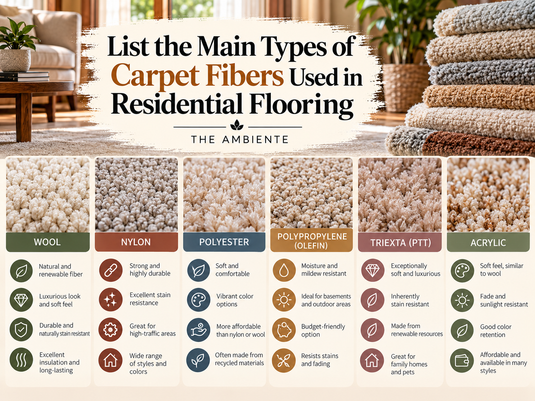
Wool Is Worth Considering
Wool is a popular rug material for good reason.
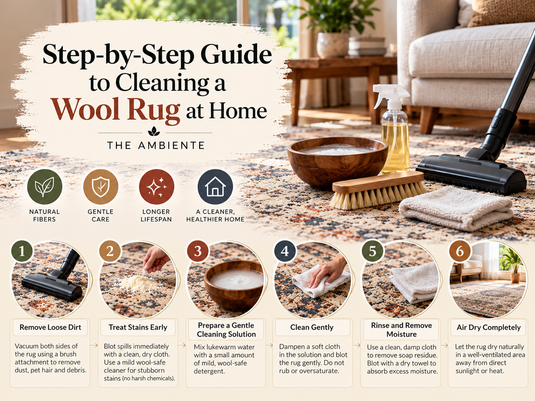
If wool suits your home, proper maintenance matters. See our step-by-step wool rug cleaning guide.
A high-quality wool rug can be durable, resilient, comfortable, and attractive. Wool fibers have natural properties that help them withstand everyday use, making them suitable for rooms that see regular traffic.
For homes with pets, durability is a significant advantage.
A dense, low-pile wool rug can often tolerate years of use when properly maintained. Wool also tends to hide small amounts of soil well, although hiding dirt is not the same as being clean.
There are a few important caveats for allergy sufferers.
People can react to different substances, so it would be misleading to claim that wool rugs are universally "hypoallergenic." Someone with a specific sensitivity to wool or materials associated with a particular rug should choose accordingly.
Wool rugs may also shed fibers, especially when new, with the amount varying by rug construction and quality.
Another consideration is cleaning. Wool requires the right care. It is not a material you should casually soak with household cleaning products after a pet accident. Some stains are best handled with techniques or professional services suitable for wool.
So, wool can be an excellent choice, but choose a tightly constructed, relatively low-pile version and make sure its care requirements fit your household.
What About Synthetic Rugs?
Synthetic rugs can be highly practical in pet-friendly homes.
For a fuller material comparison, read our breakdown of synthetic carpet vs. natural fiber rugs.
Fibers such as nylon, polyester, and polypropylene are used widely in rug production, although their characteristics differ.
Certain synthetic rugs offer strong stain resistance and can be relatively easy to clean, which is useful if your dog comes in with muddy paws or your cat occasionally has an accident. They may also cost less than comparable handmade natural-fiber rugs, reducing the stress associated with inevitable pet wear.
But "synthetic" does not automatically mean allergy-friendly.
Like natural materials, synthetic rugs can collect dust, pet dander, pollen, and hair. The main advantage from an allergy-management standpoint is often cleanability rather than the fiber itself.
Some people are also concerned about odors or emissions from new rugs, backings, adhesives, or treatments. If chemical sensitivity is part of your allergy or respiratory concerns, look for clear information about materials and relevant emissions or chemical certifications.
Environmental considerations matter too. Synthetic fibers are typically derived from petrochemicals, and some can shed microplastic fibers over time.
The right choice depends on what you prioritize. A durable synthetic rug that you can keep consistently clean may be more practical for your household than a delicate natural-fiber rug you are reluctant to clean frequently.
Washable Rugs Sound Ideal, but Read the Details
A machine-washable rug can seem like the perfect answer to pets and allergies.
In some situations, it is an excellent option.
Being able to wash a rug can be extremely useful after pet accidents and for periodically removing accumulated dust or dander. This can make washable rugs particularly appealing in smaller rooms, children's spaces, kitchens, or areas where pets spend a lot of time.
But there is a practical limitation that is easy to overlook: washing-machine capacity.
A small washable rug may fit comfortably into a household machine. A large 8-by-10-foot rug may be another matter, even if the manufacturer's label describes it as washable.
Check whether the rug can actually fit into the machine you have, whether a commercial washer is required, and what the drying instructions involve.
Also pay attention to the backing or pad system. Some washable rug designs separate into layers, which can simplify cleaning but creates additional components that need care.
"Washable" is useful when it genuinely matches your cleaning setup.
Avoid Loose Loops If Your Pet Likes to Scratch
Pet claws introduce another issue unrelated to allergies.
Looped rug constructions can sometimes snag.
Cats that scratch rugs and dogs with long nails may catch their claws in loose or prominent loops. Once pulled, those loops can affect the appearance and potentially the structure of the rug.
A tightly woven flatweave or cut-pile rug may be a safer choice for animals prone to scratching.
No rug is completely pet-proof, of course. A determined cat can test almost any textile.
Keeping pets' nails appropriately trimmed can help reduce snagging, and providing cats with suitable scratching surfaces may reduce the appeal of your rug.
When shopping, run your hand over the rug sample if possible. Large, loose loops that are easy for your fingers to catch may also be tempting targets for claws.
Pattern Is More Practical Than You Might Think
Now we can talk about appearance.
For a pet-friendly rug, pattern is not just decorative. It can make everyday life easier.
Solid dark rugs can show light-colored pet hair dramatically. A pale solid rug may show muddy paw prints, darker hair, and stains. Very uniform surfaces tend to reveal whatever lands on them.
A rug with variation in color or pattern is more forgiving between cleanings.
That does not mean you should choose a rug that disguises dirt so you can clean less often. If allergies are a concern, regular cleaning remains important.
Instead, think of pattern as a way to keep the room looking presentable between normal vacuuming sessions.
Consider your pet's coat color too. If you have a golden retriever, a solid navy rug may make every shed hair visible. If you have a black Labrador, a very pale cream rug may require constant attention.
A mid-tone, multicolored, or patterned design often strikes a practical balance.
A Rug Should Be Easy to Move When Necessary
Dust does not only collect in rugs. It also collects underneath and around them.
This is one reason extremely heavy, difficult-to-move rugs can be less convenient for allergy-conscious households.
You do not need to pick up your rug every time you vacuum, but periodic access to the hard floor underneath can make thorough cleaning easier.
Room size obviously affects what is realistic. Nobody wants to move a king-size bed and an enormous rug every week.
For smaller spaces, choosing a rug that can be reasonably lifted or moved occasionally is useful. For larger rugs, focus on vacuuming accessible edges regularly and plan for periodic deeper cleaning.
Area rugs have an inherent advantage over fitted carpet in this respect because they can, at least theoretically, be removed entirely.
Choose Your Rug Pad Carefully
The rug itself is only one part of the setup.
Most area rugs benefit from a suitable rug pad. A pad can prevent slipping, add comfort, protect the floor, and reduce unnecessary movement.
In pet households, stability is particularly important. A dog running across a loose rug can send it sliding across a smooth floor.
For allergy-conscious households, you also want to keep the area under the rug and pad dry. Moisture trapped against the floor is something you want to avoid, particularly in humid environments.
If a pet accident penetrates the rug, check the pad and floor beneath it rather than cleaning only the visible surface.
Choose a rug pad compatible with your flooring, and look for clear information about its materials. Pads differ substantially, and some may contain materials or treatments that matter to people with specific chemical sensitivities.
Pet Dander Is Not the Same as Pet Hair
This distinction is important if allergies are the main concern.
People often talk about being allergic to pet hair, but pet allergies are typically reactions to proteins found in an animal's dander, saliva, or urine rather than the hair itself. Hair can carry these allergens around the home, however.
A rug that looks hair-free may therefore still contain allergens.
Removing visible fur is useful, but allergy management requires broader cleaning. Regular vacuuming with an appropriate filtration system, cleaning the rug according to its care instructions, washing pet bedding, and keeping other surfaces clean can all be relevant.
If someone in your household has a diagnosed pet allergy or asthma, flooring decisions should be considered as part of the overall management plan recommended by their healthcare professional.
No rug style can make a pet allergy disappear.
Look for a Vacuum-Friendly Rug
Before buying a rug, think about the vacuum you already own.
Some delicate handmade rugs need gentler vacuuming without an aggressive rotating brush. Thick rugs may be difficult for certain vacuum heads to move across. Rug fringes can also get caught in some machines.
For a household with pets, you are probably going to vacuum more often than someone without animals. That means the relationship between your vacuum and rug matters.
A low, dense surface that can tolerate appropriate, regular vacuuming is generally easier to maintain.
If allergies are a concern, a vacuum with effective filtration, often including a well-designed HEPA filtration system, may help reduce the amount of fine particulate matter that is released back into the room while cleaning.
The quality of the whole vacuum matters, not merely whether "HEPA" appears somewhere on the packaging. A machine with poor seals can allow air to bypass the filter.
Cleaning Frequency Matters More Than Finding a "Hypoallergenic" Label
The phrase "hypoallergenic rug" sounds reassuring. Treat it cautiously.
There is no rug that can guarantee you will not have an allergic reaction. Allergies are personal, and rugs exist in real homes alongside pets, outdoor pollen, dust, upholstery, bedding, and many other potential sources of allergens.
Construction and cleaning habits are usually more useful factors to consider.
A flat, tightly woven rug vacuumed regularly may be much easier to manage than a thick rug marketed using an allergy-friendly label but rarely cleaned.
How often should you vacuum?
That depends on your pets, household traffic, allergy severity, and rug type. A home with two heavily shedding dogs will naturally need a different routine from a home with one short-haired cat.
High-use areas may benefit from frequent vacuuming, while a deeper clean can be scheduled based on the manufacturer's guidance and the realities of your household.
Pay attention to what you see and what your allergy symptoms tell you.
Deal With Pet Accidents Quickly
Even a well-trained pet may occasionally have an accident.
Urine and other pet messes should be addressed as quickly as the rug's material allows. The longer moisture remains in a rug, the harder odors and staining may be to remove.
Blot rather than aggressively rubbing the area, since rubbing can spread the stain and potentially damage fibers.
After that, follow care instructions specific to the rug.
Avoid assuming that a cleaning product described as "pet safe" is automatically appropriate for every rug material. A product that works well on a synthetic washable rug may not be suitable for wool, silk, natural dyes, or certain handmade pieces.
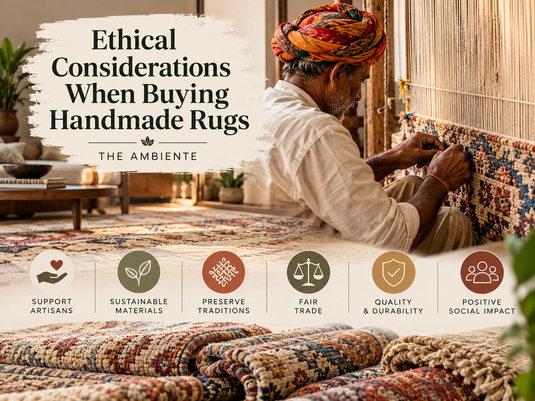
For valuable rugs, contacting a professional rug cleaner familiar with the construction and fiber can be worth the expense.
And remember to check underneath. Liquid can pass through a rug and reach the pad or flooring without leaving obvious evidence on the surface.
Jute and Sisal Require Some Thought
Natural-fiber rugs made from jute or sisal are popular because of their casual texture and neutral appearance.
They can work in pet households, but they are not necessarily the easiest option.
Jute is often relatively absorbent and can be sensitive to moisture, making pet accidents more challenging. Its textured construction can also hold debris, depending on the weave.
Sisal is durable but likewise does not always respond well to liquid stains.
If your pets are reliably house-trained and you like natural textures, these materials may still make sense in certain rooms. If you have a puppy, senior dog, or pet prone to accidents, an easier-to-clean fiber is probably the less stressful option.
Silk Is Usually Not Our First Recommendation for Pet-Heavy Rooms
Silk rugs can be exceptionally beautiful, but practicality matters.
If your living room regularly hosts dogs, cats, muddy paws, toys, food, or the occasional pet accident, a delicate silk rug may demand more care than you want to provide.
Silk and silk-rich rugs often require specialized maintenance. They can also be more vulnerable to staining and physical wear than practical pet-oriented alternatives.
That does not mean pet owners can never own fine rugs. Placement is the key.
A delicate handmade rug in a formal room that pets rarely enter is a very different proposition from putting it directly beneath your dog's favorite sleeping spot.
The best material is partly determined by where the rug will live.
What About Rug Size?
Larger is often better from a design perspective, but allergy concerns add another dimension.
A larger rug means more textile surface area that requires cleaning.
That is not necessarily a problem if the rug is low-pile, accessible, and easy to vacuum. In many living rooms, a correctly proportioned large rug looks much better than several small rugs scattered around the furniture.
Still, do not buy a larger rug than you can realistically maintain.
If you want to be able to wash or periodically remove the rug, size becomes especially important.
A small washable runner can be cleaned easily. A room-size rug underneath a large sectional may require professional cleaning.
There is nothing wrong with that arrangement. You simply want to understand the maintenance commitment before buying.
The Bedroom Deserves Extra Consideration
People spend many hours in their bedrooms, which makes allergen management there particularly relevant.
If the rug is for a bedroom, compare wall-to-wall carpet vs. area rugs for bedrooms before deciding on format and coverage.
If allergies are significant, some people prefer hard flooring with a limited number of removable textiles.
You can still use a rug to make the bedroom comfortable. A low-pile rug beside the bed, runners on either side, or a manageable flatweave may provide warmth without covering almost the entire floor.
If you prefer a large rug beneath the bed, choose something easy to vacuum around exposed areas and plan for occasional cleaning under furniture.
Whether pets sleep in the bedroom is another factor. If a pet spends eight hours every night on the bed or rug, that room will naturally contain more pet dander than a pet-free space.
For people with significant animal allergies, healthcare guidance may include keeping pets out of sleeping areas. A rug choice cannot compensate for exposure levels that trigger symptoms.
So, Which Rug Style Would The Ambiente Recommend?
For a typical home with pets and allergy concerns, we would start with a low-pile or flatweave rug with a tight construction and straightforward care requirements.
From there, choose the fiber based on your priorities.
A dense, low-pile wool rug may be a good fit if you value natural materials, durability, and comfort and are prepared to follow appropriate cleaning methods. A durable synthetic rug may be preferable if stain resistance and easy everyday maintenance are more important. A genuinely washable rug can make sense if you have frequent pet messes and can realistically wash the size you choose.
Whichever material you prefer, we would generally look for these characteristics:
- Low pile or a flatwoven surface
- Tight construction without large, claw-catching loops
- Durable fibers appropriate for frequent vacuuming
- Clear cleaning and care instructions
- A pattern or mid-tone color that does not highlight every strand of pet hair
- A suitable non-slip rug pad
- A size you can realistically maintain
- Minimal fringe if your pet likes chewing or playing with tassels
- Clear material information, particularly if someone has chemical sensitivities
We would be more cautious about shag rugs, very deep piles, loose-loop constructions, highly absorbent rugs in homes with frequent pet accidents, and delicate fibers in rooms where pets spend most of their time.
You Don't Have to Choose Between a Beautiful Home and a Practical One
Pet-friendly design sometimes gets reduced to the idea that everything must be indestructible, stain-colored, and purely functional.
That is unnecessary.
A practical rug can still have rich color, a distinctive pattern, beautiful texture, and craftsmanship worth appreciating. The trick is choosing those qualities within a construction that suits your household.
The same principle applies to allergies. Removing every textile from your home is not automatically necessary for everyone with allergies. What matters is the nature and severity of the allergy, what triggers it, and how effectively your home environment can be managed.
At The Ambiente, we recommend beginning with the realities of your household rather than with a trend or a product label.
How much does your pet shed? Does your dog track in dirt every afternoon? Does your cat scratch woven surfaces? Are pet accidents a realistic concern? How frequently are you prepared to vacuum? Can the rug be professionally cleaned when necessary? Does someone in the house have mild seasonal allergies or medically significant asthma?
Those answers should influence your rug choice more than a generic claim that a particular product is "pet-friendly" or "hypoallergenic."
For many households, a tightly constructed flatweave or low-pile rug provides the best balance. It gives you the warmth and visual interest of a rug while making routine removal of hair, dust, and debris much more manageable.
Choose a material you can care for properly, use the right rug pad, vacuum regularly, and deal with pet accidents quickly.
Your rug does not need to pretend your pets do not exist. It simply needs to be chosen for the home you actually share with them.