Basements have a reputation for being difficult spaces to floor. There is a good reason for that.
Even a finished basement usually behaves differently from the rooms above it. The floor is often concrete, temperatures can be cooler, humidity may be higher, and the consequences of a plumbing leak or water intrusion can be more serious. A flooring material that performs beautifully in an upstairs bedroom may be a poor choice below grade.
That does not mean carpet is off the table.
In fact, low-pile carpet can be a very practical choice for a dry, properly prepared basement. It adds warmth, softens a hard concrete floor, absorbs some sound, and can make a basement feel much more comfortable as a family room, home office, playroom, guest space, or media room.
The key is choosing carpet based on basement conditions rather than treating the space like another bedroom.
For many basements, a low-pile synthetic carpet, particularly one made from nylon or solution-dyed polyester, is a sensible starting point. Carpet tiles are also worth serious consideration because individual sections can be removed if they become stained or damaged. But the best choice depends on moisture conditions, how you use the room, your budget, and what is installed beneath the carpet.
At The Ambiente, we tend to think about basement carpet from the ground up. Before looking at colors and patterns, you need to understand the slab, moisture, padding, installation method, and fiber.
Here is how to make the choice.
Why Is Low-Pile Carpet a Good Fit for a Basement?
Pile refers to the visible fibers that create the carpet's surface. Low-pile carpet has shorter fibers than plush, deep-pile, or shag-style carpeting.
That relatively simple difference can make low pile particularly useful downstairs.
Low-pile carpets are generally easier to vacuum and tend to show fewer deep impressions from furniture. Their shorter fibers also make it easier to spot and remove debris. In busy basement spaces, that is a practical advantage.
They can be easier to dry than very thick carpet if minor moisture reaches the surface, although no carpet should be considered safe from serious flooding simply because it has a short pile.
Low-profile carpet can also work well where basement ceiling heights are limited. A thick carpet paired with deep padding adds more height to the floor assembly. The difference may not be huge, but every bit can matter in a room with low doors or existing transitions between flooring surfaces.
Then there is furniture.
Basements often contain heavy sofas, desks, shelving, exercise equipment, pool tables, or entertainment systems. A dense, low-pile carpet provides a relatively stable surface beneath these items.
If the basement needs to function more like a multipurpose room than a formal sitting room, low pile makes a lot of sense.
The Best Carpet Is Useless Until You Solve Moisture Problems
This is the most important point in the entire discussion.
Do not install carpet over a basement floor with an unresolved moisture problem.
Carpet is not a moisture-control system. Neither is carpet padding.
If water enters through foundation walls, comes up through cracks, condenses on cold surfaces, leaks from plumbing, or collects because of poor drainage, installing carpet over the problem can hide the evidence temporarily while creating a much bigger problem underneath.
Before choosing carpet, inspect the basement for warning signs such as musty odors, efflorescence on concrete, discoloration, previous water marks, damp areas, peeling finishes, mold growth, and recurring condensation.
A basement that flooded two years ago also deserves attention even if it looks dry today. Find out why the flooding happened and whether the underlying cause was corrected.
Depending on your home and climate, assessing moisture may involve a qualified flooring installer, waterproofing contractor, building professional, or other appropriate specialist.
If the slab or basement has persistent water intrusion, fix that first.
No carpet fiber can compensate for an actively wet basement.
Humidity Matters Even When You Don't Have Leaks
A basement does not have to contain standing water to have a moisture issue.
Below-grade spaces can experience elevated relative humidity, especially during warm and humid weather. That matters because carpeting, padding, dust, wood, and other materials can be affected by prolonged damp conditions.
A hygrometer is an inexpensive way to monitor indoor relative humidity.
If the basement tends to feel clammy or develop condensation, investigate why. A dehumidifier may be useful in some homes, but it should not be used as a substitute for correcting water entry, drainage, or major ventilation problems.
Heating and air-conditioning systems can also affect basement humidity.
The practical point is simple: know the room's conditions before buying the floor.
Choosing carpet while ignoring humidity is a little like buying outdoor furniture without checking whether it will sit under a roof or in constant rain.
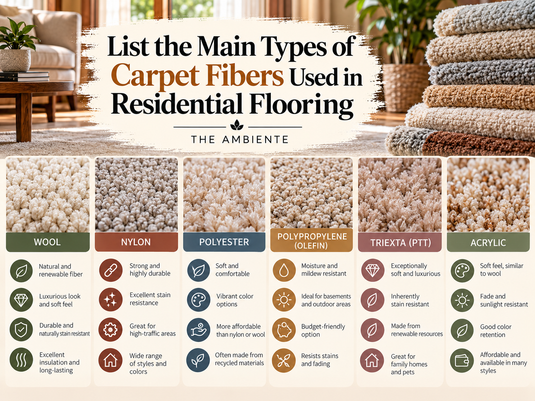
Nylon Is One of the Strongest All-Around Choices
If you want a traditional low-pile basement carpet, nylon deserves a close look.
Nylon is known for resilience and durability. It generally handles foot traffic well and can recover from compression better than some other carpet fibers.
That makes it useful in basements that function as active family spaces.
If people are regularly walking between a basement entrance, laundry area, media room, and stairs, durability becomes more important than it would be in a low-traffic guest bedroom.
Nylon is also available in a very wide range of colors, patterns, and constructions.
The drawback is price. Quality nylon can cost more than some polyester and polypropylene options.
It is also important to understand that nylon itself does not make a basement waterproof. The carpet, backing, padding, and subfloor system all need to be considered.
If flooding occurs, the fact that the face fiber is nylon does not automatically mean the whole flooring installation can simply be dried and kept.
Still, for a dry finished basement where you want a durable, comfortable, conventional carpet, low-pile nylon is one of the safest categories to investigate.
Solution-Dyed Carpet Can Be Useful in Busy Basements
How a carpet receives its color affects its performance.
With solution-dyed synthetic fiber, color is incorporated into the fiber during its manufacturing process rather than applied only after the fiber has been formed. This can provide strong resistance to fading and certain types of staining.
For a basement family room, playroom, or pet-friendly space, those characteristics may be valuable.
Solution-dyed nylon and solution-dyed polyester products are both available, though product specifications vary.
Do not assume "solution-dyed" tells you everything about carpet quality. You still need to consider density, construction, backing, warranty, installation requirements, and the suitability of the product for below-grade use.
Think of solution dyeing as one useful feature, not the entire buying decision.
What About Polyester?
Polyester is another common option for basement carpet.
Its main attractions are softness, color options, stain resistance, and often a lower price than comparable nylon products.
Modern polyester carpet can work very well in lower to moderate traffic basement rooms, especially when you choose a dense low-pile construction from a reputable manufacturer.
If your basement is primarily a guest room, TV space, or hobby area, polyester may offer a good balance between comfort and budget.
Nylon generally has the advantage in resilience under heavy traffic, although performance varies among individual products.
Furniture placement also matters. If you expect heavy pieces to remain in one place for years, check how the specific carpet handles crushing and indentation.
Rather than choosing between "nylon good, polyester bad," compare actual products designed for your intended use.
Fiber type is important, but carpet quality involves far more than the name of the fiber.
Is Polypropylene a Good Basement Carpet?
Polypropylene, also known as olefin, is frequently discussed for basements because it absorbs very little moisture compared with some other fibers.
It also tends to offer good resistance to many stains and can be relatively affordable.
Those qualities can make polypropylene useful in particular basement settings, including some carpet tiles and indoor-outdoor-style products.
There are trade-offs.
Polypropylene is generally less resilient than nylon, particularly under heavy furniture and repeated foot traffic. It can crush or mat depending on construction and use. It can also attract oily soils, which may be harder to remove.
For a casual basement, utility-oriented room, or space where moisture resistance is a high priority, polypropylene may make sense.
For a high-traffic basement living room where you want the carpet to retain its appearance for many years, a good-quality nylon product may be preferable.
Again, look at the whole carpet specification rather than fiber alone.
Should You Choose Wool for a Basement?
At The Ambiente, we have a great appreciation for wool. It is durable, resilient, comfortable underfoot, and can make an exceptional carpet or rug.
For a broader look at fibre trade-offs, compare synthetic carpet vs. natural fiber rugs before choosing basement flooring.
But a basement requires more caution.
Wool can absorb moisture from the environment, and it requires appropriate conditions and care. In a consistently dry, climate-controlled, properly waterproofed basement, a suitable wool carpet may perform well.
In a damp basement with a history of water intrusion, however, we would not select an expensive wool carpet and hope for the best.
Basement flooring should reflect the realistic risk level.
If your basement has never had a moisture problem, has appropriate vapor management, maintains stable indoor conditions, and has been assessed as suitable for the flooring, wool might be considered if you particularly value a natural fiber.
If water is a recurring concern, synthetic low-pile flooring is typically the more practical direction.
Carpet Tiles May Be the Most Practical Basement Option
Wall-to-wall carpet is not your only way to get a carpeted basement.
Carpet tiles deserve serious consideration.
Instead of installing carpet as one large continuous sheet, modular carpet comes in individual tiles or planks. When correctly installed using an appropriate product and method, the result can feel cohesive while offering a major practical advantage: damaged areas may be individually replaceable.
Imagine your water heater leaks and affects one corner of the room.
With broadloom carpet, dealing with localized damage can become complicated. With certain carpet tile installations, affected modules may be removable and replaceable, subject to the product and contamination involved.
The same applies to stubborn stains.
If a child spills paint in a basement playroom or a pet repeatedly damages a particular area, replacing a few tiles can be easier than addressing an entire room of carpet.
Carpet tiles also lend themselves to patterns. You can use subtle tonal variation or directional layouts without creating an overly commercial appearance.
Just make sure the carpet tile is rated for the location and installed according to the manufacturer's below-grade and concrete-substrate requirements.
Broadloom Still Has Advantages
Carpet tiles are practical, but traditional broadloom carpet remains appealing if your priority is residential comfort.
For another format comparison, read wall-to-wall carpet vs. area rugs to understand flexibility, cleaning and installation trade-offs.
Broadloom creates fewer visible seams and tends to offer the familiar soft, continuous appearance many people associate with a finished living room or bedroom.
It can work especially well if the basement is being used as a guest suite or family room rather than a utility space.
You also have a broad selection of pile types, patterns, fibers, and padding systems.
Installation over concrete does require planning.
The slab must meet the flooring manufacturer's moisture requirements. Any required vapor control or subfloor system needs to be handled correctly. Tack strips, adhesives, padding, and other installation components must all be suitable for the environment.
This is one of those projects where professional installation can be particularly valuable.
The installer needs to understand both the carpet and the basement floor underneath it.
Don't Choose Carpet Padding as an Afterthought
People spend plenty of time comparing carpet samples and very little time thinking about what goes underneath them.
In a basement, that is a mistake.
Carpet pad affects comfort, performance, installation height, and how the overall flooring system behaves.
A thick, soft pad can make carpet feel luxurious, but thicker is not automatically better. The carpet manufacturer may specify acceptable pad density and thickness. Using the wrong pad can affect performance and potentially warranty coverage.
Basement conditions introduce moisture considerations too.
Certain padding products are designed for use over concrete or in below-grade installations. Some systems incorporate moisture-resistant materials. But a moisture-resistant pad does not mean water can be trapped beneath it indefinitely without consequences.
You still need a dry, properly prepared slab.
Choose the pad together with the carpet rather than purchasing the cheapest option once you have exhausted the flooring budget.
Consider a Subfloor System
Putting carpet directly over a concrete slab is not the only installation approach.
Some finished basements benefit from a subfloor system that creates separation between the finished flooring and concrete.
Depending on the system, this can improve thermal comfort and provide an appropriate base for flooring. Certain products also include features designed to manage small amounts of moisture or allow an air space between the slab and finished floor.
This is a building-system decision, not just a decorating choice.
Floor height, door clearance, stairs, ceiling height, moisture conditions, local building requirements, and manufacturer specifications all need to be taken into account.
If the concrete floor feels extremely cold during winter, talking with a qualified installer about subfloor options may be worthwhile.
Carpet itself will make a floor feel warmer, but a properly designed assembly beneath it can make an even bigger difference.
Berber-Style Carpet Can Work, With a Few Caveats
When people think of low-pile basement carpet, Berber-style loop carpet often comes to mind.
Its dense, relatively low-profile construction can handle regular traffic, and its flecked appearance is good at disguising small amounts of everyday soil.
That makes it attractive for basement family rooms and recreation areas.
Pets complicate the picture.
Claws can potentially catch in looped carpet. A pet that likes scratching flooring can pull loops and cause visible damage. Large continuous loops can sometimes create a more substantial problem if snagged.
If you have dogs or cats, compare loop construction with cut-pile alternatives.
A dense, low cut pile can provide many of the practical benefits of low-pile carpet without giving claws the same type of loop to catch.
The right choice depends heavily on the specific product and your animals.
Low-Pile Cut Carpet Is a Safe Residential Choice
If you want a basement to look and feel like an extension of the rest of your home, a dense low-pile cut carpet can be a particularly versatile option.
Cut pile means the fiber loops have been cut at the top rather than remaining closed loops.
Low cut piles can provide a softer residential look while still being easy to vacuum and reasonably practical around furniture.
Patterns and subtle texture can also make the carpet more forgiving.
Perfectly smooth, solid carpet can show footprints, vacuum marks, and differences in pile direction. A lightly textured or patterned low-pile carpet often disguises everyday wear more effectively.
For a basement living room, this can be an excellent compromise between appearance and practicality.
Consider Pets Before Choosing the Carpet
Basements often become the rooms where pets have the most freedom.
That makes pet compatibility worth thinking about from the start.
If your dog has regular access to the backyard before running downstairs, choose a carpet that can tolerate dirt and frequent vacuuming. Stain resistance may be more valuable than exceptional softness.
If your cat scratches the floor, avoid loose loop constructions.
Pet accidents create another concern. Urine can travel through carpet and into padding, making surface cleaning insufficient. A carpet with good stain resistance helps, but repeated urine contamination can still require replacement of carpet, pad, or both.
Carpet tiles can be especially useful in pet-heavy basements for this reason.
Choose medium colors or patterns that do not make every strand of pet hair visible. That does not reduce the need for cleaning, but it makes the room easier to keep looking presentable.
Allergy Concerns Favor a Low, Dense Construction
If someone in your household has allergies, low-pile carpet is generally easier to maintain than deep, plush carpet.
If allergies or pets are major factors, see our guide to the best rugs for allergies and pets for related pile and fibre considerations.
Dust, pollen, pet dander, and other particles can collect in any carpet. A lower pile is easier to vacuum thoroughly because there is less fiber depth for particles to settle into.
Regular cleaning matters more than finding a carpet labeled with vague terms such as "hypoallergenic."
A good vacuum with effective filtration can be valuable, particularly in a household with pets.
Humidity control is also important in a basement, both for general indoor-air conditions and to discourage damp environments.
For someone with medically significant asthma or allergies, it is worth discussing environmental triggers with a healthcare professional. In some cases, hard flooring with removable rugs may be preferred over fitted carpet.
Carpet Color Makes a Practical Difference Downstairs
Basements typically receive less natural light than above-grade rooms.
That does not mean you need to install white or pale beige carpet, but very dark flooring can make an already dim basement feel even darker.
Mid-tone neutrals often work well because they balance brightness with practicality.
Warm gray, taupe, oatmeal, brown, muted beige, and mixed neutral tones are forgiving choices. Subtle patterns and heathered surfaces can conceal everyday dust, crumbs, and pet hair between cleanings.
Consider the color of the walls and lighting too.
A basement illuminated mainly with warm artificial light will render carpet colors differently from a sun-filled showroom.
Always bring samples into the basement before deciding.
Look at them during the day and at night. A carpet that looks neutral under showroom lighting may read unexpectedly cool, warm, or dark in your home.
Don't Forget Basement Stairs
If the basement carpet continues up the stairs, durability becomes even more important.
Stairs concentrate foot traffic into a very small surface area. Carpet bends around the stair nosing and receives repeated pressure in the same spots.
Not every carpet is suitable for stair installation.
Check the manufacturer's rating and warranty information. A dense, low-pile carpet often performs well, but construction matters.
Pattern scale matters too. Large geometric designs may be difficult to align attractively across stairs. Smaller patterns and textured solids are generally easier to work with.
Professional installation is especially worthwhile on stairs for both appearance and safety.
What If Your Basement Has Flooded Before?
A history of flooding should significantly influence your decision.
The first question is why it flooded.
Was there a one-time plumbing failure that has been completely repaired? Did a sump pump stop working during a storm? Does groundwater enter after heavy rain? Is there a recurring sewer backup?
Those are very different scenarios.
If the basement has a continuing risk of significant water intrusion, you may want to reconsider wall-to-wall carpet altogether.
Hard, water-tolerant flooring with removable area rugs can offer easier recovery after certain water events, depending on the materials and installation.
Carpet tile may provide more flexibility than broadloom in some situations, but contamination matters. Flooring exposed to sewage or other hazardous floodwater cannot necessarily be cleaned and reused simply because it is removable.
If major flooding is realistically likely, design the room around that risk rather than pretending it will not happen again.
What About Mold-Resistant Carpet?
You will sometimes see carpeting, backing, padding, or installation products promoted as mold or mildew resistant.
These features may be useful, but read the claims carefully.
A material being resistant to microbial growth does not make an entire wet flooring installation immune to mold.
Dust, organic debris, wood components, walls, furniture, and other materials can all become involved when a basement stays wet.
The real defense is moisture control.
Keep water out, maintain appropriate humidity, respond quickly to leaks, and dry affected materials correctly.
Do not purchase a "mold-resistant" carpet as a substitute for basement waterproofing.
How Much Should You Spend on Basement Carpet?
There is no single correct budget.
It depends on whether your basement is an occasional-use storage-adjacent space or a fully finished living area used every day.
However, cheapest is not always smartest.
A very inexpensive carpet that mats quickly may cost more over time if it needs early replacement. On the other hand, installing one of the most expensive carpets available in a basement with meaningful flood risk may not be a sensible use of money either.
Aim for the level of quality appropriate to the room.
Compare more than the price per square foot. Your budget may need to include:
- Carpet or carpet tiles
- Padding
- Subfloor preparation
- Moisture testing
- Removal of existing flooring
- Installation
- Stairs
- Transitions
- Baseboards or trim work
- Subfloor systems where needed
- Furniture moving
- Disposal costs
Once those costs are included, two carpets with similar retail prices can produce very different project totals.
Questions to Ask Before Buying Basement Carpet
A salesperson or flooring installer should be able to provide more than a color recommendation.
Ask practical questions about the product and the installation.
Useful questions include:
- Is this carpet specifically approved for below-grade installations?
- Is it suitable for installation over concrete?
- What moisture limits does the manufacturer specify for the substrate?
- What testing is required before installation?
- What type of backing does the carpet use?
- What type and thickness of padding are recommended?
- Is the carpet rated for stairs if I need it there?
- How does it perform under heavy foot traffic?
- What stain treatments or stain-resistance properties does it have?
- Is it appropriate for pets?
- What are the cleaning requirements?
- What could void the warranty?
- Does the installation require a vapor-control layer or specific subfloor system?
- If I choose carpet tiles, can individual tiles actually be replaced later?
Specific answers are more useful than being told that a carpet is simply "great for basements."
So, What Is the Best Low-Pile Carpet for a Basement?
For a dry, finished basement used regularly as living space, The Ambiente would generally start by looking at a dense, low-pile synthetic carpet.
Low-pile nylon is an especially strong all-around option when durability and resilience are priorities. Solution-dyed products can be appealing where stain resistance and color performance matter.
Polyester may be an excellent alternative for lower to moderate traffic spaces, especially when budget and softness are important.
Polypropylene can work in situations where low moisture absorption and affordability are priorities, although it may not offer the same resilience as quality nylon in demanding areas.
And if easy replacement matters, low-pile carpet tiles may be the most practical solution of all.
Construction matters alongside fiber. We generally prefer a tight, dense surface over deep plush carpeting for basements. Homes with pets may benefit from cut pile rather than larger loop constructions that claws can potentially snag.
But no recommendation is complete without looking underneath the carpet.
The best basement carpet is installed over a dry, properly prepared foundation using compatible padding, subfloor products, adhesives, and installation methods.
The Bottom Line: Build From the Concrete Up
It is tempting to begin a basement flooring project with samples.
You find a soft gray carpet you like, compare prices, choose a pad, and schedule installation.
For an upstairs bedroom, that approach might work reasonably well. For a basement, reverse the order.
Start with the building.
Is the basement dry? Is the concrete slab suitable for the flooring system? Has there been previous water intrusion? What is the indoor humidity like during summer? Does the slab require testing or preparation? Would a subfloor system improve comfort? What does the carpet manufacturer require?
Once those questions are answered, then choose the carpet.
At The Ambiente, we see low-pile carpet as a strong option for the right basement. It can turn a cold, echoing lower level into a room that feels comfortable enough to spend real time in. It can make a home office quieter, a playroom warmer, and a media room more inviting.
But basement flooring succeeds when practicality comes before appearance.
For many homes, a dense low-pile nylon carpet is the dependable traditional choice. For others, solution-dyed polyester offers the right balance of cost, comfort, and stain resistance. Carpet tiles make particular sense when replacement flexibility is valuable.
Whatever you choose, do not ask carpet to solve a moisture problem.
Get the basement dry first. Choose materials rated for the conditions. Use the correct underlayment or padding. Follow the manufacturer's installation requirements.
Then pick the color, texture, and pattern you actually want to live with.
When those pieces come together, low-pile carpet can be one of the simplest ways to make a basement feel less like the bottom level of the house and more like a room you genuinely want to use.