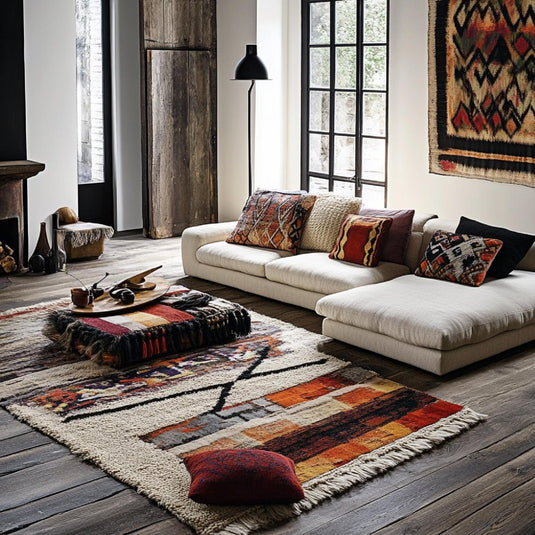
The latest rug inspiration can be brought into a home without replacing every piece of furniture. For 2026, useful directions to explore include expressive geometry, tactile surfaces, layered colour and textiles chosen for a clear role in the room. The most economical approach is to decide which of those ideas solves a real design problem, then buy the right size and construction within a complete delivered budget.
A trend report is not proof that one material or colour is best for every household. This guide uses current editorial references as starting points and develops practical budget decisions. It does not claim that a retailer leads the market or that natural fibre automatically means a smaller environmental footprint.
What the current references actually show
Pinterest Predicts 2026 includes Neo Deco and Afrohemian Decor among its forecast themes. They provide broad inspiration for geometric expression and layered material relationships. They are not product recommendations or performance classifications.
Architectural Digest India's 2026 decor ideas discusses thoughtful updates and soft furnishings as part of a room's character. Its editorial examples can help you think about the complete interior rather than buying a rug in isolation.
The interpretations below are design suggestions. They should be adapted to the room's measurements, existing furniture and daily use. A forecast can open up possibilities, but the product's specifications still decide whether it is practical.
Begin with the room you already have
Photograph the room from the entrance and the usual seating positions. List furniture, curtains and flooring that will remain. This establishes the actual background for a rug instead of creating an inspiration board for an unrelated home.
Identify what feels unresolved. The seating may look disconnected, the palette may feel too uniform or the floor may need warmth. A rug can address one or more of these issues, but it cannot compensate for an inconvenient furniture arrangement.
Make the first improvement through layout where possible. Moving a chair or reducing competing accessories may clarify what kind of rug is needed. Spending less begins with avoiding a purchase that does not solve the problem.
Trend direction one: texture within a restrained palette
Texture can make a neutral room feel more complete without adding a strong print. A subtle weave, softly mixed yarn or controlled high-low surface can provide interest alongside plain furniture.
For a budget-conscious choice, compare simpler constructions that offer the desired visual effect. Do not assume that the deepest or most sculptural pile is necessary. A manageable woven or compact tufted rug may fit the room better.
Explore textured rugs by dimensions and material. Texture is a visual feature, not a durability guarantee. Check how furniture sits on the surface and whether the care routine fits the household.
Trend direction two: considered geometry
Geometric rugs can introduce structure or become a focal point. A few broad forms can work with simple furniture without requiring a room full of matching geometric objects.
If the rug is visually strong, let nearby fabrics be quieter. Updating a cushion cover may be enough to connect an accent colour. You do not need to replace the sofa simply because the reference image contains different upholstery.
Compare geometric rugs at the actual size you need. A phone image can make a large pattern look delicate. Consider which parts will remain visible after the sofa and coffee table are placed.
Trend direction three: traditional patterns with modern furniture
A traditional or vintage-inspired design can provide detail alongside contemporary furniture. The relationship can feel personal without turning the whole room into a period interior.
Choose one or two colours from the rug to repeat in small accents. Avoid reproducing every colour across the room. A quiet sofa and a detailed rug can already provide enough contrast.
Traditional rugs and vintage rugs are useful visual starting points. Vintage-inspired is not the same as an antique. If age or provenance affects the price, request documentation rather than inferring it from a distressed appearance.
Trend direction four: layered, warmer colour
Warm ivory, muted clay, soft brown and related earth tones can create a comfortable palette. They are options to explore, not a requirement to abandon blue, grey or bright colour.
Look at the undertones of existing furniture. A warm rug beside a cool sofa may provide an attractive contrast, or it may feel disconnected. View samples in daylight and under the lamps you normally use.
For a modest update, repeat one rug accent in an existing accessory or replace only a cover. A coherent colour relationship can be achieved with a few thoughtful decisions rather than a complete set of new furnishings.
Trend direction five: expressive textiles with a clear role
A colourful or abstract rug can act as the room's main statement. Decide whether that role belongs on the floor or is already occupied by artwork, curtains or patterned furniture.
A statement piece needs suitable proportions. A tiny dramatic rug beneath only the coffee table can feel less connected than a quieter rug that reaches the seating. Size and placement are part of the design, not merely practical details.
For other textile ideas, compare our minimalist wall rug guide. Wall display needs an appropriate mounting plan and should not be treated as a free installation project simply because an unused rug is available.
Measure before setting a final budget
Mark the proposed rug outline with removable tape suitable for the floor. Check the front legs of the seating, door movement and the route through the room. Compare two sizes before committing to one.
A slightly larger suitable rug may create a more connected room, but larger is not always better. The floor plan and furniture group decide the dimensions. Do not buy a smaller size solely to reach an early price target.
Our rug size and shape guide explains the layout decisions. Keep the dimensions in one unit and convert carefully when a retailer uses feet rather than centimetres.
Build a complete budget
Include the rug, delivery, a compatible pad where required and realistic care. Ask whether taxes are included. A lower headline price can become a different total once essential items are added.
For illustration, a household might allocate ₹18,000 to a rug, ₹2,000 to a pad and ₹2,000 to delivery or small accessories within a ₹22,000 plan. These are hypothetical planning amounts, not current prices or quotations from The Ambiente.
The allocation should follow your needs. If the rug requires no separate pad or delivery is included, the available amount changes. If specialist cleaning is necessary, consider that ownership cost before buying.
Compare like with like
Record the actual dimensions, fibre composition, construction and care instructions for each option. A wool-rich rug and a delicate lustrous rug should not be compared only because their colours look similar.
Read the selected variant carefully. Online photographs may show a larger size, and a displayed price may belong to the smallest option. A set may include fewer pieces than the styling image suggests.
For a fair retailer comparison, use our high-traffic shopping guide. Even a quiet room benefits from clear specifications and usable return terms.
Decide where to compromise
Separate must-have requirements from preferences. The correct size, suitable material and manageable care may be essential. A specific motif, unusual shape or custom colour may be optional.
If the desired statement design exceeds the budget, consider a related palette in a simpler pattern. If texture matters more than a particular brand, compare constructions that provide that texture without unsupported luxury claims.
Avoid compromising on a specification that determines daily use. A rug that is difficult to clean in a spill-prone room may create more expense than the initial saving. A lower price is useful only when the product remains suitable.
Use sale prices carefully
Compare the final amount with the specification you need. A discount percentage cannot establish value if the original comparison price is unclear or the selected size is wrong.
Check return terms for sale products and keep the order details. Large rugs can involve packaging or collection requirements. A clearance item may have different conditions from a regular product.
Ask whether the rug is in stock and when it is expected to arrive. Do not let a countdown timer replace the measuring and material checks. A decision made quickly can still be careful if the brief is already clear.
Reuse existing textiles before buying more
A cushion cover, throw or curtain may already repeat a colour you want in the rug. Place those items together during planning. Reusing them can make the room feel connected without increasing the shopping list.
Clean or rearrange an existing rug if it remains suitable. Sometimes a different furniture position reveals more of its pattern and resolves the composition. Replacing it is not automatically the most effective update.
If the existing rug is damaged or unsuitable, explain that need clearly. Budget planning becomes easier when the purchase has a concrete purpose rather than a general desire to keep up with every trend.
Be precise about sustainability claims
Natural, recycled and handmade describe different aspects of a product. None alone establishes its full environmental impact or working conditions. Ask for relevant evidence when a sustainability claim influences your decision.
Durability and suitability can affect how often you replace a rug. A well-chosen product that you can maintain may support your practical goal of buying less frequently. That is different from assigning it an unverified environmental score.
Avoid assuming that recycled fibre makes the whole rug recyclable or suitable outdoors. Backing, dyes and construction need their own information. Buying thoughtfully includes knowing what the product actually is.
Keep cleaning realistic
Choose a pile and construction you can look after with the recommended method. A textured surface should be assessed for debris, furniture stability and vacuum compatibility. An attractive photograph cannot establish these details.
Light colours may show some marks more clearly, while dark rugs can show pale lint. Pattern can disguise ordinary soil without removing it. Every colour still needs care.
Our cream rug care guide and tufted material guide connect appearance with ownership. Use them before buying a delicate or unusually pale design for a demanding room.
Make a shortlist you can explain
Choose a small number of suitable rugs and record why each belongs on the list. One may provide the best colour relationship, another a clearer care routine and another the right size at the lowest delivered cost.
Where information is missing, mark it as unconfirmed. Ask the retailer rather than filling the gap with a positive assumption. A clear response can help you compare service as well as product.
Before checkout, view the room plan one last time. The selected rug should still fit the original brief without the influence of a promotional photograph. A trend is most useful when it helps you make a decision you will enjoy living with.
Frequently asked questions
Which trend is cheapest to introduce?
A colour relationship or small textile update may cost less than replacing the main rug. Reuse suitable accessories and compare simple rug designs in the right dimensions. The cheapest approach depends on what the room already has.
Do I need a designer rug to get a current look?
No. Proportion, palette and texture can create a coherent interior at different price levels. Check the actual product rather than assuming a label determines the result. A modest rug can work well when it suits the room.
Is layering always a budget solution?
No. It can require two suitable rugs and appropriate stability. Layers can also complicate doors and walking routes. Use the idea only when the arrangement works safely and both textiles have compatible care needs.
What should I prioritise?
Start with dimensions and daily use, then material, care and delivered cost. Choose the design within those requirements. Current inspiration should support a useful room rather than force an unsuitable product into it.
Review the order as a whole
Before payment, confirm the selected size, colour and delivery address in the final basket or written quote. Keep the material description and purchase terms together. Once the rug arrives, inspect it before making irreversible changes or discarding packaging. A careful order check helps protect the budget as effectively as finding a discount.
For related decisions, compare Living Room Carpet and Textile Trends for 2026: Colours and Textures, How to Choose a Modern Living Room Rug: Styles and Layout, Minimalist and Abstract Rugs: Colours, Materials and Durability. These guides connect the material, layout and care choices behind this topic.
Need help choosing a rug or carpet?
Ask The Ambiente about rug sizes, materials, colours or the right choice for your room.