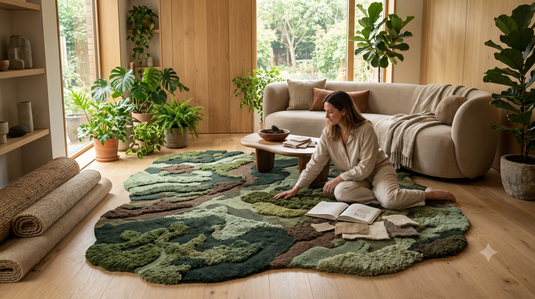
Biophilic styling brings references to nature into an interior through materials, forms, colour and the relationship with light and landscape. A rug can contribute to that visual approach without becoming a literal picture of leaves. Its surface might suggest stone, bark, a riverbank or the irregular rhythm of a landscape. The useful design question is how those references fit your room and daily routine, rather than whether a product carries a fashionable label.
A rug should not be promoted as an air purifier or a substitute for ventilation, nor should an organic pattern be treated as proof of a health benefit. Here, biophilic rug design means a practical styling approach: using natural references to create a considered room. This guide explains how to choose pattern, texture, colour and size, and how to balance the desired appearance with maintenance in an Indian home.
Begin with the nature already visible from the room
Look through the main window before choosing a pattern. You may see trees, an urban courtyard, a terrace garden or simply a broad area of sky. Those views can suggest a palette and a level of visual activity. A room facing dense greenery may need a quieter rug rather than another strong botanical pattern. A room with little outdoor view may benefit from a subtle landscape-inspired design that gives the floor more character.
Consider light as well. A bright room with changing shadows can make a textured rug appear lively even when the colour is restrained. A dimmer room may need clearer tonal contrast to keep the surface readable. The rug does not need to reproduce the outdoor view exactly. It can support a relationship through colour, material or rhythm without turning the interior into a themed setting.
Keep existing plants and furniture in the assessment. A large plant beside a textured timber cabinet already introduces natural references. Adding a highly detailed leaf-pattern rug might create more activity than you want. A softly varied neutral could provide a calmer base. Start with the whole composition and decide which element should attract attention first.
Choose between literal and abstract natural patterns
Literal patterns show recognisable leaves, branches or flowers. They can make a strong decorative statement, especially when the furniture is simple. Abstract patterns suggest natural movement through irregular lines, softly changing colour or uneven shapes. They are often easier to connect with a wider range of furniture because they do not depend on one recognisable motif. Neither approach is inherently more sophisticated.
A botanical pattern works best when its scale suits the visible floor area. Large leaves may be partly hidden by a coffee table, while a very small repeat may appear busy from a distance. A landscape-like abstract pattern can be more forgiving, but its darkest areas may still influence the room's balance. Look at a flat overall image and identify what will remain visible around furniture.
Ask whether the design changes across sizes. A smaller version may crop a large motif or use a different repeat. For custom work, confirm how the artwork will be adapted. Do not assume that an irregular pattern can simply be enlarged without changing its appearance. The relationship between the motif and the finished rug size is part of the design decision.
Use organic shapes carefully
An irregular rug outline can soften a room dominated by straight walls and square tiles. It may suit a sculptural sofa or a relaxed reading area. However, its listed width and length do not describe the same usable surface as a rectangle. Narrow projections and recessed edges can leave furniture unsupported or create an awkward edge in a walkway. Ask for an outline drawing when the shape is complex.
Mark the proposed shape on the floor and place the furniture over it. Check where chair feet sit and whether the coffee table remains level. Walk through the room in the way you normally use it, including carrying a tray or moving a chair forward. A shape that looks attractive from above may be less practical when a narrow section sits beside the main route to a balcony.
A regular rectangle can still support a biophilic room. Its structure may provide a useful counterbalance to organic furniture, plants and irregular patterns. If you have curved seating, compare both approaches using our curved sofa rug guide. Organic styling does not require every object to have a freeform outline.
Build a palette from materials, not only green
Green is one possible colour, but natural references include warm earth, pale sand, grey stone, dark bark and muted water tones. Choose a palette that relates to the floor and furniture. A cool green rug can clash with warm red timber if the surrounding colours do not connect them. A muted brown or grey-green may provide a more comfortable bridge, depending on the room's light.
Use three roles to simplify the decision: a foundation colour, a supporting material tone and an accent. The rug might carry the foundation, while timber supplies the supporting tone and plants provide the accent. Alternatively, a quiet neutral room can use the rug for a controlled green or blue focal point. Avoid adding several unrelated colours simply because each appears somewhere in nature.
Test samples under daylight and the lamps used in the evening. Soft greens can look grey in one setting and yellow in another. Warm neutrals can change noticeably beside white marble or cool tile. Our living room rug colour guide explains the undertone checks that help prevent an online colour choice from becoming a mismatch at home.
Distinguish natural appearance from natural fibre
A rug can look like stone or grass without containing a natural fibre. Conversely, a wool rug can have a crisp geometric pattern. Appearance and composition are separate. If fibre sourcing matters to you, ask for the material percentages rather than relying on words such as earthy, organic or nature-inspired. In a design description, organic often refers to shape, not organic agricultural certification.
Natural fibre also does not automatically mean lower maintenance. Wool, cotton and plant fibres have different care requirements, and blends introduce further variation. Backing materials and finishing treatments matter as well. Choose the construction according to the room's use, then decide whether its appearance supports your design direction. A suitable synthetic rug may meet a particular practical need without making the room's natural references invalid.
Explore wool rugs and textured rugs as separate browsing routes. Those collection names do not establish organic certification, an undyed process or any measured environmental performance. Our undyed wool guide explains why these claims need to be checked individually.
Let texture do a clear job
Texture can make a restrained room feel less flat. A woven surface may contrast with polished stone, while a moderate pile can soften the visual effect of timber and metal. The amount of texture should relate to the other materials. If the room already contains rough walls, woven chairs and heavy timber grain, a quieter rug may provide needed relief. More texture is not always better.
Check the physical profile as well as the photograph. A high-low surface may create attractive shadows but can affect cleaning and furniture contact. Narrow chair feet may sit differently on raised and recessed areas. A low coffee table may wobble if its support points are inconsistent. Ask for close-up photographs or a sample and assess the surface under the furniture that will actually use it.
For a household that sits or plays on the floor, tactile comfort is important. However, softness should be balanced with the ability to maintain the rug and keep edges stable. A deeply textured rug can collect crumbs in recesses and may need more careful vacuuming. The tufted rug materials and care guide discusses how surface design and construction affect everyday decisions.
Place plants without exposing the rug to water
Plants can complete the composition, but their watering routine should not put the rug at risk. Use appropriate containers and check that drainage cannot reach the rug or pad. Do not assume a decorative pot is watertight. Place plants where you can inspect and clean beneath them, especially if they sit near a rug edge. A hidden leak can affect the backing and floor before it becomes obvious on the surface.
Keep a useful gap between the rug and areas that receive regular watering or soil handling. If a plant needs to be moved for maintenance, choose a route that does not drag a heavy container across the rug. Avoid putting a damp plant stand back onto a textile surface. These practical details preserve the relationship between greenery and furnishings without turning the rug into part of the planting area.
For balconies and semi-outdoor rooms, choose products explicitly specified for that exposure. An indoor rug with a natural appearance is not automatically suitable for rain, persistent humidity or direct outdoor conditions. Confirm the intended use and cleaning requirements with the seller. The distinction between a visual theme and a performance specification is especially important near doors and terraces.
Fit the rug to the way people gather
A nature-inspired rug still needs the right dimensions. Measure the seating group, not only the open floor. Decide whether the rug connects the front legs of the sofa and chairs or accommodates the whole arrangement. Leave main walking routes clear where possible. A small rug centred under the table may show its pattern well but fail to anchor the furniture around it.
In a reading corner, the rug can relate to one chair, a side table and a lamp rather than the entire room. Check chair movement and whether the table remains on a level surface. In an open-plan lounge, a larger rectangle can create a clear boundary while organic patterns provide softness inside it. Our living room sizing guide provides the measurement process.
Avoid adding a second rug purely to create more texture if it introduces bulk. A single well-chosen surface may be enough. If layering has a useful role, our layering guide explains dimensions, pads and furniture support. The room should remain easy to walk through and maintain.
Be realistic about acoustics and comfort claims
A rug can change how a hard-floored room feels underfoot and may contribute to reducing some reflected sound, depending on the assembly and space. It is not soundproofing, and no particular reduction should be claimed without testing. Windows, walls, ceilings, furniture and the source of noise all affect the result. Choose the rug for its documented characteristics rather than expecting a decorative pattern to solve an acoustic problem.
Similarly, a natural-looking rug does not establish better air quality or a health outcome. Ventilation, cleaning, moisture management and the actual materials remain relevant. If a household has a specific sensitivity or building-performance requirement, ask for product information that addresses that requirement directly. A style label is not a technical test result.
Maintain the natural look through ordinary care
Follow the rug's instructions for vacuuming and spot care. Reduce incoming grit with entry mats and inspect areas under furniture or near plants. Blot spills promptly with a clean absorbent cloth, avoiding aggressive rubbing or saturation. Where treatment is uncertain, ask a specialist cleaner. The appropriate routine depends on fibre, construction and backing rather than the design's natural references.
Seasonal humidity deserves attention in rooms near balconies or gardens. Check beneath the rug and pad when there has been moisture exposure. Do not leave a damp rug against moisture-sensitive flooring. Our monsoon rug care guide explains more detailed checks. A room can feel connected to nature while still protecting indoor furnishings from damp and dirt.
A final selection exercise
Shortlist one quiet textured rug, one restrained organic pattern and one clearer botanical design. Compare each with the room's flooring, sofa and outdoor view. Then eliminate any option that fails the dimension, maintenance or furniture-support checks. This order helps you choose the design that works in the complete room, rather than the one with the strongest individual product photograph.
Keep the chosen product's specifications and care instructions with the order. Ask for clarification of any organic, natural or environmental claim before purchase. A thoughtful biophilic room comes from the relationship between light, materials, furniture and use. The rug contributes one important surface to that relationship, and should be selected with the same practical care as the rest of the room.