Choosing a rug is about more than finding a color or pattern that works with your room. The material matters just as much, especially if the rug will be placed in a busy living room, dining area, bedroom, hallway or commercial space.
Two of the most common choices are wool rugs and synthetic rugs. Both have their advantages, but they behave differently when exposed to daily foot traffic, spills, furniture, dust and regular cleaning.
If durability and stain resistance are high on your list, the choice between wool and synthetic rugs deserves a closer look.
At The Ambiente, we believe a rug should complement the design of a room while also making sense for how the space is actually used. A beautiful rug that does not suit your lifestyle can become difficult to maintain, while the right material can stay comfortable and attractive for years.
So, which is better: wool or synthetic?
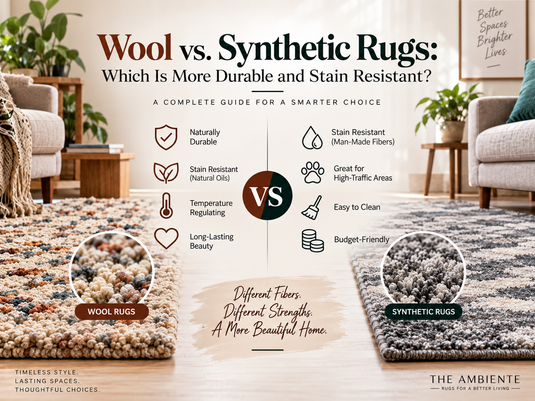
The answer depends on what you value most. Wool is naturally resilient, comfortable and well suited to long-term use. Synthetic fibers can offer practical stain resistance, easy maintenance and a wide range of price points. Let's compare the two in detail.
Wool Rugs vs. Synthetic Rugs at a Glance
Before getting into the details, here is a simple comparison.
| Feature | Wool Rugs | Synthetic Rugs |
|---|---|---|
| Durability | Excellent | Good to excellent, depending on fiber |
| Natural resilience | Excellent | Varies by fiber |
| Stain resistance | Naturally good | Often very good |
| Spill response | Generally forgiving | Depends on fiber and treatment |
| Comfort | Soft and warm | Varies |
| Appearance | Rich, natural and textured | Wide range of finishes |
| Maintenance | Regular care recommended | Generally easy to maintain |
| Longevity | Often excellent | Varies considerably |
| Sustainability considerations | Natural fiber | Usually petroleum-based |
| Best for | Long-term, premium interiors | Practical, high-use and budget-conscious spaces |
This table is only a starting point. The actual performance of a rug also depends on its construction, density, pile height, yarn quality, finishing and how it is used.
What Makes Wool Rugs Durable?
Wool has been used for rugs and carpets for centuries, and there is a good reason for that. It is a naturally resilient fiber that can handle regular use without immediately losing its character.
A good-quality wool rug can work particularly well in areas where people walk frequently. The fibers have a natural ability to bend and recover rather than simply flattening under pressure. This resilience is one of the biggest reasons wool remains popular for premium handmade rugs.
Wool Can Handle Everyday Foot Traffic
Think about a living room where people walk between the sofa, coffee table, television area and doorway throughout the day. A rug in this environment needs to handle repeated pressure. Wool is naturally suited to this type of use because its fibers have elasticity.
That does not mean a wool rug is impossible to wear out. Any rug can show signs of wear when it is placed in an extremely busy area and receives little maintenance. However, a well-made wool rug can age gracefully when properly cared for.
Construction Matters Too
It is important not to judge durability based on fiber alone. Two wool rugs can perform very differently because of their construction.
For example, a densely made hand-knotted wool rug can have a very different feel and lifespan from a lightweight, loosely constructed rug. Handloom, hand-tufted, flat-weave and hand-knotted rugs all have different characteristics.
When choosing a rug, consider:
-
Fiber quality
-
Knot or weave density
-
Pile height
-
Construction technique
-
Backing
-
Finishing
-
Expected foot traffic
-
Cleaning and maintenance
At The Ambiente, handmade rugs are selected with both design and craftsmanship in mind, allowing homeowners and designers to consider the rug as part of the overall interior rather than simply a decorative floor covering.
Are Wool Rugs Stain Resistant?
This is where the comparison gets interesting. Wool is not completely stain-proof, but it has some natural characteristics that can help it resist everyday staining. Wool fibers contain a natural protective layer that can make it harder for certain liquids and dirt to penetrate immediately.
This can give you a little more time to respond when a spill happens. That does not mean you should leave coffee, wine, curry or other liquids sitting on a wool rug. Quick action is still important. The best approach is to blot a spill gently with a clean, absorbent cloth rather than rubbing aggressively.
Wool and Everyday Spills
Imagine someone accidentally spills tea in the living room. The first step should always be to act quickly. Blot the liquid and avoid rubbing it deeper into the fibers.
For more difficult spills, professional cleaning may be appropriate depending on the rug's material, construction and care instructions.
The advantage of wool is that its natural fiber characteristics can make it more forgiving than you might expect.
What Makes Synthetic Rugs Different?
Synthetic rugs are made using manufactured fibers. Common materials include:
-
Polyester
-
Polypropylene
-
Nylon
-
Acrylic
-
Other synthetic blends
Each material has different characteristics, so it is not accurate to treat all synthetic rugs as identical.
For example, a synthetic rug designed for high-traffic use can have very different performance from a low-cost decorative rug.
One of the main reasons people choose synthetic rugs is practicality. They can be designed to offer easy maintenance, strong color retention and resistance to certain types of staining.
Are Synthetic Rugs More Stain Resistant Than Wool?
In many cases, synthetic rugs can have an advantage when it comes to resistance to certain stains, particularly when the fiber has been specifically engineered or treated for stain resistance.
Some synthetic fibers absorb less moisture than natural fibers. This can make certain spills easier to clean before they penetrate deeply.
However, "synthetic" does not automatically mean "stain-proof." Oil-based substances, strongly pigmented foods and dyes can still create difficult stains. Dirt can also become trapped in the pile if a rug is not vacuumed regularly. The quality of the fiber and the rug's construction matter.
Wool vs. Synthetic Rugs for High-Traffic Areas
If you are choosing a rug for a busy part of the home, durability becomes especially important.
Consider spaces such as:
-
Living rooms
-
Family rooms
-
Hallways
-
Entryways
-
Dining areas
-
Office spaces
-
Hospitality interiors
Wool in High-Traffic Spaces
Wool can be a strong choice for high-traffic areas because of its resilience. It can also bring a natural warmth and texture to the space, which is difficult to replicate exactly with synthetic fibers.
For a premium living room where the rug is expected to remain part of the interior for many years, a well-made wool rug can be a compelling choice.
Synthetic Rugs in High-Traffic Spaces
Synthetic rugs can also work well in busy areas, particularly when easy cleaning and practical maintenance are priorities.
For households with frequent spills, children or heavy everyday activity, some synthetic options can provide a practical solution.
The key is to select a rug specifically suited to the intended environment rather than choosing based on fiber name alone.
Which Is Better for Homes With Children?
There is no universal answer.
Families with children often prioritize easy cleaning and resistance to spills. A synthetic rug can make sense when stain resistance and simple maintenance are major considerations. At the same time, wool can also be a practical choice for family spaces because of its resilience and natural characteristics.
The decision should take into account:
-
Age of children
-
Frequency of spills
-
Traffic levels
-
Desired comfort
-
Cleaning habits
-
Budget
-
Long-term expectations
For a playroom where frequent messes are expected, easy-care performance may take priority. For a formal living room that receives regular but controlled use, a premium wool rug may be more appropriate.
Which Is Better for Pets?
Pet owners need to think about more than stains. Pet hair, dirt, scratching, moisture and accidents can all affect a rug. A rug with a complicated high pile can sometimes make cleaning more difficult. A flatter construction may be easier to vacuum regularly. Synthetic rugs can be appealing to pet owners who prioritize easy cleaning and stain resistance.
Wool can also work well, particularly when the rug is durable and regularly maintained. If you have pets, consider the entire rug rather than simply asking whether wool or synthetic is better. The construction, pile height, color, pattern and maintenance requirements can all influence how practical the rug will be.
Wool vs. Synthetic Rugs for Dining Rooms
Dining rooms are one of the most challenging spaces for rugs because food and drinks are naturally part of the environment.
A dining rug should ideally be:
-
Easy to vacuum
-
Suitable for frequent cleaning
-
Durable
-
Large enough for chairs to remain on the rug when pulled back
-
Resistant to everyday wear
Synthetic rugs can be attractive for dining areas because certain fibers offer good resistance to spills. Wool can also work beautifully, particularly when you want a premium, natural material and are prepared to respond quickly to spills.
Pattern also matters. A textured or patterned rug can visually disguise small amounts of everyday dirt better than a very light, solid-colored rug.
Wool vs. Synthetic Rugs for Living Rooms
Living rooms are often where aesthetics and practicality need to meet. This is where wool rugs can really stand out. Wool has a naturally rich appearance and texture. It can create warmth underfoot and add depth to an interior.
For interiors featuring natural wood, stone, linen, leather or neutral upholstery, a wool rug can blend beautifully with the surrounding materials. Synthetic rugs offer greater flexibility in terms of colors, patterns and price ranges.
They can be a practical option when you want a particular look without committing to a premium natural fiber.
How Long Do Wool Rugs Last?
There is no single lifespan that applies to every wool rug. A well-made wool rug that is properly maintained can remain in use for many years. Handmade construction, fiber quality, density and traffic levels all make a difference.
A rug in a lightly used bedroom may experience much less wear than one placed in a busy hallway. The way you care for the rug matters too. Regular vacuuming, quick response to spills, moving furniture periodically and professional cleaning when needed can help extend its useful life.
How Long Do Synthetic Rugs Last?
Synthetic rugs also vary significantly in longevity. A well-made synthetic rug can provide years of service, especially when used in an appropriate environment and maintained properly. However, lower-cost synthetic rugs may show signs of wear sooner, particularly in high-traffic areas.
This is why comparing only the initial price can be misleading. If you are buying a rug for a space that you expect to use for many years, consider the total value over its expected lifespan rather than only the purchase price.
Which Rug Is Easier to Clean?
Synthetic rugs are often chosen because they can be relatively easy to maintain, especially when made from fibers with low moisture absorption. That can be useful in homes where spills are common. Wool rugs need thoughtful care, but maintenance does not have to be complicated.
Regular vacuuming is important. Avoid harsh cleaning methods unless they are specifically recommended for the rug. For valuable handmade rugs, professional cleaning is often the safest option. Always follow the care instructions provided for the specific rug.
Does Color Affect Stain Visibility?
Absolutely. A cream or very pale rug can show a spill more clearly than a multicolored patterned rug, regardless of whether it is made from wool or synthetic fiber. This is one reason pattern selection can be just as important as material. For busy households, consider:
-
Mid-tone colors
-
Multicolor designs
-
Textured patterns
-
Geometric designs
-
Traditional motifs
-
Subtle variations in color
These designs can help everyday dust and minor marks blend into the overall appearance of the rug.
What About Wool and Bamboo Silk Rugs?
For homeowners interested in premium interiors, blends can provide another option. At The Ambiente, wool and bamboo silk are used together in selected handcrafted designs to create a combination of natural wool texture and the distinctive visual character of bamboo silk.
These rugs are intended more for design-led interiors where material, texture and craftsmanship are important considerations. However, bamboo silk requires appropriate care. It should not be treated like a heavy-duty synthetic floor covering.
If you are considering a wool and bamboo silk rug, think about where it will be placed and how much traffic it will receive. A carefully selected location can help preserve its appearance.
Which Is More Sustainable: Wool or Synthetic?
Sustainability is another consideration for many rug buyers. Wool is a natural animal fiber and is renewable. Synthetic fibers are manufactured materials, and many are derived from petroleum-based resources.
However, sustainability is not determined by fiber alone. The useful life of the rug matters too. A rug that lasts for many years and remains in use can have a different environmental impact from one that is frequently replaced. Buyers should consider:
-
Fiber source
-
Manufacturing process
-
Rug lifespan
-
Repairability
-
Cleaning requirements
-
End-of-life options
-
Overall product quality
For this reason, it is better to think about the entire lifecycle of a rug rather than simply labeling one material as automatically sustainable.
Is a Wool Rug Worth the Higher Price?
For some buyers, yes. A premium wool rug can offer:
-
Natural fiber
-
Long-term durability
-
Comfortable texture
-
Rich visual depth
-
Natural resilience
-
Handmade craftsmanship
-
Timeless design
But whether it is worth the investment depends on your priorities. If you need an inexpensive rug for a temporary rental or an area where heavy staining is expected, a synthetic rug may be more practical.
If you are furnishing a home where the rug is intended to become a long-term part of the interior, investing in a well-made wool rug may make more sense.
When Should You Choose a Synthetic Rug?
A synthetic rug may be a practical choice if:
-
You want easy everyday maintenance
-
Frequent spills are likely
-
You have a busy household
-
You need a lower initial price
-
You want a particular color or pattern
-
The rug is for a temporary space
-
You need a rug for an area where heavy use is expected
Synthetic rugs can offer excellent practicality when the material and construction are appropriate for the intended use.
When Should You Choose a Wool Rug?
Wool may be the better fit if you value:
-
Natural materials
-
Long-term durability
-
Comfort
-
Premium appearance
-
Natural resilience
-
Handmade craftsmanship
-
Timeless design
-
A rug that can become part of your interior for many years
Wool is particularly attractive when the rug is not simply being used as a functional floor covering but as an important design element.
What About Hand-Knotted Wool Rugs?
Hand-knotted wool rugs deserve special attention because their construction can contribute significantly to durability.
Each knot is individually created by skilled artisans, and the resulting rug can have a distinctive character that changes subtly over time.
A well-made hand-knotted rug can be an excellent choice for living rooms, bedrooms, studies, formal spaces and other interiors where craftsmanship is important.
The key is to select the right density, material and design for the space.
How to Make Any Rug Last Longer
Regardless of whether you choose wool or synthetic, basic maintenance makes a significant difference.
Vacuum Regularly
Regular vacuuming removes loose dirt before it works deeper into the rug. For handmade rugs, use an appropriate vacuum setting and avoid aggressive beater bars unless the manufacturer's care instructions specifically allow them.
Deal With Spills Quickly
Don't wait for a spill to dry. Blot the area gently using a clean cloth. Avoid vigorous rubbing, which can spread the stain or damage the fibers.
Rotate the Rug
If possible, rotate the rug periodically so that traffic and sunlight exposure are distributed more evenly.
Use a Rug Pad
A suitable rug pad can help reduce movement, protect the floor and reduce friction between the rug and the floor surface.
Protect the Rug From Excessive Sunlight
Continuous direct sunlight can affect colors over time. Where possible, use curtains, blinds or other methods to reduce prolonged direct exposure.
Get Professional Cleaning When Needed
For valuable handmade rugs, professional cleaning is usually preferable to experimenting with household chemicals. Always check the care requirements for your specific rug.
Wool vs. Synthetic Rugs: The Final Comparison
So, which material wins when it comes to durability and stain resistance? There isn't one answer that works for every home. Wool is naturally resilient and offers excellent long-term performance when properly maintained. It also brings a distinctive natural texture and warmth that many homeowners appreciate.
Synthetic rugs can offer strong practical performance, particularly when stain resistance, easy maintenance and budget are major considerations. The better choice depends on the room, your lifestyle and what you expect from the rug.
If you are furnishing a premium living room and want a rug that combines craftsmanship, natural material and long-term appeal, wool is worth considering. If you need an easy-care option for a busy household or a space where frequent spills are expected, a well-selected synthetic rug may be more practical.
And remember, fiber is only one part of the equation. Construction, density, pile, craftsmanship, color, pattern and maintenance all influence how a rug performs.
Choose a Rug Based on How You Live
The best rug is not necessarily the one with the most impressive specifications. It is the one that fits your space and the way you use it.
A formal living room, a busy family area, a bedroom, a dining room and a hotel lobby all have different requirements.
At The Ambiente, our collection of handcrafted rugs brings together different materials, constructions, colors and designs so you can choose a piece that works with your interior and lifestyle.
Whether you are looking for a wool rug, hand-knotted rug, handloom rug, hand-tufted rug, wool and bamboo silk rug or a custom-designed carpet, consider the room first. Think about traffic, furniture, maintenance, color, comfort and the kind of atmosphere you want to create.
If you are unsure which material or construction would suit your space, personalized rug assistance can make the decision much easier. The right guidance can help you narrow down the choices based on your room size, interior style, expected traffic and practical requirements.
A rug should look beautiful on the day you buy it, but it should also make sense years later. That is where choosing the right material becomes important.