Choosing a carpet for your home can feel surprisingly difficult. There are hundreds of designs, materials, constructions and price points to consider. Then there is the question of brands. Should you buy from a specialist rug brand, a home décor company, a furniture retailer, an online marketplace or a traditional carpet manufacturer?
If you search for the top carpet brands for homes, you will quickly notice that different websites recommend different names. That is because there is no single definition of a "top-rated" carpet brand.
One source may focus on handmade craftsmanship. Another may prioritize affordability. A design publication may look at aesthetics, while a home retailer may focus on practicality and availability.
For homeowners, this means the most useful approach is not simply to copy a ranking. It is to understand which brands and sources are repeatedly mentioned, what each is known for, and what you should look for before making a purchase.
In India, brands such as The Ambiente, Jaipur Rugs and Obeetee are frequently discussed in content about premium and handmade carpets, while brands such as D'Decor, IKEA and other home retailers appear in conversations around accessible, contemporary and machine-made options. Recent Indian carpet guides reflect this broad range of choices.
This guide looks at how to evaluate those sources and brands, what makes a carpet brand worth considering, and how to choose a rug that actually works for your home.
What Does "Top-Rated Carpet Brand" Really Mean?
The phrase "top-rated" can be misleading. A carpet brand may be highly regarded for its handmade craftsmanship but not necessarily be the right choice for someone looking for a low-cost, easy-care rug.
Similarly, a brand known for affordable machine-made carpets may be a practical choice for a rental apartment but may not offer the level of customization or craftsmanship expected for a luxury interior.
That is why it helps to define what you are looking for before comparing brands. For example, you may care most about:
-
Handmade craftsmanship
-
Wool or natural fibers
-
Contemporary designs
-
Traditional patterns
-
Custom sizes
-
Luxury interiors
-
Durability
-
Easy maintenance
-
Affordable pricing
-
Availability
-
Local showroom access
-
Interior designer support
-
Hospitality or commercial projects
A useful carpet comparison should take these factors into account instead of treating every brand as if it serves the same customer.
Which Carpet Brands Are Commonly Mentioned in India?
Current online carpet guides and brand-focused articles frequently mention a mixture of specialist rug companies and broader home décor retailers. Among the names commonly appearing in Indian carpet discussions are:
The Ambiente
The Ambiente focuses on premium handcrafted rugs and carpets, combining traditional Indian rug-making techniques with contemporary interior design.
The brand's manufacturing roots are associated with Bhadohi, one of India's well-known carpet-producing regions, while its Delhi presence gives homeowners and designers an opportunity to explore rugs through a more personal, design-focused experience.
The Ambiente offers hand-knotted, hand-tufted, handloom and other handcrafted constructions, along with materials including wool and bamboo silk.
The brand also works on custom rugs and carpets for residential and commercial interiors. Its website currently describes the brand as serving designers, hotels and homes, with a Delhi atelier and manufacturing presence in Bhadohi.
For homeowners looking for a rug that feels connected to craftsmanship rather than mass-produced décor, this is an important distinction.
Jaipur Rugs
Jaipur Rugs is another frequently cited name in discussions about Indian handmade carpets.
The brand is associated with artisan-made rugs and has built a strong identity around the relationship between designers, customers and weaving communities.
Recent Indian carpet guides describe Jaipur Rugs as a brand known for hand-knotted rugs, wool and silk designs, modern collections and artisan-led craftsmanship.
Its appeal is particularly relevant to homeowners who want a handmade rug with a strong connection to Indian weaving traditions.
Obeetee
Obeetee is another established name that appears frequently in Indian carpet discussions.
The company has a long history in Indian carpet manufacturing and is associated with handmade carpets, traditional craftsmanship and premium interiors.
Recent brand comparisons continue to include Obeetee alongside other established Indian rug companies when discussing luxury or handmade carpets.
D'Decor
D'Decor represents a different side of the market.
Rather than focusing exclusively on traditional handmade rugs, the brand is widely known across the broader home décor sector and offers contemporary floor-covering options.
Recent carpet guides mention D'Decor in the context of modern, machine-made carpets and accessible home décor.
This illustrates an important point: a carpet brand does not have to specialize exclusively in handmade rugs to be relevant to homeowners.
The Rug Republic
The Rug Republic is often mentioned in conversations around contemporary rugs and sustainability-focused home décor.
Its positioning makes it relevant to homeowners who prefer modern designs and want to consider materials and production approaches alongside appearance.
IKEA
IKEA is another commonly referenced option for homeowners looking for accessible rugs.
Its rugs tend to appeal to people furnishing apartments, smaller rooms, rental homes or spaces where affordability and simple design are major considerations.
The presence of retailers like IKEA in carpet comparisons demonstrates how broad the home-rug market has become.
You can choose between a handcrafted rug designed to become a long-term part of your home and a more accessible machine-made rug intended to solve an immediate decorating need.
Neither approach is automatically right or wrong.
Why Do Different Sources Recommend Different Carpet Brands?
If you search ten websites for "best carpet brands for homes," you may find ten slightly different lists.
That is normal.
A publication focused on luxury interiors may highlight handmade and designer brands.
A general home décor website may recommend brands with broader price ranges.
An ecommerce website may emphasize availability and convenience.
An interior designer may focus on customization, material quality and construction.
A homeowner may care most about stain resistance and maintenance.
This is why it is useful to look beyond the headline ranking.
Instead of asking:
"Which brand is number one?"
Ask:
"Which brand is suitable for the way I live and the space I am furnishing?"
That question usually produces a much more useful answer.
What Should You Look for in a Top Carpet Brand?
A good carpet brand should offer more than attractive photographs.
Before purchasing, look at the following factors.
1. Material Quality
Material has a major effect on how a rug feels, looks and performs.
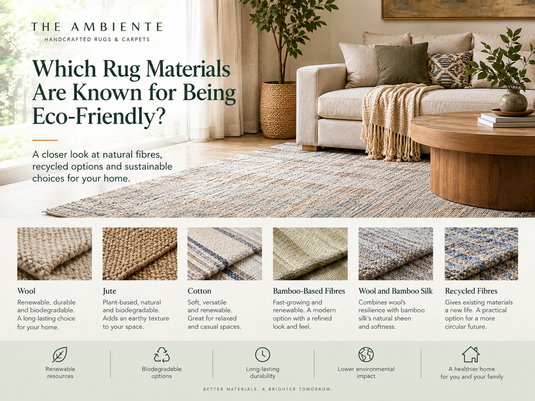
Wool remains one of the most popular materials for premium rugs because of its resilience, warmth and natural texture.
Bamboo silk can add softness and visual sheen.
Cotton can work well for lightweight and casual rugs.
Jute offers a more organic appearance.
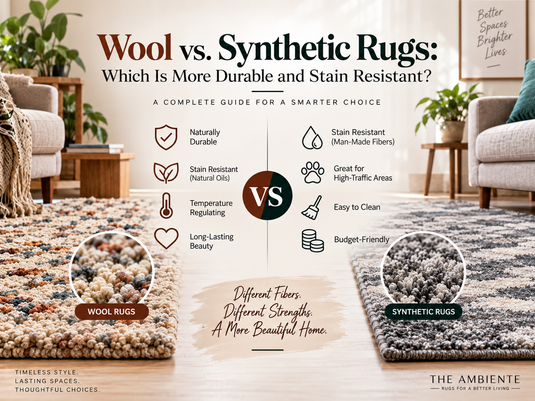
Synthetic fibers can be useful where easy maintenance and affordability are priorities.
There is no single "best" material for every room.
The right choice depends on the intended use.
2. Construction
Ask how the carpet is made.
Common constructions include:
-
Hand knotted
-
Hand tufted
-
Handloom
-
Flat weave
-
Machine made
Construction can influence durability, texture, appearance and price.
For example, hand-knotted rugs are individually knotted by artisans, while machine-made rugs are produced using industrial equipment.
Neither description tells you everything about quality, but construction provides important context when comparing products.
3. Design Quality
A good rug should work with the rest of your interior.
Think about:
-
Sofa color
-
Wall color
-
Flooring
-
Curtains
-
Lighting
-
Furniture style
-
Room size
For a minimalist interior, a subtle geometric or textured rug may work beautifully.
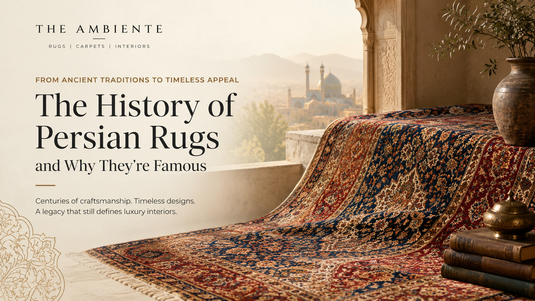
For a traditional room, Persian-inspired or heritage patterns may feel more appropriate.
For a contemporary space, abstract, transitional or geometric designs can add character without making the room feel overly busy.
4. Customization
Customization is particularly useful when standard rug sizes do not fit your room. For example, you may need:
-
A very large living-room rug
-
A narrow hallway runner
-
A custom dining-room size
-
A specific color combination
-
A particular pattern
-
A rug designed around existing furniture
A brand that offers customization can be especially useful for architects, interior designers and homeowners working on carefully planned interiors.
The Ambiente offers bespoke options alongside ready-to-ship collections, allowing customers to approach a rug as part of the overall design rather than simply choosing from a fixed size and color combination.
Are Handmade Carpets Better Than Machine-Made Carpets?
This is one of the most common questions homeowners ask. The answer depends on what you want. Handmade rugs are created through traditional or artisanal techniques. They can offer distinctive texture, craftsmanship and individuality.
Machine-made rugs can offer consistency, affordability and faster production. If you are furnishing a temporary apartment, a machine-made rug may be perfectly practical.
If you are furnishing a luxury home and want a piece with craftsmanship and long-term character, a handmade rug may be more suitable. The important thing is to match the construction to the purpose.
Why Wool Is Popular for Premium Home Carpets
Wool has remained a favorite material for rugs because it combines comfort and practical performance.
It has natural resilience and can work well in living rooms, bedrooms, studies and other residential spaces. It also has a distinct visual quality. A wool rug can look different under morning sunlight, evening lighting and artificial light, particularly when the design includes texture or variation in the yarn.
For homeowners who want a rug to remain relevant for years rather than simply follow a short-lived trend, wool is often worth considering.
What About Wool and Bamboo Silk?
Wool and bamboo silk combinations are increasingly relevant to premium interiors because they allow designers to work with contrasting textures. Wool provides body and natural texture, while bamboo silk can introduce a subtle sheen and a smoother visual quality.
The result can be especially effective in contemporary, luxury and transitional interiors. However, these rugs should be selected according to the room's traffic level and maintenance requirements. A highly decorative wool and bamboo silk rug may be better suited to a carefully used living room or bedroom than a space exposed to constant heavy traffic.
How Important Are Customer Reviews?
Reviews can be helpful, but they need context. A five-star review tells you that someone was satisfied. It does not necessarily tell you whether the rug is right for your home. When reading reviews, look for details about:
-
Actual rug quality
-
Color accuracy
-
Packaging
-
Delivery
-
Customer service
-
Construction
-
Long-term use
-
Maintenance
-
Whether the rug matched the photographs
Reviews that mention specific experiences are generally more useful than reviews that simply say "beautiful product." It is also worth looking at reviews across multiple platforms rather than relying entirely on reviews published by the brand itself.
Should You Visit a Carpet Showroom?
If you are buying a premium rug, seeing it in person can be extremely useful. Photographs can tell you about a rug's design, but they cannot always communicate:
-
Texture
-
Thickness
-
Softness
-
Sheen
-
True color
-
Density
-
Scale
This is particularly important for wool, silk and wool-blend rugs. A rug that looks beige on your screen may appear warmer or cooler in your actual room. If possible, request samples or visit a showroom before making a significant investment.
The Ambiente's Delhi atelier offers homeowners and designers the opportunity to discuss rugs personally, request physical samples and receive design assistance.
How to Choose a Carpet Brand for Your Living Room
The living room is often the main space where a rug needs to perform both visually and practically. Start with size. A common mistake is buying a rug that is too small for the furniture arrangement.
Ideally, the rug should relate clearly to the seating area rather than appearing like a small island in the middle of the room. Then consider material. For a premium living room, wool, hand-knotted wool or wool-blend rugs can create warmth and texture.
For a more casual space, a flat-weave or easy-care option may be more practical. Finally, think about the design. The rug should complement the furniture rather than compete with it.
How to Choose a Carpet Brand for a Bedroom
Bedrooms generally have lower traffic than living rooms, so comfort can become a higher priority. Soft wool rugs, plush constructions and textured designs can work beautifully beside beds. If the room has a neutral palette, a patterned rug can introduce visual interest.
If the furniture is already decorative, a quieter rug can provide balance. This is also an area where premium materials can make sense because the rug is likely to be experienced at close range.
How to Choose a Carpet Brand for a Dining Room
Dining rooms require a slightly different approach. Food and drinks mean spills are inevitable. Choose a rug that can tolerate regular cleaning and consider a pattern that does not make every small mark immediately visible.
Flat-weave and lower-pile constructions can also be easier to vacuum around dining furniture. Recent interior-design advice similarly emphasizes material, pile height and ease of cleaning when choosing rugs for dining areas.
How to Choose a Carpet Brand for a High-Traffic Home
If you have children, pets or a busy household, practicality should be part of the decision from the beginning.
Look at:
-
Fiber
-
Construction
-
Pile height
-
Color
-
Pattern
-
Cleaning requirements
Do not choose a rug only because it looks beautiful in a photograph. Ask whether it will continue to look good after months or years of actual use.
Interestingly, recent interior-design coverage shows that even designers who traditionally preferred wool may choose synthetic carpets for particularly busy family environments because of their practical stain resistance and maintenance characteristics. That is a useful reminder that the "best" carpet depends heavily on the household.
Carpet Brands for Luxury Homes
Luxury does not necessarily mean the most expensive rug. For many homeowners, luxury is about craftsmanship, materials, customization and the way the rug fits into the architecture.
A premium handmade rug can become a defining element of a room. At The Ambiente, the focus is on handcrafted rugs that bring together Indian rug-making traditions and contemporary design. The brand offers collections across modern, traditional, geometric and other styles, along with custom work for residential and commercial interiors.
This approach is particularly relevant when the rug is being selected alongside an interior designer or architect.
Carpet Brands for Custom Homes
Custom homes often have unusual room dimensions or highly specific design requirements. Standard 5 × 8 or 8 × 10 foot rugs may not always be enough.
You may need a rug that is:
-
Larger than standard sizes
-
Designed around a seating plan
-
Matched to a specific color palette
-
Created for an unusual room shape
-
Coordinated with curtains or upholstery
-
Made for a hospitality-style interior
This is where a brand's customization capabilities become important. The ability to discuss size, material, color and design directly with a rug specialist can make the process much easier.
What Makes The Ambiente Different?
The Ambiente approaches rugs from a handcrafted and design-led perspective. Its roots are connected to Bhadohi carpet manufacturing, while the brand's Delhi atelier focuses on helping homeowners and designers select rugs for contemporary interiors.
Its current website highlights handmade construction, natural fibers, artisan craftsmanship and custom rug services. The collection includes different techniques and styles, allowing customers to choose based on the character of their space rather than being restricted to one particular aesthetic.
For someone furnishing a home, that can be important.
Your living room may require a bold geometric rug.
Your bedroom may need something softer and more understated.
Your dining area may benefit from a practical flat-weave design.
A custom project may require an entirely different approach.
Don't Choose a Brand Before Choosing Your Requirements
One of the easiest mistakes is beginning the buying process with a brand list.
Instead, start with the room.
Ask yourself:
Where will the rug go?
How much traffic will it receive?
Do I want natural or synthetic fibers?
What size do I need?
What is my budget?
Do I want handmade craftsmanship?
Will I need customization?
How much maintenance am I comfortable with?
Once you answer those questions, the list of suitable brands becomes much smaller.
A Simple Carpet-Buying Checklist
Before placing an order, check these points.
Measure the Room
Measure the available area and furniture arrangement.
Decide the Construction
Choose between hand-knotted, hand-tufted, handloom, flat weave or machine-made based on your needs.
Select the Material
Consider wool, bamboo silk, wool blends, cotton, jute or synthetic fibers.
Think About Traffic
A bedroom and a busy living room should not necessarily have the same type of rug.
Check the Care Instructions
Know how the rug should be cleaned before purchasing it.
Look at the Actual Dimensions
Always check the exact size rather than relying on the room photograph.
Ask About Customization
If standard sizes do not work, ask whether custom sizes and designs are available.
Read Detailed Reviews
Look for reviews that discuss actual product quality and service.
Compare the Total Value
Don't compare brands only on price. Consider material, construction, craftsmanship, expected lifespan, service and customization.
Final Thoughts: Finding the Right Carpet Brand for Your Home
There is no universal list that can tell every homeowner which carpet brand is the right choice.
The most frequently cited brands can give you a useful starting point, but the final decision should come down to your room, lifestyle, design preferences and expectations.
For some homes, an affordable machine-made rug is exactly what is needed.
For others, a handmade wool rug can be a much more meaningful long-term purchase.
If craftsmanship, natural materials, customization and contemporary Indian design are important to you, The Ambiente offers a range of handcrafted rugs and carpets designed for modern homes as well as bespoke interiors.
The key is to look beyond the label.
Ask how the rug was made.
Ask what materials were used.
Think about where it will be placed.
Consider how it will be maintained.
And most importantly, choose something that works with the way you actually live.
A good rug should not simply fill an empty section of floor. It should bring the furniture together, add warmth and texture, and make the room feel more complete. That is ultimately what makes a carpet worth choosing.