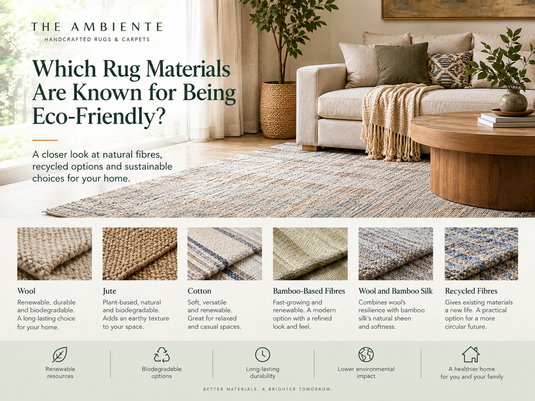
When you are choosing a rug for your home, the material usually gets attention for its appearance, softness, durability, and maintenance. But there is another factor that is becoming increasingly important: how the material affects the environment.
If you are trying to create a more sustainable home, choosing an eco-friendly rug can be a good place to start. The right rug material can potentially offer benefits such as renewable sourcing, biodegradability, durability, recyclability, and a longer useful life. But there is no single material that automatically makes a rug sustainable.
That is worth remembering. A rug can be made from a natural fibre and still have an environmental impact depending on how the raw material is produced, processed, dyed, transported, constructed, used, and eventually discarded. On the other hand, a well-made rug that lasts for many years can sometimes have a different environmental profile from a cheaper rug that needs to be replaced frequently.
So, when people ask, “Which rug materials are known for being eco-friendly?”, the better question is:
Which rug materials have properties that can support a more environmentally conscious choice, and how can I choose responsibly?
Natural materials such as wool, jute, cotton, and some plant-based fibres are commonly considered when looking for more sustainable home textiles. Wool is particularly interesting because it is renewable, durable, recyclable, and biodegradable. The International Wool Textile Organisation notes that wool products can biodegrade and that wool does not contribute to microplastic pollution in the same way synthetic fibres do.
At The Ambiente, the material is an important part of the rug-making process. The collection includes wool, bamboo silk, jute, wool and bamboo silk, and wool and silk rugs, along with different handmade constructions such as hand knotting, handloom weaving, and hand tufting.
Let’s take a closer look at the materials worth knowing about and what actually makes a rug an eco-conscious choice.
What Makes a Rug Material Eco-Friendly?
Before comparing individual materials, it helps to understand what sustainability means when we are talking about rugs. There are several factors to consider.
Renewable sourcing
A renewable material comes from a source that can naturally replenish over time. Wool, for example, comes from sheep and can be harvested repeatedly. Plant-based fibres such as jute and cotton come from crops that can be grown again.
This does not mean every product made from these materials has a low environmental impact. Farming practices, water consumption, land management, chemicals, and processing all matter.
Biodegradability
Biodegradability refers to the ability of a material to break down naturally through biological processes. This is one reason natural fibres receive so much attention in sustainability discussions.
Wool is a good example. According to the International Wool Textile Organisation, wool is a protein-based fibre that biodegrades in soil and water under suitable conditions. Synthetic fibres such as polyester and polypropylene behave differently and can persist for much longer.
Durability
Sustainability is not only about what a rug is made from. How long the rug lasts matters too. A durable rug that remains attractive and functional for many years does not need to be replaced as frequently. This can reduce the amount of material, energy, packaging, transportation, and manufacturing associated with replacement purchases.
Wool is particularly well known for resilience. The IWTO describes wool as durable and resilient, with a structure that helps it perform well in carpet applications.
Recyclability
Another useful question is what happens to a material after its useful life. Some fibres can be recycled or reused. Wool, for example, is readily recyclable and is already recycled in the textile industry.
Responsible manufacturing
Even a natural fibre has to go through manufacturing. Spinning, dyeing, weaving, washing, finishing, packaging, and transportation all require resources.
This is why it is better to look at the complete rug rather than judging sustainability from the fibre name alone.
1. Wool Rugs
If you are looking for an eco-friendly rug material, wool is one of the first materials worth considering. Wool is a natural fibre obtained from sheep. It is renewable because sheep grow new fleece, and quality wool can be used to create durable textiles and carpets.
The International Wool Textile Organisation describes wool as naturally renewable, biodegradable, and recyclable. It also notes that wool products tend to have long lifespans and that wool biodegrades readily on land and in water. That combination makes wool particularly interesting for rugs.
Why is wool considered sustainable?
There are several reasons.
- First, wool is natural.
- Second, it is renewable.
- Third, it can be extremely durable when used in a well-made rug.
- And finally, it is biodegradable under suitable conditions.
- The durability point should not be overlooked.
A beautiful rug that lasts for years can be a more responsible purchase than one that needs replacing every few seasons.
Quality wool rugs are also known for their resilience. Wool fibres have a natural spring-like structure, which helps them recover from compression and everyday foot traffic.
This makes wool particularly suitable for living rooms, bedrooms, studies, and other areas where a rug needs to perform as well as look good.
2. Jute Rugs
Jute is another natural fibre that is commonly associated with eco-conscious interiors. It comes from a plant and is known for its earthy appearance and textured surface. Jute rugs can work particularly well in interiors that use natural wood, linen, cotton, stone, rattan, or other organic-looking materials.
The visual appeal is one of the reasons jute remains popular. Instead of looking highly polished or formal, jute tends to bring a relaxed, organic quality to a room.
It can work beautifully in:
- Living rooms
- Bedrooms
- Entryways
- Casual dining areas
- Farmhouse-style interiors
- Contemporary natural interiors
- Coastal-inspired spaces
- Minimal interiors
However, it is important not to assume that every jute rug has the same environmental profile.
The farming, processing, dyeing, backing, adhesives, and finishing materials can all influence the overall impact.
So, when shopping for a jute rug, look beyond the word “jute” and check the complete product specification.
3. Cotton Rugs
Cotton is another natural fibre frequently used in rugs. It is soft, versatile, and available in a wide range of colours and patterns. Cotton rugs can be especially useful when you want something relatively lightweight and easy to move around.
They can work well in:
- Bedrooms
- Kids' rooms
- Small living areas
- Reading corners
- Layered rug arrangements
- Casual spaces
Cotton is a renewable plant-based fibre, but sustainability depends heavily on how it is grown and processed.
Cotton cultivation can require significant amounts of water, and farming practices can vary considerably.
So, while cotton is a natural material, “natural” should not automatically be treated as a synonym for “environmentally harmless.”
Look for information about sourcing, certifications where relevant, dyeing practices, and manufacturing.
4. Bamboo-Based Fibres
Bamboo is often discussed in sustainability conversations because bamboo plants grow relatively quickly. However, there is an important distinction when shopping for bamboo-based rugs.
“Bamboo” and “bamboo silk” are not necessarily the same thing. Bamboo can be processed into different types of fibres, and the environmental profile depends heavily on the production method.
This is particularly important with luxurious bamboo-derived fibres used for their shine, softness, and appearance.
At The Ambiente, bamboo silk is used in a number of rug designs, including wool and bamboo silk combinations. The current collection includes hand-knotted and handloom rugs made using wool and bamboo silk.
If you are considering a bamboo-based rug because of sustainability, ask about how the fibre was produced rather than relying only on the word “bamboo.” That is a much more useful way to evaluate the product.
5. Wool and Bamboo Silk Rugs
For people who want the natural character of wool combined with the visual richness of bamboo silk, a wool and bamboo silk rug can be an interesting option.
The two fibres can create contrast in texture and appearance. Wool can provide structure, warmth, and resilience, while bamboo silk can add a smoother surface and subtle sheen.
The Ambiente has a substantial collection of wool and bamboo silk rugs across hand-knotted and handloom constructions. Its current collections include designs in contemporary, transitional, geometric, floral, and minimal styles.
From a sustainability perspective, though, it is better to evaluate the entire blend. Do not assume that a rug is automatically eco-friendly simply because one component is plant-based.
Look at:
- Fibre composition
- Source of each fibre
- Dyeing process
- Backing material
- Adhesives
- Construction method
- Expected lifespan
- Care requirements
- End-of-life options
This broader view gives you a more realistic understanding of the product.
6. Silk Rugs
Silk is a natural fibre and has been used for centuries in luxury textiles and fine rugs. It is valued for its softness, fine texture, and distinctive sheen. From an environmental perspective, silk has some qualities associated with natural fibres, but that does not automatically make every silk rug a low-impact product. Production methods, processing, dyeing, transportation, and the overall construction of the rug all matter.
Silk rugs also tend to require more careful handling than hard-wearing wool rugs. For that reason, silk may make more sense in a lower-traffic area where its delicate appearance can be appreciated and maintained. The Ambiente offers wool and silk rug options alongside its wool, jute, and bamboo silk collections.
7. Recycled Fibres
Recycled materials can also play a role in more environmentally conscious rug design. The basic idea is simple: instead of using only newly produced raw materials, recycled fibres give existing materials another use. Recycled polyester, recycled cotton, recycled wool, and other reclaimed fibres may be used in certain rug products.
The important thing is to understand what has actually been recycled and how much of the product contains recycled content. A product described as “recycled” may contain a blend rather than being made entirely from recycled material. When sustainability is a priority, check the product details rather than relying on a marketing phrase.
Is a Natural Fibre Rug Always More Sustainable?
Not necessarily.
This is one of the most important points to understand. A natural fibre can have environmental impacts associated with agriculture, water use, land use, processing, dyeing, and transportation. Likewise, synthetic materials can sometimes offer benefits such as high durability, stain resistance, and lower replacement frequency.
Sustainability is therefore not as simple as:
Natural = good
and
Synthetic = bad.
The real picture is more complicated.
The International Wool Textile Organisation itself notes that environmental assessment requires looking at multiple stages of a product's life, including raw material production, manufacturing, use, and end of life. That is a useful principle for any rug buyer.
Why Rug Construction Matters Too
Material is only one part of the story. The way a rug is made also matters. Hand-knotted rugs, handloom rugs, hand-tufted rugs, and machine-made rugs are produced differently.
A handmade rug can require significant craftsmanship and time, but if it is designed and constructed well, it can also become a long-lasting piece in the home. At The Ambiente, rugs are hand knotted, hand tufted, or woven by hand rather than machine produced, according to the brand's current website. Construction affects:
- Durability
- Texture
- Repairability
- Appearance
- Thickness
- Maintenance
- Expected lifespan
When sustainability is part of your buying decision, ask how the rug is constructed as well as what it is made from.
Does a Long-Lasting Rug Help Make a Better Environmental Choice?
It can. Think about your rug as a long-term home furnishing rather than a temporary decoration. If you purchase a rug that looks good for years, performs well under normal use, and can be maintained properly, you may not need to replace it frequently.
This is especially relevant when buying a large rug. A large 8 × 10 or 9 × 12 rug contains considerably more material than a small accent rug. Choosing something durable and timeless can therefore make practical sense. Wool is particularly suited to this approach because of its durability and resilience. The IWTO highlights wool's long lifespan as one of its sustainability-related characteristics.
Eco-Friendly Rugs for Living Rooms
The living room is one of the easiest places to start if you want to bring more natural materials into your interior.
- A wool rug can work beautifully under a sofa and coffee table.
- A jute rug can create a more relaxed, organic atmosphere.
- A wool and bamboo silk rug can add texture and subtle sheen to a more sophisticated interior.
- The choice should depend on how you actually use the room.
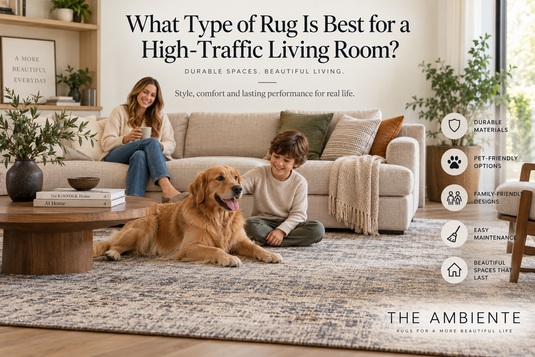
- If the living room receives heavy daily traffic, prioritize durability.
- If it is a formal sitting area, you may have more freedom to choose a delicate construction.
- If you have children or pets, maintenance should also be part of the decision.
- Eco-Friendly Rugs for Bedrooms
Bedrooms are generally lower-traffic spaces, which gives you more flexibility. Soft wool rugs can make the room feel warmer and more comfortable.
Cotton can work well for lightweight options. Natural-textured rugs can also complement wooden furniture, neutral bedding, linen curtains, and earthy colour palettes.
The goal does not need to be a perfectly “green” bedroom. Instead, focus on choosing materials that are durable, appropriate for the room, and sourced responsibly.
Eco-Friendly Rugs for Dining Areas
Dining rooms require a slightly different approach. Food and drink spills are more likely, so maintenance becomes important. A highly delicate rug may not be the most practical choice if the table is used every day.
For a dining room, consider a material and construction that can handle regular foot traffic and routine cleaning. Flat-weave and low-profile constructions can also make it easier to move dining chairs across the rug.
How to Make Your Rug Purchase More Sustainable
You do not necessarily have to find a rug carrying a big “eco-friendly” label. There are practical things you can do yourself.
Buy for longevity
Choose a rug you genuinely expect to keep. A timeless design can be easier to live with for years than a trend-driven design that you quickly get tired of.
Choose the right size
Buying the correct size reduces the chance that you will replace the rug simply because it does not work properly in the room. Measure your furniture arrangement first.
Look at the fibre composition
Read the product specifications. If a rug is made from a blend, understand what the blend contains.
Ask about construction
Find out whether the rug is hand knotted, handloom, hand tufted, flat woven, or machine made.
Ask about care
A rug that requires excessive maintenance may not be the right choice for your lifestyle.
Avoid unnecessary replacement
If a rug develops a small problem, ask whether it can be repaired, cleaned, or repurposed before replacing it.
Consider the entire product
Look at the face fibre, backing, dyes, adhesives, packaging, and construction. The more information you have, the better your decision can be.
Certifications and Transparency Matter
If sustainability is a major priority for you, certifications and supply-chain information can be useful.
Depending on the material, relevant certifications may relate to organic production, responsible fibre sourcing, chemical management, recycled content, or social standards. But certification is only one part of the picture.
A brand that clearly explains its materials, manufacturing process, construction, and care instructions gives consumers more information to make an informed decision. This is particularly useful when buying premium rugs.
What About Synthetic Rugs?
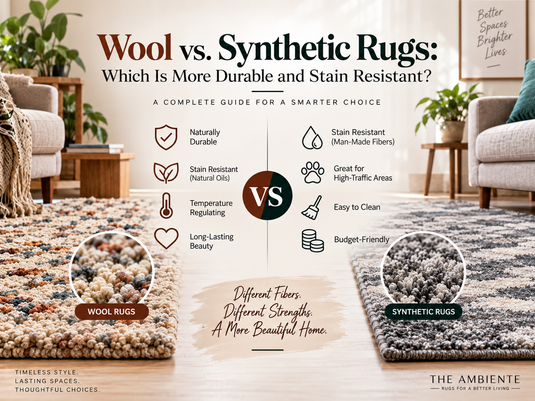
Synthetic rugs such as polypropylene, polyester, and nylon can be practical choices. They are often valued for affordability, stain resistance, colour variety, and ease of maintenance. However, most conventional synthetic fibres are derived from petrochemical sources and are not biodegradable in the same way as natural fibres.
That does not mean every synthetic rug is automatically a poor environmental choice. For example, if a synthetic rug performs extremely well in a demanding environment and lasts substantially longer than an alternative that needs frequent replacement, the comparison becomes more complicated.
Again, the entire life cycle matters. For a homeowner trying to reduce environmental impact, the best approach is to consider durability, frequency of replacement, material sourcing, manufacturing, care, and disposal together.
Why Wool Is Especially Interesting for Sustainable Interiors
Among traditional rug materials, wool has a particularly strong combination of practical and environmental characteristics. It is:
- Natural
- Renewable
- Durable
- Resilient
- Biodegradable
- Recyclable
- Naturally suited to carpet applications
The IWTO states that wool is readily recyclable and biodegrades readily on land and in water. It also notes that wool does not contribute to microplastic pollution in the same way synthetic fibres do.
Wool can also require relatively infrequent washing compared with some textile products, which can influence the use phase of a product.
That does not make every wool rug automatically sustainable, but it makes wool a material worth considering when sustainability and long-term performance are both priorities.
How The Ambiente Approaches Rug Materials
At The Ambiente, material selection is part of the overall rug-making process.
The brand's current collection includes wool, bamboo silk, jute, wool and bamboo silk, and wool and silk rugs. It also offers different handmade constructions, including hand-knotted and handloom rugs.
The brand describes its process as moving from material selection and design development through weaving and finishing, with rugs manufactured in Bhadohi and design support available through its Delhi atelier.
This is important because choosing a rug is not simply about selecting a fibre. You are choosing a combination of:
Material + construction + design + craftsmanship + longevity + maintenance.
That combination determines how the rug will actually perform in your home.
Which Rug Material Should You Choose?
There is no universal answer. Here is a simple way to think about it.
Choose wool if:
You want durability, natural fibre, comfort, resilience, and long-term use.
Consider jute if:
You prefer a natural, textured, earthy look and the room is appropriate for its characteristics.
Consider cotton if:
You want a lightweight, versatile natural-fibre rug for a relatively casual space.
Consider bamboo-based fibres if:
You like a smooth, refined appearance and are prepared to check how the specific fibre was manufactured.
Consider wool and bamboo silk if:
You want a combination of wool's structure and the visual richness of bamboo silk.
Consider silk if:
You are furnishing a lower-traffic area where a luxurious and delicate material can be properly cared for.
Consider recycled fibres if:
You want to incorporate recycled content and the product provides clear information about its composition.
A Simple Checklist for Buying an Eco-Conscious Rug
Before buying your next rug, ask these questions:
- What fibres is the rug made from?
- Are the fibres natural, recycled, synthetic, or blended?
- Where do the raw materials come from?
- How is the rug constructed?
- How durable is it?
- How often will it need cleaning?
- Can it be repaired?
- Does the manufacturer provide material information?
- Are relevant certifications available?
- How long do I realistically expect to keep the rug?
- Can the rug eventually be reused or recycled?
- Does the rug suit the room where it will actually be used?
These questions will tell you much more than a simple “eco-friendly” label.
Final Thoughts
So, which rug materials are known for being eco-friendly?
Natural fibres such as wool, jute, and cotton are among the materials commonly considered when looking for more environmentally conscious rugs. Wool stands out for its combination of renewability, durability, recyclability, and biodegradability.
Bamboo-based fibres can also be worth exploring, but their sustainability should be evaluated according to the specific manufacturing process rather than the word “bamboo” alone.
The most important thing is to look beyond the material name.
A sustainable rug decision is really about choosing a product that is appropriate for your space, made responsibly, built to last, and cared for properly.
For a home where quality and long-term use matter, a well-made natural-fibre rug can be a meaningful choice.
At The Ambiente, you can explore handmade rugs across wool, bamboo silk, jute, wool and bamboo silk, and wool and silk, with options in hand-knotted, handloom, and other handmade constructions.
Ultimately, the best rug is not simply the one with the most impressive sustainability claim.
It is the one whose material, construction, design, durability, and care requirements make sense for your home and that you can see yourself living with for many years.