TikTok has a way of making a rug feel like the most important object in a room.
Scroll through enough interiors content and you will see the formula repeatedly. A room starts out looking unfinished, the creator rolls out a rug, furniture gets moved back into position, and suddenly the space seems warmer, more intentional, and much more personal.
But the rugs getting attention on TikTok right now are not all following one look.
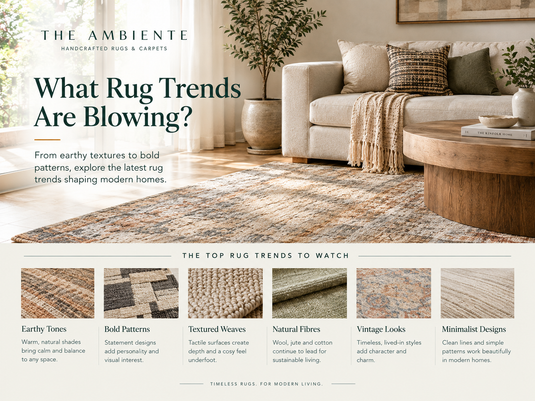
In 2026, the broader direction is toward more personality. Vintage and vintage-inspired rugs continue to show up in layered, collected interiors. Irregular shapes and sculptural rugs are being treated almost like floor art. Checks and graphic patterns have not disappeared. Brown, burgundy, olive, rust, butter yellow, and other warm or earthy colors are replacing some of the cooler neutrals that dominated interiors for years. Natural texture is still important, while custom-looking tufted rugs remain part of the platform's maker culture.
Perhaps more interestingly, people are paying more attention to rug placement and scale. Videos about using a larger rug, layering rugs, putting rugs in kitchens, or choosing a shape that responds to the furniture are often as relevant as videos about a particular pattern.
At The Ambiente, we like looking at social trends with one question in mind: which ideas are actually useful once the camera is turned off?
TikTok can be an excellent source of inspiration. It can also make highly specific decorating ideas look universal because you have seen them six times in twenty minutes.
So rather than treating every viral rug as a shopping instruction, here are the major rug directions showing up across TikTok and social-first interiors right now, plus what to think about before bringing them home.
First, a Note About What "Trending on TikTok" Really Means
TikTok does not have one interior-design feed.
What you see depends heavily on what you watch, save, search for, and interact with. Someone following maximalist apartment makeovers may encounter completely different rug content from a person watching minimalist renovations or vintage-home accounts.
Trends also move quickly.
A rug style can suddenly appear everywhere because one creator's room goes viral, a retailer launches a popular design, or an aesthetic gets a catchy name. By the time a particular look reaches every furniture store, creators may already be moving toward something else.
That makes this article less of a strict popularity ranking and more of a snapshot of the rug ideas currently circulating strongly through TikTok-style interiors.
The best way to use these trends is as a source of options rather than rules.
1. Vintage Rugs Are Still Everywhere
Vintage rugs have been a major interiors presence for years, but they remain particularly suited to TikTok's current preference for rooms that feel collected rather than perfectly matched.
Persian, Turkish, Anatolian, Caucasian, and other traditional rug styles appear in everything from historic homes to contemporary apartments.
What has changed somewhat is how casually people use them.
The rug does not necessarily need to match the architectural style of the home. A worn traditional rug may sit beneath a very modern sofa. A richly patterned runner might appear in a minimalist kitchen. A small vintage rug can be used beside a bed rather than centered traditionally in the room.
The contrast is often the point.
Why Vintage Rugs Work So Well on Social Media
Vintage rugs photograph beautifully.
The pattern adds detail, while age and variation make a room look less newly purchased. Colors are often complex rather than flat, which can help tie together wood, upholstery, paint, and art.
They also fit naturally with the current enthusiasm for secondhand furniture and decorating slowly.
A genuine vintage rug has another advantage: it already exists.
For people interested in extending the useful life of home furnishings, buying secondhand can be appealing.
What to Check Before Buying
TikTok can make buying vintage rugs look as simple as finding one online and rolling it out.
In reality, inspect condition carefully.
Look for foundation damage, holes, extensive wear, moth activity, color bleeding, repaired areas, fringe deterioration, and odors.
Wear is not necessarily bad. Some buyers specifically like the softened appearance of an older rug.
Structural damage is different.
If you are shopping online, ask for photographs of the back, edges, fringe, and worn sections.
2. Vintage-Inspired Rugs Are Getting the Same Treatment
Not everyone wants the cost, care, or unpredictability of a genuine vintage rug.
That is where vintage-inspired designs come in.
These rugs reproduce some of the visual language of older textiles using new manufacturing methods and materials.
Faded motifs, distressed patterns, medallions, borders, and traditional color combinations are common.
On TikTok, they often appear in family homes where creators want the character of a traditional design but need something available in a specific size and price range.
The quality varies enormously.
Some designs use intentional fading effectively. Others can look overly printed or artificially distressed in person.
If possible, see a sample or close-up photographs before buying.
The goal should be finding a rug you actually like, not simply finding the closest imitation of an old rug.
3. Irregular and Organic Shapes Are Moving Beyond the Novelty Category
Rectangular rugs are not going anywhere.
They are practical, easy to size, and naturally suit rectangular rooms and furniture arrangements.
But irregularly shaped rugs are receiving a lot of attention.
Think scalloped edges, wavy outlines, asymmetrical forms, cloud-like shapes, rounded corners, abstract silhouettes, and rugs that look almost like a drawing on the floor.
These are particularly common in bedrooms, creative studios, reading corners, and smaller living spaces.
Why Are Irregular Rugs Popular?
Most homes contain a lot of straight lines.
Walls are straight. Sofas are usually rectangular. Coffee tables, televisions, shelving units, windows, and cabinetry frequently repeat the same geometry.
An irregular rug disrupts that visual structure.
It can make a fairly simple room feel much more individual without requiring colorful walls or unusual furniture.
The rug becomes an object in its own right.
Where They Can Be Difficult
Furniture placement requires more care.
With a rectangular rug, it is relatively easy to determine whether all front sofa legs should sit on it or whether a dining table has sufficient clearance.
An irregular rug does not provide consistent edges.
That is not necessarily a problem beneath a coffee table or beside a bed. Under a dining table, however, it can become impractical if chairs repeatedly move on and off narrow parts of the rug.
Use irregular shapes where the rug can be appreciated rather than forced into a conventional functional role.
4. Sculptural and High-Low Rugs Are Becoming Floor Art
Texture is getting more dramatic.
High-low rugs combine areas of different pile heights, creating patterns that are visible through shadow and texture even when the colors are restrained.
Some designs include carved lines, raised shapes, or relief-like surfaces.
This works especially well on TikTok because texture catches directional light. A cream rug that might seem simple in a product thumbnail can look much more complex in video as the camera moves across it.
The Practical Trade-Off
More texture usually means more cleaning considerations.
Deep carved sections can collect debris. Robot vacuums may struggle with large variations in pile height. Pets may pull at highly textured sections depending on the construction.
If you have allergies, heavy-shedding animals, or very high foot traffic, a simpler low-pile rug may be easier to maintain.
You can still participate in the textured look through tightly woven variations rather than extremely deep relief.
5. Custom Tufted Rugs Continue to Have a Strong TikTok Identity
Few rug-making methods are as satisfying to watch as tufting.
A creator stretches backing fabric on a frame, traces a design, fills it with yarn using a tufting gun, applies backing, trims the pile, and suddenly an illustration has become a rug.
The process itself is perfect for short-form video.
As a result, custom tufted rugs remain a recognizable part of TikTok rug culture.
Designs often include lettering, cartoon-inspired imagery, flowers, abstract graphics, food, logos, characters, or highly personalized motifs.
Where This Trend Works Best
Smaller custom rugs can be great in bedrooms, home offices, studios, game rooms, and other informal spaces.
They also offer a way to support independent textile makers.
If you are commissioning one, ask about materials and construction.
Find out what fiber is being used, what backing and adhesive are involved, whether the rug is intended for floor use or display, and how it should be cleaned.
A handmade tufted rug designed primarily as decorative artwork may not be built for constant traffic in an entryway.
6. Checkerboard Rugs Are Evolving Rather Than Disappearing
The checkerboard trend has had an unusually long social-media life.
Classic black and white is still around, but current versions are often softer and less literal.
You might see:
brown and cream, rust and beige, green and tan, burgundy and pink, irregular hand-drawn checks, wavy grids, or checks distorted into curved shapes.
This evolution is part of why the pattern remains useful.
A checkerboard rug provides immediate visual structure without requiring an elaborate traditional motif.
Does Checkerboard Work in Every Room?
No.
Checks are visually strong.
If your upholstery, curtains, artwork, and wallpaper already contain prominent patterns, adding a high-contrast checkerboard rug may make the room feel busy.
Scale matters too.
Large checks can make a bold statement, while smaller checks read more like texture from a distance.
Tape out the rug size before ordering, then imagine how much of the pattern will actually be visible around the furniture.
7. Stripes Are Showing Up in More Playful Forms
Striped rugs are another long-established design being reinterpreted through social media.
Instead of only neat navy-and-white coastal stripes, current rugs might use uneven bands, wide color blocks, contrasting borders, tonal stripes, or unexpected color combinations.
Stripes are useful because they can visually emphasize a direction.
A striped runner naturally draws the eye down a hallway.
In a small room, horizontal or lengthwise bands can affect how you perceive the proportions.
Do not take claims that stripes will magically "make the room larger" too literally. But directional pattern absolutely affects visual movement.
If you have a long narrow space, think carefully about whether you want the rug to emphasize that length or counterbalance it.
8. Brown Is Back in a Big Way
For years, cool gray dominated mainstream interiors.
Current social feeds tell a different story.
Chocolate brown, tobacco, camel, espresso, chestnut, and warm tan are showing up in upholstery, wood finishes, paint, and rugs.
Brown rugs work particularly well with the broader shift toward warmer interiors.
They can complement oak, walnut, leather, brass, cream upholstery, burgundy, olive, blue, and many other colors.
Why Brown Rugs Are Practical
Brown also happens to be forgiving.
Mid-tone warm rugs tend not to show every small speck of soil or strand of pet hair as dramatically as very pale or very dark solid rugs.
That does not mean they need less cleaning. They just look more relaxed between cleaning sessions.
For a trend with decent staying power, warm brown is easier to recommend than some highly specific novelty patterns.
9. Burgundy and Deep Red Are Replacing Some Beige
Red rugs have never really left traditional interiors, but deep red and burgundy are being used differently now.
Instead of appearing only in classic rooms, they are showing up alongside contemporary furniture, stainless steel, dark wood, chrome, and minimalist architecture.
A burgundy rug can function almost like a neutral when the color is deep and muted enough.
It brings warmth without having the brightness of primary red.
Traditional rugs naturally fit this trend because many already use wine, rust, brick, and red tones.
Modern solid and geometric rugs are picking up the palette too.
If you want color but do not want the room to feel excessively bright, this direction is worth considering.
10. Olive, Moss, and Earthy Green Remain Strong
Green has been one of the most persistent colors in interiors over the last several years.
Current rug palettes often lean toward olive, moss, sage, forest, and earthy green rather than bright emerald.
These shades work easily with natural woods and warm neutrals.
They can also bridge traditional and modern styles.
A distressed olive rug feels very different from a graphic green checkerboard rug, but both fit into the broader interest in grounded color.
If your home already contains many houseplants, be careful about trying to match them exactly.
A rug does not need to repeat every green in the room.
Think about creating a compatible palette rather than a perfect match.
11. Butter Yellow and Softer Yellows Are Appearing Underfoot
Butter yellow has become a noticeable color direction across fashion and interiors.
Rugs are part of that movement.
It is warmer and less intense than a bright lemon yellow, which makes it easier to use across a large floor surface.
You may see it paired with brown, cream, light blue, burgundy, green, or warm wood.
A yellow rug can brighten a room that receives limited natural light, although the actual effect depends on paint color and artificial lighting.
Before purchasing a large yellow rug online, get a sample if possible.
Yellow is especially sensitive to lighting and can shift from creamy and warm to greenish or overly bright depending on the environment.
12. Colorful Borders Are Having a Moment
A relatively simple rug with a contrasting border is one of the more usable current trends.
The center might be cream, beige, or brown, while the edge introduces green, blue, red, pink, or another stronger color.
Why does this work?
The border gives definition without covering the whole floor in pattern.
It also interacts nicely with furniture layouts because the visible portion of a large rug often consists mainly of its outer edges.
This is especially relevant in living rooms where a sofa and coffee table cover much of the center.
A bordered rug can provide visual structure while remaining fairly easy to coordinate.
13. Natural-Fiber Rugs Continue to Anchor Quiet Interiors
Not everything trending is colorful.
Jute, sisal, seagrass, wool, and other natural textures continue appearing in neutral interiors.
What has changed is that these rugs are often paired with more characterful furniture.
Rather than an entirely beige room, you might see a jute rug underneath a burgundy sofa, chrome table, vintage chair, or colorful art.
Texture becomes the neutral foundation while other objects supply personality.
Understand the Material Before Buying
Natural does not automatically mean easy to maintain.
Jute can be sensitive to moisture and staining.
Sisal is durable but may be unforgiving with liquid spills.
Wool generally handles residential use very well but requires appropriate cleaning.
Seagrass has its own texture and limitations.
Choose based on the room, not only the aesthetic.
A jute rug in a dining area used by toddlers will live a very different life from the same rug in an adult bedroom.
14. Rug Layering Is Back in a More Deliberate Way
Layering rugs is hardly new, but TikTok has given the idea another round of attention.
The common setup is a large, relatively neutral rug underneath and a smaller patterned rug on top.
A natural-fiber rug topped with a vintage wool rug is a classic example.
This can solve several design problems.
If the vintage rug you love is too small for the room, layering it over a larger base gives it more visual presence. A neutral base can also define the full furniture zone while allowing a more expensive or distinctive rug to occupy only the central area.
The Downsides of Layering
Two rugs mean additional edges and additional cleaning.
The top rug needs to remain stable.
The transition should not create an obvious trip hazard.
Very thick rugs layered together can become awkward under furniture or doors.
If you are layering, use appropriate rug pads or other manufacturer-approved methods to control movement.
Do not assume the weight of the top rug alone will always keep it secure.
15. Oversized Rugs Are Replacing the "Postage Stamp" Look
This may be one of TikTok's more useful decorating trends.
People are realizing that many rooms look better with a larger rug.
The classic mistake is placing a small rug beneath a coffee table while the sofa and chairs sit completely outside it. The rug looks isolated, and the furniture does not feel connected.
A larger rug can visually anchor the seating area.
Depending on the room, at least the front legs of major seating pieces may sit on the rug, or all furniture may be placed fully on it.
Dining rooms also benefit from appropriate scale. The rug should generally extend far enough beyond the table for chairs to remain on it when pulled back.
Bigger is not automatically better, but correctly scaled rugs usually make a bigger difference than chasing a particular viral pattern.
16. Runners Are Moving Beyond Hallways
TikTok interiors are putting runners everywhere.
Kitchens are a major example.
A long runner in front of cabinetry can add color and softness to a room dominated by hard materials.
Runners also appear beside beds, in dressing rooms, laundry rooms, and narrow home-office spaces.
Vintage runners are particularly popular because each one can bring substantial pattern into a relatively small footprint.
Think About Safety
Kitchens involve spills.
A runner needs to stay stable, especially on smooth tile or wood.
Use a suitable rug pad and avoid thick curled edges.
The rug should also be cleanable enough for the location.
Putting a delicate antique textile directly in front of a sink or range might look excellent online but create a maintenance headache in real life.
17. Round Rugs Are Getting More Attention
Rectangular rugs still dominate, but round rugs are showing up more often in dining areas, bedrooms, and conversation spaces.
The appeal is similar to irregular rugs.
A circle interrupts all the rectangular architecture and furniture.
Round dining tables and round rugs are a natural combination, particularly when the rug is large enough for chairs to stay on it while being pulled out.
Small round rugs also work beneath pedestal tables, reading chairs, and in awkward corners where a rectangle feels forced.
Scale remains important.
A tiny circle floating beneath a large dining table will look less intentional than a correctly sized rectangular rug.
Shape should never be used as an excuse for poor sizing.
18. Rugs That Look Like Art Are Growing More Confident
Abstract rugs are becoming less cautious.
Instead of restrained neutral shapes, some current designs use strong blocks of color, painterly gestures, graphic lines, faces, landscapes, or compositions that could easily exist as wall art.
These rugs become the main visual statement in the room.
That approach can work particularly well when furniture is simple.
A neutral sofa and straightforward coffee table give an expressive rug room to do more.
The question is whether you want that much attention on the floor.
Social media favors high-impact design because it registers immediately on a phone screen. Your home has to work when you are sitting in it for several hours.
If an expressive rug still appeals after the novelty wears off, it may be worth committing to.
19. Maximalist Rugs Are Meeting Maximalist Rooms
For years, decorating advice often suggested that a patterned sofa needed a plain rug or that strong wallpaper required a quiet floor.
TikTok's maximalist side has largely ignored that advice.
Pattern is being layered with pattern.
Floral rugs sit under striped furniture. Traditional rugs appear in wallpapered rooms. Checks coexist with art-filled walls and colorful upholstery.
This approach can work, but there is usually more organization than first appears.
Colors repeat.
Pattern scales differ.
Some elements are visually dense while others offer resting space.
Successful maximalism is not simply adding every object you like to the same room.
If you want to combine patterns, look for a common color or tonal relationship and vary the scale so every surface is not competing at the same frequency.
20. Quiet, Textural Rugs Are Still Very Much Present
TikTok is not entirely headed toward maximalism.
At the other end of the spectrum, simple textural rugs remain common.
Cream wool rugs, tonal geometric designs, bouclé-like textures, subtle high-low surfaces, and warm neutral flatweaves all continue to appear.
The difference from earlier neutral interiors is often context.
These rugs now sit beneath more varied furniture, bolder art, darker woods, and stronger accent colors.
A quiet rug can be useful when you want the rest of the room to carry the visual interest.
Neutral does not have to mean boring.
Texture, fiber, weave, and subtle variation can do plenty of work without a loud pattern.
21. "Dopamine Decor" Is Still Influencing Rug Choices
The term may eventually fade, but the underlying idea remains visible: people are decorating with colors and objects that make them happy rather than trying to satisfy a narrow definition of good taste.
For rugs, that means unusual color combinations, florals, graphic patterns, playful motifs, and highly personal designs.
This can be refreshing.
A home does not need to look as if it were designed for resale photographs.
At the same time, large rugs can be expensive.
If you like a very specific viral style but are unsure whether you will still want it in two years, try the idea with a smaller rug first.
A bedside rug or runner is a lower-commitment place to experiment than a 9-by-12-foot living-room rug.
22. Washable Rugs Remain Popular for Practical Reasons
Some trends spread because they photograph well.
Washable rugs spread because people have children, pets, and spills.
The category has expanded significantly.
You can now find washable rugs in traditional, geometric, abstract, and neutral styles.
TikTok's before-and-after cleaning videos naturally help promote the idea.
Just read the details before buying.
"Machine washable" does not mean every size fits your washing machine.
Large rugs may require a high-capacity or commercial machine. Some use separate pad and cover systems. Drying instructions vary.
Make sure the practical benefit works at the size you need.
23. Pet-Friendly Rug Content Is Becoming More Specific
Pet owners on social media are increasingly sharing not just what rug looks good, but what survives their animals.
Low-pile rugs, tight weaves, patterns that disguise hair, washable constructions, and stain-resistant fibers get plenty of attention.
This is a useful direction because "pet-friendly" should mean more than a marketing label.
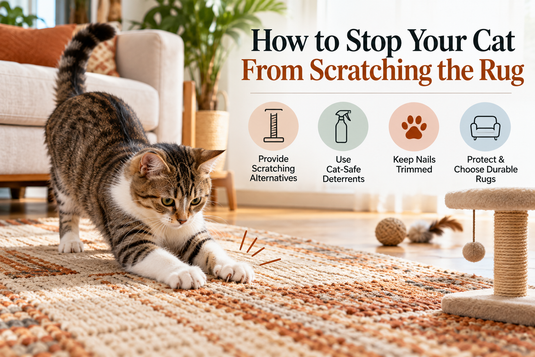
If you have cats, consider whether loops might catch claws.
If your dog sheds heavily, think about how coat color will look against the rug.
If accidents are possible, make sure the rug and pad can actually be cleaned appropriately.
A beautiful white shag rug and a muddy Labrador can technically coexist.
Whether you want to manage that relationship every week is a different matter.
24. Wall-to-Wall Carpet Is Creeping Back Into the Conversation
Technically, carpet is not an area-rug trend, but the return of interest in fitted carpet affects how rugs are being used.
Social-media interiors are rediscovering patterned carpet, wool carpet, warm colors, and full-floor softness, especially in bedrooms and cozy spaces.
Area rugs are also being layered over wall-to-wall carpet to add pattern or define furniture arrangements.
This creates more opportunities for texture but requires good rug stability.
A rug placed on soft carpet can shift or wrinkle more easily than one sitting on a hard floor.
If layering a rug over carpet, use a pad or anchoring method specifically designed for rug-on-carpet use.
25. The "Collected Home" May Be the Biggest Rug Trend of All
Individual rug patterns come and go.
The larger shift may be away from rooms where every item clearly came from the same collection.
TikTok and other social platforms are full of interiors combining vintage, inherited, handmade, contemporary, and secondhand objects.
Rugs are central to this look because they can bridge different periods.
A traditional rug can connect an old wooden table with contemporary dining chairs. A simple wool rug can calm a room filled with vintage furniture. A graphic rug can make inherited furniture look less formal.
This is good news if you dislike constantly replacing furnishings.
A rug does not need to be "on trend" when it participates naturally in a room that feels personal.
How Do You Know Which TikTok Rug Trend Is Worth Trying?
Before buying the rug you have seen repeatedly on your For You page, ask a few practical questions:
- Would I like this rug if I had never seen it on social media?
- Does the size work with my furniture?
- Is the pile practical for this room?
- Can I clean it realistically?
- Will my pets damage the construction?
- Does the material suit the amount of foot traffic?
- Is the trend mainly about color, and could I introduce that color more easily elsewhere?
- Is the rug expensive enough that I need to like it for five or ten years?
- Does it work with the home I already have?
- Am I buying it because I love the design or because familiarity is starting to feel like preference?
That last question is especially useful.
The more often you see an object, the more normal and desirable it can start to feel.
Give major purchases a little time.
How The Ambiente Thinks About Rug Trends
Trends are useful when they expand your sense of what is possible.
Maybe TikTok convinces you that a round rug would solve an awkward dining layout. Maybe a vintage runner makes you reconsider a plain kitchen floor. Perhaps an irregular rug finally gives you a reason to add curves to a room full of rectangular furniture.
Those are productive uses of inspiration.
Problems begin when trends override function.
A rug still needs to fit the room. Dining chairs need enough clearance. Pets still shed. Children still spill drinks. Doors still have to open. Deep pile still traps more debris than flatweave. A tiny rug does not become correctly sized because the pattern is popular.
At The Ambiente, we recommend starting with those practical questions and then using trends to guide the fun part.
Which Rug Trends Have the Best Staying Power?
No one can guarantee which designs will still feel current several years from now.
But some of the ideas currently circulating are less trend-dependent than others.
Vintage rugs have already survived countless decorating cycles.
Warm browns, reds, and greens have deep historical roots in textile design.
Stripes and checks disappear and return repeatedly because basic geometry is endlessly adaptable.
Natural fibers and wool are not tied to any particular social platform.
Correct rug sizing will never stop being useful.
Irregular novelty shapes, specific viral graphics, and highly recognizable color combinations are more likely to become associated with a particular period.
That is not a reason to avoid them.
Not everything in your home needs to be timeless. Sometimes the object that clearly belongs to a certain moment becomes the one you remember most fondly.
Just match the financial commitment to your confidence.
The Bottom Line: Use TikTok for Ideas, Not Instructions
Right now, rug content on TikTok is moving in several directions at once.
Vintage and vintage-inspired designs remain strong. Irregular and sculptural shapes are making floors more expressive. Checks and stripes continue to evolve. Brown, burgundy, olive, butter yellow, and other warmer colors are replacing some of the cool-gray uniformity of the previous decade.
Texture is becoming more visible.
Custom tufted rugs are keeping maker culture in the conversation.
Rug layering, oversized rugs, kitchen runners, and unusual shapes are changing how people think about placement.
At the same time, practical ideas such as washable and pet-friendly rugs are getting just as much attention as purely decorative ones.
If there is one common thread, it is personality.
People seem less interested in making every home follow one neutral formula and more interested in using rugs to give rooms an identity.
At The Ambiente, we think that is a useful direction, as long as the rug still works when nobody is filming it.
Save the TikToks you like. Look for patterns in what you keep returning to. Then close the app and look at your actual room.
Measure the furniture. Think about traffic. Consider your pets, children, cleaning habits, and flooring underneath. Decide how much color and pattern you genuinely want to live with.
Then choose the rug.
The best outcome is not a room that looks exactly like the one that went viral last week.
It is a room where the inspiration made sense once it reached your floor.