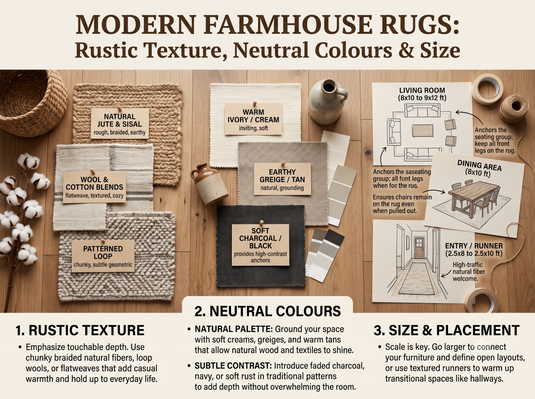
Modern farmhouse styling combines a relaxed, lived-in character with cleaner lines and a considered palette. A rug can help connect those elements, especially when the room includes timber, neutral upholstery and a mixture of old and new furniture. The aim is not to reproduce a country-house photograph exactly. It is to choose a floor textile that brings the furniture together and suits everyday use.
This guide treats modern farmhouse as an interior style, not as a requirement to own a farmhouse property. The ideas can work in an apartment, a family living room or a quieter bedroom. Explore The Ambiente's living-room rugs for current options, then check the individual materials and construction rather than selecting a rug from the style label alone.
What does modern farmhouse mean for rug selection?
Begin with the balance you want between rustic character and visual simplicity. A room with strong timber grain and vintage furniture may need a quieter rug. A room with smooth modern surfaces may benefit from more texture or a traditional pattern. The rug should fill a useful role in that particular composition.
The style can include warm neutrals, muted colour, familiar patterns and tactile surfaces, but none of those is compulsory. Avoid turning an inspiration board into a checklist that every room must satisfy. Your furniture, floor, lighting and maintenance needs are the real starting points.
Also separate the style from product performance. A rug described as rustic is not automatically durable, washable or suitable for pets. A natural-looking texture does not establish a particular fibre. The practical specification belongs alongside the decorative story.
Start with the room's fixed materials
Identify the flooring, sofa, built-in joinery and the furniture you intend to keep. These large elements create the main visual relationships. A rug chosen to connect them is more likely to work than one bought first because it looks perfect in an unrelated room photograph.
Compare the undertones of timber and upholstery. Warm wood can make a cool grey rug feel quite different from the way it appears on a white website background. Beige and cream also vary, so use physical samples beside the actual finishes where possible.
If the room contains several timber tones, the rug can provide a quieter common base. It does not need to match every grain. Look for a palette that lets the furniture sit comfortably together and decide which piece should remain the focal point.
Neutral colours are a starting point, not a guarantee
Cream, beige, taupe and grey can all suit a farmhouse-inspired room, but their undertones matter. Test a warmer neutral against a cooler alternative under the room's lighting. View both from the doorway and seated height to judge the whole composition.
A light rug may create a softer transition between dark furniture and a pale wall. A deeper neutral may ground a large sofa more clearly. Neither is automatically more practical. Colour affects how some marks are seen, while care and suitability depend on the actual product.
Muted green, blue or rust can also work when connected with existing furniture or artwork. A controlled accent can add depth without making the room feel busy. Choose it deliberately instead of assuming that modern farmhouse requires an entirely beige interior.
Texture should complement the furniture
Compare how the rug feels and looks beside the upholstery. A smooth sofa may benefit from a textured floor surface. A heavily woven sofa and patterned curtains may need a calmer rug so the room does not become visually crowded.
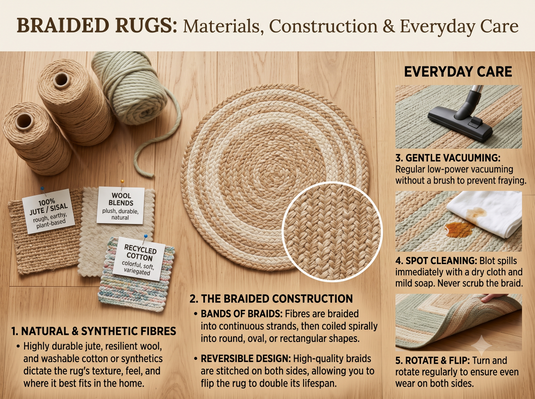
Texture can come from the fibre, weave, pile height or a relief pattern. Ask what creates the effect in the product you are considering. Two rugs with a similar photograph may have very different constructions and cleaning requirements.
Do not select a dramatic surface without checking use. Dining chairs, small table feet, doors and vacuuming can all be affected by the finished texture. A comfortable farmhouse-inspired room should remain workable when people actually sit, walk, eat and clean in it.
Traditional patterns can work with modern lines
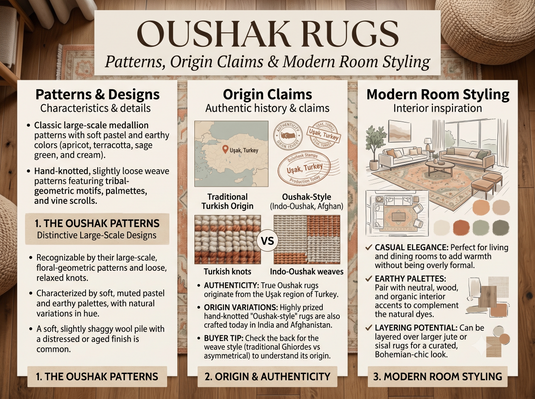
A restrained traditional rug can add depth beneath a simple contemporary sofa. Look at pattern scale and contrast rather than assuming that a historical-looking motif makes the entire room old-fashioned. A quieter palette can let the pattern behave as background texture.
Examine the full field and border. A central medallion may be partly hidden by the coffee table, while a strong border may define the seating footprint. Ask for a layout image at the size being considered, because pattern proportions can differ between products.
For more mixed-furniture ideas, read our transitional-rug guide. It helps connect traditional references and modern pieces without requiring every object in the room to share one era or design language.
Stripes, geometry and solids are useful alternatives
A striped rug can introduce rhythm and a restrained colour story. A geometric design can connect cleaner furniture lines. A solid or nearly solid rug can leave the focus on timber, upholstery and artwork. Compare these roles instead of treating one motif as the authentic farmhouse choice.
Pattern scale matters. A fine repeat may read as texture, while a large high-contrast shape becomes more prominent. View the design from across the room and with the furniture footprint in mind. A close-up alone cannot communicate the overall visual weight.
If the room already contains patterned cushions and curtains, test a quieter floor first. If the room feels plain, a more noticeable rug may be the most useful change. The decision should solve a specific composition problem rather than add another style label to the shopping list.
Choose material through use and care
Write down the room's conditions: foot traffic, shoes, pets, food, sunlight and the cleaning routine available. Then compare the product's stated fibres, construction, backing and maintenance. This connects the appearance you want with the way the room functions.
Wool is one option to compare for comfort and a range of visual effects, but a wool label does not guarantee suitability for every setting. Jute and other plant-fibre products may provide a natural-looking surface, but their placement and care need explicit attention. Lustrous blends create another visual effect and require their own specification.
Explore wool rugs and jute rugs as available categories, then read the individual product information. Do not treat a category page as evidence that every design has the same performance or maintenance requirements.
Size the rug around the seating group
Measure the sofa, chairs and coffee table. Decide whether the front legs or the full group should sit on the rug, then test the footprint. Include the room's main walkways and any door that passes over the area.
A rustic-looking room can still feel unsettled when the rug is too small for the seating arrangement. Equally, a large rug should not crowd access or become difficult to maintain. Try two outlines with a floor-safe method and compare how they support the furniture.
The rug can sit off-centre in the room if it is correctly placed around the seating activity. In an open-plan apartment, the dining and circulation areas may occupy the other side. Useful balance is not always the same as equal margins at every wall.
Dining areas need a chair-movement test
Measure the table and pull chairs out to the positions used for sitting and standing. The rug should be assessed through that working footprint, not only through the table's closed outline. Check the edges and the surface with chair movement in mind.
Ask whether the selected construction and pile suit repeated movement and likely food spills. A thick or loosely textured rug may not be the best choice simply because it fits the rustic aesthetic. Compare a more appropriate product if the surface makes chairs awkward to use.
Keep cleaning access in the plan. A rug beneath a large table needs care that the household can realistically provide. The material, pad and floor compatibility should be confirmed before ordering, especially when the room is used for everyday family meals.
Bedroom farmhouse styling can be softer and quieter
In a bedroom, connect the rug with bedding and the bed frame. A muted pattern or tactile neutral can bring warmth to the composition without competing with every cushion and throw. Review the sample beside both the daytime and evening lighting.
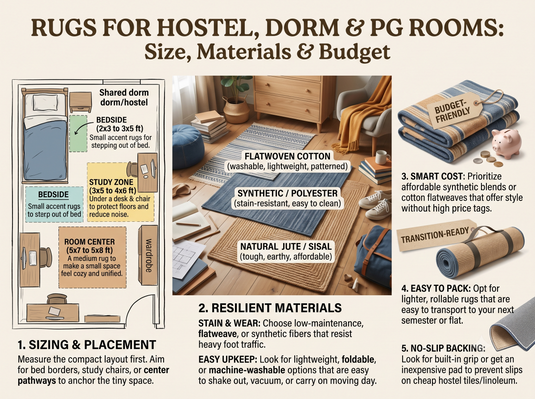
Choose a footprint that supports the intended bedside use. A large under-bed rug creates one effect, while smaller bedside pieces create another and can be easier to handle. Check door and wardrobe clearance and keep the edges stable where you step down.
The bedroom may be quieter than the living room, but care still matters. Consider shoes, water glasses, pets and cleaning access beneath the bed. A soft appearance should be backed by a practical maintenance plan for the actual fibres and construction.
Layering is optional, and stability comes first
Layering can add texture, but it introduces more edges and interactions between surfaces. Compare the arrangement carefully and confirm whether the rug and support layers are intended for that use. A visually appealing stack is not automatically stable underfoot.
Check how furniture legs meet the layers and whether the top rug moves during ordinary use. Keep edges outside main routes where possible. If the arrangement repeatedly shifts or makes vacuuming awkward, a single suitable rug may be the better solution.
Do not use layering to hide an unsuitable base rug or an unresolved floor issue. Start with a clear purpose and verify the complete installation. The farmhouse character can come from colour and texture without adding extra textiles under the seating group.
Work with existing furniture on a realistic budget
Keep the large pieces that already serve the room well. A new rug, adjusted lighting and a few coordinated accessories may provide the change you want without replacing the sofa or dining table. Begin with the floor textile's required footprint and care needs.
Separate essential requirements from decorative preferences. If the ideal pattern is unavailable within the budget, preserve the size and suitable construction while comparing another palette or motif. A slightly different design that fits the room can be better value than the perfect photograph in the wrong size.
Check current prices and terms directly. Do not infer a sale or a particular saving from a styling article. Include the compatible pad and expected care in the total cost, and review custom-order conditions before requesting a bespoke size or colour.
Avoid turning rustic character into clutter
A farmhouse-inspired room can contain personal objects, but the rug should not have to compete with every visible surface. Identify the focal points and let some elements remain quieter. A controlled palette can connect different textures without making them identical.
Distressed-looking patterns also need accurate descriptions. An aged effect does not prove that a rug is vintage or antique. If age or origin matters, request documentation rather than relying on appearance. A newly made design can provide the look honestly when described as an interpretation.
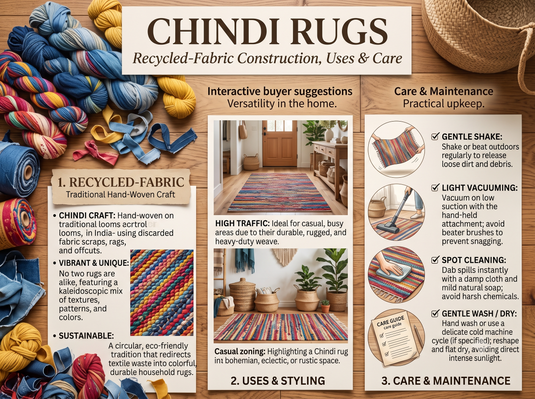
For related eclectic ideas, see our boho-rug and room-story guide. Use the overlaps thoughtfully, while keeping the intended farmhouse balance of texture, comfort and visual restraint clear.
A worked apartment-living-room example
Imagine a cream sofa, two timber chairs and a black metal coffee table on warm flooring. You want the room to feel less bare without adding more furniture. Measure the seating group and test a rug outline that connects the front legs while preserving the route to the balcony.
Compare a warm textured neutral, a muted traditional pattern and a restrained stripe. The neutral may highlight the furniture shapes; the traditional pattern may soften the contrast of metal and timber; the stripe may add rhythm. Place samples beside the sofa and check each in evening light.
Then compare care and construction. If the household eats in this area daily, choose from products suitable for that use rather than the most rustic-looking surface. The successful result is a comfortable composition that fits the room, not a collection of objects purchased because they share the same style label.
Frequently asked questions
Do I need a farmhouse property for this style?
No. Modern farmhouse describes an interior approach in this guide. It can be adapted to an apartment or city home through furniture, palette and texture.
Must the rug be beige?
No. Warm neutrals are one option, while muted colours and restrained patterns can also work. Test the undertone against the actual floor and furniture instead of choosing from a colour name alone.
Is jute always the best material?
No. Compare the product's intended use and care with the room. Natural-looking texture is only one part of the decision, and other materials may suit your household better.
Can a traditional rug suit modern furniture?
Yes. Pattern scale, contrast, colour and the furniture footprint determine how it reads in the room. A restrained design can connect modern pieces without making the whole space formal.
What is the most useful first step?
Measure the seating group and identify the fixed room finishes. Then compare physical samples and complete specifications. This gives the styling decision a practical basis before you add accessories or place an order.
Build the style around a useful room
The right farmhouse-inspired rug connects texture, palette and furniture while supporting everyday use. Keep the style flexible, verify the individual product and test the footprint before buying. A room that feels considered and comfortable will serve you better than one that follows an inspiration image at the expense of care and layout.
Related rug guides
Need help choosing a rug or carpet?
Ask The Ambiente about rug sizes, materials, colours or the right choice for your room.