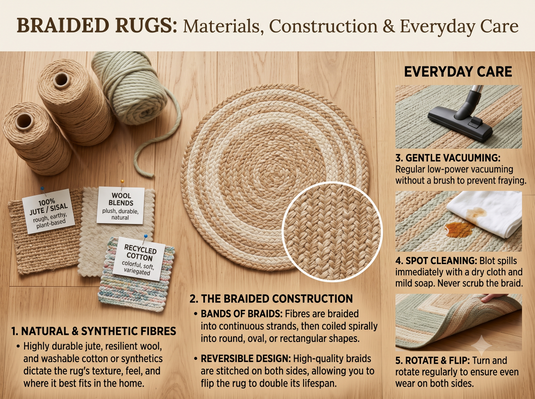
Braided rugs bring a recognisable texture to a room through lengths of material arranged and joined into a surface. They can feel relaxed, traditional or contemporary depending on the fibre, colour and shape. The familiar look is only the beginning of the buying decision. A finished rug should also have a clear specification, stable placement and a care routine that fits its construction.
This guide is for choosing a finished braided rug, rather than making one at home. It covers materials, joining, room layouts and maintenance. It does not imply that The Ambiente offers every braided product discussed. If you are comparing natural-looking options, explore our jute rugs and confirm the construction of each individual design.
What makes a rug braided?
In a braided construction, lengths of yarn or fabric are formed into braids and assembled into the finished rug. The joining method and the materials matter to the completed surface. Ask the supplier to explain the structure of the specific product instead of identifying it from a close-up photograph alone.
A rug with a braided-looking edge may not have a fully braided field. Similarly, a textured woven surface can resemble a braid without being made in the same way. Request face and reverse photographs and a clear product description where the construction is important to you.
The technique does not establish the fibre. Wool, cotton-rich material, jute, synthetic yarn or blends can require different care. Keep composition and construction as separate entries in the buying comparison. A style label should not substitute for the product's actual materials.
Braided versus woven rugs
A woven rug is built through the interlacing of structural yarns, while a braided product is discussed through the formation and assembly of braids. Some products combine methods, so the supplier's explanation remains important. Do not turn that distinction into a universal quality ranking.
Compare how each finished piece behaves. Does it lie as intended? Are the edges secure? Does the surface support your furniture? Is the cleaning process appropriate for the room? Those observations are more useful than assuming one construction is always more durable than another.
A woven or braided rug can be decorative and practical when correctly specified. The choice should connect feel, appearance and maintenance with the intended use. If the listing does not explain the joining or backing, ask before purchase rather than filling the gap from a similar product.
Wool braided rugs: ask about the complete blend
A wool description should include the actual percentage and any other fibres. Ask whether the stated composition refers to the visible braid or the whole product. Materials inside a braid or in its stitching may be relevant to care and should not be ignored.
Compare the sample's feel and density on a similar support surface. A showroom pad can change the underfoot impression. If comfort is a priority, ask to see the recommended pad and evaluate the combination rather than judging the rug alone.
Wool content is not a guarantee that the rug can tolerate any cleaning method. Read the finished product's instructions and discuss spills, professional cleaning and storage. For available wool alternatives, review The Ambiente's wool rugs through their own construction and specification.
Cotton, jute and synthetic braided options
For a cotton-rich rug, confirm the fibre mix and washability separately. A cotton ingredient does not automatically make a large joined textile suitable for a domestic machine. Size, dyes, stitching and backing can all affect the permitted method.
For jute or other plant-fibre products, ask about placement and moisture exposure. Do not assume that a natural-looking surface is an appropriate bath mat or wet entrance mat. Choose the location through the manufacturer's intended use rather than the material's decorative appeal.
For synthetic or blended products, clarify the generic fibres and any outdoor claim. A synthetic ingredient alone does not prove weather resistance, UV stability or suitability for a particular balcony. Request the relevant instructions for the complete rug and the conditions in which it will be used.
Inspect how the braids are joined
Look closely at the joins and outer edge, using the supplier's photographs or the actual piece. Ask what a normal finish looks like and how a loose joining thread should be handled. A neat appearance is useful, but the structure and maintenance guidance should also be clear.
Do not pull a thread to test strength. That can damage the piece and does not provide a meaningful performance assessment. If a join appears loose, ask the retailer to inspect it before purchase or delivery. Keep any concerns specific and supported by photographs.
After installation, inspect the places that receive repeated movement. An edge near a doorway or a join under a frequently shifted chair may need attention sooner than a protected area. A problem should be assessed through the construction, not dismissed as normal because the rug looks rustic.
Reversible is a product claim to verify
Some braided rugs are designed to be reversible, but you should not assume that every braided item can be turned over. The reverse may include backing, a different finish or an intended support arrangement. Ask whether both faces are meant for use.
If reversibility is confirmed, request instructions for rotation and turning. Check that the new face and the pad work together properly, and inspect the rug before reinstalling. Reversibility does not eliminate the need for cleaning or make damage on one side irrelevant.
For a patterned or mixed-colour design, compare both sides before buying. You may prefer one face or find that the finish differs. A clear product description should tell you what to expect rather than leaving that discovery until the first maintenance session.
Choose oval, round or rectangular through the furniture footprint
Braided rugs are often associated with curved shapes, but shape should follow the room. A round or oval piece may suit a reading corner, while a rectangular footprint may connect a sofa and chairs more effectively. Measure the proposed placement before selecting from a style association.
For a circular rug, check the entire footprint around the furniture, not only its centre. A chair leg near the edge can change the practical fit. For an oval, record both overall dimensions and compare the outline against the furniture arrangement.
Use a floor-safe mock-up to test walking routes and doors. The shape should not leave a raised or unstable corner in the main path. If the required size is unusual, ask whether a custom option is actually available and clarify the finished-size tolerance.
Living-room and dining-room considerations
In a living room, assess how the rug connects the seating group and supports the coffee table. A strongly ribbed or uneven surface should be checked with the actual furniture where possible. Small feet may interact differently from broader supports.
Dining requires a separate test. Pull chairs out to the position used for sitting and standing. Ask whether the surface and construction are appropriate for that repeated movement and for likely food spills. A decorative braided rug should not be chosen for dining solely because its shape matches the table.
Keep the pad and cleaning plan in the decision. A stable installation and realistic care matter as much as colour. If a particular braided product does not meet the room's operational needs, compare a different rug rather than forcing the look into the wrong location.
Coordinate the palette without making the room overly rustic
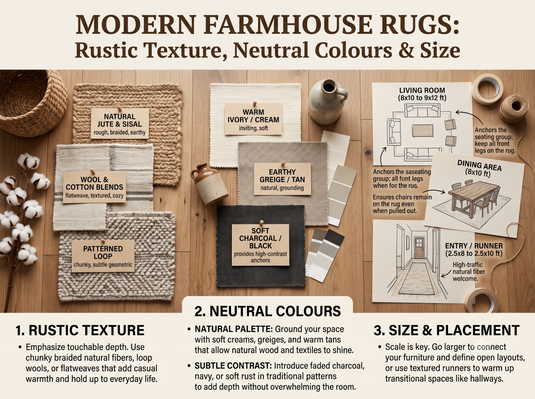
A braided texture can work with modern furniture when the palette is controlled. Compare a neutral braid with a higher-contrast mix. The first may read as background texture; the second may become a focal point. Decide which role is useful in the room.
Place samples beside the sofa and floor. Natural-looking beige tones can vary in warmth, and multicolour braids can include stronger sections than a small image suggests. Review the full rug layout and the sample together.
You do not need to repeat the braid pattern in every accessory. A plain sofa, simple table and considered rug can make a clear composition. If the room already contains strong texture in curtains and upholstery, compare a quieter rug to keep the overall effect balanced.
Cleaning should follow the actual product
Read the instructions before ordering. Ask about vacuum settings, treatment of joins and edges, spill response and professional cleaning. A casual texture does not justify aggressive brushing or a washing method intended for another construction.
Avoid tools that catch exposed material or joining threads. Keep vacuum attachments away from loose areas until they have been assessed. If the manufacturer gives a particular method, use that rather than applying advice from a different braided brand.
For a fresh spill, follow the approved response and avoid saturating the rug or using several household remedies. The braid, stitching, dyes and backing may react differently. Tell the cleaner what the rug contains and what has already been applied.
Repair and maintenance need a construction-aware approach
If a join separates, stop the repeated stress where possible and ask for suitable repair advice. Moving a chair repeatedly across the same damaged area can enlarge the problem. Photograph it clearly and retain the product reference.
Do not glue, staple or cut the structure as an improvised fix. A repair method needs to suit the construction and materials. Some manufacturers provide specific repair guidance, but that does not make the same process appropriate for another product.
Check the pad and floor at the same time. Movement may come from the support layer or placement rather than a fault in the braid alone. Solving the cause helps avoid repeating damage after a repair.
Storage and moving
Remove loose soil according to the approved method and arrange cleaning where needed. Let the whole rug dry before packing. Ask how the finished construction should be rolled or supported, particularly if the piece is stiff, damaged or large.
Avoid sharp folds and heavy boxes on top of the packed rug. Keep the roll protected from dirt and possible leaks during transport. A temporary storage space should be clean and dry, with a plan for inspection if the rug will remain there for a long period.
At the next home, confirm the pad's compatibility with the new floor. Check the rug's edges and joins before placing furniture. Moving is an opportunity to inspect the full structure rather than simply hiding the same worn area beneath a table.
Compare buying value with a DIY project fairly
A finished braided rug includes materials, assembly, joining and finishing. A DIY project can be rewarding, but it is a different decision involving your time, equipment and ability to make a stable textile. Do not compare a material-only DIY estimate directly with a finished retail price.
If you want to make a rug, use a tutorial appropriate to the chosen method and materials. Our jute-rug making guide and jute weaving guide cover related DIY interests. They do not certify a homemade rug for every floor or use.
For a purchased rug, compare the complete specification, current terms and care. Decide whether the product meets the room brief and whether you can maintain it. A familiar handmade appearance should lead to informed questions, not automatic assumptions about value.
A worked reading-corner example
Imagine a curved armchair and a small round table beside a window. You want a braided texture to soften the corner. Test a circular outline large enough for the chair's working footprint, then compare it with an oval if the area is longer than it is wide.
Check how the table feet sit on the surface and how the rug behaves when you stand from the chair. Confirm a compatible pad and keep the edge away from the main walkway. View the sample beside the chair fabric and floor in the lighting you use for reading.
Finally ask about composition, joining, reversibility and care. If the window brings strong sunlight or the corner is used for drinks, include those conditions in the brief. The successful choice should fit the activity and the appearance together.
Frequently asked questions
Is every braided rug reversible?
No. Verify that claim for the individual product and ask how both faces should be used. Backing and finishing can make the reverse unsuitable for normal placement.
Are braided rugs always made from jute?
No. The construction can use different materials and blends. Ask for generic fibres and percentages rather than identifying composition from a textured appearance.
Can I machine wash one?
Only if the finished rug's instructions permit it and the equipment and drying method meet the stated requirements. The fibre name alone does not establish washability.
What should I do with a loose join?
Avoid pulling, cutting or gluing it without advice. Reduce repeated stress, photograph the area and request an assessment suitable for the product's construction.
Is a braided rug suitable under dining chairs?
Check the actual surface, stability and manufacturer guidance against repeated chair movement and likely spills. A shape that matches the table is not enough to establish suitability.
Construction reference
For an example from a specialist braided-rug manufacturer, see Capel's braided-construction information. Its product-specific care and repair instructions apply to its own rugs. Use the general distinction between fibre, braid and joining to ask clearer questions about whichever product you buy.
Related rug guides
Need help choosing a rug or carpet?
Ask The Ambiente about rug sizes, materials, colours or the right choice for your room.