Handloom rugs can give a modern room texture without asking every surface to compete for attention. A softly varied solid, restrained stripe or simple geometric weave can connect clean-lined furniture with a more tactile floor. The effect is often quiet, but choosing well still requires clear information about the material and construction.
This guide explores useful handloom style directions for living rooms and bedrooms, explains how to compare them and sets out practical care questions. It does not present an unverified sales ranking. The best style is the one whose dimensions, texture and maintenance fit the particular home.
What does handloom mean?
Handloom describes production on a manually operated loom. It does not identify one fibre, one surface or one level of durability. Depending on the technique, a handloom rug may have a relatively flat structure or a different pile effect.
Ask which method is used and what the face and foundation contain. Handloom should not be treated as a synonym for hand-knotted, and a rug can include decorative elements that change its care requirements. A clear product description makes those distinctions understandable.
Browse The Ambiente's handloom rugs with the exact specifications in view. The collection provides a browsing direction; the individual product establishes composition, dimensions and intended use.
Why handloom texture can work in modern interiors
Modern furniture often uses relatively simple shapes and broad, quiet surfaces. A textured rug can add interest without introducing another large visual motif. Subtle yarn variation or the rhythm of the weave can create a softer relationship between seating and the floor.
That effect can be useful in a room with pale walls, timber furniture or restrained upholstery. The rug does not have to be completely plain. A small variation in tone can make a large floor area feel considered while remaining easy to coordinate.
Look at the surface from normal viewing positions. Texture that appears delicate in a close-up photograph can read differently across the room. Choose an effect you appreciate both at floor level and from the doorway.
Style direction one: softly varied solids
A solid-looking handloom rug may contain subtle variation in yarn or tone. This can provide interest in a room where artwork, cushions or furniture already carry the strongest pattern. Compare a varied neutral with a completely uniform surface before deciding.
Warm greys, ivory, taupe and earth-toned directions can support a restrained scheme, but the actual undertone should be tested beside the floor and sofa. A shade name does not tell you how it will appear under evening lamps.
Check whether the variation is part of the design and what differences may occur between pieces. Handmade variation can be appealing when you understand it in advance. It should not become an excuse for unexplained differences from the agreed product.
Style direction two: restrained stripes
Stripes can introduce rhythm without requiring a detailed pictorial design. A narrow repeated stripe may create a subtle surface, while broader bands can become more noticeable. Choose the scale according to the room's other patterns.
Think about orientation. Stripes running along a seating arrangement can give a different impression from stripes crossing it. Test the proposed direction using the furniture layout and any available image or sample.
Do not assume every striped rug is handloom. The appearance can be produced by several methods. Confirm the actual construction and material before comparing a handwoven piece with a printed or machine-made design.
Style direction three: geometric structure
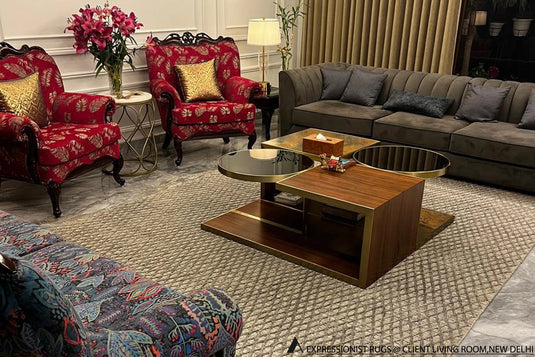
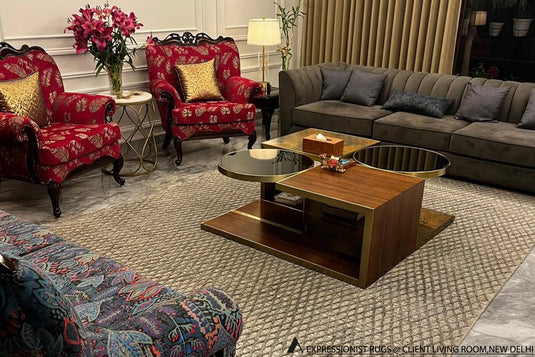
Simple geometric designs can connect well with clean-lined furniture. Repeated shapes, measured borders or a grid-like composition can give a room structure while keeping the palette restrained. Check how much of the pattern will remain visible beneath the coffee table.
A very small repeat can appear busier than expected over a large area. A large geometry may remain legible but require careful furniture placement. View the design at approximately the scale at which it will be used.
Compare geometric designs with handloom options, keeping the method distinct from the pattern. Geometry describes visual language, while handloom describes manufacture. The right pairing depends on the exact product.
Style direction four: texture-led minimalism
A modern minimalist room can still benefit from tactile variety. A texture-led handloom rug may soften a stone or timber floor without adding strong colour. Look for a surface that gives enough interest while supporting the room's practical use.
Raised or sculptural areas deserve attention beneath moving chairs or in a main walking route. Texture should be convenient to clean and should not create an unstable edge. A protected seating zone offers different possibilities from a busy entrance.
If the rug's visual appeal relies on a lustrous fibre, assess how it changes with light and pile direction. A subtle photograph may not show the full reflective effect. Decide whether that variation fits the atmosphere you want.
Choosing wool handloom rugs
Wool can be a useful material direction when comfort and a natural tactile finish are priorities. Evaluate density, finishing and intended use rather than assuming every wool handloom rug is equally durable. The construction has to support the room's traffic.
A compact wool surface may provide a practical balance in a living room. If pets catch loops or the rug will sit beneath moving furniture, examine the specific structure carefully. Ask which incidents should be handled at home and which need professional care.
Use our wool rug guide alongside the product details. Fibre characteristics are helpful context, but they do not replace an item-specific suitability recommendation.
Lustrous fibres and blends
Bamboo silk and other lustrous fibres can create a smooth, light-responsive surface. They can be attractive in a quieter decorative room, yet they may require more care around moisture, crushing and staining. The exact composition should be clear.
A wool blend may combine different visual effects, but it is not automatically easier to maintain than pure wool. Ask about proportions and whether delicate fibres appear throughout the pile or in specific details. The whole rug's treatment should take those components into account.
Do not confuse natural silk with regenerated fibres sold under silk-like names. A seller should be able to explain what the product contains. Choose the appearance only after deciding that its maintenance requirements fit the room.
Living-room layout and dimensions
Measure the sofa and accompanying chairs, then mark a proposed rug outline on the floor. Where practical, a footprint connecting the principal seating pieces can give the handloom texture a clear role in the room.
Check the coffee table, doors and main walking routes. A beautifully textured rug can still look disconnected if it is too small. It can also become inconvenient if a corner sits where people regularly turn or a door catches the surface.
Compare living-room rugs using the taped measurements rather than the scale suggested by product photography. Decide how the rug supports normal use before choosing the final texture.
Bedroom layouts
In a bedroom, choose which areas you want to feel soft underfoot: beside the bed, at its foot or around a larger furniture arrangement. The rug's size should follow that intention. A small decorative piece and a larger under-bed footprint create different effects.
Check bedside tables, wardrobe doors and the space needed to move around the bed. A low-profile rug can be convenient where clearance is tight, but it still needs stable support. Avoid selecting a thick assembly without testing the actual door movement.
A quieter texture can work well beside patterned bedding, while a striped or geometric rug can add interest to plain linen. View samples beside the bedding and furniture together. Do not choose the rug as though it were an isolated object.
Choosing colours in the actual room
Start with the larger fixed surfaces: floor, walls and upholstery. Warm grey or taupe may connect with timber, while cooler tones can support an existing blue palette. The best undertone depends on your particular materials and light.
Test the sample flat in the intended position. A handloom texture can cast small shadows or reflect differently when viewed across the floor. Shop lighting and screen images may not reveal that effect accurately.
For a custom colour, confirm how approval will work and which variation is expected. An agreed sample is more useful than a vague request for the same beige as an online photograph. Clear references make the design conversation more precise.
What is popular and what suits you?
Without verified sales data, a style should not be described as the most popular simply because it is prominent on a website. This guide identifies common design directions: softly varied solids, restrained stripes, simple geometry and texture-led minimalism.
Those directions can help you build a shortlist, but they are not a demand ranking. A strongly coloured handloom rug may suit your home better than a neutral option that appears frequently in styled rooms.
Choose by the furniture arrangement, desired visual role and practical specification. Popularity can be interesting context when reliable data exists; it does not correct an unsuitable size or demanding material.
Handloom versus machine-made alternatives
Machine-made rugs can offer consistent repeat patterns and other practical specifications, while handloom rugs may provide a different tactile character and craft connection. Compare actual products rather than treating one method as universally superior.
Use similar dimensions and intended-use categories for a fair comparison. Check composition, edge finishing, backing, cleaning instructions and the seller's terms. If one rug contains a delicate decorative fibre, acknowledge that material difference rather than attributing everything to manufacture.
Our construction guide explains how different methods relate. A method label should help you understand the textile, not act as a substitute for inspecting it.
Daily care and maintenance
Follow the instructions for the exact fibre and construction. Remove dry soil with compatible equipment and keep loose edges or fringes away from anything that could catch them. If cleaning changes the surface or pulls yarn, stop and reassess the method.
Blot spills promptly without scrubbing or saturating the rug. Avoid universal cleaning mixtures, especially on lustrous blends or unfamiliar dyes. A small wet mark can affect more than the face pile if moisture reaches the backing or floor.
Seek professional advice for significant staining, dye transfer, persistent dampness or structural damage. Our The Ambiente care guide explains routine decisions, while item-specific guidance should govern treatment.
Pads, furniture and sunlight
Choose a pad compatible with the rug and floor finish. It should support stability and comfort without creating an unnecessarily high edge. Ask about underfloor heating or special finishes where relevant rather than improvising with adhesives.
Lift heavy furniture when moving it and inspect pressure points periodically. A change in furniture position can expose a new walking route or place more weight on a small area. The rug's practical arrangement deserves review after restyling the room.
Manage strong uneven light where possible. Rotation may distribute exposure and use when the layout allows, but it cannot reverse fading or remove soil. Treat it as one part of care rather than a solution to every appearance change.
Comparing price and handmade value
The price can reflect size, fibre, technique, finish and seller services. Compare the dimensions you actually need before deciding that one piece is better value. A smaller rug with more sheen may be less useful than a simpler texture in the correct footprint.
The Ambiente's handloom pricing can be considered as part of its handmade offering, alongside the material and finishing. Request a current quote or confirm the listed product price. Do not assume every custom request will carry the same price or delivery schedule.
Include a suitable pad and expected care in the decision. A good purchase is one whose appearance and practical needs remain satisfying in normal use, rather than one selected solely for a promotional reduction.
Build a focused shortlist
Choose three candidates that fit the room dimensions: one quieter texture, one with a measured pattern and one alternative colour if you want contrast. Compare each beside the furniture under normal lighting.
Record the exact composition, construction, care instructions and seller terms. Remove an option whose maintenance does not fit the household, even if the texture is appealing. This keeps the shortlist useful rather than allowing it to grow into an unfocused collection of photographs.
Handloom rugs can make a modern room feel more tactile and personal through relatively simple design. Choose that effect together with appropriate size, honest specifications and realistic care. The result is a rug that connects the space and earns its place through everyday use.
Related reading
- The Ambiente Rugs: Sizes, Materials, Colours and Value
- How to Clean and Protect The Ambiente Handmade Rugs
- Boho Rugs, Carpet Art and Rug Stories: A Room Design Guide
Need help choosing a rug or carpet?
Ask The Ambiente about rug sizes, materials, colours or the right choice for your room.