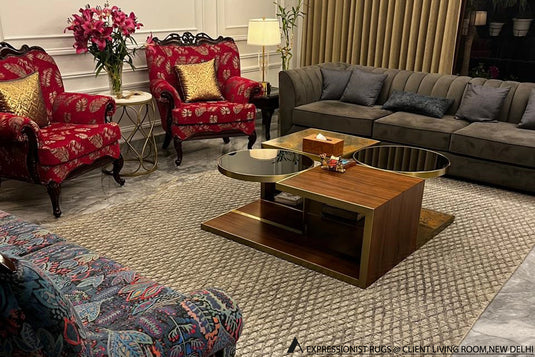
A cozy living room needs more than a soft surface. Its rug has to work with the sofa, tolerate the way people move through the room and fit the care you can realistically provide. Wool is often a strong candidate because it offers a substantial, welcoming feel and can retain its appearance well when the yarn and construction suit the job. It is still a textile that can stain, shed, flatten or suffer damage if chosen or maintained poorly.
This guide explains how to choose a wool rug without relying on the word luxury alone. It also compares polypropylene and other synthetic options, and separates a loose wool rug from fitted wool carpet. Start with the way you use the room, then decide which combination of material, construction and layout gives you the comfort you want.
Why wool can be a good choice for a cozy living room
Wool has a tactile quality that suits rooms where people relax barefoot, sit close to the floor or gather around a coffee table. A compact wool surface can feel comfortable without needing an exceptionally long pile. That matters in a busy living room, where a dramatic shag may collect crumbs and make regular vacuuming awkward. Comfort comes from the whole rug and its pad, rather than pile height alone.
The fibre also has resilience, which can help a suitable rug recover from everyday compression. However, a loose, lightly constructed wool rug will not automatically perform better than a well-made synthetic one. Examine how closely the yarns sit together, whether the edges are secure and whether the manufacturer recommends the rug for your expected traffic. Ask about construction before making a durability comparison.
Wool takes colour attractively, giving you choices from quiet ivory and stone to richly patterned designs. In a cozy room, a softly varied colour can make the rug feel integrated with timber, leather and upholstery. Choose the actual palette you enjoy rather than assuming that natural fibre means only beige. The wool rug collection is a useful place to compare individual specifications and appearances.
The best wool construction depends on your daily routine
A hand-knotted wool rug can be a considered choice when you want a durable woven structure and are comfortable with specialist care when necessary. Check the condition of the foundation and finishing as carefully as the pile. A rug with beautifully drawn motifs but weak edges is not a better everyday purchase simply because it is hand-knotted.
A hand-tufted wool rug can deliver appealing texture and pattern at a different price point. Its backing and adhesive system deserve attention, particularly if the room is damp or cleaning is frequent. Ask how the backing should be cleaned and what the warranty covers. Do not assume that the same treatment suitable for one wool rug is safe for another.
Flatwoven wool offers a lower profile that can work under furniture and in more casual rooms. It may need a suitable pad to improve grip and comfort. A looped surface can also be practical, but households with pets should think about claws catching loops. None of these categories gives a universal winner; choose the one whose structure matches the room.
Which wool rug works with a sofa and coffee table?
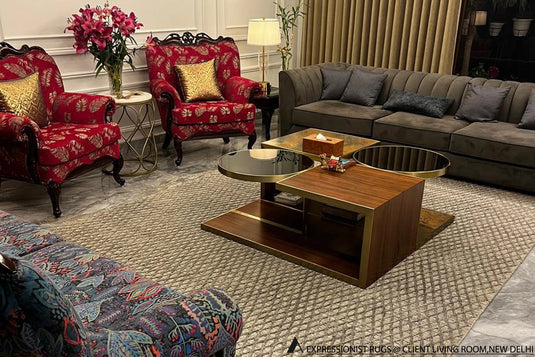
Mark the proposed rug outline on the floor before shopping. The important question is whether the rug connects the seating group. A useful arrangement places at least the front legs of the main sofa and accompanying chairs on the rug, with the coffee table comfortably inside the outline. A small rug floating beneath the table can make the group look disconnected.
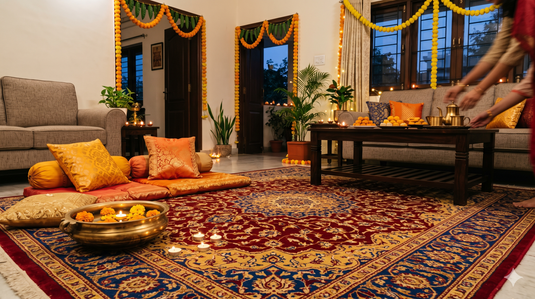
Hosting guests in a compact room? Try these Diwali rug and seating layouts for small living rooms to check furniture placement, serving space and rug dimensions before the gathering.
Check the space needed for walking around the seating, opening doors and accessing storage. In an open room, the rug can define the lounge without extending into the dining circulation path. Measure all furniture positions you regularly use, including a recliner when extended. The layout should continue to work when the room is being lived in, not only when it is photographed.
A larger rug may be preferable to upgrading the fibre while keeping an undersized footprint. If the budget forces a choice, compare the total effect of an appropriately sized, simpler design with a small elaborate rug. Browse living room rugs with your taped measurements beside you so the product photographs do not distort your sense of scale.
Wool carpets versus woollen floor coverings: what do the names mean?
Woollen floor covering is a broad description, not a separate construction standard. It may refer to fitted carpet, a loose area rug, a runner or another textile surface containing wool. Carpet and rug are also used differently by different retailers. To compare products properly, ask whether each item is fitted across a room or supplied as a finished loose piece.
A fitted wool carpet provides continuous coverage and generally requires an installation plan. Subfloor preparation, underlay, seams, edge finishing and transitions all affect the result. It can make a bedroom or enclosed sitting room feel consistently soft underfoot. Replacing or professionally cleaning it may involve working around the whole room rather than lifting a small piece.
A loose wool rug keeps the surrounding floor visible and defines a particular furniture group. It is easier to reposition when your layout changes, but its edges and pad need careful attention. Where dining and lounge spaces share one room, separate loose rugs can support distinct zones. Where uninterrupted floor coverage is the priority, fitted carpet may make more sense.
What are the main benefits of polypropylene rugs?
Polypropylene can be useful when you want an accessible price, a broad choice of patterns and a fibre that absorbs relatively little water. It is often considered for casual rooms where spills are a concern. The actual rug still needs a suitable backing, secure edges and a realistic traffic recommendation. A fibre benefit should not be mistaken for a guarantee about the finished product.
There is an important limitation: resistance to water absorption does not mean resistance to every stain. Oily marks can be troublesome on polypropylene, and soil can remain between the yarns even when the fibre itself is less absorbent. WoolSafe explains that no fibre is stain proof and highlights the difficulty of oily staining on polypropylene.
Compare recovery from furniture pressure and foot traffic rather than judging only stain resistance. A polypropylene rug with a soft, loose pile may lose its fresh appearance along a busy route. Another with a compact surface may be more suitable. Do not interpret a washable or bleach-cleanable marketing phrase as permission to treat the backing, floor or pad with the same chemical.
Wool versus synthetic: a useful comparison for busy homes
Choose wool when its feel, appearance and appropriate construction justify the care and purchase price for you. Choose a synthetic rug when its verified performance, cleaning instructions and replacement cost better match your household. Synthetic is a group of fibres, not one material: polypropylene, nylon and polyester have different characteristics. A fair comparison names the specific fibre.
Ask for the full composition of blends. A product described as wool rich may contain other fibres in the pile, and it may have a different material in the foundation. Small decorative silk or viscose areas can change the cleaning requirements even when most of the rug is wool. Treat the most delicate component as relevant to the entire maintenance plan.
Before buying, compare two or three shortlisted products on size, construction, pile profile, backing, recommended use, return conditions and care instructions. This makes the decision more useful than an abstract argument about natural versus synthetic. Our wool and synthetic durability guide explores that comparison in more detail.
How to choose for children, pets and regular visitors
Identify what actually happens in the room. Crumbs beneath the coffee table, muddy paws near the entrance and heavy sofa pressure are different challenges. A patterned medium tone may make everyday marks less conspicuous, but it will not stop staining. A lower, accessible pile can make it easier to remove dry debris before it becomes worked into the surface.
Pets add questions about claws, accidents and shedding. Check whether loops are likely to snag and whether the care instructions address the incidents you expect. A valuable wool rug might be better in a protected seating zone than directly beside a garden entrance. Place a separate practical entry mat where it can intercept outdoor dirt.
For children who often play on the floor, think about a stable surface, secure corners and comfortable padding. A thick rug and thick pad are not always the safest combination where doors or walking routes are tight. Match the pad to the floor finish and ask both suppliers about compatibility. Grip matters as much as softness.
How much maintenance should you expect?
Wool rugs need regular dry soil removal, with equipment and settings suited to their construction. Follow the rug maker's vacuum instructions, and avoid catching fringes or loose yarns. If a rotating brush pulls at the surface, stop and use an approved gentler method. New loose fibres can occur, but heavy continued shedding or exposed foundation deserves an assessment.
Plan for spills before one happens. Keep plain absorbent white cloths available, lift solids carefully and blot liquid rather than scrubbing it across the pile. Use a cleaner only if it is compatible with the rug and its dyes, following the product label and the rug's instructions. Stop if colour transfers, the surface changes or the spot grows.
Do not saturate a rug to remove a small mark. Moisture can affect the foundation, backing and floor beneath even when the face appears to dry. For dye-sensitive pieces, valuable handmade rugs or a stain that persists, contact an appropriate rug cleaner. See our wool rug cleaning guide for a more detailed decision process.
Can wool be used in a warm or humid home?
A warm climate does not automatically rule out wool. A lower-profile rug can still make a seating area comfortable without creating the visual weight of a thick shag. The more important issue is the room's actual moisture conditions. A dry, ventilated indoor room is different from a damp enclosed ground-floor space with recurring condensation.
Choose a rug for the conditions it will encounter, and address dampness before placing any absorbent furnishing over the floor. Wool is not an outdoor-weatherproof material simply because it is natural. Inspect beneath the rug periodically, especially after cleaning or a spill. A rug that stays damp needs the cause investigated rather than a deodorising powder added.
Strong sunlight is another separate consideration. Arrange the rug so one section is not constantly exposed while another remains shaded. Curtains or blinds can help manage exposure. Rotate the rug if the shape and layout allow it, but remember that rotation redistributes exposure rather than reversing existing fading.
What should the price comparison include?
Compare the delivered and usable result. The cost may include a pad, professional cleaning, delivery, installation for fitted carpet and any special finishing. A smaller sticker price can become less attractive if the rug cannot be returned after you discover that its colour or pile does not work in the room.
There is no reliable universal lifespan or price premium for every wool rug. Fibre grade, labour, size, construction, finish and seller services all influence cost. Ask what explains a higher price on the particular product. A straightforward answer is more useful than a claim that all wool rugs last for decades or improve in value.
Consider the cost of maintaining the rug in your own household. A delicate pale wool and silk blend might be beautiful, but it could be an inconvenient main family-room surface. A simpler wool rug with a suitable construction may give you a better daily experience. Value includes enjoying the rug without constantly worrying about normal use.
A practical selection example
Imagine a living room with a timber floor, a grey sofa, children playing beside the coffee table and a door to the garden. Begin by measuring a rug that connects the sofa and chairs while leaving the door clear. Next, look for a compact, comfortable surface with secure edges, and choose a medium-toned pattern if visible crumbs are a concern.
Compare a wool option and a polypropylene option in that same size and approximate pile profile. Request care instructions for each and consider which problems you are most likely to face. If garden grit is the main issue, an effective entry mat and regular cleaning matter for both. If oily snacks are common, polypropylene's water resistance does not settle the decision.
Finally, view a sample beside the sofa in daylight and under evening lamps. Check that the pad is floor compatible and that the corners sit securely. This sequence gives you a rug that supports the room's comfort and daily routine. The best wool rug for your living room is the one whose documented construction, proportions and care requirements work together.
Related reading
- Durable Rugs for Australian Homes: Climate and Materials
- Hospitality Rugs: Durability, Stain Resistance and Maintenance
- Kilim and Handloom Rugs: Weaving, Authenticity and Care
Need help choosing a rug or carpet?
Ask The Ambiente about rug sizes, materials, colours or the right choice for your room.