New Handmade Rug: First Seven Days of Care. A practical guide for Indian homes.
Unpacking safely
Open your rug on a clean dry floor and inspect its packaging for damage. Save photographs of unusual marks before removing the wrapping. Avoid pulling the rug by the fringes or dragging it over rough surfaces. Ask a second person to help with large or heavy pieces. Compare the colour, material, dimensions and construction against the original order, but remember that handwoven pile can appear different when viewed from opposite ends. If you see tears, detached binding or obvious transit damage, photograph the issue and contact the seller before attempting repairs.
Allowing transport creases to relax
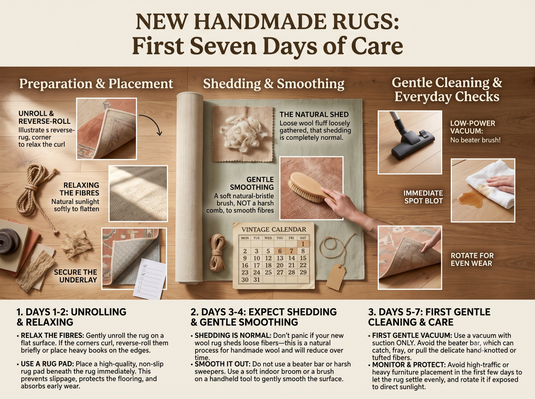
A rug may arrive with mild ripples or curled corners after shipping. Unroll it in its intended indoor environment and allow it to settle naturally. Avoid steam irons, very hot objects, forceful reverse folding and soaking. A delicate silk-like pile may not tolerate the same treatment as a sturdy flat weave. If a pronounced crease persists, ask the seller for guidance specific to the weave and foundation. The correct solution depends on whether the rug is hand-knotted, handloom, tufted or flatwoven.
Measuring the final placement
Use tape to outline the rug beneath your sofa, bed or dining table before moving heavy furniture. For many living rooms, the sofa's front legs can rest on the rug to connect the seating group. In bedrooms, consider how much soft floor remains beside the bed. Check door clearance, walkways and chair movement. A beautiful rug that catches under a door or leaves seating disconnected needs a better placement. Explore living room rugs and bedroom rugs for room-specific ideas.
Considering a rug pad
On polished tile or stone, a suitable rug pad can reduce shifting and improve comfort. Compatibility is important: some pad materials may react with floors or rug backing. Confirm suitability for your floor finish and rug construction before purchasing. A pad normally stays inside the rug's outer edge rather than protruding beyond it. Inspect corners and high-traffic edges regularly, particularly if children or pets use the room. Never substitute adhesive tape without checking whether it could leave residue or harm the floor.
Initial shedding and fibre changes
Some new wool rugs release loose surface fibres at first. The amount depends on the yarn, finishing and weave; it is not accurate to claim that every wool rug sheds heavily. Do not respond with harsh brushing or frequent aggressive vacuuming. If yarns come away in bunches or a bald patch develops, take clear photographs and contact the maker. Reflective fibres may seem darker or lighter with pile direction. Such changes in appearance are not automatically fading or a manufacturing flaw.
Cleaning during the first week
Read care instructions for the specific rug before vacuuming. A gentle setting may be appropriate for certain constructions, but rotating brush heads and strong suction can damage delicate yarn or fringes. Avoid household stain-removal experiments. If a spill occurs, gently blot it with a clean cloth and seek advice suitable for the actual fibre and dye. Do not assume instructions for wool also apply to bamboo silk. The safest routine is determined by the weave, material and manufacturer's recommendations.
Checking furniture marks and traffic
Once furniture is positioned, inspect the areas beneath heavy legs for pressure marks or snagging. Broad furniture feet or suitable protectors may reduce concentrated pressure when compatible with the surface. Lift furniture rather than dragging it across the rug. Check whether edges stay flat when people walk over them. If the rug bunches or slips, reassess its position and underlay before the problem becomes a daily nuisance. Keep the rug away from damp areas unless the product is specifically intended for them.
Light exposure and colour
Observe the rug in morning light, indirect afternoon light and warm evening lamps. Lustrous fibres may change appearance considerably depending on viewing direction. This is different from long-term fading, which can occur with sustained direct sunlight. If the rug lies beside a bright window, consider appropriate shading and rotate it as advised to distribute exposure and wear. When asking the seller about colour, share photographs without heavy filters and include a picture of the entire room.
When to contact The Ambiente
If you discover significant shipping damage, unusual shedding, persistent major curling or uncertainty about fibre composition, contact The Ambiente with your order information and clear close-up photographs. Do not cut stray ends, apply glue or attempt steam treatments while the issue is under review. Good documentation makes it easier to distinguish an expected feature of handmade construction from a concern needing intervention. For more options, explore hand-knotted rugs and review individual product details.
First-week checklist and FAQ
Day one: inspect and photograph the rug. Day two: allow it to settle and confirm placement. During the week: check movement, pile direction and approved cleaning methods. Keep fibre details and your order reference. Can I steam the corners flat? Not without specific approval. Does every handmade rug shed? No. Must I use a pad? It depends on floor and construction. Why does the rug look lighter from one end? Pile direction and reflective yarns can affect appearance.
What is normal, and what is a warning sign?
A handmade rug is not identical to a machine-printed floor covering. Minor variations in line, texture and dimension may be inherent to the making process. What deserves attention is damage that compromises use: torn foundation threads, detached edge binding, patches without pile or substantial unexplained staining. Initial surface fibres are different from yarns pulling out of the structure. Examine the whole rug before concluding there is a fault, then record the details and contact the seller instead of attempting an irreversible fix.
Different constructions need different first-week care
A hand-knotted rug has pile yarn secured by knots around foundation threads, while flatweaves are generally thinner and lack a conventional cut pile. Handloom and hand-tufted constructions can behave differently again. This is why generic advice such as reverse rolling, heavy steaming or beating a new rug is unreliable. Check the specific material and construction shown on the product page. Where the guidance is missing, request written care instructions. Choose a conservative approach until you know how the surface and backing respond.
A week-one routine for households with pets
Introduce pets to the rug under supervision, particularly if they tend to scratch, dig or chew textile edges. Keep food and water bowls away from delicate surfaces. Check for loose loops or fringes that could attract claws, and do not pull an exposed yarn. Promptly remove debris according to the recommended cleaning method. A rug pad may reduce movement on slippery floors but cannot eliminate the need to monitor pets. Assess practicality based on fibre, texture and your pet's habits rather than assumptions about a material.
Furniture placement without premature wear
Before positioning a heavy bed or sofa, make sure the rug has settled and the outline works for the furniture footprint. Lift furniture with assistance, rather than dragging it along the surface. Narrow metal feet may leave sharper pressure marks than broad bases. If a chair rolls frequently, a deep-pile handmade rug may not be an appropriate location for it. Confirm that doors clear the rug height. Recheck the position after daily use reveals where people actually walk and where edges are being disturbed.
What not to do with curled corners
Do not pour boiling water onto a corner, iron directly through the pile, attach strong adhesive tape to the back or place extreme weights that crush delicate fibres. Online remedies sometimes overlook the foundation material and the dyes used. A slight curl may ease with normal settling; a persistent fold, however, should be assessed by the retailer or a qualified rug-care professional. Send a photograph from the side showing how high the edge lifts so that advice can be specific.
A short message to send the seller
For quick assistance, share the order number, full photograph of the rug, close-up of the concern, approximate dimensions and how long the rug has been unrolled. Describe whether the issue was visible immediately or appeared after normal use. Add the type of flooring and whether a rug pad is installed if the problem concerns movement or curling. This helps distinguish a delivery problem from a placement or maintenance question and reduces the need for repeated messages.
Longer-term habits to establish now
Keep the care instructions accessible. Decide who will handle ordinary cleaning and which equipment is appropriate. Note if strong sunlight consistently reaches one portion of the rug and plan sensible shading or rotation where allowed. Arrange prompt response to spills, rather than allowing marks to set. Inspect fringe and binding periodically, especially along doorways. These small habits are more useful than aggressive cleaning once damage becomes visible. Consult professional care for delicate, valuable or unfamiliar fibres.
Flattening a newly unpacked handmade rug
Temporary curl and shallow folds can develop when a rug spends time rolled for shipping. Unroll it completely on a clean, dry, level floor and let the fibres relax naturally. Check the product's construction and care label before considering any treatment. Do not apply direct heat, aggressive steam or heavy adhesive to force the rug flat. If edges remain raised or there is a persistent crease, photograph it and contact the seller for advice. A compatible rug pad or underlay may help with movement but cannot correct every structural issue.
Early shedding versus a snag
Some loose surface fibres may appear during early use, especially with certain wool constructions. Gently remove loose fibre with a vacuum setting approved for the rug; avoid a rotating beater brush on delicate handmade surfaces. Shedding alone does not establish poor quality. A pulled loop, exposed foundation, rapid thinning or continuing heavy fibre loss is different: avoid tugging the yarn and request guidance. Learn more about snagging and fading prevention.
First-week care checklist
Keep footwear grit and spills away while you assess the new rug, rotate only if needed to distribute light and use, and monitor corners so they do not create a trip risk. Take photos in morning and evening light to document pile-direction changes in appearance. Check that the flooring is clean and dry before placing an underlay. For advice on furniture placement, read our living-room rug measurement guide.
Need help choosing your rug?
Share your room photo, approximate measurements and preferred colours with The Ambiente.
WhatsApp: +91 63885 19911