How to Layer Rugs in Indian Living Rooms and Bedrooms. A practical guide for Indian homes.
What rug layering accomplishes
Layering means placing one rug partly over another to add texture, pattern or a clearer furniture zone. It can rescue a cherished smaller rug that otherwise looks disconnected from a sofa arrangement. However, it is not required for an attractive home. If the room is compact, has many doorways or needs easy wheelchair movement, one correctly sized rug may be safer and simpler. The choice should serve your room and everyday habits rather than imitate a photograph.
Choose a practical foundation
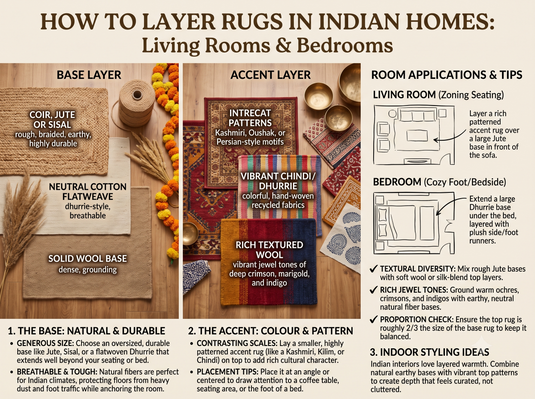
A stable lower-profile foundation often works better than stacking two deep piles. Consider the room's traffic, floor finish and cleaning requirements. A muted foundation can provide a generous outline for a more colourful top rug. Check its construction: not every flatwoven or handloom rug is automatically suitable for layering. Browse flat-weave rugs for ideas and confirm individual specifications before selecting a base.
Select the top rug thoughtfully
Use the upper rug to introduce a colour, border or motif that might overwhelm the room at a larger scale. The top piece can be traditional, modern or softly textured. Consider how much remains visible after the coffee table and chairs are placed. A beautiful centre motif hidden beneath furniture is often a poor use of the design. Choose a manageable pile height and check that raised edges do not create tripping points along regular walkways.
Determine proportions
Measure the furniture grouping and mark both proposed rugs on the floor with removable tape. The base typically defines a larger area, while the accent creates a smaller point of interest. Too little visible foundation defeats the layered look; excessive strips around a tiny top rug may appear awkward. There is no universal mathematical ratio that fits every room. Compare large rugs and medium rugs against your real floor plan.
Layering beside a beige sofa
A soft sand or ivory foundation can support a blue, brown or olive accent rug. Keep cushions quieter if the accent rug contains a complex traditional motif. In a room with strongly veined marble, avoid stacking two highly detailed patterns over an already busy floor. Choose one feature to lead visually. A contrasting texture can be enough: a relatively smooth base with a softly woven accent offers interest without introducing an entirely new colour family.
Layering in bedrooms
A generous rug beneath the bed can provide comfortable coverage on both sides. A smaller piece near a reading chair or at the foot of the bed may add interest, but safety matters. Avoid overlapping corners where someone steps out at night, moves a chair or opens a wardrobe. In a narrow bedroom, a single well-sized rug is often more practical. See bedroom rugs to compare layouts and check the true product measurements.
Mixing patterns with control
Pair a stronger motif with a subtle texture or a mostly solid foundation. If both rugs are patterned, vary the motif scale so they do not compete. Repeat one colour across the rugs and a small number of accessories rather than matching everything exactly. Judge the combination from the doorway, not just close-up product photos. A fine motif can blur into texture at a distance, while large geometry may become the dominant feature of a room.
Safety, underlays and flooring
A layered arrangement should not slide or bunch. Depending on construction, a suitable non-slip underlay may help, but verify compatibility with the floor finish and both rugs. Avoid unknown adhesive products on polished timber or delicate stone. Watch raised edges in entrances and areas used by children or older visitors. If a door catches the top rug, change the arrangement. Style should never come at the expense of a safe walking path.
Cleaning and maintenance
Layering can trap dust between textiles, so lift and clean the rugs periodically according to their specific care labels. Wool, bamboo silk and blended fibres may need different handling. Do not assume either rug is machine washable. Avoid dragging one across the other, and check for movement or colour transfer where materials touch. If the room receives intense sunlight, consider how exposure affects the two rugs differently. A simpler combination may be easier for busy family spaces.
A practical buying decision
Before buying a second rug, photograph the rug you already own, note its measurements and draw the furniture footprint. Decide what the new piece must solve: scale, comfort or style. Compare materials and available sizes and avoid buying two rugs when one would work better. Explore modern rugs and traditional rugs for visual contrast, checking each product rather than relying on collection labels. FAQ: Is layering necessary? No. Should the base be bigger? Usually. Can handmade rugs be layered? Sometimes, depending on their construction and stability.
Example: a neutral base and patterned accent
Imagine a cream sofa with pale floors and black metal side tables. A larger sandy flatwoven base can visually connect the front sofa legs and chairs. A smaller blue geometric accent positioned near the coffee table adds character. Before buying, check the complete footprint: the top rug should not leave a corner in the principal walking route. Compare both textiles in daylight, confirm the base is sufficiently stable and choose compatible underlay materials if needed.
Example: mixing traditional with contemporary
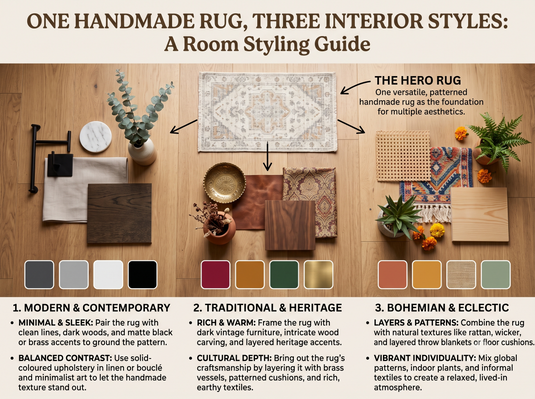
A detailed hand-knotted rug can complement contemporary furniture when the background is deliberately quiet. Consider a low-key neutral foundation with a smaller traditional piece rather than mixing two bold patterns. Pick up one colour from the traditional motif in a cushion or artwork. The living area should still read as one seating group. If the top rug is too small to be appreciated beneath a substantial coffee table, revise the placement or display it in a different part of the room.
How to avoid a trip hazard
Raised edges are especially risky in the path between a sofa and balcony or near the foot of a bed. Inspect the overlap from standing height and walk around it wearing normal indoor footwear. If corners lift, do not assume a decorative rug pad will solve every situation. Try a simpler arrangement or move the top rug to a quieter area. Children, elderly visitors and anyone with limited mobility should be considered during planning. A single fitted rug is often the safer design.
Rug layering on marble floors
Polished marble looks beautiful but can be slippery beneath unsecured textiles. Check the floor-finish compatibility of any pad, since some materials can leave residue or marks. Avoid adhesives unless the flooring manufacturer expressly supports them. A layered arrangement also changes the thickness beneath furniture, so chairs may wobble if some legs rest on multiple layers and others do not. Consider placing coffee-table legs consistently or adjusting the design to prevent an unstable surface.
The best rug for the top layer
A meaningful top layer is a rug you want people to notice, not necessarily the most expensive or thickest piece. Think about border visibility, colour, construction and the direction of pile. Reflective fibres may change appearance from one end of the room to the other. A valuable delicate rug may be more appropriate in a low-traffic corner than beneath a chair that moves often. Choose based on the room's routines, not just visual contrast.
When layering is not a good idea
Avoid layering when doors scrape the floor, the room is already crowded with low-clearance furniture, or the combined edges fall along a busy corridor. It may also be impractical for households that need rapid and frequent cleaning. If two rugs keep shifting despite suitable measures, return to one rug in the right size. Layering should solve a design problem; it is not a requirement for an editorial-looking home.
Questions to ask before purchase
What is the exact size of each piece? Which rug is intended as the foundation? Will both fibres tolerate the same environment? Is a compatible pad needed? Can the top layer be moved for cleaning without damaging the rug below? Where do the sofa and coffee-table legs sit? Asking these questions prevents buying two attractive but incompatible pieces. If you already own one rug, photograph it with a measuring tape visible and share it with the seller.
Layering layouts that work in Indian homes
Living room: anchor the main sofa grouping with a broad lower rug and use a smaller accent rug only where its edges do not become a walking hazard. Place it deliberately rather than centring two rugs without reference to furniture. Test both outlines with tape before ordering. For proportion guidance, see the living-room rug size guide.
Bedroom: a broad neutral rug can anchor the bed while a more expressive rug defines a reading chair. Two overlapping rugs are not always necessary; separate zones may be easier to clean and more secure on a smooth floor.
Compact rental: avoid adding thickness where doors open or chairs roll. If the floor is polished marble, tile or timber, consult the floor-compatible rug pad guide. A stacked arrangement should remain stable in daily use, not only in photographs.
Pattern and fibre compatibility
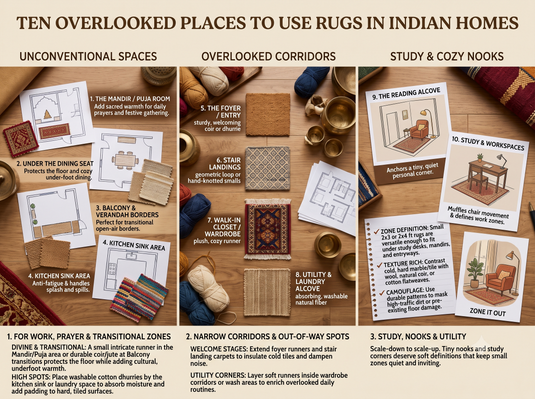
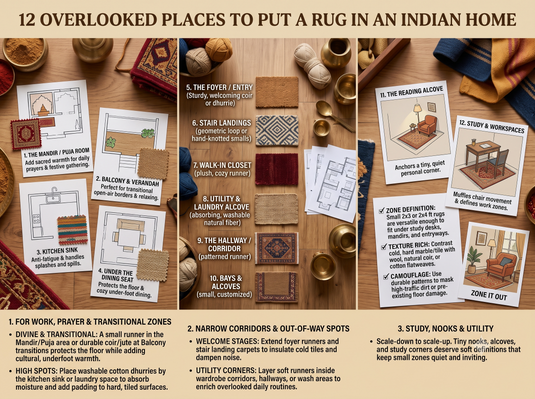
Pair one dominant pattern with a quieter base, and check how light changes both surfaces. Choose fibres based on wear, cleaning and foot traffic rather than appearance alone. Delicate fibres or very high pile may be difficult to maintain in overlapping sections. For other practical placements, see overlooked places to use rugs.
Need help choosing your rug?
Share your room photo, approximate measurements and preferred colours with The Ambiente.
WhatsApp: +91 63885 19911