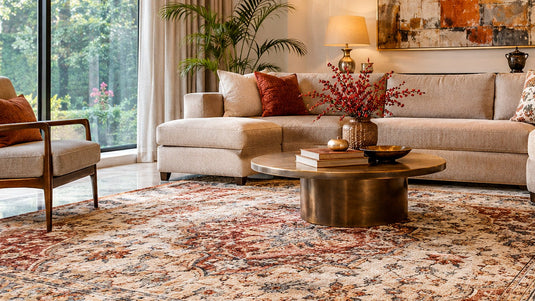
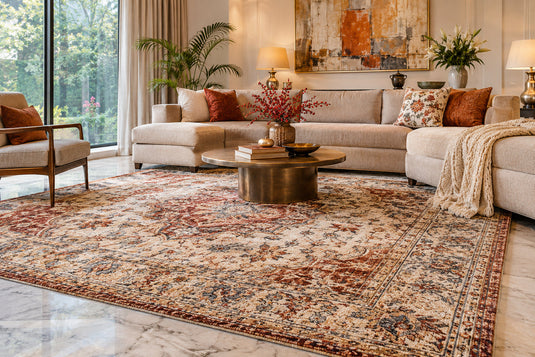
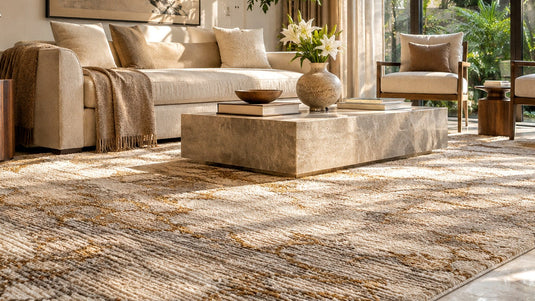
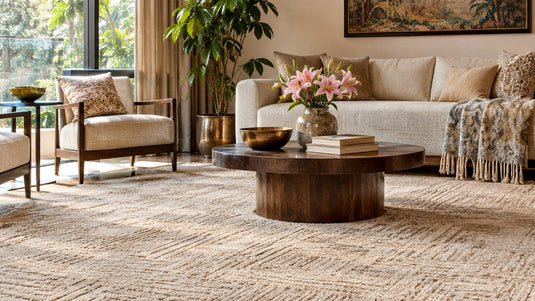
Cold marble or tile can make a room feel stark during winter. Wool, jute and bamboo-silk rugs offer different textures and care profiles, so the choice should depend on the room, the amount of traffic and your comfort priorities. This guide compares materials without assuming a single fibre is best for every household.
Wool: resilient and tactile
Wool fibres have natural crimp and elasticity, making many wool rugs resilient under ordinary use. Depending on the construction, they can feel softer than a bare hard floor and create a more inviting seating or bedside zone. A fine, dense wool pile feels different from a loosely textured flat weave, so check pile and knotting or weaving details. Wool still needs attentive stain care and an appropriate vacuum routine.
Jute: natural texture and a firmer surface
Jute can create a relaxed, earthy look with noticeable woven texture. It is often less plush than a wool-pile rug, which may be desirable under furniture but less comforting as a bedside landing zone. Jute is sensitive to moisture, so wet shoes, damp floors and frequent spills deserve caution. Check actual product composition: a wool–jute design will not necessarily behave like a pure jute weave.
Bamboo silk: sheen with care considerations
Bamboo silk typically refers to regenerated cellulose-based fibre with a lustrous feel. It can bring soft highlights to a design, but sheen should not be confused with low maintenance. Moisture and traffic can affect its appearance, depending on the product. For busy family rooms, consider whether the delicate look fits the daily care routine; ask how to treat spills before committing.
Blends need product-level comparison
A wool and bamboo silk blend can combine matte and luminous areas, but the ratio and location of each fibre matter. Some patterns use silk-like yarn primarily as an accent; others have larger delicate surfaces. A rug labelled wool and silk may use a different material from bamboo silk. Read the fibre description rather than assuming the words are interchangeable.
Choose by room and routine
For a living room with regular foot traffic, compare resilient wool surfaces first. For a lower-traffic bedroom, a softer or more lustrous rug may be suitable. A dry reading nook could suit a textured jute-rich look if you prefer firmness. Dining areas call for attention to chair movement and spill cleaning. A non-slip pad may help on polished floors, provided it is compatible with the flooring finish.
Make your material decision confidently
Request close-up photographs, pile height, care instructions and an explanation of the construction. If possible, feel the rugs in person. Consider how the material will perform in summer as well as winter. Buying on tactile appeal alone is risky; the best material is the one that supports your room's use, maintenance capacity and style.
Detailed buyer considerations
Why construction matters as much as fibre
A wool flat weave and a thick wool-pile rug can feel very different underfoot, despite sharing a fibre label. In jute, the tightness of weaving and any blended yarns influence the surface texture. A bamboo-silk-rich rug may be soft and luminous but less suitable for moisture-prone areas. Ask about construction, pile height, density and any backing rather than judging only the material name. A clear product specification prevents expectations about softness or durability that the individual rug may not support.
Comfort on marble, tile and timber
On polished stone, the difference between bare floor and a textile can be particularly noticeable when stepping out of bed or sitting near a coffee table. Measure where people actually place their feet. A rug should create a usable zone rather than merely fill an empty area. Floor-compatible pads can help with stability, but some pad materials may interact with stone finishes. For timber, check the floor manufacturer's guidance as well. Never trap moisture beneath a rug after mopping or introduce a pad without checking compatibility.
Moisture and spill sensitivity
Jute and regenerated cellulose fibres may be sensitive to moisture, so a damp entrance, frequently used dining room or area near wet shoes deserves special care. Wool is not immune to staining either, even when described as naturally resilient. For any material, ask what to do immediately after a spill and when professional cleaning is recommended. Avoid generic home remedies that can alter colour or texture. If the household includes young children or pets, choose a material and pattern that can realistically be cared for rather than relying on marketing claims about stain resistance.
How to combine materials in a cohesive home
There is no need to use a single material everywhere. A wool lounge rug may work alongside a wool–jute texture in a dry study and a silk-accented design in a lower-traffic formal room. Coordinate the colours or undertones so the spaces relate visually. Avoid placing delicate rugs where damp shoes or chairs regularly move. When comparing different fibres online, request close-up photographs because texture is difficult to judge from a distant room scene. Consider the rug's function and maintenance plan before building the colour scheme around it.
A buyer's material decision worksheet
List the room, expected foot traffic, spill risk, floor surface, preferred tactile feel and maintenance capacity. Rank comfort, durability, sheen and natural texture by personal importance. Then compare specific products rather than abstract fibre categories. Write down whether the pile is predominantly wool, contains bamboo silk accents or has a jute-rich base. Request current size availability and proper care advice. The best choice is one that remains practical during warm weather, not merely an attractive rug with a winter-themed label.
A worked example for a real room layout
Consider three rooms in a home with polished stone flooring. The living room is used daily by family members, a quiet study has little moisture exposure, and a formal drawing room is used for visitors. A resilient wool surface may be appropriate in the first, a textured jute-rich construction could fit the second, and a design with silk-like sheen may suit the third if maintenance is realistic. These are not universal rules, because the actual weave and fibre mix also matter. The buyer compares product care sheets and tests how the surface feels underfoot before making a decision.
Five mistakes to avoid
- Assuming bamboo silk is the same fibre as natural silk. Before choosing, verify this point using actual room measurements, product details and care guidance rather than relying on a broad category label.
- Calling every jute rug plush or every wool rug identical. Before choosing, verify this point using actual room measurements, product details and care guidance rather than relying on a broad category label.
- Putting moisture-sensitive fibres in damp entryways without checking suitability. Before choosing, verify this point using actual room measurements, product details and care guidance rather than relying on a broad category label.
- Selecting a pad for marble without checking finish compatibility. Before choosing, verify this point using actual room measurements, product details and care guidance rather than relying on a broad category label.
- Ignoring the effect of pile height and weave on tactile comfort. Before choosing, verify this point using actual room measurements, product details and care guidance rather than relying on a broad category label.
Final five-step buying checklist
- Write down each room's traffic and spill exposure. This small check can reduce guesswork and helps the seller recommend suitable options rather than unrelated designs.
- Compare the actual weave and fibre composition. This small check can reduce guesswork and helps the seller recommend suitable options rather than unrelated designs.
- Ask about the material's moisture and cleaning sensitivity. This small check can reduce guesswork and helps the seller recommend suitable options rather than unrelated designs.
- Check floor and underlay compatibility before installation. This small check can reduce guesswork and helps the seller recommend suitable options rather than unrelated designs.
- Choose the finish that meets both comfort and long-term care needs. This small check can reduce guesswork and helps the seller recommend suitable options rather than unrelated designs.
Explore related handmade rug collections
Compare suitable patterns, constructions and available dimensions: Wool rugs | Jute rugs | Wool and bamboo silk rugs. Check each product's material, size and care specifications before ordering.
Frequently asked questions
Are thicker rugs always better for winter?
No. Pile height, construction, fibre and the room's actual use matter more than thickness alone. Compare how the rug feels and how you will clean it.
Can I order a custom size?
The Ambiente offers custom rug enquiries; share measurements and the desired design so availability, specifications and timing can be discussed.
What should I send for a recommendation?
A floor-plan measurement, room photograph, preferred colours, city and approximate budget help the team propose suitable options.
Ask The Ambiente about the right rug for your space
We can help you compare available handmade designs, discuss bespoke dimensions and understand suitable construction options. Share your room photograph and measurements so recommendations reflect your actual layout.
Need help choosing the right rug?
Send your room measurements and placement photos to The Ambiente.
Chat with us on WhatsApp