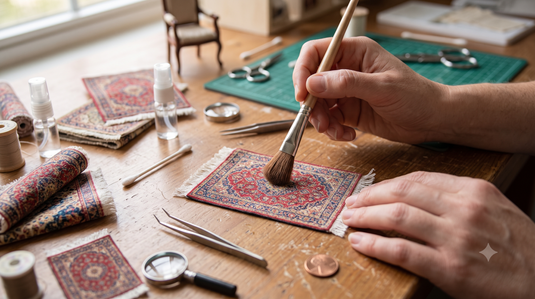
A dollhouse rug can be tiny enough to fit in your hand and still deserve careful maintenance. Miniature textiles may contain woven yarn, embroidery, printed fabric, felt, adhesive backing or a mixture of materials. Their small scale makes loose fibres, moisture and distorted edges especially noticeable.
The safest starting point is to identify how the miniature was made and whether it can be removed from the room. This guide explains gentle dust removal, sensible decisions about stains, drying and storage. It focuses on miniature display rugs rather than recommending household carpet products for a dollhouse simply because the names sound similar.
Identify the miniature before cleaning it
Look closely at the surface and back without pulling threads or separating layers. Is it woven, stitched, printed or cut from a larger material? Does it have glue, a paper support, decorative fringe or a coating? These details determine what kind of treatment may be appropriate.
If you bought it from a maker, keep any supplied material and care information. Ask for clarification when the construction is uncertain. A miniature advertised as a Persian-style rug may refer only to the printed design, not the fibre, origin or method used in a full-sized Persian carpet.
Older or handmade miniatures can be particularly difficult to identify from appearance alone. Do not guess that a shiny thread is silk or that a flat backing is washable fabric. When the piece is valuable or sentimental, an unresolved material question is a good reason to limit cleaning to careful, non-invasive maintenance.
Remove the rug only when it can be lifted safely
First check whether it is loose, taped down or permanently attached. A loose rug can usually be placed on a clean working surface for inspection. Support the whole piece when lifting it, especially if the backing is fragile or the textile has been folded or shaped.
If adhesive holds it in place, do not pull one corner until it releases. You may tear the textile, lift the dollhouse floor finish or separate a printed layer from its support. Ask the maker about the attachment or seek restoration advice where the model has significant value.
Move nearby furniture before working. Tiny chair legs and table feet can catch fringes or scrape the surface while you clean. Keep the pieces organised so the room can be reassembled without dragging furniture across the rug.
Prepare a clean and controlled work area
Work on a clean, smooth surface with good light. A shallow tray can help keep a tiny textile or loose accessory from disappearing, but the surface should not be abrasive. Avoid working beside open drinks, food or strong cleaning products.
Photograph the rug and room before treatment if the arrangement or condition matters. The image can help you restore the placement and recognise whether a fringe or edge was already uneven. A quick condition record is particularly useful for inherited models or handmade pieces.
Keep tools simple and appropriate to the scale. You may need a clean soft brush, a plain cloth and a safe way to collect loosened dust. Large household equipment can apply far more force than the miniature needs. Test the gentlest method first and stop if the surface changes.
Gentle dust removal for a stable modern miniature
For a robust, removable textile, begin with very light brushing using a clean soft brush. Work carefully so dust is lifted rather than ground into the surface. Do not scrub embroidery, loose loops or fringe, and do not repeatedly brush a printed design if it appears to be wearing.
Hold the rug by supporting it rather than pinching a weak corner. Inspect it as you work. If yarns start to lift, the backing crumbles or the printed layer changes, stop. Removing every visible particle is less important than preserving the structure.
Do not shake a fragile miniature forcefully or beat it like a full-sized rug. The small textile may have delicate stitching or adhesive layers that cannot tolerate that handling. A controlled surface-cleaning method is generally a better starting point than trying to dislodge all dust at once.
Should you use a vacuum on a dollhouse rug?
Ordinary household suction can pull a tiny rug into the nozzle, distort the weave or detach decorative components. Do not apply a powerful nozzle directly to a loose miniature. Small scale alone does not make a household vacuum safer.
For collection textiles, the Canadian Conservation Institute discusses screened, low-powered surface cleaning. This is a conservation method requiring appropriate support and attention to condition, not a reason to improvise with high suction over a tiny object.
For a delicate, old or valuable miniature, ask a textile conservator whether any suction method is suitable. For a simple stable modern piece, a gentle brush may be sufficient for ordinary display dust. If dust is embedded and cannot be removed safely, leave it for an appropriate assessment rather than increasing force.
Deal with a spill by limiting further damage
If liquid has reached a removable rug, lift it carefully away from a vulnerable dollhouse floor where safe. Blot with a plain absorbent material using minimal pressure. Avoid rubbing the liquid across the design or squeezing the miniature into a hard fold.
Check what happened to adjacent materials. A wet paper-backed rug, painted floor or glued furniture can need a different response from a plain woven textile. Do not treat the rug in isolation if liquid remains underneath it or in the surrounding model.
Identify the spill and note what has already been done. If colour transfers, an adhesive layer softens or a printed design begins to lift, stop treatment. A tiny stain can quickly become a larger area of damage when repeated wet cleaning is attempted on an uncertain construction.
Can miniature rugs be washed?
Only consider washing when the maker explicitly confirms that the whole product is washable and supplies an appropriate method. The fibre alone does not settle the question. A cotton surface may have a paper backing, a wool miniature may have unstable dyes, and a printed fabric may rely on a finish that reacts to water.
A household washing machine is generally an excessive environment for an unverified miniature. Agitation, suction during draining and loss among larger textiles can all be practical problems. Do not assume a laundry bag makes the process suitable if the construction itself is not approved for washing.
If a maker allows hand cleaning, follow the supplied details rather than inventing a universal soaking recipe. Confirm how much moisture is permitted, which cleaner is compatible and how the rug should dry. If those instructions are absent, ask before wetting the piece.
Avoid full-sized carpet cleaning shortcuts
Do not apply carpet shampoo, bleach, stain sprays, vinegar mixtures or steam as a general miniature-care method. The product may contain delicate dyes, adhesives, paper, painted details or fibres that are not represented in a household carpet label.
Sticky rollers and adhesive tape can also be risky. They may pull fine yarns, leave residue or lift a printed surface. A product designed to collect pet hair from a sofa is not automatically appropriate for a miniature embroidery or an old dollhouse textile.
Avoid scraping dried marks with a sharp tool. The apparent stain might be above a very thin printed or stitched surface. If you cannot remove loose material with a gentle, appropriate method, accept the limit of home care and seek advice where the piece warrants it.
Different constructions need different decisions
An embroidered miniature has stitches that can snag, so brushing and handling should avoid pulling the thread. A printed miniature needs protection of the image layer. A felt piece may react differently to moisture and abrasion, while a woven textile can distort if its yarns are stressed.
Glue-backed and paper-supported miniatures add another layer of uncertainty. Moisture may change the support even if the face fabric appears unaffected. A stable-looking rug can separate during drying after the adhesive has softened. Do not judge the whole product by the surface alone.
For a newly made miniature, ask the maker which methods were used and keep those details. For an unidentified older piece, treat uncertainty as a reason for conservative handling. A valuable model may benefit from advice covering the entire object rather than a textile-only cleaning attempt.
Drying after an approved treatment
Follow the maker's specified method, and support the miniature so that it does not curl, stretch or hang from a weak point. Avoid high heat, a hairdryer held close to the surface or direct sunlight as improvised ways to speed the process.
Check both the face and backing before returning the rug to the dollhouse. Residual moisture can affect a painted or timber floor and any adhesive used for placement. The rug should not be pressed back into a room merely because its top surface feels dry.
Do not weight a wet miniature with objects that could stain it or transfer texture. A drying arrangement should be compatible with the construction. If the rug begins to distort or separate, stop trying to flatten it by force and ask for advice.
Protect the rug during display
A covered display can reduce dust, but it should not create persistent condensation or trap an existing moisture problem. Inspect the miniature periodically rather than assuming that a cover eliminates care. The dollhouse's location in the room can influence both dust and light exposure.
Keep the model away from prolonged strong sunlight where practical. Small textiles and other model components may fade or change, and one side of a room can receive more exposure than another. Moving the whole model may be safer than repeatedly removing a delicate rug.
Arrange furniture so legs do not scrape the textile during handling. If visitors or children interact with the dollhouse, make sure the rug is appropriate for that use. A fragile display miniature and a robust play accessory have different expectations.
Cleaning the room around the rug
Dust furniture and surrounding surfaces before returning a removable rug to position. Otherwise, newly loosened dust can fall onto the textile immediately. Use methods compatible with the model's paint, wallpaper and floor, and keep moisture away from unverified materials.
Do not spray cleaning products into a furnished dollhouse room. Overspray can reach textiles, adhesives and painted details even when you intend to clean only one surface. Apply an appropriate method to the specific component instead, following the model maker's advice.
Inspect the area underneath the rug for trapped dust, adhesive residue or a stain from a previous spill. Avoid aggressive scraping. If the rug is permanently fixed, clean the surrounding area carefully without forcing the textile up merely to satisfy a routine checklist.
Storage for loose miniature rugs
Store a clean, dry miniature with suitable support so it is not crushed beneath furniture or bent sharply. A labelled compartment can help keep the rug with the correct room and accessories. Avoid packaging that sticks to the surface or transfers colour.
For a stable flat miniature, flat supported storage may be convenient. A fragile or unusually shaped piece may need a different arrangement. Valuable textiles can require conservation-quality materials and advice about long-term storage rather than an ordinary craft box.
Inspect stored pieces periodically for changes in condition and unwanted debris. A closed box is not a permanent solution if moisture or pests have entered. If you notice a problem, isolate the affected item appropriately and seek guidance before applying chemicals to the miniature or its packaging.
Repairing a tiny fringe or curling corner
Do not assume that trimming a loose thread is harmless. It might be part of the structural weave or an embroidery stitch. Photograph the issue and ask the maker whether the thread can be secured or trimmed without affecting the rest of the piece.
A curling corner may come from construction, moisture, storage or an adhesive layer. Do not automatically iron it. Heat can damage printed surfaces or soften glue, and pressure can change texture. Ask which flattening method, if any, is appropriate for the actual material.
Avoid adding household glue as a quick repair unless it is part of the maker's recommended method for a modern craft accessory. On an old or valuable piece, an irreversible adhesive repair can complicate future treatment. Stabilising the miniature correctly is more important than making the corner look perfect immediately.
When professional advice is worthwhile
Seek help when the rug has historical, collectible or substantial sentimental value; when dyes transfer; when the backing is unstable; or when a stain cannot be addressed with a confirmed safe method. A textile conservator or miniature-restoration specialist can assess risks that are difficult to judge from photographs.
Explain the whole object and your priorities. If the rug belongs to an inherited dollhouse, preserving the original material may matter more than eliminating every mark. If it is a replaceable modern accessory, the sensible choice may be to obtain a new piece rather than undertake complicated treatment.
Ask what the proposed work can achieve and whether it might alter appearance or texture. Cleaning is not a promise of a new-looking miniature. A conservative treatment may leave some evidence of age while making the piece safer to handle or display.
A simple routine for everyday maintenance
Check the rug when you dust the dollhouse, and remove it only if it lifts safely. Inspect the construction, use a gentle compatible method to remove loose dust and replace it after the surrounding room is clean. Keep the maker's care details with the model.
After a spill, limit moisture, avoid rubbing and stop if the material reacts. Wash only when explicitly approved, and dry the whole construction before returning it to the room. Store spare rugs supported and labelled so they do not get crushed among accessories.
Miniature rug care works best when the treatment stays proportionate to the object. Gentle handling, clear material information and timely decisions can preserve a tiny textile without turning a minor mark into major damage. The goal is a well-kept dollhouse that retains its character, including the small rugs that make its rooms feel complete.
Which miniature rug materials are most durable?
For dollhouse rugs, durability means surviving handling, storage, furniture contact and the intended cleaning method. It does not mean the same thing as a full-sized rug's resistance to thousands of footfalls. Choose the material and construction around whether the dollhouse is a display model or a frequently handled play setting.
A tightly woven cotton miniature can give a convincing low-profile appearance, but edge finishing and dye stability are important. Do not assume it can be washed if it contains a paper support or adhesive. A compact synthetic textile can be practical for a modern accessory when the print and backing withstand the intended handling.
Fine wool can provide texture and a craft feel. It may be appropriate for an embroidered or woven display piece, although very fluffy yarn can look oversized at miniature scale. For a small Persian-style design, fine thread and a stable foundation often produce a more convincing result than thick yarn chosen only for softness.
Felt can be convenient for simple miniature shapes because it does not use a conventional woven edge. It can still fuzz, distort or respond badly to moisture. Check thickness, surface stability and how furniture legs sit on it. A soft craft felt intended for occasional display is not automatically robust enough for repeated play.
Printed fabric can reproduce a detailed pattern at small scale, but print adhesion, backing and light exposure influence durability. Ask whether the image is printed, woven or embroidered. Silk or metallic threads can create an elegant display textile, yet may need more conservative handling. Their visual appeal should not be confused with easier cleaning.
For a frequently handled modern dollhouse, prioritise secure edges, a stable removable construction and clear maker instructions over a precious fibre name. For a collectible model, preserving original textiles can be more important than replacing them with a theoretically tougher fabric. The best material is the one that gives a suitable scale, stable construction and realistic care for the model's actual use.