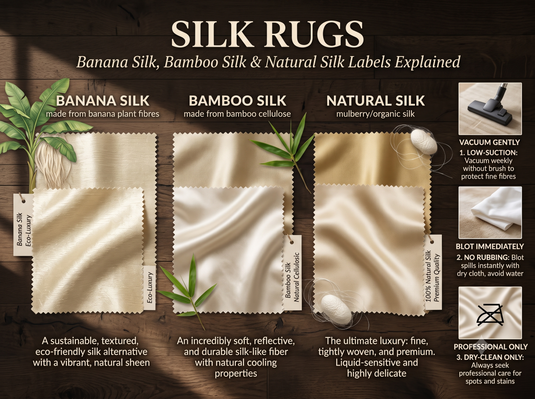
Silk-like rugs are often described with names that sound closely related: banana silk, bamboo silk, art silk and natural silk. A shopper can easily assume that they are variations of the same fibre. That assumption is risky because retail terminology, raw-material descriptions and generic fibre names do not always describe the same thing. The important question is what the finished rug is actually made from.
A clear specification lets you compare comfort, appearance, care and value without guessing. This guide explains how to ask for that information, how to judge a lustrous rug for your room and how to avoid treating a beautiful product name as a performance promise. It does not imply that every fibre discussed is available from The Ambiente. Explore our bamboo-silk rug collection and check the individual product details for current options.
Start with three different kinds of information
A product listing may contain a retail name, a raw-material description and a generic fibre name. For example, a seller might refer to a silk-like appearance, mention a plant source and then specify a regenerated fibre. These are separate pieces of information. Ask the supplier to explain how they relate to the actual rug.
The most useful written answer identifies the pile fibre, its percentage and any other materials in the structure. It should also state whether the quoted composition refers only to the pile or to the whole product. A wool foundation beneath a lustrous pile does not mean the visible surface should automatically be cared for as wool.
If several names appear together without a definition, pause the comparison. You do not need a chemistry lesson to buy a rug, but you do need enough clarity to understand the care label. Keep the specification with the invoice and pass it to anyone who later cleans, stores or repairs the rug.
What should banana silk mean to a buyer?
Do not assume a universal composition from the name banana silk. Ask the retailer which fibre the particular product contains and whether its source and manufacturing description are documented. A historical story, a reference to a plant or an unusually soft sample does not establish the composition of the rug in front of you.
If the seller says it is a banana-derived fibre, ask how that statement is supported and what generic fibre name appears on the supplier documentation. If the answer instead identifies a regenerated fibre sold under a decorative name, record that information accurately. Neither answer should be replaced by an unsupported synonym.
This matters because a rug described as banana silk should not automatically be called bamboo silk or natural silk. Where a listing equates those names, request clarification before purchase. Clear terminology is a practical buying requirement, not an argument about which name sounds more premium.
What should bamboo silk mean to a buyer?
Bamboo silk is a retail description that needs further explanation. Ask whether the specified material is rayon or viscose derived from bamboo, lyocell, or another documented fibre. A reference to bamboo as a source is not the same as saying the finished fibre is mechanically processed bamboo.
The US Federal Trade Commission's bamboo-textile guidance distinguishes bamboo-source descriptions from the generic identity of rayon. That is a useful terminology reference, not a statement that US labelling rules govern an Indian purchase. For an Indian rug buyer, the immediate lesson is to request an accurate composition instead of inferring one from the plant name.
Do not transfer properties of the growing plant to the rug. Claims about stain resistance, antibacterial effects, environmental impact or biodegradability require their own evidence. A bamboo reference alone cannot substantiate them, especially for a finished rug with other yarns, backing, dyes and finishes.
Natural silk is a separate material description
Natural silk should not be identified solely by sheen. Several fibres can produce a smooth, reflective surface, and a photograph can exaggerate or flatten that effect. Ask whether the stated silk percentage applies to the pile, a blend or decorative highlights, and obtain the specification in writing.
Avoid home identification tests involving flame, chemicals or pulling fibres from the rug. They can damage the textile and still fail to answer questions about mixed composition. Where authenticity materially affects the purchase, request credible supplier information and, if necessary, an independent professional assessment.
Compare the piece as a complete product. Fine craftsmanship, appropriate construction, colour, size and care requirements all contribute to value. A natural-silk description does not mean the rug is automatically the most suitable choice for a family entrance or a dining area with repeated food spills.
Art silk and silky are not complete specifications
Words such as art silk, silky and silk-touch describe a commercial category or an impression. They do not provide the same clarity as a declared generic fibre and percentage. Ask the seller to translate the descriptive language into the actual materials used.
A product can be attractive and useful without natural silk. The problem is uncertainty, not the existence of alternatives. When the composition is transparent, you can decide whether the appearance and maintenance requirements meet your needs. When it is vague, comparisons based on price alone become misleading.
If a listing says wool and art silk, request the breakdown and the identity of the art-silk component. Ask whether different parts of the design use different fibres. This information helps a cleaner evaluate the sensitive sections and helps you understand changes in sheen across the pattern.
Compare lustre in the room, not only on a screen
A rug with directional pile can look different when viewed from opposite ends. Test the sample from the doorway and from the sofa. Turn it around and check whether the changing appearance is something you enjoy. A reflective surface is part of the design, but it should not be a surprise after delivery.
View the sample in daylight and under the lamps you use at night. Place it beside upholstery and floor finishes rather than holding it against a plain white background. Warm lighting, a dark sofa and a pale stone floor can change the visual relationship even when the sample itself has not changed.
Ask for unfiltered photographs and, where possible, a physical sample. A product image is useful for pattern layout, but it cannot reliably communicate tactile feel or every lighting effect. If exact colour coordination is important, document the approved sample reference instead of relying on a saved screenshot.
Construction and backing can change the comparison
A lustrous hand-knotted rug, a handloom rug and an adhesive-backed hand-tufted rug may require different handling. Identify the construction before discussing cleaning or long-term use. Ask how the edges are finished and whether the reverse includes materials that need special care.
Look beyond the visible fibre percentage. Foundation yarn, backing, adhesives and mixed pile heights can affect the suitability of a cleaning method and the practicality of placement. A water-tolerant component does not make the entire rug washable if another component or the dye system is unsuitable.
For background, read our rug materials and lifecycle guide. Then ask questions about the actual product rather than treating a broad construction category as a guarantee of durability or repairability.
Place delicate-looking rugs where their care makes sense
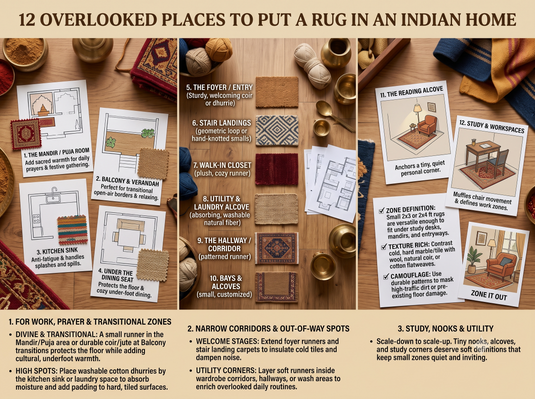
Map the room's daily activity. Include the path from the entrance, the balcony, the dining table and the places where people put drinks down. A quiet bedroom and a frequently used family lounge may look equally beautiful in photographs but expose a rug to different conditions.
If you want a glossy focal point in a busy room, compare products with clearly documented suitability. Consider whether a different furniture layout could keep the main walking route beside the rug. Do not rely on colour to hide a placement problem or on a protector to make every fibre suitable for repeated spills.
In a dining area, include chair movement and cleaning access. In a bedroom, assess whether the rug can be vacuumed under the bed and whether bedside shoes or water glasses create recurring risks. The room decision should be specific enough to explain to the supplier in a few sentences.
Plan spill response before the first accident
Keep the manufacturer's instructions accessible. Ask what to do immediately after a spill and which actions should be avoided. If the guidance says professional cleaning, ask how to stabilise a fresh spill while arranging that help. A clear answer is more valuable than a general easy-maintenance claim.
Gently absorb fresh liquid with a plain clean cloth and avoid aggressive rubbing. Before adding water, detergent or any household remedy, obtain advice suitable for the actual composition, dyes and backing. Repeated experiments can make a later professional treatment more difficult and can alter the appearance of a lustrous surface.
Tell the cleaner exactly what happened. Record the spill, the time, any treatment already applied and the product specification. Avoid disguising a mark with furniture until it has been assessed if moisture remains in the structure. Our care guide for wool, silk and bamboo silk provides a useful starting framework.
Ask better questions about sustainability and origin
A raw-material story is only one part of the product. If the seller makes an environmental claim, ask which component it concerns and what evidence supports it. A recycled foundation, a plant-derived pile and certified manufacturing are different claims and should be stated separately.
Origin also needs precision. A rug may be woven in one country using fibre produced elsewhere, and its design may reference another tradition. Ask whether origin refers to weaving, fibre production or design inspiration. Do not let an attractive historical narrative stand in for the documented origin of the current piece.
Specific information is preferable to broad phrases such as completely natural or chemical-free. You can appreciate craftsmanship and a material story while still requiring accurate details. Where information is unavailable, treat it as unknown rather than supplying a confident answer from a similar-looking product.
A practical comparison sheet for three shortlisted rugs
Put each rug in a separate column. Start with the exact product reference, size and quoted price. Add the generic pile fibres and percentages, construction, backing, edge finish and care instructions. Only then compare the decorative names used in the listing.
Include placement suitability, sample availability, delivery terms and any custom-order restrictions. For a bespoke piece, retain the approved sample and drawing. Ask how finished-size tolerance and colour approval are handled. Current lead times and return terms should come from the seller for that order, not from a general materials article.
If one rug is much cheaper, investigate the specification before assuming it is a bargain or inferior. Differences in dimensions, fibre mix, construction and finishing may explain the price. Equally, a higher price does not prove a disputed composition claim. Documentation and room suitability remain essential at every price level.
A worked example: a beige rug for an architectural project
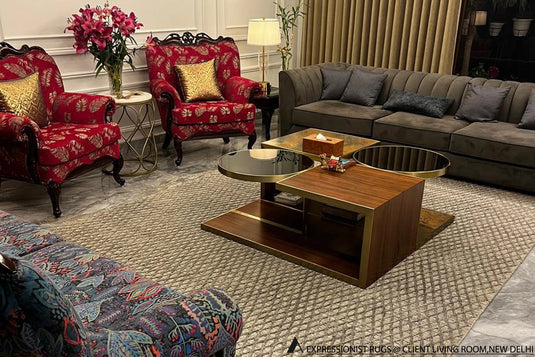
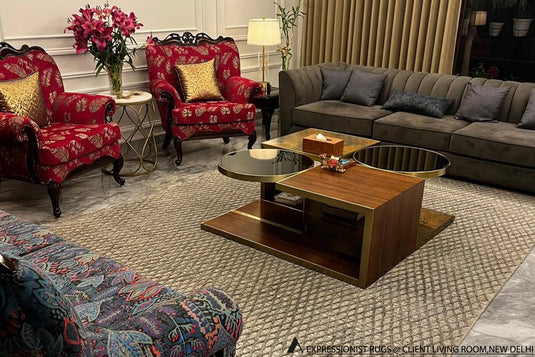
Imagine an architect choosing a lustrous beige rug beside pale stone and bronze fittings. The brief initially says silk-like finish, but the client also wants straightforward maintenance. Instead of ordering from that phrase, obtain two or three fully specified samples and compare them under the project's actual lighting.
Write the intended use next to each sample: a formal lounge, expected walking routes, food service and the cleaning team available. Ask suppliers for the care process and any relevant product performance evidence. Resolve whether the sheen comes from natural silk, a regenerated fibre or a blend before presenting the shortlist.
The approved choice should include the product reference, pile composition, sample identification, dimensions and cleaning instructions. That record is more useful at handover than a decorative material nickname. For related project planning, see our beige-rug sourcing guide for architecture firms.
Frequently asked questions
Are banana silk and bamboo silk the same thing?
Do not assume they are. Ask the supplier to identify the generic fibre and the documentation behind the name used for that product. Similar sheen or similar retail wording is not proof of identical composition.
Can I identify natural silk by looking at the rug?
Appearance alone is unreliable. Request written composition and credible supplier information. Do not damage a rug with a home test in an attempt to settle an authenticity question.
Does a plant-based name mean easy cleaning?
No. Cleaning suitability depends on the actual fibres, dyes, construction, backing and manufacturer instructions. Ask about the finished rug rather than transferring an assumption about a plant to the textile.
Which option is best for a busy living room?
Choose from products documented as suitable for your traffic and care expectations. Compare samples and complete specifications. If a lustrous option requires more delicate care than your room allows, consider a different product or a quieter placement.
What information should I keep after buying?
Retain the composition, construction, care instructions, approved sample reference where relevant and invoice. Share those records with the cleaner or restorer. They are the foundation of sensible maintenance when the retail name is ambiguous.
Reference for material terminology
For the distinction between bamboo-source wording and rayon identity, consult the Federal Trade Commission's bamboo-textile information. Product-specific fibre documentation remains necessary. The recommendations in this guide concern transparent buying and careful room planning; they do not establish the composition of an unverified rug.
Related rug guides
Need help choosing a rug or carpet?
Ask The Ambiente about rug sizes, materials, colours or the right choice for your room.