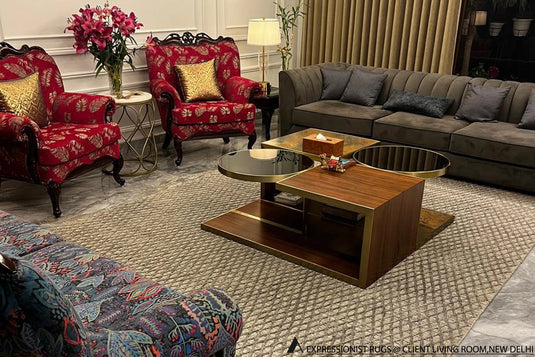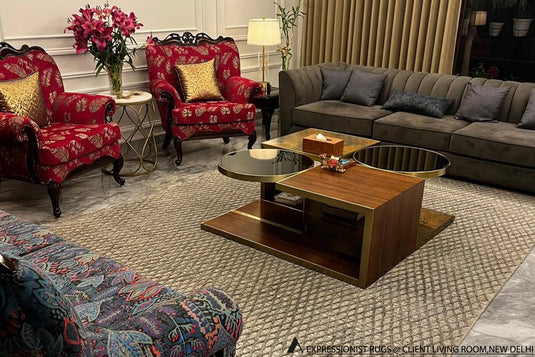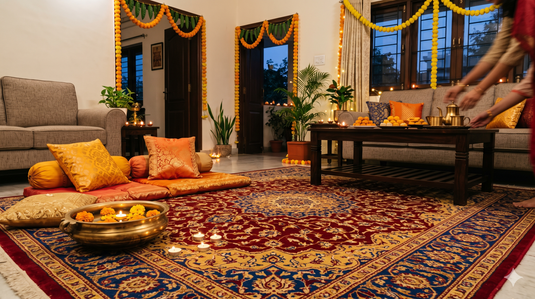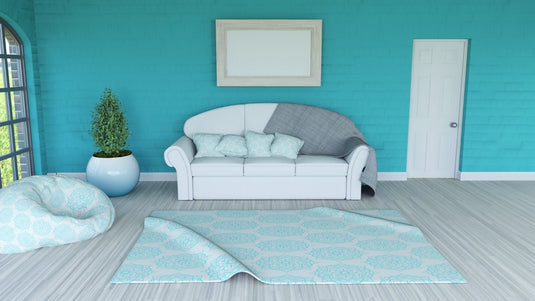
Choosing the right rug size for your living room can significantly enhance the overall aesthetics and comfort of your space. Whether you're redecorating or moving into a new home, understanding how to choose the best rug size is crucial for achieving a cohesive and stylish look. This comprehensive living room rug size guide will help you find the perfect fit for your space, covering essential topics from rug size for living rooms to rug placement tips and everything in between.
Why Rug Size Matters
A rug does more than add color and texture to a room. It defines areas, anchors furniture, and brings warmth to your living space. The right rug size can make a room feel balanced and well-proportioned, while the wrong size can disrupt the flow and harmony of your decor. Let’s dive into how to choose the best rug size for your living room.
Assessing Your Living Room Space
Before you start shopping, it's essential to assess your living room space. Take measurements of your room, considering the layout and the size of your furniture. This will help you determine the area you want to cover with a rug and ensure you choose a size that fits well within your space.
Measuring Your Room
- Measure the length and width of your living room.
- Note the placement of furniture and any architectural features like fireplaces or built-in shelving.
- Decide on the area where you want the rug to be placed, considering traffic flow and focal points in the room.
Common Rug Sizes for Living Rooms
Understanding standard rug sizes can help you visualize how different sizes will look in your space. Here are the most common rug sizes and how they typically fit in a living room.
5’x8’ Rugs
A 5’x8’ rug is a versatile choice for smaller living rooms or as an accent piece in larger spaces. This size is perfect for placing in front of a sofa or under a coffee table. However, it may not be large enough to fit under all the furniture in a seating area, so it’s best used in smaller configurations.
8’x10’ Rugs
The 8’x10’ rug is a popular choice for medium to large living rooms. It provides ample coverage for most seating areas, allowing you to place the front legs of your furniture on the rug. This size helps anchor the space and creates a cohesive look.
9’x12’ Rugs
For larger living rooms, a 9’x12’ rug can cover more ground, fitting under all your furniture pieces. This size creates a unified look and is ideal for open-concept spaces where you want to define the living area clearly.
Larger and Custom Sizes
If you have an expansive living room or an unconventional layout, you might need a larger or custom-sized rug. Consider having a rug custom-made to fit your space perfectly, ensuring all furniture pieces sit comfortably on the rug.
Rug Placement Tips
Once you’ve chosen the right size, how you place your rug is equally important. Here are some rug placement tips to help you achieve the best look for your living room decor.
Full Coverage
For a cohesive and spacious look, place all your furniture entirely on the rug. This works well with larger rugs (like 9’x12’ or custom sizes) and creates a unified seating area. Ensure there’s enough space around the edges for balance.
Partial Coverage
If your rug is slightly smaller, you can opt for partial coverage by placing the front legs of your furniture on the rug. This technique works well with 8’x10’ rugs and helps anchor your seating arrangement without overwhelming the room.
Floating Rug
In smaller spaces or more open floor plans, you might choose to have a floating rug, where no furniture legs are on the rug. This can create a cozy, defined area without making the space feel cramped. A 5’x8’ rug is often used this way.
How to Choose Rug Size Based on Furniture Arrangement
Your furniture arrangement plays a crucial role in determining the best rug size for your living room. Here are some common setups and the ideal rug sizes for each.
Sofa and Chairs
For a seating area with a sofa and chairs, an 8’x10’ rug usually works well. Place the front legs of the sofa and chairs on the rug to create a connected and inviting space. If your furniture is larger or you prefer more coverage, opt for a 9’x12’ rug.
Sectional Sofa
Sectional sofas can be tricky, but a larger rug, such as a 9’x12’, is often ideal. Ensure that all the sections of the sofa are on the rug, along with any accompanying tables and chairs, to maintain a balanced look.
Coffee Table Focus
If your coffee table is the centerpiece, a 5’x8’ or 6’x9’ rug can be placed underneath it, with the surrounding furniture just off the rug. This works well in smaller living rooms or as a way to highlight a specific area in a larger space.
Open Floor Plan
In open floor plans, defining separate areas with rugs is essential. A large rug (like a 9’x12’) can define the main seating area, while smaller rugs can delineate secondary spaces, such as reading nooks or dining areas.
Home Decor Rug Guide: Complementing Your Style
Choosing the right rug size is just one part of the puzzle. The style, color, and pattern of your rug should complement your living room decor and personal taste.
Matching Colors
Consider the color scheme of your living room when selecting a rug. Choose colors that either complement or contrast with your existing decor. Neutral rugs can create a calm, sophisticated look, while bold patterns add vibrancy and interest.
Considering Patterns
Patterned rugs can make a statement and add depth to your living room. If your furniture and walls are relatively plain, a patterned rug can be the focal point. Conversely, if your space is already busy with patterns, a solid or subtly patterned rug might be a better choice.
Texture and Material
The texture and material of your rug also affect the overall feel of your living room. Plush, high-pile rugs add warmth and comfort, while flat-weave rugs are easier to clean and better for high-traffic areas. Consider your lifestyle and preferences when making a choice.
Practical Considerations
When selecting a rug, consider practical aspects such as maintenance, durability, and safety.
Maintenance
Choose a rug that’s easy to clean and maintain, especially if you have kids or pets. Some materials, like wool or synthetic fibers, are more stain-resistant and easier to clean than others.
Durability
Consider the traffic in your living room. High-traffic areas need durable rugs that can withstand wear and tear. Look for rugs with sturdy construction and high-quality materials.
Safety
Ensure your rug stays in place to prevent tripping hazards. Use rug pads to keep your rug secure and add an extra layer of cushioning and protection for your floors.
Conclusion on Living Room Rugs and Carpet
Finding the perfect rug size for your living room is a blend of art and science. By understanding the dimensions of your space, the arrangement of your furniture, and the style of your decor, you can choose a rug that not only fits perfectly but also enhances the overall aesthetics of your living room. Use this rug size guide to make informed decisions and create a living space that is both beautiful and functional.
With these tips, you’re well on your way to choosing the best rug size for your living room, ensuring a perfect fit that enhances your home’s decor and comfort. Happy decorating!
Measure sectionals and chaise sofas as a complete footprint
A sectional needs more than one sofa-length measurement. Record the main span, the return or chaise depth and the actual front-leg positions. Place the coffee table and chairs before measuring the rug boundary. The chaise can extend far beyond the main sofa front, so a rug that fits a straight sofa may leave that section disconnected. Check the complete arrangement rather than centring the rug under the longest section alone.
As a planning example, consider a sectional with a 280 cm main span and a 170 cm chaise depth. Test a 300 by 240 cm outline with the longer side along the main span, then check every contact point. That size is not automatically correct: a wide side chair or a table placed further forward may require more area. If the chaise feet fall near an edge, measure the remaining margin and allow for the product's stated size tolerance.
Check movement as well as the static layout. A swivel chair needs space to rotate, and an occasional chair may be pulled forward during conversation. Avoid an arrangement where its rear feet repeatedly drop off a raised rug edge. A sofa with a continuous plinth may need a different support assessment from a sofa with separate legs. Follow the furniture manufacturer's requirements before placing a thick rug under only part of its base.
Curved sectionals introduce another geometry check. A round rug can reinforce the arc, but its diameter must accommodate the outer leg positions. A rectangle can provide a clearer boundary for a broader seating group. Read our curved sofa rug guide for a fuller comparison of circles, rectangles and irregular shapes.
Before ordering, tape two candidate outlines and use the room normally for an evening. Note where feet land, where chairs move and whether the route to doors remains clear. Measure any low cabinet or balcony-door clearance with the rug and pad thickness in mind. A size that looks balanced in an overhead sketch should also remain comfortable and stable during ordinary use.
Translate the outline into an order specification
Once a taped size works, record the dimensions in one consistent unit and identify the orientation. A note saying large living room rug is too vague for a custom enquiry. State which side follows the main sofa span and where the chaise sits. Add the room's narrowest available clearance and any furniture support points close to the boundary. This helps a retailer understand whether a small size variation would affect the arrangement.
Ask whether the listed dimensions include fringe and what variation is expected in the finished product. If a front leg sits only a few centimetres inside the outline, that placement may be too sensitive to a minor size difference. Move the furniture or consider a larger size before ordering. The aim is not to eliminate every exposed strip of floor, but to create a layout that remains coherent within the product's stated tolerances.
For a patterned rug, compare the exact size's composition with your furniture footprint. A border may become narrower or wider proportionally, and a central motif may move under the table. Ask how a custom design will be adapted. An enlarged photograph is not a dimensioned plan, so do not use the visual proportions of a styled image as your only evidence.
Keep the pad in the plan. Its outline should remain inside the rug boundary according to the supplier's instructions, and its thickness affects doors and furniture support. If the rug crosses a doorway or sits beside a low cabinet, test the clearance using the proposed assembly rather than the rug alone. Check compatibility with the actual floor finish before installation.
On delivery, inspect dimensions and construction before placing heavy furniture. Compare the rug with the order and ask promptly about any significant discrepancy. Recreate the measured arrangement, then use the room normally and check edge movement or chair stability. A useful sizing decision survives everyday movement as well as the initial photograph.
Off-centre layouts and wall clearance without rigid styling rules
Position a living-room rug around the seating activity, not automatically around the centre of the room. In an open-plan home, a sofa group may sit to one side because the other side is a route to the dining table or balcony. The rug can be centred on that group while remaining off-centre within the architectural space.
Measure the usable seating footprint after allowing for doors, walkways and furniture operation. Mark two possible rug outlines with a floor-safe method, then sit down and walk through the room. Check the front legs of chairs, the chaise, coffee-table access and the route people actually take. This is more reliable than applying a fixed wall-gap rule to every room.
As an illustrative calculation, a seating group measuring 240 by 180 cm might be tested with a 270 by 210 cm outline to add 15 cm on each side. Those numbers are a starting mock-up, not a universal minimum. If the extra width narrows an essential walkway, adjust the seating or compare a different outline. Do not order until the taped shape has been tested in use.
An irregular sofa does not always require an irregular rug. A rectangular footprint may connect a curved sofa and chairs successfully if it supports the group and preserves circulation. Compare shapes through the full footprint, not only the diameter or the size printed in a product listing. A smaller floating rug can work visually, but check exposed corners and stability carefully.
Keep useful design rules flexible. Symmetry, repeated colours and balanced margins can help, yet no 3-5-7 styling formula or universal wall clearance replaces room measurements. Photograph each trial from the entrance and seated height, then record the selected dimensions and orientation. For an unusual plan, discuss a measured drawing with the supplier and confirm the finished-size tolerance before ordering.
Related guide: rug shapes and placement for curved sofas.
More on living room rugs
Connect rug size and placement with furniture, room proportions and daily use.
Small living-room placement alternatives
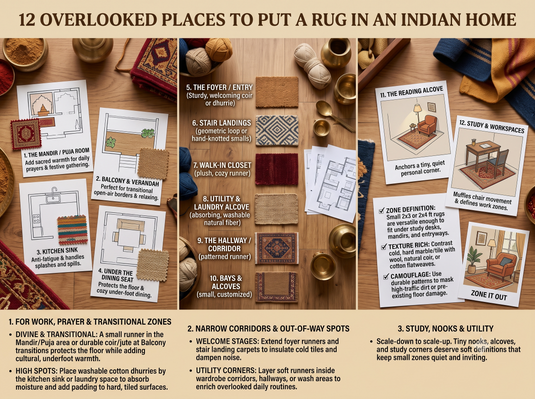
Not every Indian home has enough floor space for a single oversized rug. If the seating arrangement leaves only a narrow strip behind the sofa, do not force a second rug into that passage. Instead, measure a reading corner or a separate chair grouping to see whether a smaller piece adds useful definition without creating a trip edge. Our overlooked rug placement guide discusses alternative zones, and the one rug, three interior styles guide shows how to coordinate a versatile rug with different interiors.
For rented apartments, confirm floor-protection requirements and test the rug outline before investing. See our rental-apartment rug ideas for practical considerations.
Need help choosing a rug or carpet?
Ask The Ambiente about rug sizes, materials, colours or the right choice for your room.
Need more sizing choices? Browse medium-size rugs for smaller seating arrangements or oversized rugs for expansive living rooms. Measure your furniture footprint and check the available product dimensions.
Practical room-size check before ordering
Mark your sofa, chairs and coffee table on a floor plan. A good living-room rug should visually anchor the seating zone; in many layouts the front legs of the main seating pieces can rest on it. Measure the exact footprint and check doorway and walking clearance rather than relying only on generic size labels. Compare medium rugs, large rugs and living room rugs using the product's stated dimensions.