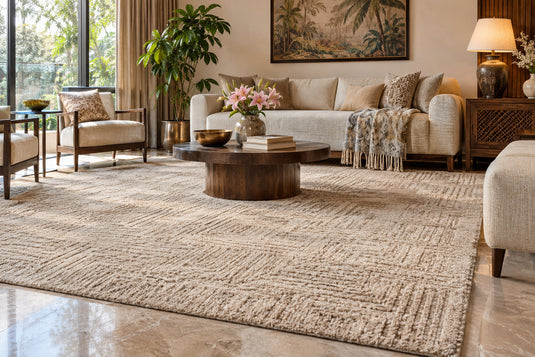
Shopping for winter rugs is less about chasing a seasonal colour and more about understanding what each room needs underfoot. The same plush rug that suits a quiet bedroom may be impractical beneath dining chairs. This room-by-room framework helps you buy once and use the rug beyond the cold season.
Living room: anchor the furniture
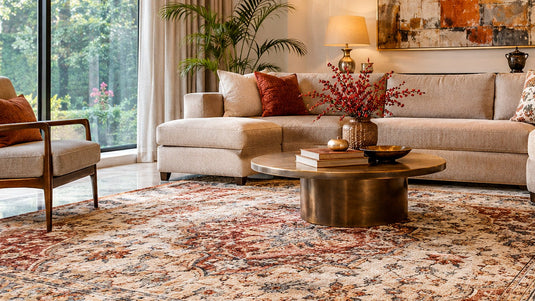
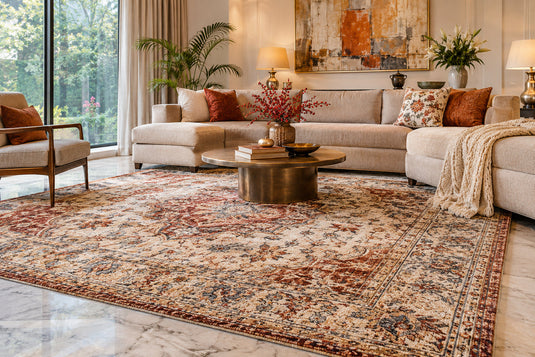
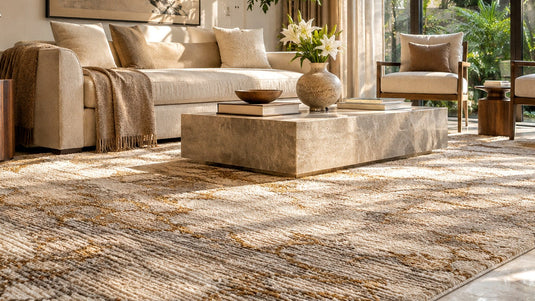
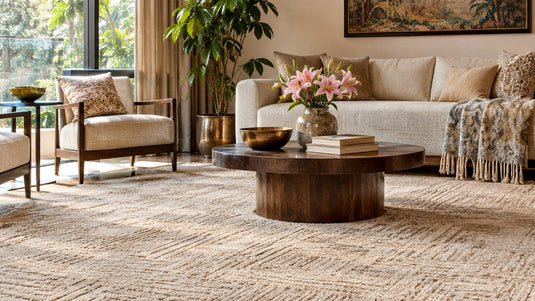
The living room usually needs the largest rug footprint. Measure the main seating group and choose whether front furniture legs or all legs will rest on the rug. Consider where people will walk and whether a coffee table's footprint hides important design details. Wool can provide a resilient textured feel, while handloom and tufted constructions offer different visual finishes. Choose a colour in conversation with the sofa and floor, not in isolation.
Bedroom: prioritize the landing zone
The first step out of bed is often the most useful place for a rug. Decide between one generous under-bed piece and separate bedside runners. Check wardrobe door clearance, especially for sliding or hinged shutters near a narrow passage. A low to medium pile may be easier to vacuum, while a deeper surface offers a different tactile experience. Test the size before considering decorative fringe.
Dining room: think about chairs
A beautiful rug can quickly feel inconvenient when dining chairs catch on its edge. Start with the table measurements, then add adequate clearance—often around 60–75 cm beyond each side—depending on the chairs and room. Low-profile or flatter constructions may ease chair movement. Ask about cleaning sensitivity before selecting a silk-rich design for a table used daily.
Study and reading corner: define a zone
A compact rug under an armchair and side table can create a purposeful corner without covering the whole room. Check whether chair wheels, desk legs or frequently moved furniture will disturb the pile. A patterned or textured design can add focus against otherwise simple surroundings. Small rugs should be stable underfoot, with a floor-compatible pad if necessary.
Entryways and hallways: prioritize stability
Foot traffic, dust and moisture make entryway selection different from choosing a bedside rug. A low-profile runner with the right width can define a corridor, but its edges must stay clear of doors. Handmade indoor rugs should not be exposed to persistent wet conditions unless the individual product is rated for such use. Choose practical care over the assumption that any thick rug is winter-ready.
Make the shortlist practical
For each room, record preferred dimensions, construction, acceptable care requirements and a realistic budget. Confirm availability and custom options before committing. A winter shopping checklist becomes more useful when it includes maintenance and longevity, not only the initial impression of warmth.
Detailed buyer considerations
Establish one consistent measuring method
Use centimetres or feet consistently and record the dimensions beside every room photograph. Include fixed furniture, movable chairs, doors and the area you want covered. When comparing rug sizes online, calculate the actual floor area rather than assuming a named size will work. A rug that suits the visual proportions in one room may feel too small in another. Tape-marking the outer perimeter is a low-cost way to test circulation. Perform the test at the times when the room is most active, such as during meals or when children use the lounge.
Separate everyday rooms from occasional rooms
A formal room used for guests may support a different rug from a television lounge where food, toys and pets are common. The first might prioritize intricate pattern, delicate sheen and visual impact. The second may place more weight on wool resilience, easy vacuuming and a practical colour. Similarly, a guest bedroom may need fewer maintenance concessions than a frequently used children's room. Make a short note of how each room is used before comparing materials. This avoids applying the same buying checklist to spaces with very different demands.
Do not confuse softness with low maintenance
A soft-looking rug can be made with fibres or pile structures that need special care. Ask about shedding, cleaning methods, moisture sensitivity and backing construction. A low-pile rug is not necessarily unpleasant, and a deep-pile rug is not automatically better for winter. Evaluate fibre, density and the way the rug is constructed. Where dining chairs move often, check that the edges and pile do not interfere. Where a rug rests beside a bed, consider the feeling underfoot as well as how easily it can be vacuumed.
Create a consistent colour plan across rooms
You do not need identical rugs throughout the home. Instead, repeat one or two undertones or related materials so rooms feel connected. For example, a muted blue-grey rug in the lounge may work alongside a quieter ivory bedroom rug if both complement the flooring and woodwork. Traditional floral and modern geometric designs can coexist when their colour values are coordinated. Avoid buying several bold pieces independently and expecting them to work together. Lay photographs of your proposed choices side by side to assess the overall visual rhythm.
A post-purchase care plan for each room
Record care directions with the rug's invoice and product photographs. Check whether the manufacturer recommends vacuuming without a beater bar, how to treat immediate spills and when to seek professional cleaning. Place underlays only where appropriate for the rug and flooring finish. In hallways and entrances, inspect for movement or curling. In bedrooms, maintain access for dust removal beneath furniture. Rotate rugs when practical to distribute wear and sun exposure. Routine attention can keep the rug usable well beyond the winter season.
A worked example for a real room layout
A household plans rugs for a family lounge, parents' bedroom and dining room. The lounge needs a generous wool-rich rug that supports frequent seating; the bedroom benefits from softness beside the bed; the dining area needs space for chairs to move. Buying the same construction in three sizes might produce a tidy catalogue order but not the best result. Instead, the family creates a room-by-room specification, marking size, foot traffic and cleaning needs separately. They select related colours rather than identical patterns. This approach produces a coordinated home while allowing each rug to serve its actual purpose.
Five mistakes to avoid
- Applying the same pile and material recommendation to every room. Before choosing, verify this point using actual room measurements, product details and care guidance rather than relying on a broad category label.
- Ignoring dampness or foot traffic in entrances. Before choosing, verify this point using actual room measurements, product details and care guidance rather than relying on a broad category label.
- Choosing a dining rug without checking pulled-out chair movement. Before choosing, verify this point using actual room measurements, product details and care guidance rather than relying on a broad category label.
- Using colour alone as the deciding criterion. Before choosing, verify this point using actual room measurements, product details and care guidance rather than relying on a broad category label.
- Forgetting that the rug must still suit the home after the cold season. Before choosing, verify this point using actual room measurements, product details and care guidance rather than relying on a broad category label.
Final five-step buying checklist
- Measure every room and identify its busiest use zone. This small check can reduce guesswork and helps the seller recommend suitable options rather than unrelated designs.
- Separate low-traffic decorative areas from practical everyday rooms. This small check can reduce guesswork and helps the seller recommend suitable options rather than unrelated designs.
- Rank fibre, pile, size and care needs for each space. This small check can reduce guesswork and helps the seller recommend suitable options rather than unrelated designs.
- Coordinate undertones across rooms without forcing matching rugs. This small check can reduce guesswork and helps the seller recommend suitable options rather than unrelated designs.
- Request product-level specifications before finalizing the combined order. This small check can reduce guesswork and helps the seller recommend suitable options rather than unrelated designs.
Explore related handmade rug collections
Compare suitable patterns, constructions and available dimensions: Living room rugs | Bedroom rugs | Dining room rugs. Check each product's material, size and care specifications before ordering.
Frequently asked questions
Are thicker rugs always better for winter?
No. Pile height, construction, fibre and the room's actual use matter more than thickness alone. Compare how the rug feels and how you will clean it.
Can I order a custom size?
The Ambiente offers custom rug enquiries; share measurements and the desired design so availability, specifications and timing can be discussed.
What should I send for a recommendation?
A floor-plan measurement, room photograph, preferred colours, city and approximate budget help the team propose suitable options.
Ask The Ambiente about the right rug for your space
We can help you compare available handmade designs, discuss bespoke dimensions and understand suitable construction options. Share your room photograph and measurements so recommendations reflect your actual layout.
Need help choosing the right rug?
Send your room measurements and placement photos to The Ambiente.
Chat with us on WhatsApp